
The Best Guitar Amplifiers of the YAMAHA brand
Let’s go with a selection of the most valued guitar amplifiers for this brand. This is a selection based on different parameters such as quality, sales leader and positive reviews.
Amplifier Yamaha THR5 V2
This amplifier usually has a price around 166.00 €
- Equipped with: 2x 8 cm full range speaker
- Power: 2 x 5 Watt
- 5 Amp simulations: Clean, crunch, lead, Brit HI, modern
- Effects: Chorus, flanger, phaser, tremolo, delay, delay/reverb, spring reverb, hall, reverb
- Tone controls
- Chromatic tuner
- Inputs and outputs: Input, headphones, AUX in and USB (to use as interface)
- Operates with battery or power adaptor
- Dimensions (W x H x D): 271 x 167 x 120 mm
- Weight: 2.0 kg
- Included: Power adapter (EADP-38EB a), USB cable, stereo mini cable and cubase AI (download)

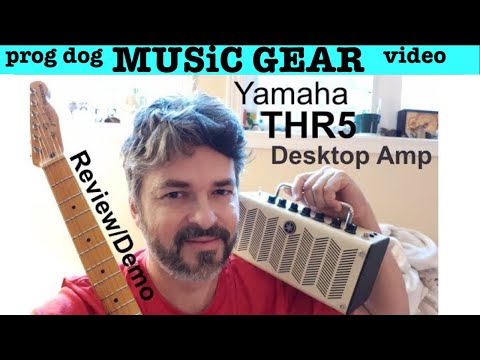
Now that we have seen the features of this amplifier Yamaha THR5 V2 watch this related video to learn more.
Some comments from people who come to the forum about this model:
Comment:
If you want to record one of the processed sounds of the amp ("clean", "crunch", "lead", etc, which are send through input signals 1 and 2), you might be happy with the outcome. However, if you want to use a digital amp sim like the ones from your DAW or NeuralDSP plugins, for example, you may prefer to use the DI inputs (3 and 4). Despite THR5’s Impressive low latency, here are the main problems:
The output signal for DI is very low, and there’s nothing you can do to control the gain for DI. All the settings for master, volume, and gain control affect only the processed sounds, not the DI. In my case, my guitar signal was peaking at -34db when recording, which is pretty low, creating a bad signal to noise ratio. When compared to Focusrite Scarlett Solo, for example, the difference in quality is gigantic, so I recommend you to use a proper audio interface for better sound recording instead of the THR5.
All in all, I really like this Amp for daily practice. I just had the wrong expectations in mind for recording when I bought it.
Comment:
I use this amp for home practice and recording of demos.
This is a good amp under every aspect. Plenty of words of appreciation have been written over the years and I agree with every single one of them.
Sounds great and the modeled amps and effects provide all the basic options you need for practice and simple recordings.
The drivers’ installation on PC is straightforward and no issues whatsoever have emerged while recording with Cubase (included with the amp) and other popular software.
The building quality is flawless and the amp is so compact and light that you can play literally wherever you want.
Only feature I miss: bass/mid/treble knobs available right on the amp (but you have to consider the size); anyway they can be set using the PC application (which offers extended settings and options).
And you have the following options to buy the amplifier Yamaha THR5 V2.
And if you want to know more about this model you can find here the review of this amplifier Yamaha THR5 V2.
Amplifier Yamaha THR5A
This amplifier usually has a price around 166.00 €
- Power: 2x 5 watts
- Equipment: 2x 8 cm full range loudspeaker
- 5 Amp Simulations: Condenser, Dynamic, Tube, Nylon, Eg Cln
- Effects: Compressor, Compressor / Chorus, Chorus, Flanger, Phaser, Tremolo, Delay, Delay / Reverb, Reverb / Reverb, Spring / Reverb
- Noise Gate (in the THR Editor)
- Tone knob
- Chromatic tuner
- Inputs and Outputs: Input, Headphones, Aux in, and USB (for use as an interface)
- Dimensions (WxHxD): 271x 167 x 120 mm
- Weight 2.0 kg
- Operation with battery or power supply
- Power adapter (EADP-38EB A), USB cable, stereo mini cable and recording software Cubase AI (Download)

Now that we have seen the features of this amplifier Yamaha THR5A watch this related video to learn more.

Some comments from people who come to the forum about this model:
Comment:
What is it? I find many reviews less than clear on this. Yamaha THR devices actually ‘model’ sound, and also have a small amplification (the THR10’s are 5W+5W and, importantly, that’s the same for the THR5’s). I own 3 THR’s (2 10’s for general and electric guitar, and now the newest THR5A – which I should have bought a long time ago). The THR5A is SPECIFICALLY for acoustic guitars, modelling types of microphones for variety I suppose, but also to enable simulation of a live environment where the sound engineer, for instance, might want to use a dynamic mic, but where you tend to prefer the balance and depth of a large condenser. Well, you can model all of that and put your views intelligently to the engineer, who may help.
[Notes for the Silent Guitar: turn off the mic emulation (use PU only), and turn off the effects (reverb and chorus) and let the THR process the guitar’s output ‘dry’ with its own magic.]Pros. Lots of pros for this thing. Firstly, it’s small despite it’s identical power to its bigger THR10 brothers. And it’s a lovely sort of gold colour – really nice, with that glowing grill when it’s on. But the quality of the sound (pre-amp stage) is wonderfully rich and thought through. Better I think than the THR10 range, which seem less controlled (but, let’s face it, they’re geared towards electric guitarist winding up the effects). The compressor (which I don’t use much just on my own playing) is actually controlled on the device rather than only available by computer link, and lets you blend into an instrument mix better during recording. Look it up.
Cons. I don’t want to say anything bad, but there’ll be somebody that will point out that if you pump up the amplifier volume the bass corrupts. Look – this is a small amp, with 2 smallish speakers, so there are limits. Pass through it to a larger amp (through the phones jack or USB) if you need volume. A good trick is to not drive the THR too hard from your instrument – let the volume control on the THR give the punch. On a silent guitar that means lowering its own output volume to about 1/3rd ideally, then turning up the THR volume to compensate.
Conclusion: this is a fantastic help for acoustic players which looks groovy, fits in a tiny bag (camera case, for instance), and makes cleverly engineered sounds. My silent guitar is nylon (I use a mix of guitars) and the ‘nylon’ setting (not sure what mic that’s emulating) allows all the subtlety of nylon to come out, and that’s why finger style players like me have nylon-strung modern guitars – expression. But my steel-strung guitars get 5 star treatment from the mic types. Condenser always my favourite on my Takamines, as they’s already put ‘tube’ into the equation through CoolTube technology in their own pre-amps.
Carefully and quickly brought to me in the UK from Thomann, as always. Make your guitar happy – it’s infectious!
Comment:
As a recording tool this works great as a first step, laying down acoustic tracks. Be careful with latency though.
Two drawbacks:
– USB computer volume (while recording) can only be set via the PC interface software.
– there are no presets. When you use this amp with multiple guitars, you might want those…
I have a THR10C too, which does have presets and a USB volume control.
And you have the following options to buy the amplifier Yamaha THR5A.
And if you want to know more about this model you can find here the review of this amplifier Yamaha THR5A.
Amplifier Yamaha THR10II
This amplifier usually has a price around 266.00 €
- 5 Memory/storage spaces
- Realistic tube amp sounds en playing feel
- With integrated effects, Bluetooth and USB
- New amp-models for E-Guitar and bass
- Microphone models for electric-acoustic guitars and flat voicings
- 3 Amp-modi per amp-type: modern, boutique and classic
- 6 Effects: chorus, flanger, phaser, tremolo, delay, reverb
- THR remote editor/librarian app for desktop and mobile devices
- 1 Channel
- Power rating: 20 W
- Controls: amp mode, gain, master, bass, middle, treble, effect, echo/rev, guitar output, audio output
- Switches: memory 1-5, tap/tuner
- Instrument input: 6,3 mm jack
- Aux input: 3,5 mm jack
- Headphone output: 3,5 mm stereo jack
- USB
- Dimensions (B x D x H): 368 x 140 x 183 mm
- Weight: 3 kg
- Incl. adapter 15 V 3 A

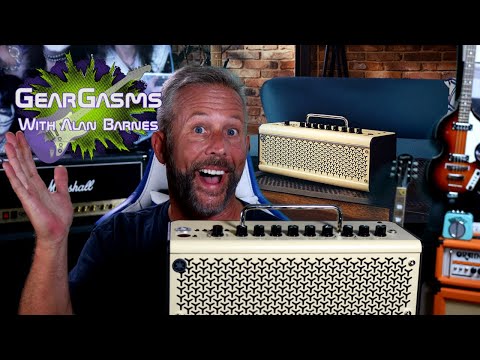
Now that we have seen the features of this amplifier Yamaha THR10II watch this related video to learn more.
Some comments from people who come to the forum about this model:
Comment:
Let’s start with the positive things. The amp is really light and it looks really good. So you can keep it in your living room on the bookshelf of wherever. Since it also works as a bluetooth speaker, you can use it as a speaker for the room. The sound of a bluetooth speaker when playing music is ok and it is loud enough. The amp has many features, mobile app, USB recording and all that. So, packed with features.
Sound of the amp is ok. To be honest, I expected more after reading and watching the reviews on the internet. Maybe small, BT amps with small speakers are just not for me. To my ears, Boss Katana 50 sounded much better. As did the Fender Tone Master Deluxe, but that one is much more expensive. But again, sound is not bad, it was just not as good as I expected. A little bit too artificial.
The other problem with the sound is that volume levels really differ between channels. Clean is really quiet, Crunch is louder, and the others are much louder. I expect that for same master volume/gain/volume settings to be the similar loudness. But that’s not the case. Again, this is not a big problem, since you won’t be switching amps all the time.
The mobile app could use some UX improvements. Not everything is logical or user friendly, but you get used to it pretty quickly.
My biggest problem with the amp was that mine was defective. It has a loud high frequency squeaking sound, especially audible on single coil guitars. On humbuckers you can still hear it but barely. I read that it happens on some of the yamaha amps, but not too often. So I was probably unlucky.
Fortunately, I bought it at Thomman, so I didn’t have any problems returning it.
Comment:
And you have the following options to buy the amplifier Yamaha THR10II.
And if you want to know more about this model you can find here the review of this amplifier Yamaha THR10II.
Amplifier Yamaha THR30IIW
This amplifier usually has a price around 409.00 €
- Built-in wireless receiver compatible with the Line6 Relay G10 transmitter (Art.398255 – not included)
- Integrated rechargeable battery
- 5 Memory locations
- Realistic tube amp sounds and feel
- 15 Guitar amplifiers
- 3 Bass amplifier
- 3 Microphone models and flat mode
- 3 Amp modes per amp type: Modern, Boutique and Classic
- 6 Effects: Chorus, Flanger, Phaser, Tremolo, Delay, Reverb
- Built-in tuner
- Bluetooth and USB
- THR Remote Editor / Librarian app for desktop and mobile devices
- 1 Channel
- Power: 30 W
- Controls: Amp Mode, Gain, Master, Bass, Middle, Treble, Effect, Echo / Rev, Guitar Output, Audio Output
- Switch: Memory 1-5, Tap / Tuner
- Instrument input: 6.3 mm jack
- Aux input: 3.5 mm jack
- Line output L / R: 2 x 6.3 mm jack
- Headphone output: 3.5 mm stereo jack
- USB
- Dimensions (W x D x H): 420 x 155 x 195 mm
- Weight: 4.3 kg
- Includes power supply 15 V 3 A

Now that we have seen the features of this amplifier Yamaha THR30IIW watch this related video to learn more.
https://www.youtube.com/watch?v=Nzk3TEPv5zE
Some comments from people who come to the forum about this model:
Comment:
It is very important to know though that Yamaha offers an app to model the amp effects in great detail via bluetooth. The app for Ios, Android, Mac work great. The app for Windows though DOES NOT have the bluetooth option, hence you can only model the amp via cable with a windows PC!
This is not a windows, of bluetooth connectivity issue, it is in fact an issue in the Yamaha Windows app. Lets hope Yamaha quickly fixes this issue because it is of course sold as a Wireless product. On the internet i read that this problem already exists for several months..
As said, apart from this issue this is just an absolutely amazing product!! The app is also very user friendy, just a shame that the windows version doesnt support bleutooth,,,
Comment:
And you have the following options to buy the amplifier Yamaha THR30IIW.
And if you want to know more about this model you can find here the review of this amplifier Yamaha THR30IIW.
Amplifier Yamaha THR10IIW
This amplifier usually has a price around 349.00 €
- Built-in wireless receiver compatible with the Line 6 Relay G10 transmitter (Art Nr 398255 (not included))
- Integrated rechargeable battery
- 5 Storage locations
- Realistic tube amp sounds and playing feel
- Built-in effects, Bluetooth and USB
- New amp models for electric guitar and bass
- Microphone models for acousto-electric and flat voicings
- 3 Amp modes per amp type: Modern, Boutique, Classic
- 6 Effects: Chorus, Flanger, Phaser, Tremolo, Delay, Reverb
- THR Remote Editor/Librarian app for desktop and mobile devices
- 1 Channel
- Power: 20 W
- Controls: Amp Mode, Gain, Master, Bass, Middle, Treble, Effect, Echo/Rev, Guitar Output, Audio Output
- Switch: Memory 1-5, Tap/Tuner
- Instrument input: 6.3 mm Jack
- Aux input: 3.5 mm
- Headphone output: 3.5 mm Stereo jack
- USB
- Dimensions (W x D x H): 368 x 140 x 183 mm
- Weight: 3.2 kg
- Includes a 15V 3A power supply

Now that we have seen the features of this amplifier Yamaha THR10IIW watch this related video to learn more.

Some comments from people who come to the forum about this model:
Comment:
of course, a big thanks to Thomann for exceptional customer service and trading standards.
Comment:
I mostly use the Clean and Crunch channel for my guitar, and the bass channel as well, and they all sound amazing. The clean channel has a purity I’ve been looking for, with a perfect tonal balance between bass / medium / high. It has a perfect response to the dynamic playing, as a tube amp would have.
The only thing I could be unhappy about is the need to download an app and spend some times on the computer to get in the deep settings of the amp. But, to be honest, I have my pedal effects, so it’s not really a problem to me.
All you have to do is : turn on the amp, and play, anywhere, anytime, nothing more simple, with a sound you gonna love.
And you have the following options to buy the amplifier Yamaha THR10IIW.
And if you want to know more about this model you can find here the review of this amplifier Yamaha THR10IIW.
Other posts you may be interesting in

