

Review of the Koch Amps Jupiter JUP45-C amplifier. Where to buy it?
I’ll tell you how this post is built. First I list the features of the Koch Amps Jupiter JUP45-C amplifier. Then you have a video or two, purchase links and useful comments from other users and then you have one of the most useful parts; comparison tables with similar amplifiers so you can compare.
- Power: 45 W
- Equipped with: 1x 12″ Koch VG12-60 speaker
- 2x 12AX7 tubes in the preamp and power amp
- 3 Switchable channels: Clean, Overdrive, High Gain
- 3-Band EQ with contour switch
- Buffered effects loop
- Spring type reverb
- ATR Technology
- Output with loudspeaker emulation and passive filter
- Weight: 19.1 kg
- Dimensions (W x D x H): 540 x 260 x 460 mm
- Includes 2-way footswitch

This amplifier usually has a price around 538.00 €
Now that we’ve seen the features of this amplifier Koch Amps Jupiter JUP45-C watch these related videos to learn more.

Post you may be interested in
- Ranking with the best guitar amplifiers.
- My selection of cheap guitar amplifiers.
- A beginner’s guide to guitar amplifiers.
- Guitar amplifiers by brand.
- Easy Guide to the Guitar.
Some comments from people who come to the forum about this model:
Comment:
Use
Home(studio), band practice, gigs.
Pros
*Very nice clean sound on the cool (clean) channel, with a lot of headroom (so, the clean sound does not break up, but stays clean). If you do want a slightly broken up/distorted sound, this can be achieved as well, by adjusting volume and gain settings or going over to the hot (OD) channel (with its own gain and volume knobs). You can switch between channels by using the left button on the foot switch (FS), or use the switch button on the back of the amp.
*So, the amp acts and sounds pretty much like a tube amp, even though it is a hybrid. That is because there is a tube in the preamp and one in the power amp (followed by MOSFETs). Less tubes should mean less maintenance and certainly less maintenance costs. With a dimmer (master volume) you can change the volume of the amp, without changing the nature of the sound you’ve dialed in with the gain, volume, 3-band EQ, contour, and (the nice sounding!) reverb. The EQ knobs and contour-switch are subtle (and shared by the two channels), but certainly noticeable. The gain-boost option is nice for soloing, or for creating a heavier sound for rhythm guitars. It seems to provide a boost in volume, but I think it actually boosts the mids instead.
*The whole amp, from the on/off switch to the housing (and also the footswitch with 5 m cable ) appears to be very sturdy (I guess that is where part of the weight comes from; the amp is some 19 kg and not 16 kg as you find in a lot of review articles).
Cons
*Both channels (cool/clean and hot/distortion) share the same EQ and reverb section. However, I favor other EQ-settings for the clean channel than I do for the distortion channel.
*The distortion channel is not that impressive (personal taste).
*Overall, the sound could use just a tad bit more body to it.
*Although not super heavy, it is still 19kg. But that comes with entering the tube-amp territory. So, can’t really count it as a comp.
Experience from the last year
I’ve had it for over a year, and so far, I am pretty happy with it. I use it for band practice, for gigs and jam-sessions. It is certainly loud enough for any of these uses. Should you need even more volume (if you have an insanely loud drummer, maybe?), you can simply mic the amp or connect an extra cabinet. You can also use the speaker emulated output if you do not want to mic the amp. I find that it gives a very good sound if you do this (and the sound guys/galls are usually pretty happy with this option, as well).
LONG STORY
I bought the Koch Jupiter 45 Combo as a replacement for the (of course much cheaper) Fender Mustang IIIv2 that I returned. The footswitch of the Fender Mustang III had horrible latency. I have read that the Blackstar TVP ID60 (also a modeling amp) has this problem, as well, making current day modeling amps probably not very suitable for on stage use when in need of (quick) mid-song setting changes. (Also, in band setting the Fender sounded sounded very thin and powerless).
So, in search for a replacement, I tried out a couple of other amps: I first A/B/C-tested a Roland Blues Cube Stage (solid state amp), a Laney CUB 12R (all tubes) and a VOX AC15C1 (all tubes). I wanted to also test the Koch Jupiter 45 (hybrid, with one 12AX7 tube in the pre-amp and one 12AX7 in the power amp, and then some MOSFETs), which was recommended to me. However, this amp/brand is hard to find in music stores.
So, I first tested the Roland, the Laney and the Vox with a Gibson SG. I dropped the Roland Blues Cube Stage based on me not liking the sound of it, compared to the other amps. Also, I think the Roland is pretty expensive for a solid state (and that is without a rather expensive footswitch). I did like the option to combine the clean and distortion channel on this amp. And it has variable power output, making it suitable for different settings (home, band practice-room, stage).
The Laney CUB 12R sounded pretty good (I liked the distortion you could dial in), but not as "wide" as the VOX. However, from what I understand, it only has one channel, so it seems that it is not possible to quickly switch between clean and distortion (or is it, somehow?). Of course you could use a distortion/OD pedal in front of it. But, I read several reviews stating that the amp might not be loud enough for even smaller gigs (it’s 15W, just like the VOX, but the latter is supposed to be very loud, if you want it to be).
The Laney has the option to turn to 1W for the "bedroom". And it has an external FX loop which the VOX does not have, and a connection for an external speaker (just like the VOX) should you want to use an additional cabinet. Both do not have a recording output, nor a headphone out.
As I said, the VOX was way more "wide" in its sound, and a lot more sparkling clear. The VOX has 2 channels with separate inputs, but no switch on the amp. You have to buy an ABY-pedal to be able to switch between the clean channel en the top boost channel. A good quality ABY switch will costs you an additional $100, at least. In reviews people talk about the VOX not having much headroom on the normal channel, so when you turn it up loud(er), the clean sound is not completely clean anymore. The VOX is almost twice as heavy as the Laney: some 22kg.
In another shop I tried out a Fender Blues Junior III, but I was not all that impressed (it seemed kind of buzzy when turned up loud in clean. And not distortion buzzy, just buzzy).
So, that left me with the Vox AC15C1 and a yet to be tested Koch Jupiter. I finally found a shop that had both the Vox and the Koch in stock so that I could A/B them (again using a Gibson SG). I had brought my earplugs, so I could turn up both amps very loud (for a short while, of course). And indeed, the Vox did not have enough headroom. It broke up pretty quickly. I want to be able to play clean also in louder (non-amp mic-ed) set-ups, so that pretty much eliminated the Vox AC15C1 from my list. (A Vox AC30 supposedly has a lot more headroom, but also is a lot more expensive and a lot heavier [>30kg]).
It left me with the Koch Jupiter 45, which I quite liked, especially the clean sound of it! The Jupiter has a ?dimmer? knob so you can play your clean and overdriven channel at the level you like. It acts and sounds like a full tube amp, if you want it to, although the sounds seems to have a bit less ?body? to it, but that might well be the sound design Koch was going for. I like that it has a FX-loop and a record/PA-out. The record/PA-out does not cut off the signal to your speaker, so you can use your amp as a stage monitor, although if you change the volume, it will have an effect on the level of the signal going to the mixing desk, as well. (B.t.w. you can cut off the signal to your speaker, without any harm done, by unplugging the speaker cable). It also has an output for an additional cabinet.
I would have liked a volume control specifically for the FX loop, but since the loop is serial, that might not be possible without influencing the master output, when the effect is turned off. I also would have liked separate EQ-controls for the clean (cool) channel and the overdriven/distortion (hot) channel. Of course, that would come with a price increase.
The footswitch (FS2) is very handy. It has a 5 meter cable attached to it. I would have liked an input jack on the FS so that you can tailor the lenght of the FS cable to your needs. Also, a three button FS would have been nice, so that you don’t have to chose between gain-boost and reverb on/off for the right hand button.
The fact that it has only two tubes in it, should make it cheaper in maintenance compared to a full tube amp.
I have tested it out in band (practice)-situation, jam-sessions and gigs and it was (way!) more than loud enough.
It takes pedals well, both those "designed" to go in between the guitar and the amp, and those that should ideally go in the FX-loop. This is nice, because the distortion is not that impressive, speaking from personal taste.
I would have given "sound" and "total" more stars if the clean channel had a bit more body to it, and if I’d been more happy about the distortion sound of the Hot-channel. Having said that, it is a real pleasure to play this amp. It makes you want to pick up your guitar and play.
Thomann’s service was again good and quick.
Comment:
I bought the Koch because it was a hybrid amp and I wanted to try to retain a Valve Amp sound whilst adding the reliability of solid state. My research told me that the pre-amp valve had excellent longevity. I had been using a Marshall JC200 DSL400 Combo which began a gig sounding perfect and totally died after half a set. No spare so rerouted through the PA …in short it was a mess !!
So the Koch arrived and I plugged in my pedalboard (SKB) and guitar (Cassidy) turned everything on and started playing.
After ten minutes I was a very happy bunny indeed.
The Amplifier sounded like a valve amp…but more importantly it was very responsive…flexible to the ‘n’th degree.
The controls enable you to extract pretty much any sound from bright clean to super crunchy. I love the gain control on the clean channel which allows you to flavour the clean to your taste. I like a hint of dark on the clean channel !! An added bonus was the effects loop which works so much better than my previous amp. I can now split my board putting the wah/compression/distortion overdrive through the front end and the other stuff into the loop…really really excellent.
I cannot praise the Koch too highly… it’s well built, good looking, and gives you such sound versatility and so far total reliability ! I originally bought it as a backup to the Marshall (Which is now repaired) but to be honest I find myself using it for every gig.
Apart from giving me the confidence of knowing it’s reliable it backs that up with a brilliant sound and you can’t ask for better than that !!
And finally a side benefit is the number of conversations I’ve had with fellow musicians who approach me after the gigs and ask me "..hey…what’s that amp? I love it!!"
Koch Amps Jupiter JUP45-C vs Vox AC15 C1
Contenidos de la página
The amplifier Koch Amps Jupiter JUP45-C is usually 23 € more expensive than Vox AC15 C1, but the difference is so small that this can vary..
|
Koch Amps Jupiter JUP45-C |
Vox AC15 C1 |
|---|---|
|
|
And then a video of the amplifier Vox AC15 C1

If you want to know more about this option, click on the following link to see the Vox AC15 C1 review
Koch Amps Jupiter JUP45-C vs Marshall DSL40CR
The amplifier Koch Amps Jupiter JUP45-C is usually 31 € cheaper than Marshall DSL40CR, but the difference is so small that this can vary..
|
Koch Amps Jupiter JUP45-C |
Marshall DSL40CR |
|---|---|
|
|
And then a video of the amplifier Marshall DSL40CR

If you want to know more about this option, click on the following link to see the Marshall DSL40CR review
Koch Amps Jupiter JUP45-C vs Roland Cube Street EX
The amplifier Koch Amps Jupiter JUP45-C is usually 100 € more expensive than Roland Cube Street EX.
|
Koch Amps Jupiter JUP45-C |
Roland Cube Street EX |
|---|---|
|
Note: Batteries are not included |
And then a video of the amplifier Roland Cube Street EX

If you want to know more about this option, click on the following link to see the Roland Cube Street EX review
Koch Amps Jupiter JUP45-C vs Vox AC10C1 Custom
The amplifier Koch Amps Jupiter JUP45-C is usually 100 € more expensive than Vox AC10C1 Custom.
|
Koch Amps Jupiter JUP45-C |
Vox AC10C1 Custom |
|---|---|
|
|
And then a video of the amplifier Vox AC10C1 Custom
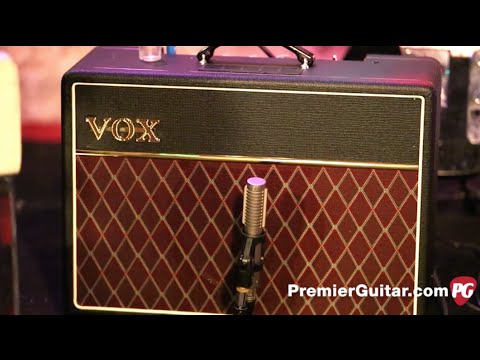
If you want to know more about this option, click on the following link to see the Vox AC10C1 Custom review
Where to buy this amplifier Koch Amps Jupiter JUP45-C
Thomann
- Free Shipping.
- Full warranty. If you have any problems, they take care of everything.
- 100% reliable payment.
- Leader in trouble-free shipping.
- Usually Best price.
- Best Reputation: They are the leading online store in Europe and have the best catalogue and information.
Amazon
- Free Shipping and possibility of shipping in one day with Amazon Premium.
- Full Guarantee but they are no experts in music equipment.
- Sometimes better price.
- He’s got worse stock than Thomann.
Also look at these models with a similar price and features:
- Bad Cat The Paw
- Blackstar HT CLUB 40 Combo MkII
- Blackstar HT Club 40 MkII 6L6
- Blackstar HT STAGE 60 212 Combo MkII
- Blackstar HT-20R MkII Valve Combo
- Blackstar HT-5R MkII
- Blackstar ID Core 150
- Blackstar Silverline Special
- Blackstar Studio 10 6L6
- Blackstar Studio 10 KT88
- Boss Cube Street II Black
- Boss Cube Street II Red
- Boss Katana 100 MKII
- Boss Katana 100/212 MKII
- Boss Katana Air
- Boss Katana-Artist MkII
- Boss Nextone Artist
- Boss Nextone Special Guitar Combo
- Boss Nextone Stage
- Bugera V55 Infinium
- Cornell Romany 10
- Cornell Traveller 5 10″
- Cort MIX-5 Multi Combo
- DV Mark Jazz 12
- DV Mark Little Jazz
- Elite Acoustics A1-4 Acoustic Amplifier MKII
- Elite Acoustics A4-8 MK II Acoustic Amplifier
- Elite Acoustics D6-8 MKII Acoustic Amplifier
- Elite Acoustics M2-6 Acoustic Amplifier
- Engl E600 Ironball Combo
- Engl MetalMaster Combo E304
- Engl Screamer 50 Mark II E330/2
- EVH 5150 Iconic 40W 1x12 Combo BK
- EVH 5150 Iconic 40W 1x12 Combo IV
- Fender 68 Custom Princeton Reverb
- Fender 68 Custom Vibro Champ
- Fender Acoustic Junior GO
- Fender Bassbreaker 30R
- Fender Blues Deluxe Reissue
- Fender Blues Junior IV
- Fender Blues Junior IV Western
- Fender Blues Junior Lacquered Tweed
- Fender Hot Rod Deluxe IV
- Fender Hot Rod Deville 212 IV
- Fender Landau Hot Rod Deville
- Fender Mustang GTX100
- Fender Mustang GTX50
- Fender Pro Junior IV
- Fender Tone Master Del. Reverb Blonde
- Fender Tone Master Deluxe Reverb
- Fender Tone Master Twin Reverb
- Fender Tone Master Twin Reverb Blonde
- Hughes&Kettner Black Spirit 200 Combo
- Koch Amps Jupiter JUP45-C
- Koch Amps Studiotone 20 Combo
- Koch Amps Studiotone XL Combo
- Laney Cub-Super12
- Line6 Spider V 120 MkII
- Marshall 2525C Mini Silver Jubilee Co
- Marshall DSL20CR
- Marshall DSL40CR
- Marshall DSL5CR
- Marshall Origin 20C Combo
- Marshall Origin 50C Combo
- Marshall Studio Classic SC20C
- Marshall Studio Vintage SV20C Combo
- Orange Crush CR60C
- Orange Crush CR60C black
- Orange Rocker 15
- Orange Rocker 15 black
- Orange Rocker 32
- Orange Rocker 32 black
- Peavey Bandit 112
- Peavey Classic 30 Tweed
- Peavey Delta Blues 115 Tweed
- PRS Sonzera 20 Combo
- Quilter Aviator Cub 112 Combo
- Roland AC-33
- Roland AC-33 RW
- Roland Blues Cube Artist
- Roland Blues Cube Hot VB
- Roland Blues Cube Stage
- Roland Cube Street EX
- Roland JC-22
- Roland JC-40
- Supro 1695T Black Magick
- Supro 64 Reverb Combo
- Supro 64 Super Combo
- Supro Delta King 10 Combo BC
- Supro Delta King 10 Combo TB
- Supro Delta King 12 Combo BC
- Supro Delta King 12 Combo TB
- Supro Delta King 8 Combo BC
- Supro Delta King 8 Combo TB
- Supro Keeley Custom 12 Combo
- Vox AC10C1 Custom
- Vox AC15 C1
- Vox AC15 C2
- Vox AC30 C2
- Vox AC30S1
- Yamaha THR10IIW
- Yamaha THR30IIW
- ZT Amplifiers Lunchbox Reverb

