
- Home
- Author's Archive:
Digital Piano Yamaha Montage 8 Full Review. Is it a good Piano?
Analysis and Where to Buy Yamaha Montage 8: Review and Opinion
If you’re in music production and you’re looking for a synth keyboard you should definitely take a look at the Yamaha Montage 8.

Its 88 weighted and pressure-sensitive keys, as well as the sound creation functions, make the Yamaha Montage 8 a solid tool for music production.
Where to Buy Yamaha Montage 8?
Amazon
- Free Shipping and the possibility of shipping in one day with Amazon Premium.
- Full Guarantee but they are no experts in music equipment
- A leader in fast shipments.
- The price change a lot daily.
- The best option in USA and ASIA
Thomann
- Free Shipping
- Full warranty. If you have any problems, they take care of everything.
- 100% reliable payment.
- A leader in trouble-free shipping.
- Usually the best price.
- Best Reputation: They are the leading online store in Europe and have the best catalog and information.
Features
The Montage 8 stands out for having a complete keyboard and offering a great diversity of functions for musical creation and production. These are its technical specifications in detail:
- Keyboard with 88 weighted and pressure-sensitive keys with balanced hammer technology
- 7-inch color display with touch technology
- Tone generator with Motion Control of 8 FM-X elements: 8 operators and 8 algorithms. Two sound engines: AWM2+FMX
- 128-note polyphony AWM2 and FM-X
- Wave: Preset: 5.67gb (in 16-bit linear format) and 1.7gb for the user.
- 18 types of filters
- Reverb of 12 types
- Variation of 76 rates
- Insertion (A,B) of 76 types
- Master effect of 15 types, A/D insertion of 71 types.
- 24 Controllers (Volume, Gain, Dial, Pitch, Modulation Wheel, Ribbon, 8 sliders, 8 Knobs, and 1 Super Knob)
- 130-note capacity recorder with 480 ppq
- USB to Device and USB to host ports
- MIDI Entry and Exit
- Pedal Input
- 6.3mm balanced output (L/mono/ R)
- TRS output for 6.3mm headphones
- 6.3mm A/D L/mono/R input
- Electricity consumption 27w
- Dimensions: 1.45m x 17cm x46cm
- Weight: 29 Kg.
Sound
I’m sure you’ll be interested in…
- See this section for possible discounts and offers
- Ranking with the best digital pianos in quality-price ratio
- The cheapest musical keyboards for beginners
- Other Yamaha Digital Piano Reviews
- Learn piano by yourself and for free
The Yamaha Montage 8 is a keyboard with great sound quality, however, it is important to remember the fact that as it is a musical production tool, it does not have integrated speakers, so it will be necessary to acquire a quality amplifier to take advantage of the sound.Below is a video with the quality of sound of the Montage 8:
Connectivity
When it comes to connectivity, the Yamaha Montage 8 has it all; 2 USB ports, balanced online input and output, options for sustain pedal, damper pedal, and various accessories. It simply has everything you need to use the keyboard on stage, or in a music studio.

Some Piano lovers will miss the triple footswitch, since Yamaha has only provided damper and sustain footswitches for this model, however, the Montage 8 covers with all the connectivity necessary to be a professional musical production tool.
Advantages and disadvantages of the Yamaha Montage 8
The advantages of this model are:
- Full keyboard with weighted keys and pressure sensitivity
- Touch screen
- Controllers
- Connectivity
- Weight
The disadvantages of this model :
- No built-in speakers
- The polyphony is only 128 notes.
- The quality of construction is not superior to some competitors
The Yamaha Montage 8 is a great option, there are no questions about it, the keyboard of 88 keys, its touch screen, and options of musical production and connectivity make it an interesting choice. In this sense, its weight is attractive for those who want to move continuously a professional musical production keyboard. Among the negative characteristics, we can only highlight the polyphony of 128 notes, as virtually no music production model has integrated speakers, still, the measurements of this keyboard make it lighter and comfortable than some of its competitors.
Montage 8 vs Genos
The Japanese brand has always been characterized by competing with different products in the same niche, Montage 8 and Genos are two very interesting options for music production. The differences between these two models are presented below:
- The Montage 8 is a complete keyboard with 88 weighted keys, while the Genos is an option with 76 keys also with counterweight and velocity sensitivity.
- The Montage 8’s screen is 7 inches, while the Genos incorporates a 9-inch screen, both with touch technology.
- The Genos has a polyphony of 256 notes, whilst the Montage has 8 of 128.
- An important difference is that the Montage 8 has no internal storage, while Genos has 58GB available to store recordings, rhythms, accompaniments, etc.
- The Genos connectivity is more complete since it has Wifi connectivity, 3 USB to device ports, and 3 pedal inputs.
- The weight of the Genos is 13 Kg. while the Montage 8 has a weight of 29 Kg.
The two options of the Japanese brand are good alternatives for music production, however, if you are looking for a keyboard with better sound quality and more modern technology the Genos is the option for you, if you prefer an approach similar to a piano the Montage 8 is a better idea.
Montage 8 vs Roland RD 2000
It is not a novelty that both Yamaha and Roland always have similar models, and the Yamaha Montage the Roland RD 2000, are no exceptions to the rule. In this case, the two models offer versatility and advanced features for music production, which are highlighted below:
- Both models have 88 pressure-sensitive and weighted keys, however, the Roland is constructed of wood and plastic with ebony/ivory feel technologies, providing an experience very similar to a piano, whilst the Yamaha incorporates a balanced hammer technology.
- The polyphony of both models is 128 notes, however, the RD 2000 offers a complete polyphony for the V Piano system.
- Roland offers 20 Controllers for musical production (8 sliders with lighting, 8 knobs with lighting 1 pitch bend, and 2 modulation Wheel), whilst Yamaha offers 15.
- The Montage’s screen is not only colored and with touch technology, but it is bigger than the one offered by Roland in the RD 2000.
- The connectivity of both models is practically identical, both models offer everything needed for music production.
- Yamaha’s tone generator is 8 elements while Roland’s is 62.
- In energy consumption, the RD 2000 is more efficient, as it consumes 23w against 27w of Montage 8.
For those who are looking for a keyboard with a focus on music production, the Yamaha Montage 8 can meet all needs, however, for others looking for higher sound quality and similarity to a piano, the Roland RD 2000 is a better alternative, as it has a higher quality design and more advanced technology. If you want to know more about Roland RD 2000 you can access the Analysis and Opinion of this model by clicking here.
Montage 8 vs Korg Kronos
A very serious competitor for the Montage 8 is the Korg Kronos, here is a comparison of both models:
- Two keyboards offer 88 pressure-sensitive and weighted keys
- The sound polyphony of the Montage 8 is 128 notes, while the Kronos can reach a polyphony of 200 notes in the CX3 (Organ Modeling) mode.
- Yamaha only offers memory via USB and Korg incorporates a 60GB solid-state hard drive (SSD), bringing the option to have an additional one.
- The Montage 8 incorporates 8 effects with more than 2000 types, while Korg offers 12 effects with 197 types.
- Both models feature a 7-inch color touch screen.
- The energy consumption of Kronos is 60w, while Yamaha consumes 27w.
If you are looking for a keyboard focused on musical production, as well as different voices, the Korg Kronos is an excellent choice, as its polyphony and sound generators put it at an advantage over the Montage 8. If your intention is to use the piano voice, the Yamaha Montage 8 may be your alternative.
Montage 8 vs Nord Stage
Yamaha Montage and Nord Stage can compete for face-to-face as they have a number of similarities. Below is a comparison of both models:
- Both models have 88 weighted and pressure-sensitive keys, and in both cases, there is the possibility of having 76 or 61 keys with very similar functions, which makes these two lines direct competition.
- The Nord stage has 5 algorithms to process sound while the Montage has 8.
- Both models have virtually the same connectivity, the only difference being that the 6.35mm audio outputs of the Yamaha Montage 8 are balanced and the Nord has a rotor pedal output.
- The Nord stage has 31 controllers for different functions while the Montage 8 has only 24.
- The user interface of the Yamaha Montage 8 is more user friendly as it has a touch screen.
- The Yamaha Montage 8 has 4 different effects and more than 200 types, while the Nord Stage has 2 customizable effects
- The weight of the 88-key Nord Stage is 18.5 Kg. while the Yamaha weighs 29 Kg.
The Yamaha Montage 8 is a more complete keyboard than the Nord Stage, as it has more advanced features, however, if you want a keyboard that continually updates your Nord operating system, a Nord Stage is an excellent choice. For those who are just looking for diversity of features, construction quality, and sound, the Yamaha Montage 8 is the best option.
Conclusion
If you are looking for a digital piano for music production there are definitely two very similar options of great quality: the Yamaha Montage 8 and the Roland RD 2000. The recommendation is simple. If you look for a piano with better quality construction and sound, the RD 2000 will be ideal for you, if what you need is to maintain your Yamaha accessories and acquire an option of very competitive quality, the Montage 8 in that case fulfills everything you need. For those who are looking for a digital piano or keyboard with other features, can check out our guide to the best keyboards and digital pianos price-to-benefit ratio.
Where to buy Yamaha Montage 8
Before buying a product, always make sure to check you will get it for the right price. It is always a better alternative to buy in an online store, just remember to check that the store offers a suitable transport/shipping option. If you want to buy your Yamaha Montage 8 at the best price take a look at Amazon at Asia or America, but for Europe check Thomann:
For a similar price you have the following pianos and keyboards:
- YAMAHA PSR-A3000
- YAMAHA PSR S975
- YAMAHA PSR S970
- YAMAHA P-515
- YAMAHA MX61
- YAMAHA MONTAGE 8
- YAMAHA GENOS
- YAMAHA CP40 STAGE
- YAMAHA CP4
- YAMAHA CP300
- YAMAHA CP1
- YAMAHA CLP 685
- WALDORF ZARENBOURG
- STUDIOLOGIC NUMA STAGE
- STUDIOLOGIC NUMA CONCERT
- STUDIOLOGIC NUMA COMPACT 2X
- STUDIOLOGIC NUMA COMPACT 2
- ROLAND RD 2000
- ROLAND KIYOLA KF-10
- NORD PIANO 3
- KORG SV1 88
- KORG SV1 73
- CRUMAR SEVEN
- CLAVIA NORD STAGE 3 HP76
- CLAVIA NORD STAGE 3 COMPACT
- CLAVIA NORD PIANO 4
- CLAVIA NORD ELECTRO 6D 73
- CLAVIA NORD ELECTRO 6D 61
- CLAVIA NORD ELECTRO 6
- ROLAND TB-3
- ROLAND SYSTEM-1
- NORD STAGE 3
Did you like this article?
Digital Piano Roland RD 2000 Full Review
Piano Analysis Roland RD 2000: Review and Opinion
Roland has always stood out for offering alternatives of keyboards and digital pianos for practically any user, the RD2000 is a digital piano with 88 wooden keys, totally focused on those who want to make live presentations or simply require a very powerful keyboard with piano sensitivity.
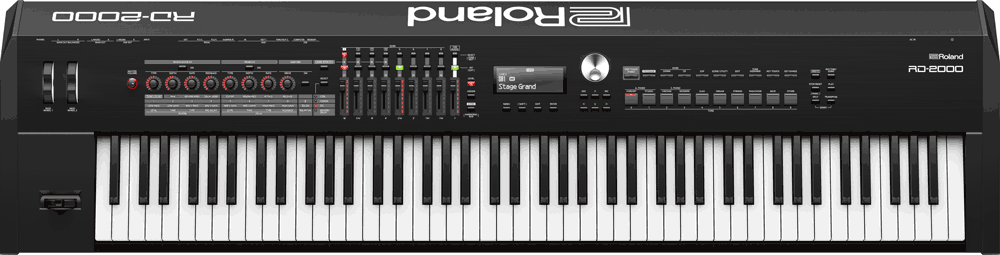
The construction quality of the RD2000 combined with the variety of voices, tones, effects, and functions in general, make it a very powerful digital piano ideal for those looking to make presentations and music production.
Features
The Roland RD2000 is a very versatile keyboard, offering features of a high-level digital piano, highlighting its 88-key wooden keyboard with ebony/Ivoryfeel system, connectivity, and a variety of tones. Below are the features of the RD2000:
- 88 Wooden keys with plastic coating, ebony/Ivoryfeel technology system (counterweight and pressure sensitivity)
- 2 independent Sound Generators
- Technology V Piano
- Super Natural Technology (Piano, E.Piano, and Clav)
- Virtual Tone Wheel and Sound Generator PCM
- polyphony complete in V system Piano and polyphony of 128 notes in SUPERnatural system.
- 1100 Tones
- 300 Programs
- FX modulation: 4 systems with 62 types
- 6 types of Reverb
- 4 systems and 6 types of tremolo/amp simulator
- 5 types of delay
- Sympathetic Resonance (only available for Supernatural piano)
- 3 Band Compressor
- 5-band Equalizer
- 200 patterns of rhythms
- 20 Controllers ( 8 Slider with illumination, 8 knobs with illumination 1 pitch bend and 2 modulation Wheel )
- 2-channel sound recording (24-bit processing, 192kHz, 96 KHz, 88.2 KHz, 48 KHz and 44.1 KHz sampling)
- 256×80 dots LCD screen.
- Output from ¼ L/Mono, R
- Output (L,R) type XLR
- Exit L,R from ¼
- Stereo entry ¼
- Input for damper pedal (FC1, FC2, EXT) and triple footswitch (DP-2, DP-10)
- MIDI connection ( IN, OUT1, THRU/OUT2)
- USB Type B for computer connectivity
- USB type A for memory
- ¼ input for headphones
- Power connector ( Consumption 23w)
The RD 2000 offers a great variety of functions, however, the functions are not the only thing to emphasize of this keyboard, the quality of construction and the versatility that offers are two factors to emphasize for those who are in search of a digital piano for musical production and live presentations.
Sound
I’m sure you’ll be interested in…
- Ranking with the best digital pianos in quality-price ratio
- The cheapest musical keyboards for beginners
- Learn piano by yourself and for free
The sound quality offered by the Roland RD 2000 is really impressive, the cleanliness and clarity that is able to emit this model, added to the complete polyphony gives very good results, although it is necessary to remember that to take advantage of the RD2000 is necessary to have a quality amplifier, since the digital piano does not have integrated speakers.
Below is a sound test of the RD 2000:
As you can appreciate the variety of sounds and the validity of the same is very good, the voices included in the video sound clean and clear, simulating the instrument they represent.
For those who are looking for a more complete demo, we include a 7-hour video showing all the sounds of the RD 2000.
Connectivity
In terms of connectivity the RD 2000 has absolutely everything you need, inputs and outputs from ¼, XLR inputs and outputs, MIDI, USB type A and type B, input for pedal and triple footswitch, output ¼ for headphones and stereo input from ¼.
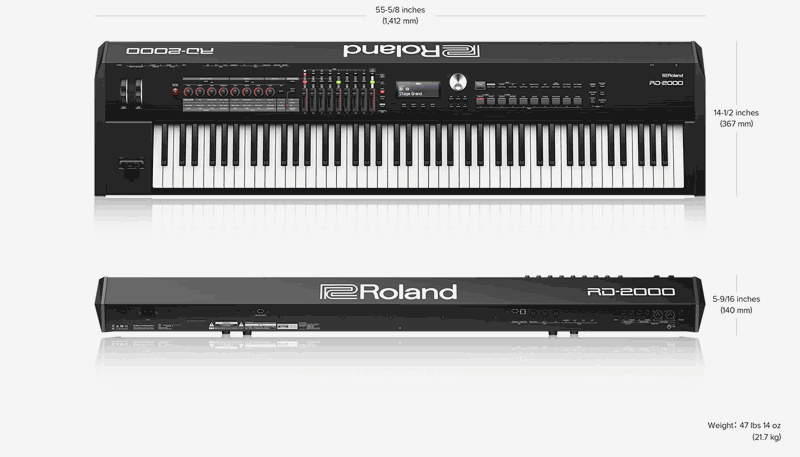
Considering that this digital piano is for advanced musicians who require connectivity focused on live performances and/or music production, Roland’s RD 2000 has everything you need to accomplish the job, with connectivity options to integrate virtually any required accessory.
Advantages and disadvantages of RD 2000
The advantages of this model are:
- 88 wooden, weighted, and pressure-sensitive keys.
- Construction and design
- Sound quality (especially piano voice)
- Ringtones
- Functions
- Connectivity
The disadvantages of this model are:
- No built-in speakers
- The complete polyphony is only available for the V Piano system.
- The balance is clearly positive for the Roland RD 2000, this model has great features that make it an option to consider within the digital stage pianos. The only disadvantages of this model are the lack of integrated loudspeakers and the polyphony (it only has complete polyphony for V Piano).
Where to buy Roland RD 2000
It will always be better to buy in an online store, however, you should check that the company guarantees adequate transportation and a good price. For a keyboard of this price the best option is by far at Europe the well-known Thomann but in America or Asia check Amazon, here we leave you the direct links:
For a similar price you have the following pianos and keyboards:
- YAMAHA PSR-A3000
- YAMAHA PSR S975
- YAMAHA PSR S970
- YAMAHA P-515
- YAMAHA MONTAGE 8
- YAMAHA GENOS
- YAMAHA CP40 STAGE
- YAMAHA CP4
- YAMAHA CP300
- YAMAHA CP1
- YAMAHA CLP 685
- WALDORF ZARENBOURG
- STUDIOLOGIC NUMA STAGE
- STUDIOLOGIC NUMA CONCERT
- STUDIOLOGIC NUMA COMPACT 2X
- STUDIOLOGIC NUMA COMPACT 2
- ROLAND RD 2000
- ROLAND KIYOLA KF-10
- NORD PIANO 3
- KORG SV1 88
- KORG SV1 73
- CRUMAR SEVEN
- CLAVIA NORD STAGE 3 HP76
- CLAVIA NORD STAGE 3 COMPACT
- CLAVIA NORD PIANO 4
- CLAVIA NORD ELECTRO 6D 73
- CLAVIA NORD ELECTRO 6D 61
- CLAVIA NORD ELECTRO 6
- NORD STAGE 3
Digital Piano Yamaha CP4 Full Review. Is it a good choice?
Where to Buy Yamaha CP4: Review and Opinion
Yamaha has a great option for those who are lovers of pianos and keyboards in search of having the best of both worlds in one instrument, the Yamaha CP4 is an option to review very closely.
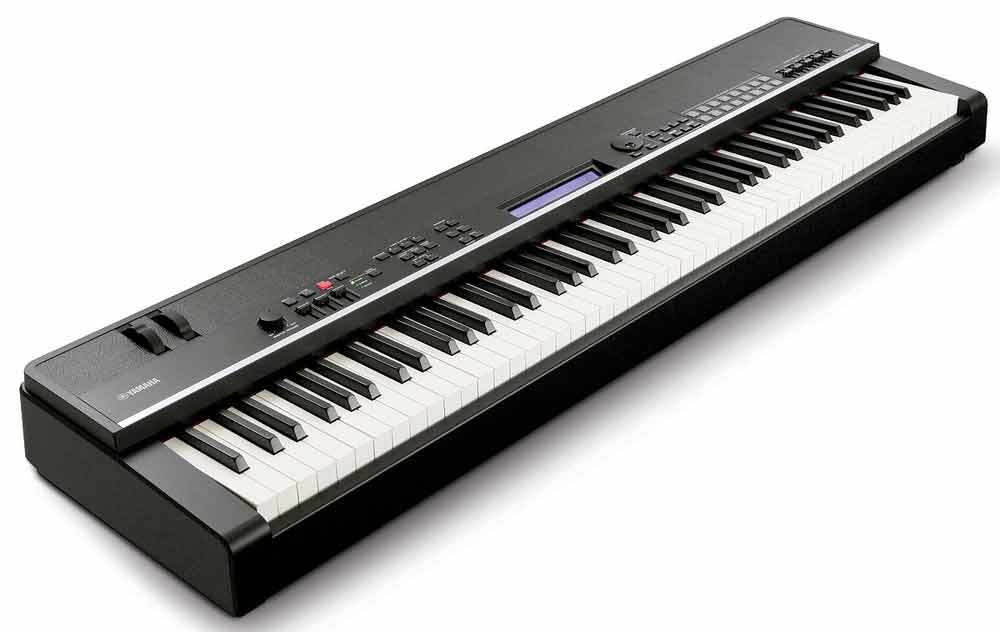
The CP4 is a high-quality digital piano, designed for live performances, its 88 weighted wooden keys and pressure sensitivity make it a very attractive option for any pianist, however, the CP4 is more than just a digital piano because it has functions focused on a musical production.
Features
The features of the Yamaha CP4 are quite complete and very interesting for both pianists and keyboardists, among the most prominent are its 88 wooden pressure-sensitive keys, 433 voices, and connectivity.
Where to Buy Yamaha CP4?
Amazon
- Free Shipping and the possibility of shipping in one day with Amazon Premium.
- Full Guarantee but they are no experts in music equipment
- A leader in fast shipments.
- The price change a lot daily.
- The best option in USA and ASIA
Thomann
- Free Shipping
- Full warranty. If you have any problems, they take care of everything.
- 100% reliable payment.
- A leader in trouble-free shipping.
- Usually Best Price.
- Best Reputation: They are the leading online store in Europe and have the best catalog and information.
The features are presented below:
- Keyboard with 88 keys made of wood (white keys) and plastic (black keys) with sensitivity to pressure and weight.
- 2-line monochrome backlit LCD display
- 433 Voices of which 45 voices dedicated to piano, 47 voices dedicated to electric pianos, and 341 voices of strings, organ, drums, etc. stand out.
- 128-note polyphony
- Effects: 11 types of reverb, 9 types of chorus, and 62 types of effects insertion.
- Audio Input (Stereo Mini Jack) – AUX
- Audio Outputs: 2 XLR, 2 TS 1 TRS outputs
- USB connectivity: 1 port type B and 1 port type A.
- Midi input and output with iOS connectivity (iMX-1 accessory required)
- Pedal port: 1 sustain pedal (FC3 pedal) and 2 controllers (FC5 and FC7 pedals) * No option for the triple pedal, although it is possible to purchase 3 separate pedals and configure them.
- Power supply : AC
- Electric consumption of 18w
- Dimensions 1.33 m x 16.1 cm x 35.2cm
- Weight 17.5kg
The quality of construction and design of the CP4 makes it an excellent choice within digital pianos, however, the approach presented by this model is entirely aimed at live presentations, the features of the Yamaha CP4 provide flexibility.
Sound
I’m sure you’ll be interested in…
- Ranking with the best digital pianos in quality-price ratio
- The cheapest musical keyboards for beginners
- Other Yamaha Digital Piano Reviews
- Learn piano by yourself and for free
The Yamaha CP4 doesn’t have built-in speakers, so it’s very important to consider that you need to connect an amplifier, mixer, or headphones in order for it to work.
The sound quality of the Yamaha CP4 is very good, despite its 128 polyphony notes, the CP4 provides great cleanliness and clarity, however, it is necessary to emphasize that to take advantage of the quality is necessary to purchase an amplifier or headphones at the height of CP4.
Below is a video with the sound quality of Yamaha CP4:
Connectivity
When it comes to connectivity, the Yamaha CP4 meets all requirements with audio input and output, 2 USB ports, MIDI and 3 pedal ports.

Practically CP4 has everything required for pianists and keyboardists who will perform live, some modern pianists may miss a Bluetooth connection, however, the connectivity offers great versatility, it is even possible to connect CP4 to any iOS device and use functions through the Yamaha application and applications from other developers.
Advantages and disadvantages of Yamaha CP4
The advantages of this model are:
88 weighted and velocity sensitivity keys
- White keys in wood
- Connectivity
- Variety of Voices
- Functions for a live presentation
- Weight
The disadvantages of this model are :
- The black keys are made of plastic
- The polyphony is 128 notes.
- No built-in speakers
- There is no option of a triple footswitch
The balance of the Yamaha CP4 is positive, as compared to focused keyboards for live performances with similar features, it is a lightweight keyboard (weighs 17.5kg), has the necessary connectivity, has 88 keys with weight and pressure sensitivity, wooden white keys, and variety of voices. Despite having black plastic keys, no built-in speakers, and only 128 polyphony notes, the CP4 is a very interesting option to consider for all pianists who want an instrument for live performances.
Yamaha CP4 vs Kawai MP7
Yamaha and Kawai have always competed with different keyboard models, CP4 and MP7 are no exception. The differences between the two models are presented below:
- Both models feature 88 pressure-sensitive, weighted wooden keys. However, the Yamaha has black plastic keys, while the Kawai has 88 wooden keys.
- Both models feature in-line audio input and output, auxiliary, USB port, MIDI, and pedal input, however:
- CP4 has special connectivity for iOS devices, allowing functions to be performed through applications.
- The MP7 has a triple footswitch option, while it does not have this option directly, as there is not a triple footswitch available for this model, however, allows you to connect 3 pedals and make custom configurations.
- The Yamaha CP4 has a lower sound quality, as it has only 128 polyphony notes, while the MP7 has 256.
- The MP7 has 256 voices, while the Yamaha has 433.
- The CP4 has 11 effects, while the MP7 has 129.
- Yamaha CP4 weighs 17.5kg and MP7 weighs 21kg.
As you can see in the comparison above the two models are very similar, the Yamaha CP4 is a very good alternative for those looking for a variety of voices and connectivity with iOS, however, the Kawai MP7 provides very good performance in terms of sound and construction quality.
Below is a video of the Kawai MP7:
Yamaha CP4 vs CP40
The CP4 and CP40 are two Yamaha models included in the music production line, the characteristics of both models are virtually identical, the differences are shown below:
- CP4 has 88 weighted keys, pressure sensitivity, and wood and plastic finish, while CP40 offers an 88-key keyboard with counterbalance pressure sensitivity and GH technology (different counterbalance for high and low keys).
- The CP40 has less quality in construction since the keyboard does not have wooden keys.
- Both models have a polyphony of 128 notes
- The variety of voices in CP4 is greater, with 433 voices, while CP40 has 297.
- The CP4 has balanced audio inputs and outputs, while the CP40 does not.
- The CP40 has only one pedal jack and 1 USB.
- Both models have the same dimensions since they were designed under the same mold, however, the weight of the CP40 is 1.2kg greater.
- The two models lack speakers, however, the power supply is different, the consumption of the CP4 is 18w, while the CP40 is 8w. The sound quality of both models is very similar, as Yamaha’s two options feature 128 polyphony notes.
Below is a video with the sound quality of the CP40:
The comparison of characteristics between the CP4 and the CP40 is very complicated, since they are practically identical, in spite of it we can notice that in this comparison the CP4 is a clear winner, since it counts on better quality of construction, a greater variety of functions, voices and better connectivity.
Yamaha CP4 vs Roland FP80
The CP4 and the Roland FP80 are two keyboards that can compete despite having a different approach, below are the important differences between the two models:
- Both models feature 88 pressure-sensitive and weighted keys, however, the CP4 has plastic and wood construction keys, giving the weight at keys in a natural way, while the Roland FP80 features ivory feel technology that simulates a piano counterweight.
- The polyphony of both models is 128 notes, however, it is necessary to highlight the quality of the piano voice of the Roland FP80.
- The CP4 has no built-in speakers, while the FP80 has 4 built-in speakers.
- The variety of voices in CP4 is greater, as it has 433 and FP80 has 353.
- The FP80 has an internal recorder, while the CP4 requires either the USB port or MIDI connectivity for recording.
- The CP4 has 3 inputs for pedals (no triple footswitch), the Roland FP80 has an input for pedal and within the accessories the triple footswitch is available.
- The power consumption of the Roland FP80 is higher, consuming 33w, while the CP4 consumes 18w.
- The weight of the FP80 is greater, as the keyboard weighs 23.8kg and 36.3kg with an integrated base, while the CP4 weighs 17.5kg.
Below is a video with the sound of the Roland FP80:
It is possible to say that Yamaha CP4 and Roland FP80 are tied in the evaluation since they are two high-quality keyboards with very similar characteristics, nevertheless, we can give the triumph to Roland for a keyboard focused on practice and study, while in keyboards with focus on music production and live presentations the triumph is for CP4.
Conclusion
Before choosing a keyboard you must make sure that you will be able to take advantage of its characteristics, to do so you must verify that the focus of the keyboard is similar to the use you will give to the instrument.
The CP4 is a very competitive option for all those who seek a keyboard with musical production functions but with sensitivity similar to a piano, Yamaha included a wide variety of voices, effects, rhythms, and musical production functions, making the CP4 a very attractive alternative.
If you are looking for an option other than Yamaha CP4 you can check out our guide to the best digital pianos and keyboards at a price/benefit ratio and there you will find a wide variety of options. If you’re looking for a cheaper keyboard you should take a look at our guide to cheaper keyboards.
Where to buy Yamaha CP4
Buying online will always be the best option, however, before you buy check that the store offers you an adequate way of transportation. In this case, the best store to buy the Yamaha CP4 is Thomann in Europe and at Asia or America the best is Amazon:
For a similar price you have the following pianos and keyboards:
- YAMAHA PSR-A3000
- YAMAHA PSR S975
- YAMAHA PSR S970
- YAMAHA P-515
- YAMAHA MX61
- YAMAHA MONTAGE 8
- YAMAHA GENOS
- YAMAHA CP40 STAGE
- YAMAHA CP4
- YAMAHA CP300
- YAMAHA CP1
- YAMAHA CLP 685
- WALDORF ZARENBOURG
- STUDIOLOGIC NUMA STAGE
- STUDIOLOGIC NUMA CONCERT
- STUDIOLOGIC NUMA COMPACT 2X
- STUDIOLOGIC NUMA COMPACT 2
- ROLAND RD 2000
- ROLAND KIYOLA KF-10
- NORD PIANO 3
- KORG SV1 88
- KORG SV1 73
- CRUMAR SEVEN
- CLAVIA NORD STAGE 3 HP76
- CLAVIA NORD STAGE 3 COMPACT
- CLAVIA NORD PIANO 4
- CLAVIA NORD ELECTRO 6D 73
- CLAVIA NORD ELECTRO 6D 61
- CLAVIA NORD ELECTRO 6
- ROLAND TB-3
- ROLAND SYSTEM-1
- NORD STAGE 3
Did you like this post?