
- Home
- Author's Archive:
Digital Piano Yamaha CP4 Full Review. Is it a good choice?
Where to Buy Yamaha CP4: Review and Opinion
Yamaha has a great option for those who are lovers of pianos and keyboards in search of having the best of both worlds in one instrument, the Yamaha CP4 is an option to review very closely.
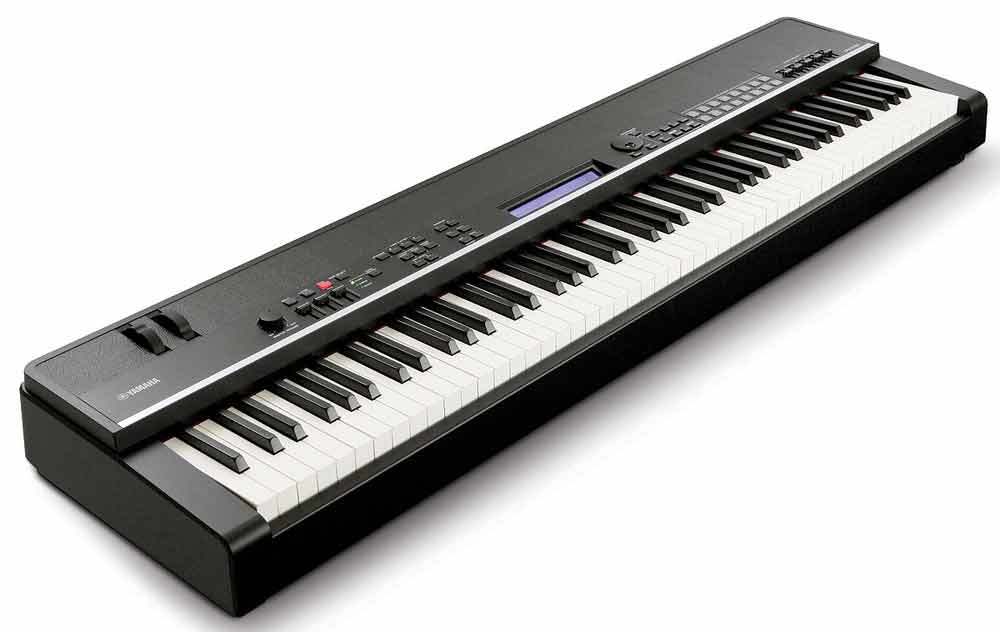
The CP4 is a high-quality digital piano, designed for live performances, its 88 weighted wooden keys and pressure sensitivity make it a very attractive option for any pianist, however, the CP4 is more than just a digital piano because it has functions focused on a musical production.
Features
The features of the Yamaha CP4 are quite complete and very interesting for both pianists and keyboardists, among the most prominent are its 88 wooden pressure-sensitive keys, 433 voices, and connectivity.
Where to Buy Yamaha CP4?
Amazon
- Free Shipping and the possibility of shipping in one day with Amazon Premium.
- Full Guarantee but they are no experts in music equipment
- A leader in fast shipments.
- The price change a lot daily.
- The best option in USA and ASIA
Thomann
- Free Shipping
- Full warranty. If you have any problems, they take care of everything.
- 100% reliable payment.
- A leader in trouble-free shipping.
- Usually Best Price.
- Best Reputation: They are the leading online store in Europe and have the best catalog and information.
The features are presented below:
- Keyboard with 88 keys made of wood (white keys) and plastic (black keys) with sensitivity to pressure and weight.
- 2-line monochrome backlit LCD display
- 433 Voices of which 45 voices dedicated to piano, 47 voices dedicated to electric pianos, and 341 voices of strings, organ, drums, etc. stand out.
- 128-note polyphony
- Effects: 11 types of reverb, 9 types of chorus, and 62 types of effects insertion.
- Audio Input (Stereo Mini Jack) – AUX
- Audio Outputs: 2 XLR, 2 TS 1 TRS outputs
- USB connectivity: 1 port type B and 1 port type A.
- Midi input and output with iOS connectivity (iMX-1 accessory required)
- Pedal port: 1 sustain pedal (FC3 pedal) and 2 controllers (FC5 and FC7 pedals) * No option for the triple pedal, although it is possible to purchase 3 separate pedals and configure them.
- Power supply : AC
- Electric consumption of 18w
- Dimensions 1.33 m x 16.1 cm x 35.2cm
- Weight 17.5kg
The quality of construction and design of the CP4 makes it an excellent choice within digital pianos, however, the approach presented by this model is entirely aimed at live presentations, the features of the Yamaha CP4 provide flexibility.
Sound
I’m sure you’ll be interested in…
- Ranking with the best digital pianos in quality-price ratio
- The cheapest musical keyboards for beginners
- Other Yamaha Digital Piano Reviews
- Learn piano by yourself and for free
The Yamaha CP4 doesn’t have built-in speakers, so it’s very important to consider that you need to connect an amplifier, mixer, or headphones in order for it to work.
The sound quality of the Yamaha CP4 is very good, despite its 128 polyphony notes, the CP4 provides great cleanliness and clarity, however, it is necessary to emphasize that to take advantage of the quality is necessary to purchase an amplifier or headphones at the height of CP4.
Below is a video with the sound quality of Yamaha CP4:
Connectivity
When it comes to connectivity, the Yamaha CP4 meets all requirements with audio input and output, 2 USB ports, MIDI and 3 pedal ports.

Practically CP4 has everything required for pianists and keyboardists who will perform live, some modern pianists may miss a Bluetooth connection, however, the connectivity offers great versatility, it is even possible to connect CP4 to any iOS device and use functions through the Yamaha application and applications from other developers.
Advantages and disadvantages of Yamaha CP4
The advantages of this model are:
88 weighted and velocity sensitivity keys
- White keys in wood
- Connectivity
- Variety of Voices
- Functions for a live presentation
- Weight
The disadvantages of this model are :
- The black keys are made of plastic
- The polyphony is 128 notes.
- No built-in speakers
- There is no option of a triple footswitch
The balance of the Yamaha CP4 is positive, as compared to focused keyboards for live performances with similar features, it is a lightweight keyboard (weighs 17.5kg), has the necessary connectivity, has 88 keys with weight and pressure sensitivity, wooden white keys, and variety of voices. Despite having black plastic keys, no built-in speakers, and only 128 polyphony notes, the CP4 is a very interesting option to consider for all pianists who want an instrument for live performances.
Yamaha CP4 vs Kawai MP7
Yamaha and Kawai have always competed with different keyboard models, CP4 and MP7 are no exception. The differences between the two models are presented below:
- Both models feature 88 pressure-sensitive, weighted wooden keys. However, the Yamaha has black plastic keys, while the Kawai has 88 wooden keys.
- Both models feature in-line audio input and output, auxiliary, USB port, MIDI, and pedal input, however:
- CP4 has special connectivity for iOS devices, allowing functions to be performed through applications.
- The MP7 has a triple footswitch option, while it does not have this option directly, as there is not a triple footswitch available for this model, however, allows you to connect 3 pedals and make custom configurations.
- The Yamaha CP4 has a lower sound quality, as it has only 128 polyphony notes, while the MP7 has 256.
- The MP7 has 256 voices, while the Yamaha has 433.
- The CP4 has 11 effects, while the MP7 has 129.
- Yamaha CP4 weighs 17.5kg and MP7 weighs 21kg.
As you can see in the comparison above the two models are very similar, the Yamaha CP4 is a very good alternative for those looking for a variety of voices and connectivity with iOS, however, the Kawai MP7 provides very good performance in terms of sound and construction quality.
Below is a video of the Kawai MP7:
Yamaha CP4 vs CP40
The CP4 and CP40 are two Yamaha models included in the music production line, the characteristics of both models are virtually identical, the differences are shown below:
- CP4 has 88 weighted keys, pressure sensitivity, and wood and plastic finish, while CP40 offers an 88-key keyboard with counterbalance pressure sensitivity and GH technology (different counterbalance for high and low keys).
- The CP40 has less quality in construction since the keyboard does not have wooden keys.
- Both models have a polyphony of 128 notes
- The variety of voices in CP4 is greater, with 433 voices, while CP40 has 297.
- The CP4 has balanced audio inputs and outputs, while the CP40 does not.
- The CP40 has only one pedal jack and 1 USB.
- Both models have the same dimensions since they were designed under the same mold, however, the weight of the CP40 is 1.2kg greater.
- The two models lack speakers, however, the power supply is different, the consumption of the CP4 is 18w, while the CP40 is 8w. The sound quality of both models is very similar, as Yamaha’s two options feature 128 polyphony notes.
Below is a video with the sound quality of the CP40:
The comparison of characteristics between the CP4 and the CP40 is very complicated, since they are practically identical, in spite of it we can notice that in this comparison the CP4 is a clear winner, since it counts on better quality of construction, a greater variety of functions, voices and better connectivity.
Yamaha CP4 vs Roland FP80
The CP4 and the Roland FP80 are two keyboards that can compete despite having a different approach, below are the important differences between the two models:
- Both models feature 88 pressure-sensitive and weighted keys, however, the CP4 has plastic and wood construction keys, giving the weight at keys in a natural way, while the Roland FP80 features ivory feel technology that simulates a piano counterweight.
- The polyphony of both models is 128 notes, however, it is necessary to highlight the quality of the piano voice of the Roland FP80.
- The CP4 has no built-in speakers, while the FP80 has 4 built-in speakers.
- The variety of voices in CP4 is greater, as it has 433 and FP80 has 353.
- The FP80 has an internal recorder, while the CP4 requires either the USB port or MIDI connectivity for recording.
- The CP4 has 3 inputs for pedals (no triple footswitch), the Roland FP80 has an input for pedal and within the accessories the triple footswitch is available.
- The power consumption of the Roland FP80 is higher, consuming 33w, while the CP4 consumes 18w.
- The weight of the FP80 is greater, as the keyboard weighs 23.8kg and 36.3kg with an integrated base, while the CP4 weighs 17.5kg.
Below is a video with the sound of the Roland FP80:
It is possible to say that Yamaha CP4 and Roland FP80 are tied in the evaluation since they are two high-quality keyboards with very similar characteristics, nevertheless, we can give the triumph to Roland for a keyboard focused on practice and study, while in keyboards with focus on music production and live presentations the triumph is for CP4.
Conclusion
Before choosing a keyboard you must make sure that you will be able to take advantage of its characteristics, to do so you must verify that the focus of the keyboard is similar to the use you will give to the instrument.
The CP4 is a very competitive option for all those who seek a keyboard with musical production functions but with sensitivity similar to a piano, Yamaha included a wide variety of voices, effects, rhythms, and musical production functions, making the CP4 a very attractive alternative.
If you are looking for an option other than Yamaha CP4 you can check out our guide to the best digital pianos and keyboards at a price/benefit ratio and there you will find a wide variety of options. If you’re looking for a cheaper keyboard you should take a look at our guide to cheaper keyboards.
Where to buy Yamaha CP4
Buying online will always be the best option, however, before you buy check that the store offers you an adequate way of transportation. In this case, the best store to buy the Yamaha CP4 is Thomann in Europe and at Asia or America the best is Amazon:
For a similar price you have the following pianos and keyboards:
- YAMAHA PSR-A3000
- YAMAHA PSR S975
- YAMAHA PSR S970
- YAMAHA P-515
- YAMAHA MX61
- YAMAHA MONTAGE 8
- YAMAHA GENOS
- YAMAHA CP40 STAGE
- YAMAHA CP4
- YAMAHA CP300
- YAMAHA CP1
- YAMAHA CLP 685
- WALDORF ZARENBOURG
- STUDIOLOGIC NUMA STAGE
- STUDIOLOGIC NUMA CONCERT
- STUDIOLOGIC NUMA COMPACT 2X
- STUDIOLOGIC NUMA COMPACT 2
- ROLAND RD 2000
- ROLAND KIYOLA KF-10
- NORD PIANO 3
- KORG SV1 88
- KORG SV1 73
- CRUMAR SEVEN
- CLAVIA NORD STAGE 3 HP76
- CLAVIA NORD STAGE 3 COMPACT
- CLAVIA NORD PIANO 4
- CLAVIA NORD ELECTRO 6D 73
- CLAVIA NORD ELECTRO 6D 61
- CLAVIA NORD ELECTRO 6
- ROLAND TB-3
- ROLAND SYSTEM-1
- NORD STAGE 3
Did you like this post?
Digital Piano Kawai MP7 Full Review. Is it worth it?
Buy Kawai MP7: Review and Opinion
Kawai has always been known for designing high quality instruments with specialized functions, the MP7 is no exception to this rule.

Kawai has always been known for designing high quality instruments with specialized functions, the MP7 is no exception to this rule.
Where to Buy Kawai MP7?
Amazon
- Free Shipping and possibility of shipping in one day with Amazon Premium.
- Full Guarantee but they are no experts in music equipment
- Leader in fast shipments.
- Price that change a lot daily.
- The best option in USA and ASIA
Thomann
- Free Shipping
- Full warranty. If you have any problems, they take care of everything.
- 100% reliable payment.
- Leader in trouble-free shipping.
- Usually best price.
- Best Reputation: They are the leading online store in Europe and have the best catalogue and information.
Features
The MP7 has a great diversity of very interesting features for pianists and keyboardists, among the most outstanding are its 88 keys with pressure sensitivity and weighted keys, connectivity and 256 polyphony notes.
Features:
- Keyboard with 88 weighted keys with Ivory Touch and Responsive Hammer 2 technology (dual exhaust system)
- 256 Notes from polyphony
- Harmonic Imaging sound source with 88 sample keys
- 256 Voices including: 32 Piano Voices, 32 Organo Voices, 32 E. Piano Voices, 32 String Voices and
- 128 additional voices.
- 6 Reverb Settings ( Longue , Room, Small Hall , Concert Hall, Cathedral and Live Hall)
- 129 Effects with 10 Parameters
- 4 Zones : Main, Sub1, 2 and 3.
- Amplifier Simulator for main zone
- 4 Band Equalizer
- Metronome ( 1/4 , 2/4, ¾, 4/4 5/4, 3/8, 7/8 and 12/8)
- Recorder for 10 songs with functions to convert to audio and export.
- Internal memory (256 sound memories and 256 configuration memories)
- USB with functions for uploading and saving files
- 52 parameters and functions
- 128x64pixel illuminated LCD display
- Entrance and exit ¼ with L/mono R)
- Midi input and output with USB host and USB to Device
- Input for Damper pedal (F-10H) and triple footswitch (F-30)
- Power Supply Form : AC
- Consumption of 20 W
- Dimensions: 1.35m x 33.9 cm x 17.1 cm
- Wood and Metal Construction
- Weight: 21kg
It is very important to highlight the quality of the construction of the Kawai MP7, because unlike other models, this keyboard incorporates wood and metal within the materials used, in addition the characteristics of the keyboard make it a solid choice for those who make live presentations.
Sound
It is vital to know that the Kawai MP7 does not have built-in speakers, so it is necessary to connect an amplifier, mixer or headphones to work.
The sound quality of the Kawai MP7 is very high because it has 256 polyphony notes, however, in order to highlight the sound and take advantage of the cleanliness, clarity and quality it will be necessary to have headphones or amplifier of the same quality.
Below is a video with the sound quality of the Kawai MP7:
Connectivity
The Kawai MP7 is a highly equipped keyboard for live performances, with ¼ input and output, USB port and 4 inputs for pedals (damper pedals, soft and triple footswitch).

Perhaps some modern keyboard players may miss bluetooth, however, bluetooth is generally unnecessary for live performances, and Kawai incorporates various functions via USB, such as connectivity to mobile devices and the ability to import and export recordings. Within the connectivity to emphasize are the options of sound, since it allows to connect amplifier in stereo mode.
Advantages and Disadvantages of the Kawai MP7
The advantages of this model are:
- 88 weighted and pressure sensitive keys
- Sound Quality (256 polyphony notes)
- Connectivity
- Functions for live presentations.
- Functions for music production
- Quality in construction and design
- Personalization
The disadvantages of this model are:
- Weight of 21kg
- No built-in speakers
The scale is fully inclined to the advantages of the Kawai MP7, as it is a professional-grade keyboard with an all-round approach aimed at musicians who perform live and require a variety of music production functions. The quality of design and construction of the MP7 is one of the advantages to highlight, however, this model really has everything you need to make live presentations. It is difficult to find disadvantages in the MP7, however, you could consider the weight and lack of built-in speakers, although for those who are used to using their keyboard with amplifier will not be a big problem.
Kawai MP7 vs Kawai ES8
The Japanese brand, has different options that can compete, the case of the MP7 and the ES8 are two keyboards to consider for those pianists who want to play live. The differences between the two models are presented below:
- The Kawai MP7 has 88 keys with weight and pressure sensitivity using Responsive
- Hammer II technology, while the ES8 has 88 pressure sensitive keys and Responsive Hammer III technology.
- The ES8 has 10 voices dedicated to piano and 24 additional voices, while the MP7 has 256 voices.
- Both models feature 256-note polyphony and a ¼ L/R input and output.
- A clear advantage of the ES8 is that it has 2 speakers of 15 watts each, while the MP7 does not have built-in speakers.
- The size and weight of both models is very similar since the dimensions of the MP7 are: 1.35m x 33.9 cm x 17.1 cm and has a weight of 21kg, while the ES8 measures: 1.36m x 36.1cm x 14.9cm with a weight of 22.5kg.
Despite the differences between the MP7 and the ES8, these two models really have very similar features, however, the MP7 is a clear winner, as the only clear advantage of the ES8 are the two integrated speakers. Among the advantages of the MP7 are the 88 keys with weight, more voices and less weight.
The sound quality of the ES8 is presented below:
Kawai MP7 vs Kawai MP11
MP7 and MP11 are two Kawai models focused on music production and live performances, however, despite the similarities these two models have some differences to consider:
- The MP7 has 88 weighted and pressure-sensitive keys, while the MP11 has 88 ivory-finished, weighted and pressure-sensitive keys.
- The MP7 approach is more versatile as it has 256 Voices, while the MP11 has 40 Voices (mainly focused on piano).
- MP7 has a larger internal memory (256 sound memories and 256 configuration memories), MP11 has only 40 sound memories and 208 configuration memories.
- The MP11 has a larger size, as it measures: 1.38m x 45.3cm x 18.8cm, while the dimensions of the
- MP7 are: 1.35m x 33.9 cm x 17.1 cm.
- The MP7 weighs 11.5 kg less.
Actually the MP7 and MP11 are two very similar keyboards, in terms of quality of construction the MP11 is a clear winner, as it has ivory keys, however, if we focus on music production the MP7 is more versatile because it has a greater variety of voices.
Below is a video with the sound quality of the Kawai MP11:
Kawai MP7 vs Yamaha CP4
The two Japanese brands have always competed with different keyboard models, the MP7 and CP4 are no exception. The differences between the two models are presented below:
- Both models feature 88 pressure-sensitive, weighted wooden keys. However, the Yamaha has black plastic keys, while the Kawai has 88 wooden keys.The Yamaha CP4 has a lower sound quality, as it has only 128 polyphony notes, while the MP7 has 256.
- The MP7 has 256 voices, while the Yamaha has 433.
- The CP4 has 11 effects, while the MP7 has 129.
- Yamaha CP4 weighs 17.5kg and MP7 weighs 21kg.
As can be seen in the comparison above the two models are very similar, the Yamaha CP4 is a very good alternative for those seeking a wide variety of voices, however, the Kawai MP7 is a clear winner because it has a higher sound quality and the keyboard has better quality materials.
Conclusions
If you are looking for a high quality keyboard for live performances you should definitely consider the Kawai MP7 as one of the best options available on the market.
The MP7 has everything you need for music production and live performances, the quality of the keyboard is really good in every respect, the metal and wood construction is very solid and designed to give a piano like feel. The sound is of high quality, since it counts on polyphony of 256 notes and in matters of connectivity it has everything necessary.
If you are looking for an option other than MP7 you can search our guide of the best keyboards price / benefit ratio, if on the other hand you are looking for a cheap keyboard visit our guide of the cheapest keyboards.
Where to buy the Kawai MP7
It will always be a better option for price to make your purchases online, but it is necessary to make sure you place your order in a store that offers you the proper transportation and the best conditions of purchase. To buy the Kawai MP7 the best option in Europe is Thomann but in Asia and United States the best is Amazon:
For a similar price you have the following pianos and keyboards:
- KORG GRANDSTAGE 73
- KORG G1 AIR
- KORG EK-50
- KORG D1
- KORG C1 AIR
- KORG B1SP
- KAWAI MP-11
- HEMINGWAY DP-201 MKII
- DEXIBELL VIVO STAGE S-9
- DEXIBELL VIVO STAGE S-7
- DEXIBELL VIVO STAGE S-3
- DEXIBELL VIVO STAGE S-1
- DEXIBELL VIVO PORTABLE P-7
- DEXIBELL VIVO PORTABLE P-3
- BEHRINGER DEEPMIND 12
- ALESIS RECITAL PRO
Did you like this article?
Digital Piano Roland Go Piano Full Review. Is it a good option?
Roland Go Piano: Review and Opinion
For those who would like to take their piano everywhere, Roland has the solution: Go Piano is a portable keyboard with 61 pressure-sensitive keys, totally focused on those who want to take their piano on the road.

The Go Piano focuses on imitating a piano, adding the benefit of portability, since with its 3.9 Kg. and the possibility of using AA batteries, it is an excellent choice for those who would like to take their piano everywhere.
Where to Buy the Roland Go Piano?
Amazon
- Free Shipping and the possibility of shipping in one day with Amazon Premium.
- Full Guarantee but they are no experts in music equipment
- A leader in fast shipments.
- The price change a lot daily.
- The best option in USA and ASIA
Thomann
- Free Shipping
- Full warranty. If you have any problems, they take care of everything.
- 100% reliable payment.
- A leader in trouble-free shipping.
- Usually the best price.
- Best Reputation: They are the leading online store in Europe and have the best catalog and information.
Features
The Roland Go Piano has a simple design and great portability, has 61 pressure-sensitive keys, can be used with 6 AA batteries, and sustain pedal input. Features:
- 61 Pressure-sensitive keys with Ivory-Feel technology (3 types of sensitivity) and Box-Shape. (Responsive key system without weighted keys)
- 128-note polyphony
- 40 Tones (10 Piano, 7 Organo, 7 E.Piano, 16 Various Tones (including a drum kit and drums))
- Effects (Chorus, Reverb with adjustable levels and other effects)
- Metronome
- Recorder with capacity for 99 songs of up to 30,000 notes each.
- Monochrome LCD screen
- 2 Speakers 2.5w
- Auxiliary Input (Stereo)
- Headphone jack 3.5mm
- Input for sustain pedal (DP series pedal)
- USB Input Type B (MIDI)
- Bluetooth connectivity
- Connectivity to Roland Applications for music studio and production
Option of use with 6 AA batteries (approximate duration 6 hours)Measurements : 87.7cm x 27.1cm x 8.2xm (without lectern) Weight : 3.9 Kg.Roland’s Go Piano is a keyboard with everything indispensable for any keyboardist or pianist, it is an ideal keyboard to use as a travel instrument or simply learn to play the piano.
Sound
I’m sure you’ll be interested in…
- See this section for possible discounts and offers
- Ranking with the best digital pianos in quality-price ratio
- The cheapest musical keyboards for beginners
- Learn piano by yourself and for free
Sound has always been one of Roland’s strengths and the Go Piano is no exception to the rule as it has 2 speakers of 2.5w each and a polyphony of 128 notes, presenting a high-quality sound. Below is a video where you can appreciate the sound of the Roland Piano Go:
The following video shows a demo of Andrea Girbaudo using a Roland Go Piano:
As you can see in the previous videos the clean and clear sound of the Roland Go Piano is quite good and the piano voice has a very similar sound to an acoustic piano, surpassing most keyboards that compete at the same price range.
Connectivity
Roland’s Go Piano has the connectivity to solve virtually any situation. The USB port, Bluetooth connectivity and sustain pedal input must be mentioned, although this Roland model also has a headphone input and an auxiliary, ideal for connecting to an amplifier.

The connectivity of the Go Piano is more than enough for a pianist who wants to do some music recording, however, it might not be enough for those looking for a keyboard to do music production.
Advantages and disadvantages of the Roland Go Piano
The advantages of this model are:
- Sound quality
- Portability and weight
- Pressure-sensitive keys with speed system
- Connectivity (Bluetooth, USB, sustain pedal input, auxiliary input, etc.)
- Can be used with 6 AA batteries (maximum 6 hours)
- Sound Recorder
- 40 voices
- Roland learning and study system (connection with applications to improve the learning and/or study process)
Disadvantages of this model are:
- Non-weighted keys
- 61 Keys of 88 that has a piano
- Basic music production functions
The balance of the Go Piano is totally positive since it is a keyboard that offers great benefits for a reasonable price, the quality of the sound and the portability of this model are two main qualities, although there is no need to leave connectivity behind. Roland’s Go Piano is a truly competitive keyboard aimed at pianists who want to have a traveling instrument, however, it is a great choice for those who want to learn to play piano and invest in a quality keyboard for a low price.
Roland Go Piano vs Yamaha NP12
The Go Piano and the Yamaha NP12 are two competitors with very similar characteristics and prices since both have an approach to portability, below are the differences and similarities between both models:
Both models have 61 touch-sensitive keys and no weighted keys, but the Ivory Feel technology and Box-shape keys included in Roland’s Go Piano produces a more realistic piano feel.
- The Go Piano has 128 polyphony notes while the NP12 has 64 polyphony notes.
- The NP12 has only 10 voices while the Go Piano has 40 voices.
- Both models have an integrated recorder, however, the Go Piano allows 99 songs to be stored, while the NP12 only allows 1.
- Both models have an option for a sustain pedal, USB, and headset input.
- The Roland has Bluetooth connectivity, auxiliary input, and a lesson system via the iOS application.
- The Roland has a black and white LCD screen, while the Yamaha has no screen.
- Both models can be used with AA batteries, the Roland Go Piano has an average battery life of 6 hours, while the Yamaha NP12 has a maximum battery life of 16 hours.
- The Go Piano weighs 3.9kg and the NP 12 weighs 4.5 Kg.
The NP12 is slightly larger than the Go Piano, as the NP12 has the following dimensions 103.5cm x 10.5cm x 25.9 cm, while Go Piano 87.7cm x 27.1cm x 8.2cm.
The clear winner in this comparison is the Roland Go Piano, because the only point against is the duration of the batteries, showing a duration of 6 hours against 16 of NP12 (data collected on the official websites of Roland and Yamaha respectively), however, the Go Piano is far superior because it has better keyboard technology, better sound quality, more complete connectivity, smaller dimensions, and weight and has a more powerful recorder.
Below is a video of Yamaha NP12 Sound:
If you want more information about this model, you can visit our review of the Yamaha NP12.
Conclusion
If you need a digital piano to play wherever you want the Roland Go Piano is one of the best options available.
The Go Piano is a keyboard aimed at novice and expert pianists who want portability has everything you need in terms of connectivity and great sound quality. Despite having 61 keys without counterweight, it has pressure sensitivity and a keyboard speed system that generates a good key response.
It is necessary to consider that the Go Piano is totally ideal for someone who wants to travel and play the piano, however, if you want a keyboard for music production or more functions you may want to take a look at our guide to the best digital pianos and keyboards in price and benefit ratio, still, if you are looking for a keyboard at a lower price, you can review our guide to cheap keyboards.
Where to buy the Roland Go Piano
The Internet will always be the best option to buy, however, it is important to choose a store that is able to guarantee you the correct transport and the best conditions of purchase. At America check Amazon. At Europe check Thomann:
For a similar price you have the following pianos and keyboards:
- YAMAHA PSR-EW300
- YAMAHA PSR-E263
- YAMAHA PSR-A350
- YAMAHA PSR F51
- YAMAHA PSR F50
- YAMAHA PSR EW400
- YAMAHA PSR E363
- YAMAHA PSR E353
- YAMAHA PSR E253
- YAMAHA NP-32 PIAGGERO
- YAMAHA EZ 220
- YAMAHA PSR EW410
- STARTONE MKR 61
- STARTONE MK-300
- STARTONE MK-200
- KORG TINY PIANO
- CASIO SA78
- CASIO SA 77
- CASIO SA 76
- CASIO SA 47
- CASIO SA 46
- CASIO LK-280
- CASIO LK-265
- CASIO LK-135
- CASIO CTK-2500
- CASIO CTK-240
- CASIO CTK 7200
- CASIO CTK 4400
- CASIO CTK 3500
- CASIO CTK 2200
- CASIO CTK 1500
- YAMAHA NP12
- CASIO CTK1300
- CASIO CTK 6200
- CASIO CTK 3200
Did you like this article?