
- Home
- Author's Archive:
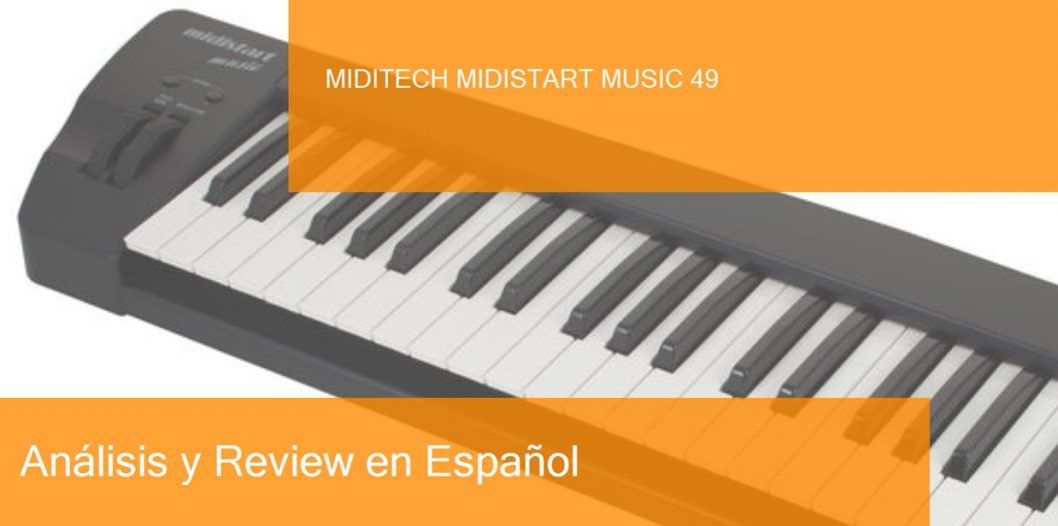
Review MIDI keyboard Miditech Midistart Music 49. Where to buy it?
I’ll tell you how this post is built. First I list the features of the Miditech Midistart Music 49 keyboard. Then you have a video or two, purchase links and useful comments from other users and then you have one of the most useful parts; comparison tables with similar keyboards so you can compare.
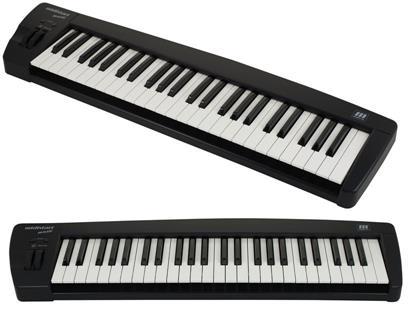
- With 49 large tips with velocity sensitivity (You can adjust the volume of the note depending on how you press it. And it’s different from the weighted hammer action, which is the weight of the keys on a piano.)
- pitch bend (Functionality that changes the sound wave of what you play and then returns to its original state) and modulation
- +/- Octave secrets
- midi (MIDI allows you to do such wonderful things as connect the keyboard to the computer, record a soundtrack and with certain programs pass with a click what you have played to musical notes in a score. MIDI tracks store information from musical notes) output
- USB connector
- Incl. USB cable, Magix Samplitude SE and Poizone computer software synth
Now that we’ve seen the features of this keyboard Miditech Midistart Music 49 watch these related videos to learn more.
Post you may be interested in
- Ranking with the best midi keyboards
- My selection of cheap midi keyboards.
- Best MIDI Software to work with.
- MIDI Basic Guide.
- Midi Keyboards by Brand.
Some comments from people who come to the forum about this model:
Comment:
As it’s my first Keyboard, I can’t give a technical feedback. For their price, I would recommend it for all of us who would like to begin playing a keyboard. Pitch Bend, Octave -/+ and Modulation works with no configuration that is extra my VST in Ableton (presently tested just on ReDominator and KORG M1).
Comment:
its my first midi keyboard so when I am very little of an keyboard/piano player either, therefore didn’t have very particular expectations. Feels pretty well for me, playing the drum that is midi with this particular plus some history synths. Can recommend it warmly. Therefore the size (range secrets) can also be convenient for my purposes.
Miditech Midistart Music 49 vs Akai MPK mini Mk2
The keyboard Miditech Midistart Music 49is usually 12 € cheaper than Akai MPK mini Mk2, but the difference is so small that this can vary..
And then a video of the keyboard
|
Miditech Midistart Music 49 |
Akai MPK mini Mk2 |
|---|---|
|
|
And then a video of the keyboardAkai MPK mini Mk2
If you want to know more about this option, click on the following link to see the Akai MPK mini Mk2 review
Miditech Midistart Music 49 vs Akai LPK 25
The keyboard Miditech Midistart Music 49 is usually 32 € more expensive than Akai LPK 25, but the difference is so small that this can vary..
And then a video of the keyboard
|
Miditech Midistart Music 49 |
Akai LPK 25 |
|---|---|
|
|
And then a video of the keyboardAkai LPK 25
If you want to know more about this option, click on the following link to see the Akai LPK 25 review
Miditech Midistart Music 49 vs Swissonic EasyKey 49
The keyboard Miditech Midistart Music 49 is usually 7 € more expensive than Swissonic EasyKey 49, but the difference is so small that this can vary..
And then a video of the keyboard
|
Miditech Midistart Music 49 |
Swissonic EasyKey 49 |
|---|---|
|
|
And then a video of the keyboardSwissonic EasyKey 49
If you want to know more about this option, click on the following link to see the Swissonic EasyKey 49 review
Miditech Midistart Music 49 vs Arturia Keystep
The keyboard Miditech Midistart Music 49is usually 35 € cheaper than Arturia Keystep, but the difference is so small that this can vary..
And then a video of the keyboard
|
Miditech Midistart Music 49 |
Arturia Keystep |
|---|---|
|
|
And then a video of the keyboardArturia Keystep
If you want to know more about this option, click on the following link to see the Arturia Keystep review
Where to buy the keyboard Miditech Midistart Music 49
Thomann
- Free Shipping.
- Full warranty. If you have any problems, they take care of everything.
- 100% reliable payment.
- Leader in trouble-free shipping.
- Usually Best price.
- Best Reputation: They are the leading online store in Europe and have the best catalogue and information.
Amazon
- Free Shipping and possibility of shipping in one day with Amazon Premium.
- Full Guarantee but they are no experts in music equipment.
- Sometimes better price.
- He’s got worse stock than Thomann.
Also look at these models with a similar price and features:
- Novation Launchkey Mini MK3
- Akai MPK mini Mk2
- Akai MPK miniplay
- Roli Lightpad Block M Studio Ed.
- Arturia MiniLab MKII
- Roli Beatmaker Kit
- Novation Impulse 25
- Akai MPK mini MK2 white
- Alesis V25
- CME Xkey Air 25
- IK Multimedia iRig Keys I/O 25
- Akai APC Keys 25
- Akai LPK 25
- M-Audio Code 25 black
- Native Instruments Komplete Kontrol A25
- Novation Launchkey Mini MK2
- Alesis V mini
- Arturia MicroLab Black
- Akai LPK 25 wireless
- Akai MPK mini Limited Black
- Arturia MiniLab MKII Inverted Edition
- M-Audio Oxygen 25 Mk4
- Korg nanoKEY Studio
- Swissonic EasyKey 25
- Korg nanoKEY 2 black
- Korg nanoKEY 2 Limited Orange
- Korg nanoKEY 2 Limited Blue
- Akai MPK mini MK2 white – AIEP3 Bdl
- Nektar Impact LX25+
- Novation Launchkey 25 MK2
- Alesis Q25
- Akai MPK 225
- Korg microKEY 25
- Miditech Midistart Music 25
- Alesis VI25
- Korg nanoKEY 2 white
- Arturia MicroLab Blue
- Nektar SE25
- Korg microKEY Air 25
- IK Multimedia iRig Keys 25
- Midiplus X2 mini
- Icon iKeyboard 3X
- Keith McMillen K-Board
- CME Xkey 25 silver
- Native Instruments Komplete Kontrol M32
- Alesis V49
- Arturia Keystep Black Edition
- Swissonic EasyKey 49
- Arturia Keystep
- Arturia KeyLab Essential 49
- Nektar Impact LX49+
- M-Audio Code 49 Black
- IK Multimedia iRig Keys 2 Pro
- M-Audio Keystation 49 MK3
- M-Audio Keystation Mini 32 MK3
- Novation Impulse 49
- Nektar Impact GX 49
- Novation Launchkey 49 Mk2
- Native Instruments Komplete Kontrol A49
- M-Audio Oxygen 49 Mk4
- Alesis Q49 Keyboard Controller
- Roland A-300 Pro
- IK Multimedia iRig Keys I/O 49
- Alesis VI49
- Midiplus AK490
- Alesis Vortex Wireless 2
- M-Audio Axiom Air Mini 32
- Alesis Vortex Wireless 2 Red
- IK Multimedia iRig Keys 37 Pro
- Arturia KeyLab Essential 49 BE
- Haken Audio Continuum Half Size
- CME Xkey 37 LE
- IK Multimedia iRig Keys Pro
- Korg microKEY 49 MkII
- IK Multimedia iRig Keys 2
- Miditech Midistart Music 49
- Roland A-49 Black
- Korg microKEY 37 MkII
- Swissonic ControlKey 49
- Roland A-500 PRO
- Nektar SE49
- Korg microKEY Air 37
- Korg microKEY Air 49
- Roland A-49 White
- Nektar Panorama T4
- Miditech Garagekey mini
- Miditech Minicontrol-32
- Midiplus X3 mini
- Miditech i2-Control 37 Black
- Icon iKeyboard 4X
- Miditech i2-mini 32
- Midiplus X4 mini
- Miditech i2-mini 32 Bluetooth
- Icon iKeyboard 5X
- Acorn Masterkey 49
- M-Audio Code 61 Black
- Arturia KeyLab Essential 61
- Nektar Impact GX 61
- M-Audio Keystation 61 MK3
- Alesis V61
- Native Instruments Komplete Kontrol A61
- Swissonic EasyKey 61
- M-Audio Oxygen 61 Mk4
- Roland A-800 Pro
- Korg microKEY Air 61
- GSi DMC-122
- Nektar Impact LX61+
- Alesis VI61
- Novation Launchkey 61 MK2
- Icon iKeyboard 6X
- Acorn Masterkey 61
- Miditech i2-61 Black Edition
- Midiplus X6 mini
- Korg microKEY 61 MkII
- Midiplus X-6 II
- Viscount Physis Piano K5 EX
- M-Audio Keystation 88 MkII
- Kawai VPC1
- Doepfer LMK2+ 88 GH
- Doepfer LMK4+ 88 GH black
- Swissonic ControlKey 88
- Viscount Physis Piano K4 EX
- Doepfer LMK4+ 88 GH grey
- Nektar Impact LX88+
- Haken Audio Continuum Full Size
- Midiplus Stage 88
- Studiologic Numa Concert
- Icon iKeyboard 8X
- Doepfer LMK2+ 88 GH without Case
- Midiplus X-8 II
- Doepfer LMK4+ 88 GH GR without Case
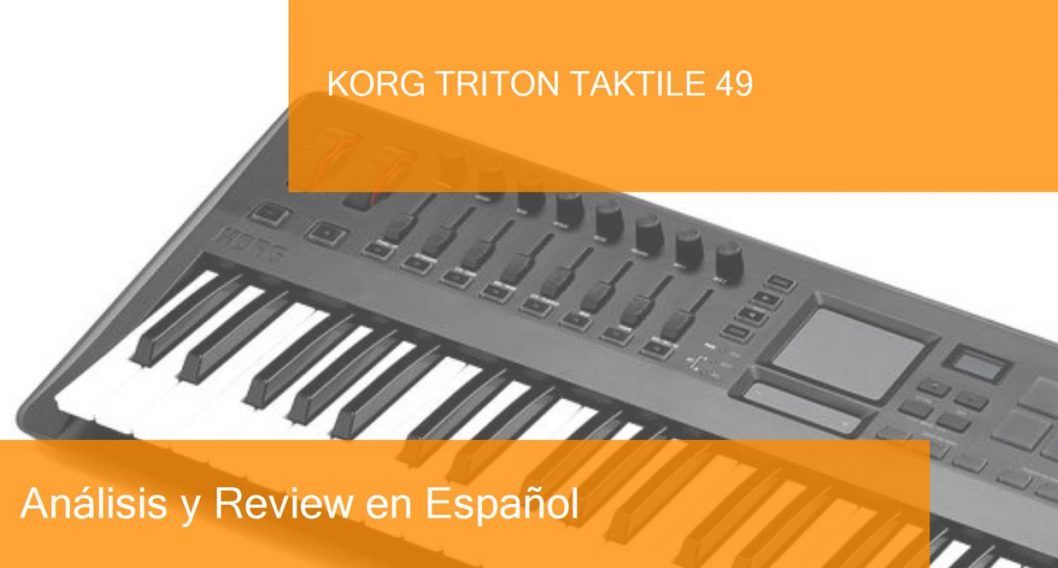
Review MIDI keyboard Korg Triton taktile 49. Where to buy it?
Korg Inc, founded as Keio Electronic Laboratories, is a Japanese multinational corporation that manufactures electronic musical instruments, audio processors and guitar pedals, recording equipment, and electronic tuners. I’ll tell you how this post is built. First I list the features of this Korg Triton taktile 49 keyboard. Then you have a video or two, purchase links and useful comments from other users and then you have one of the most useful parts; comparison tables with similar keyboards so you can compare.
- 512 TRITON Classic Series Preset Sounds
- 49 keys (sensitive semi-weighted)
- PCM sound generator
- Polyphony of max. 80 voices
- Arpeggiator with 6 types
- 50 Rhythm Patterns
- 16 Pads with dynamic sensitivity
- 8 buttons
- 8 Fader
- DAW transport button
- Pitchbend wheel and free allocation wheel
- Touchpad
- OEL screen
- USB connections, floor-mounted pedal and footswitch
- MIDI-Out
- Stereo minijack line output
- Dimensions: 750 x 290 x 83 mm
- Weight: 3.8 kg
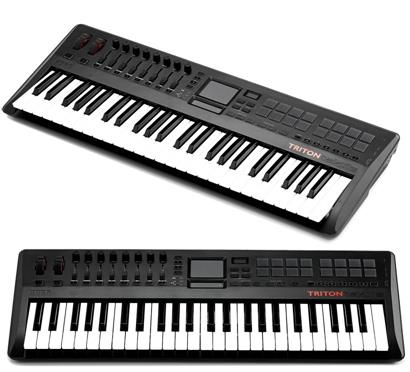
Being also an electronic keyboard it offers 512 Preset sounds of the TRITON Classic Serie with 50 rhythm patterns generated by its PCM sound engine and with a maximum polyphony of 80 notes.
Control functions include 16 pads with dynamic sensitivity, 8 assignable buttons, 8 assignable faders, transport button (rec, play, pause, stop), pitch bend wheels and a freely assignable wheel, plus a touchpad. It is a very complete MIDI controller.
In connections, we find that the Korg Triton taktile 49 offers two-floor pedal inputs and another switch, in addition to MIDI output, headset output and USB connection.
Now that we have seen the features of this Korg Triton taktile 49 keyboard watch these related videos to learn more.
Posts you may be interested in
- Ranking with the best midi keyboards
- My selection of cheap midi keyboards.
- Best MIDI Software to work with.
- MIDI Basic Guide.
- Midi Keyboards by Brand.
Korg Triton taktile 49 vs Novation Impulse 25
The Korg Triton taktile 49 MIDI Keyboard is priced at €333/£309/$339 when the Novation Impulse 25 is priced at €165/£149/$168, with a considerable difference of £168. Let’s go head to head:
- The Korg Triton taktile 49 offers 49 sensitive semi-weighted keys, while the Novation Impulse 25 offers 25 semi-weighted keys that also have an aftertouch function.
- The Korg Triton taktile 49 offers 16 Pads with dynamic sensitivity, 8 assignable buttons, 8 assignable faders, transport button (rec, play, pause, stop), Pitchbend wheel and a freely assignable wheel, plus a Touchpad. The keyboard features 512 preset sounds from the TRITON Classic Series with 50 rhythm patterns generated by the PCM sound engine and a maximum polyphony of 80 notes. The Novation Impulse 25 offers 8 backlit drum pads, 1 55mm fader, 8 assignable knobs, modulation and pitch bend wheels and up/down octave keys. It offers the option of auto-mapping, where each button or function assigns itself a parameter or function.
- The Korg features two floor-mounted pedal inputs and one switch, plus MIDI output, headset output and USB connection. And the Novation integrates a USB connection (where it is also powered), as well as MIDI input and output, and sustain and expression pedal inputs. Very similar.
Let’s put the features of these keyboards in a table so you can compare
|
Korg Triton taktile 49 |
Novation Impulse 25 |
|---|---|
|
|
In our first comparison we have two good controllers on the one hand the Korg Triton taktile 49 which has a MIDI controller function offering 49 sensitive semi-weighted keys, 16 Pads with dynamic sensitivity, 8 assignable buttons, 8 assignable faders, transport button (rec, play, pause, stop), Pitchbend wheels and another one with free assignment, as well as a Touchpad and the electronic keyboard function offering 512 Preset sounds of the TRITON Classic Series with 50 rhythm patterns generated by its PCM sound engine and with a maximum polyphony of 80 notes.
On the other hand, the Novation Impulse 25 offers 8 backlit drum pads, 1 55mm fader, 8 assignable knobs, modulation and pitch bend wheels and up/down octave keys. It offers the option of auto-mapping, where each button or function assigns itself a parameter or function.
We can comment that in general the Korg Triton taktile 49 is a better option due to all the control functions and its wider keyboard, however the Novation Impulse 25 does not let be a good element, by the price that it demands. If you have the budget go for the Korg Triton taktile 49, it’s worth the difference in price.
And here’s a video of the Novation Impulse 25 keyboard
If you want to know more about this option, click on the following link to see the Novation Impulse 25 review.
Korg Triton taktile 49 vs Novation Impulse 49
The Korg Triton taktile 49 MIDI Keyboard is priced at €333/£309/$339 when the Novation Impulse 49 is priced at €223/£205/$228 with a difference of £110. Let’s go head to head:
- The Korg Triton taktile 49 offers 49 sensitive semi-weighted keys, while the Novation Impulse 49 offers 49 semi-weighted keys that also have an aftertouch function.
- The Korg Triton taktile 49 offers 16 Pads with dynamic sensitivity, 8 assignable buttons, 8 assignable faders, transport button (rec, play, pause, stop), Pitchbend wheel and a freely assignable wheel, plus a Touchpad. The keyboard features 512 preset sounds from the TRITON Classic Series with 50 rhythm patterns generated by the PCM sound engine and a maximum polyphony of 80 notes. The Novation Impulse 49 offers 8 backlit drum pads, 9 55mm faders, 8 assignable knobs, 9 assignable buttons, 6 transport buttons, modulation and pitch bend wheels and up/down octave keys. It offers the option of automation, where each button or function is self-assigned a parameter or function.
- The Korg features two floor-mounted pedal inputs and a switch, plus MIDI output, headset output and USB connection. And the Novation integrates a USB connection (where it is also powered), as well as MIDI input and output, and sustain and expression pedal inputs. Very similar.
Let’s put the features of these keyboards in a table so you can compare
|
Korg Triton taktile 49 |
Novation Impulse 49 |
|---|---|
|
|
In this really close comparison, we have on the one hand the Korg Triton taktile 49 with its functions and features already analyzed, and on the other hand we have the Novation Impulse 49 MIDI controller that offers 49 semi-weighted keys and Aftertouch, 8 backlit Drum-Pads, 9 55mm faders, 8 assignable knobs, 9 assignable buttons, 6 transport buttons, modulation and pitch bend wheels and up/down octave keys.
We have a very similar comparison to the previous one, but this time both offer the same number of keys, which is 49. The main difference is that the Korg also offers the electronic keyboard function and also has a touchpad that can be assigned to a parameter or function and control it in two dimensions. With all these advantages we can comment that the Korg Triton taktile 49 is a better option and that the price difference is worth it.
And next a video of the Novation Impulse 49 keyboard
If you want to know more about this option, click on the following link to see the Novation Impulse 49 review.
Korg Triton taktile 49 vs Novation Impulse 61
The Korg Triton taktile 49 MIDI Keyboard is priced at €333/£309/$339 when the Novation Impulse 61 is priced at €321/£295/$325, with a small difference of 9 euros, which can change depending on the shop where we ask.
- The Korg Triton taktile 49 offers 49 sensitive semi-weighted keys, while the Novation Impulse 61 offers 61 semi-weighted keys that also have the aftertouch function.
- The Korg Triton taktile 49 offers 16 Pads with dynamic sensitivity, 8 assignable buttons, 8 assignable faders, transport button (rec, play, pause, stop), Pitchbend wheel and a freely assignable wheel, plus a Touchpad. The keyboard features 512 preset sounds from the TRITON Classic Series with 50 rhythm patterns generated by the PCM sound engine and a maximum polyphony of 80 notes. The Novation Impulse 61 offers 8 backlit drum pads, 9 55mm faders, 8 assignable knobs, 9 assignable buttons, 6 transport buttons, modulation and pitch bend wheels and up/down octave keys. It offers the option of automation, where each button or function is self-assigned a parameter or function.
- The Korg features two floor-mounted pedal inputs and a switch, plus MIDI output, headset output and USB connection. And the Novation integrates a USB connection (where it is also powered), as well as MIDI input and output, and sustain and expression pedal inputs. Very similar.
Let’s put the features of these keyboards in a table so you can compare
|
Korg Triton taktile 49 |
Novation Impulse 61 |
|---|---|
|
|
In this really close comparison, we have on the one hand the Korg Triton taktile 49 with its functions and features already analyzed, and on the other hand, we have the Novation Impulse 61 MIDI controller that offers 61 semi-weighted keys and Aftertouch, 8 backlit Drum-Pads, 9 55mm faders, 8 assignable knobs, 9 assignable buttons, 6 transport buttons, modulation and pitch bend wheels and up/down octave keys.
Same as the latest interesting comparisons with the Novation Impulse models. This time the Novation Impulse 61 has the advantage of having 61 semi-weighted keys and aftertouch, which compares to the advantages of the Korg Triton taktile 49 which still has the electronic keyboard function and its control pad that allows you to control a parameter or function in two dimensions. Depending on your needs you can make the best decision.
And here is a video of the Novation Impulse 61 keyboard
If you want to know more about this option, click on the following link to see the Novation Impulse 61 review.
Korg Triton taktile 49 vs Arturia KeyLab Essential 61
The Korg Triton taktile 49 MIDI Keyboard is priced at €333/£309/$339 when the Arturia KeyLab Essential 61 is priced at €239/£215/$239. Having a difference of 94 Euro, let’s see your face to face:
- The Korg Triton taktile 49 offers 49 sensitive semi-weighted keys, while the Arturia KeyLab Essential 61 offers 61 sensitive keys.
- The Korg Triton taktile 49 offers 16 Pads with dynamic sensitivity, 8 assignable buttons, 8 assignable faders, transport button (rec, play, pause, stop), Pitchbend wheel and a freely assignable wheel, plus a Touchpad. The keyboard features 512 preset sounds from the TRITON Classic Series with 50 rhythm patterns generated by the PCM sound engine and a maximum polyphony of 80 notes. The Arturia KeyLab Essential 61 offers 8 speed-sensitive pads with Aftertouch, 1 pushable encoder, 9 assignable knobs, 13 assignable buttons, a transport section with 4 function switches and tone and modulation wheels.
- The Korg features two floor-mounted pedal inputs and one switch, plus MIDI output, headset output and USB connection. And the Arturia KeyLab Essential 61 has an integrated USB connection (where it is also powered), but also has an external power supply, as well as MIDI output and sustain pedal input.
Let’s put the features of these keyboards in a table so you can compare
|
Korg Triton taktile 49 |
Arturia KeyLab Essential 61 |
|---|---|
|
|
Now we have a comparison that on the one hand is the already known and analyzed Korg Triton taktile 49 and on the other hand, we have the Arturia KeyLab Essential 61 that offers 61 speed-sensitive keys, 8 speed-sensitive pads with Aftertouch, 1 pushable encoder, 9 assignable knobs, 13 assignable buttons, a transport section with 4 function switches and tone and modulation wheels.
As an advantage the Arturia KeyLab Essential offers 61 keys, however, in many functions it outperforms the Korg Triton taktile 49 starting with the semi weight of its keys, and thus also the electronic keyboard functions and its control pad which is not found in many MIDI controllers, and which will allow interesting improvisations or uses. The Korg Triton taktile we consider a better controller and completely worth its difference.
And here is a video of the Arturia KeyLab Essential 61
If you want to know more about this option, click on the following link to see the Arturia KeyLab Essential 61 review.
Korg Triton taktile 49 vs Roland A-800 Pro
The Korg Triton taktile 49 MIDI keyboard is priced at €333/£309/$339 while the Roland A-800 Pro is priced at €298/£259/$289, with a difference of almost £40. Let’s go head to head:
- The Korg Triton taktile 49 offers 49 sensitive semi-weighted keys, while the Roland A-800 Pro offers 61 sensitive keys with aftertouch.
- The Korg Triton taktile 49 offers 16 Pads with dynamic sensitivity, 8 assignable buttons, 8 assignable faders, transport button (rec, play, pause, stop), Pitchbend wheel and a freely assignable wheel, plus a Touchpad. The keyboard features 512 preset sounds from the TRITON Classic Series with 50 rhythm patterns generated by the PCM sound engine and a maximum polyphony of 80 notes. The Roland A-800 Pro offers 8 pads, 9 assignable faders, 9 assignable knobs, 13 assignable buttons, 8 transport buttons (rec, play, pause, stop, etc) and tone and modulation wheels.
- The Korg features two floor-mounted pedal inputs and a switch, plus MIDI output, headset output and USB connection. And the Roland A-800 Pro integrates a USB connection (where it is also powered), but also has an external power input not included, in addition to MIDI input and output and sustain and expression pedal inputs.
Let’s put the features of these keyboards in a table so you can compare
|
Korg Triton taktile 49 |
Roland A-800 Pro |
|---|---|
|
|
In this last comparison we have two high-quality MIDI controllers, on the one hand, the Korg Triton taktile 49 with its functions and features that we have already analyzed before, and on the other hand the Roland A-800 Pro that offers 61 sensitive keys with Aftertouch, 8 pads, 9 assignable faders, 9 assignable knobs, 13 assignable buttons, 8 transport buttons (rec, play, pause, stop, etc) and tone and modulation wheels.
Both keyboards have a large number of control functions, the Roland A-800 Pro has the advantage of a wider range of notes, reaching 61, i.e. 5 octaves. And as advantages of the Korg Triton taktile 49 we can again comment on its electronic keyboard function and its control pad that allows controlling a parameter or function in two dimensions. If you have the budget go for the Korg Triton taktile 49, its difference is worth it.
And here is a video of the Roland A-800 Pro keyboard
If you want to know more about this option, click on the following link to see the Roland A-800 Pro review.
Which is the best of these MIDI keyboards if I am a beginner on a low budget?
While the answer to this question lies mostly in what specific need you have, for example, if you want to have a keyboard with the widest possible note range, or if you want to have as many control functions as possible, or perhaps a mix between the two, that is without leaving behind the different connections and software licenses that most MIDI controllers offer, we will give an objective opinion according to our experience in music production and thus also with the price that the controllers demand, a kind of value for money.
In this comparison, we have MIDI controllers for a price of approximately 300 And as an ideal MIDI controller for a beginner, we can nominate the Novation Impulse 25 which offers 25 keys, plus Pads, 1 Fader and 8 knobs all assignable. Also sustain and expression pedal inputs, in addition to its included licenses, make it a great MIDI controller option for beginners.
Where to buy the Korg Triton taktile 49 keyboard
Amazon
- Free Shipping and the possibility of shipping in one day with Amazon Premium.
- Full Guarantee but they are no experts in music equipment.
- Sometimes a better price.
- He’s got worse stock than Thomann.
Thomann
- Free Shipping.
- Full warranty. If you have any problems, they take care of everything.
- 100% reliable payment.
- A leader in trouble-free shipping.
- Usually the Best price.
- Best Reputation: They are the leading online store in Europe and have the best catalog and information.
Also, look at these models with a similar price and features:
- Roli Seaboard Rise 25
- Roli Seaboard Block Studio Edition
- Roli Songmaker Kit Studio Edition
- Haken Audio ContinuuMini
- Roli Seaboard Rise 49
- Native Instruments Komplete Kontrol S49 MK2
- Arturia KeyLab MkII 49 Black
- Akai MPK 249
- Arturia KeyLab MkII 49 White
- Novation 49SL MKIII
- Korg Triton taktile 49
- Keith McMillen K-Board Pro 4
- Native Instruments Komplete Kontrol S61 MK2
- Novation 61SL MKIII
- Novation Impulse 61
- Arturia KeyLab MkII 61 White
- Arturia KeyLab MkII 61 Black
- Nektar Panorama P6
- Akai MPK 261
- Nektar Panorama T6
- Studiologic SL73 Studio
- Native Instruments Komplete Kontrol S88 MK2
- Studiologic SL88 Studio
- Arturia KeyLab 88 MkII
- M-Audio Hammer 88
- Studiologic SL88 Grand
- Studiologic Numa Stage
- Doepfer PK88 GH
- Doepfer PK88 GH without Case
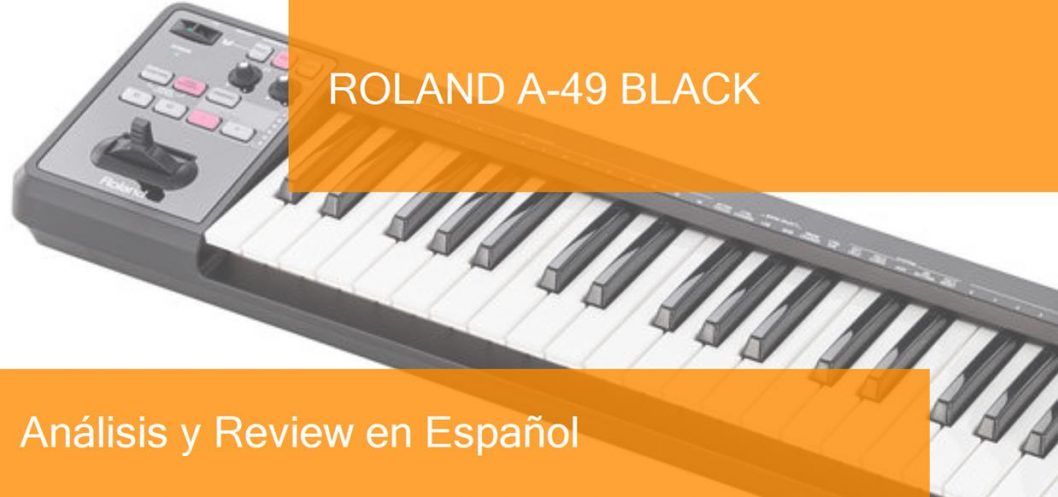
Review MIDI keyboard Roland A-49 Black. Where to buy it?
Roland Corporation is a Japanese manufacturer of electronic musical instruments, electronic equipment and software. Ikutaro Kakehashi founded the corporation in Osaka on April 18, 1972. I’ll tell you how this post is built. First I’ll list the features of this Roland A-49 Black keyboard. Then you have a video or two, purchase links and useful comments from other users, and then you have one of the most useful parts; tables of comparisons with similar keyboards so you can compare.
- 49 large format sensitive keys
- Compact design
- Two regulators and two buttons
- D-Beam Controller
- Powered by USB
- Sustain and Expression Pedal Connections (Jack)
- MIDI out
- USB Computer (USB type)
- Dimensions: 836 x 182 x 84 mm
- Weight: 2.5 kg
- Color: Black
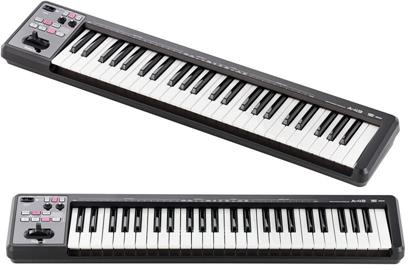
It also offers two knobs and two buttons that are assignable, which will also allow you to control some functions or parameters of the plugins you are using.
Its most relevant function is the D-Beam Controller, which is a Roland patent and is an infrared beam that is an interface that can control and manipulate sounds by hand movements interacting with an infrared light beam. The controller is usually mounted on the panel of the machine facing upward and detects the performer’s hand (or another body part) at a height of up to 40 cm (15 in.) above the device. Although controlled in a similar manner to a theremin, the operating principles are fundamentally different; the theremin uses capacitive detection.
It is powered via USB and offers sustain and expression pedal connections in addition to MIDI output.
Now that we have seen the features of this Roland A-49 Black keyboard look at these related videos to learn more.
Posts you may be interested in
- Ranking with the best midi keyboards
- My selection of cheap midi keyboards.
- Best MIDI Software to work with.
- MIDI Basic Guide.
- Midi Keyboards by Brand.
Roland A-49 Black vs Alesis V49
The Roland A-49 Black MIDI Keyboard is priced at €169/£155/$169 while the Alesis V49 is priced at €91/£79/$91. Having a difference of 74 Euro, we will see your face to face:
- Both offer 49 keys with sensitivity, in the Alesis V49 they are square.
- The Roland A-49 Black offers two knobs and two buttons both of which can be assigned, transport controls (rec, play, pause, stop) and a D-Beam controller, which is an infrared interface that is manipulated with the hand or another part of the body, where it works as a kind of theremin.
- The Alesis V49 offers 8 speed-sensitive (MIDI language intensity) backlit pads, as well as 4 assignable knobs and 4 buttons. It shares visual information through the illuminated knobs and buttons.
- Both can be powered via USB. And the Roland A-49 has connections for sustain and expression pedal, and MIDI output.
- The Alesis V49 includes the Ableton Live Lite software license (download), Xpand! 2 software (download).
Let’s put the features of these keyboards in a table so you can compare
|
Roland A-49 Black |
Alesis V49 |
|---|---|
|
|
In our first comparison, we have two MIDI controllers one of the brand Roland, the model A-49 Black, in reference to its color. It offers 49 sensitive keys, two knobs and 2 assignable buttons, and a D-Beam controller that allows you to control and manipulate sounds with hand movements thanks to its infrared beam, a very interesting function that cannot be found in any other brand as it is a Roland patent. On the other hand, the Alesis V49 offers 49 full-size keys with square fronts, 8 backlit pads, 4 assignable knobs and 4 assignable buttons.
And here’s a video of the Alesis V49 keyboard
If you want to know more about this option, click on the following link to see the Alesis V49 review.
Roland A-49 Black vs M-Audio Keystation 88 MkII
The Roland A-49 Black MIDI Keyboard and the M-Audio Keystation 88 MkII are priced at €169/£155/$169, being the same price, it will be a very interesting face-to-face:
- Both offer keys with sensitivity, on the Roland we have 49 and on the M-Audio Keystation 88 Mk II .
- The Roland A-49 Black offers two knobs and two buttons both of which can be assigned, transport controls (rec, play, pause, stop) and a D-Beam controller, which is an infrared interface that can be manipulated with the hand or another part of the body, where it works as a kind of theremin.
- The M-Audio Keystation 88 MK II features pitch bend and modulation wheels and octave controls, plus transport buttons (play, rec, stop, etc).
- Both can be powered via USB, and have connections for the sustain and expression pedals and MIDI output.
- The M-Audio Keystation 88 MK II includes the Ableton Live Lite and the SONiVOX Eighty-Eight Ensemble plug-in.
Let’s put the features of these keyboards in a table so you can compare
|
Roland A-49 Black |
M-Audio Keystation 88 MkII |
|---|---|
|
|
In this comparison, we have good MIDI controllers according to their price and functions that are different, on one hand, the Roland A-49 Black that allows us to use some functions, among them the D-Beam that we have already analyzed before, and that for sure will help us to experiment a lot. And on the other hand the M-Audio Keystation 88 MkII offers us a wide range in its 7-octave keyboard that will allow us to play any musical composition. If you want something to experiment with that also has a keyboard, the Roland A-49 Black, and if you want to focus more on performance or composition, the M-Audio Keystation 88 is for you.
Here’s a video of the M-Audio Keystation 88 MkII keyboard
If you want to know more about this option, click on the following link to see the M-Audio Keystation 88 MkII review.
Roland A-49 Black vs Novation Impulse 49
The Roland A-49 Black MIDI Keyboard is priced at €169/£155/$169 while the Novation Impulse 49 is priced at €223/£205/$228. Having a difference of 74 euros between them. Let’s move on to the face-to-face:
- Both offer 49 keys with sensitivity, in the case of the Novation Impulse 49 they are semi-balanced and with Aftertouch.
- The Roland A-49 Black offers two knobs and two buttons both assignable, transport controls (rec, play, pause, stop) and a D-Beam controller, which is an infrared interface that is manipulated with the hand or another part of the body, where it works as a kind of theremin.
- The Novation Impulse 49 offers 8 backlit Drum Pads, 9 assignable faders, 9 assignable buttons, 8 assignable knobs, 6 transport keys (rec, play, stop, pause) and pitch bend and modulation wheels.
- Both can be powered by USB (USB port), have connections for sustain and expression pedal and MIDI output.
- The Novation Impulse 49 includes the Xcite+ Software Pack, with Ableton Live Lite.
Let’s put the features of these keyboards in a table so you can compare
|
Roland A-49 Black |
Novation Impulse 49 |
|---|---|
|
|
In this interesting comparison, we have, on the side of the house to the Roland A-49 Black that as we have commented before has an outstanding function of D-Beam where we will be able to control and to manipulate sounds by means of our hand and an infrared ray, similar to a theremin. And on the other hand, we have a very complete MIDI controller, the Novation Impulse 49, just looking at its functions section in the table, we realize that we are with a versatile MIDI controller. So if you’re looking to experiment on Roland A-49 Black, and if you want a MIDI keyboard that allows you to fully control your DAW, the Novation Impulse 49 is your choice.
And here’s a video of the Novation Impulse 49 keyboard
If you want to know more about this option, click on the following link to see the Novation Impulse 49 review.
Roland A-49 Black vs M-Audio Oxygen 61 Mk4
The Roland A-49 Black MIDI Keyboard is priced at €169/£155/$169 when the M-Audio Oxygen 61 Mk4 is priced at €155/£133/$154, but the difference is so small that this may vary depending on which shop we ask.
- The Roland A-49 offers 49 keys with sensitivity, and in the case of the M-Audio Oxygen 61 MK4 offers 61 full-size, synthesizer-action keys
- The Roland A-49 Black offers two knobs and two buttons both of which are assignable, transport controls (rec, play, pause, stop) and a D-Beam controller, which is an infrared interface that is manipulated by hand or another part of the body, where it functions as a kind of theremin.
- The M-Audio Oxygen 61 Mk4 features 8 speed-sensitive trigger pads, 8 assignable knobs, 9 assignable faders, and transport buttons for DAW control.
- Both can be powered via USB, and have connections for the sustain pedal and MIDI output. The Roland A-49 also has an expression pedal connection.
- The M-Audio Oxygen 61 Mk4 includes the SONiVOX Twist (Software), Ableton Live Lite (Software).
Let’s put the features of these keyboards in a table so that you can compare
|
Roland A-49 Black |
M-Audio Oxygen 61 Mk4 |
|---|---|
|
|
In our penultimate comparison, we have two MIDI keyboards, the Roland A-49 Black that we have already analyzed, and its most curious function is that of the D-Beam. On the other hand, we have the M-Audio Oxygen 61 MK4, which offers a moderate list of control functions for our favorite DAW. In short, if you want to experience the Roland A-49 it will be your choice, but if you want to focus on controlling your DAW, the M-Audio Oxygen 61 Mk4 will be your choice.
Here is a video of the M-Audio Oxygen 61 Mk4 keyboard
If you want to know more about this option, click on the following link to see the M-Audio Oxygen 61 MK4 review.
Roland A-49 Black vs Arturia KeyLab Essential 61
The Roland A-49 Black MIDI Keyboard is priced at €169/£155/$169 while the Arturia KeyLab Essential 61 is priced at €239/£215/$240. With a price difference of £70 between them, let’s move on to your face-to-face:
- The Roland A-49 offers 49 keys with sensitivity, and in the case of the Arturia KeyLab, Essential 61 offers 61 full-size keys.
- The Roland A-49 Black offers two knobs and two buttons, both of which are assignable, transport controls (rec, play, pause, stop) and a D-Beam controller, which is an infrared interface that is manipulated with the hand or another part of the body, where it functions as a kind of theremin.
- The Arturia KeyLab Essential 61 offers 8 sensitive pads with Aftertouch, 1 pushable encoder, 9 assignable batteries, 13 buttons, a transport section with 4 function switches and tone and modulation wheels.
- Both can be powered via USB, have connections for a sustain pedal and MIDI output. The Roland A-49 also has an expression pedal connection.
- The Arturia KeyLab Essential 61 includes the SONiVOX Twist (Software), Ableton Live Lite (Software).
Let’s put the features of these keyboards in a table so you can compare
|
Roland A-49 Black |
Arturia KeyLab Essential 61 |
|---|---|
|
|
In our last comparison, we found two MIDI controllers, on the one hand, the Roland A-49, which we have already analyzed before, and whose most interesting function is its D-Beam Controller. On the other hand, we have the Arturia KeyLab Essential 61 that offers us functions such as 8 sensitive pads, 1 pushbutton encoder, 9 rotary knobs, 13 buttons, and so on. So, if you want to have a MIDI controller next to the D-Beam Controller that will allow you to experiment, while if you want a MIDI controller with many control functions (pads, knobs, buttons, push encoder) your choice will be the Arturia KeyLab Essential 61.
Here is a video of the Arturia KeyLab Essential 61
If you want to know more about this option, click on the following link to see the Arturia KeyLab Essential 61 review.
Which is the best of these MIDI keyboards if I am a beginner on a low budget?
While the answer to this question lies mostly in what specific need you have, for example, if you want to have a keyboard with the widest possible note range, or if you want to have as many control functions as possible, or perhaps a mix between the two, that is without leaving behind the different connections and software licenses that most MIDI controllers offer, we will give an objective opinion according to our experience in music production and thus also with the price that the controllers demand, a kind of value for money.
As a MIDI controller, we can mention the M-Audio Oxygen 61 Mk4 that for a fair price offers many control functions, among others we have: pads, knobs and faders all assignable to different functions or parameters in your preferred DAW. Its automation function is really useful to start composing directly by connecting to the computer. If you have the opportunity to acquire it, don’t think twice.
Where to buy the keyboard Roland A-49 Black
Amazon
- Free Shipping and the possibility of shipping in one day with Amazon Premium.
- Full Guarantee but they are no experts in music equipment.
- Sometimes a better price.
- He’s got worse stock than Thomann.
Thomann
- Free Shipping.
- Full warranty. If you have any problems, they take care of everything.
- 100% reliable payment.
- A leader in trouble-free shipping.
- Usually the Best price.
- Best Reputation: They are the leading online store in Europe and have the best catalog and information.
Also, look at these models with a similar price and features:
- Novation Launchkey Mini MK3
- Akai MPK mini Mk2
- Akai MPK miniplay
- Roli Lightpad Block M Studio Ed.
- Arturia MiniLab MKII
- Roli Beatmaker Kit
- Novation Impulse 25
- Akai MPK mini MK2 white
- Alesis V25
- CME Xkey Air 25
- IK Multimedia iRig Keys I/O 25
- Akai APC Keys 25
- Akai LPK 25
- M-Audio Code 25 black
- Native Instruments Komplete Kontrol A25
- Novation Launchkey Mini MK2
- Alesis V mini
- Arturia MicroLab Black
- Akai LPK 25 wireless
- Akai MPK mini Limited Black
- Arturia MiniLab MKII Inverted Edition
- M-Audio Oxygen 25 Mk4
- Korg nanoKEY Studio
- Swissonic EasyKey 25
- Korg nanoKEY 2 black
- Korg nanoKEY 2 Limited Orange
- Korg nanoKEY 2 Limited Blue
- Akai MPK mini MK2 white – AIEP3 Bdl
- Nektar Impact LX25+
- Novation Launchkey 25 MK2
- Alesis Q25
- Akai MPK 225
- Korg microKEY 25
- Miditech Midistart Music 25
- Alesis VI25
- Korg nanoKEY 2 white
- Arturia MicroLab Blue
- Nektar SE25
- Korg microKEY Air 25
- IK Multimedia iRig Keys 25
- Midiplus X2 mini
- Icon iKeyboard 3X
- Keith McMillen K-Board
- CME Xkey 25 silver
- Native Instruments Komplete Kontrol M32
- Alesis V49
- Arturia Keystep Black Edition
- Swissonic EasyKey 49
- Arturia Keystep
- Arturia KeyLab Essential 49
- Nektar Impact LX49+
- M-Audio Code 49 Black
- IK Multimedia iRig Keys 2 Pro
- M-Audio Keystation 49 MK3
- M-Audio Keystation Mini 32 MK3
- Novation Impulse 49
- Nektar Impact GX 49
- Novation Launchkey 49 Mk2
- Native Instruments Komplete Kontrol A49
- M-Audio Oxygen 49 Mk4
- Alesis Q49 Keyboard Controller
- Roland A-300 Pro
- IK Multimedia iRig Keys I/O 49
- Alesis VI49
- Midiplus AK490
- Alesis Vortex Wireless 2
- M-Audio Axiom Air Mini 32
- Alesis Vortex Wireless 2 Network
- IK Multimedia iRig Keys 37 Pro
- Arturia KeyLab Essential 49 BE
- Haken Audio Continuum Half Size
- CME Xkey 37 LE
- IK Multimedia iRig Keys Pro
- Korg microKEY 49 MkII
- IK Multimedia iRig Keys 2
- Miditech Midistart Music 49
- Roland A-49 Black
- Korg microKEY 37 MkII
- Swissonic ControlKey 49
- Roland A-500 PRO
- Nektar SE49
- Korg microKEY Air 37
- Korg microKEY Air 49
- Roland A-49 White
- Nektar Panorama T4
- Miditech Garagekey mini
- Miditech Minicontrol-32
- Midiplus X3 mini
- Miditech i2-Control 37 Black
- Icon iKeyboard 4X
- Miditech i2-mini 32
- Midiplus X4 mini
- Miditech i2-mini 32 Bluetooth
- Icon iKeyboard 5X
- Acorn Masterkey 49
- M-Audio Code 61 Black
- Arturia KeyLab Essential 61
- Nektar Impact GX 61
- M-Audio Keystation 61 MK3
- Alesis V61
- Native Instruments Komplete Kontrol A61
- Swissonic EasyKey 61
- M-Audio Oxygen 61 Mk4
- Roland A-800 Pro
- Korg microKEY Air 61
- GSi DMC-122
- Nektar Impact LX61+
- Alesis VI61
- Novation Launchkey 61 MK2
- Icon iKeyboard 6X
- Acorn Masterkey 61
- Miditech i2-61 Black Edition
- Midiplus X6 mini
- Korg microKEY 61 MkII
- Midiplus X-6 II
- Viscount Physis Piano K5 EX
- M-Audio Keystation 88 MkII
- Kawai VPC1
- Doepfer LMK2+ 88 GH
- Doepfer LMK4+ 88 GH black
- Swissonic ControlKey 88
- Viscount Physis Piano K4 EX
- Doepfer LMK4+ 88 GH grey
- Nektar Impact LX88+
- Haken Audio Continuum Full Size
- Midiplus Stage 88
- Studiologic Numa Concert
- Icon iKeyboard 8X
- Doepfer LMK2+ 88 GH without Case
- Midiplus X-8 II
- Doepfer LMK4+ 88 GH GR without Case