
- Home
- Author's Archive:
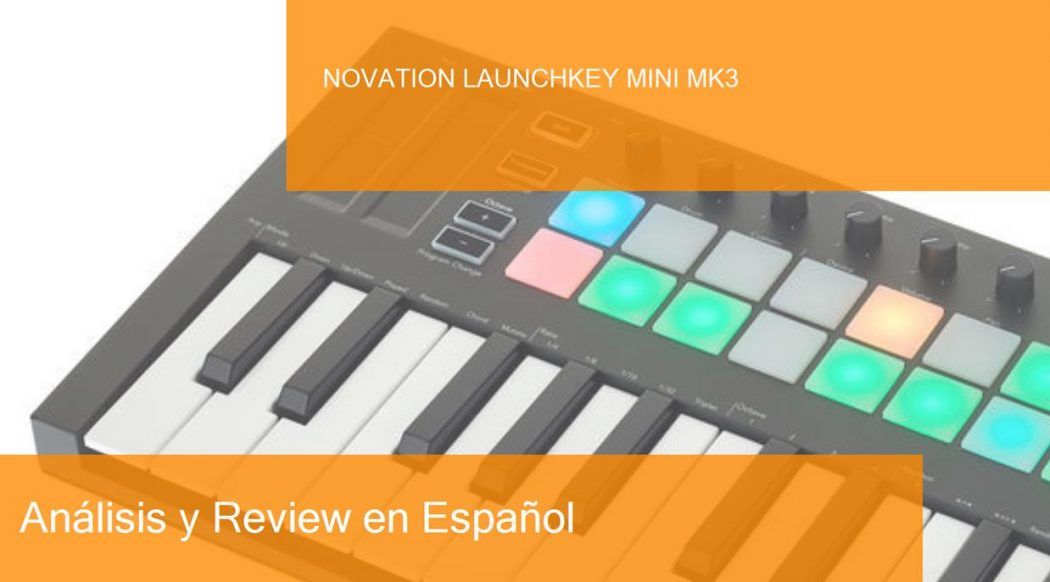
Review MIDI keyboard Novation Launchkey Mini MK3. Where to buy it?
Novation Digital Music Systems Ltd. is a British music equipment manufacturer, founded in 1992 by Ian Jannaway and Mark Thompson as Novation Electronic Music Systems. Today, the company specializes in MIDI controllers with or without keyboards, analog and virtual analog performance synthesizers, grid-based performance controllers and audio interfaces.
I’ll tell you how this post is built. First I list the features of this Novation Launchkey Mini MK3 keyboard.Then you have a video or two, purchase links and then you have one of the most useful parts, which are comparison tables with similar keyboards so you can compare.

It includes 16 RGB pads (RedGreenBlue backlighting) with sensitive dynamics, which allow to create percussion loops or other used samples, we also have 8 assignable rotary controllers, to be more precise in the parameters of the DAW or plugin we are using.
It also has touch-strips or sliders to control the pitch bend and modulation in real time, i.e. at the moment of sounding. We also have arpeggiator function and fixed-chord mode, that is to say playing a chord using only one note.
Finally the connections of the Novation Launchkey Mini MK3 are: 3.5 mm minijack MIDI output, USB port, Sustain pedal input, and offers a Bundle Software license.
Now that we have seen the features of this Novation Launchkey Mini MK3 keyboard look at these related videos to learn more.
Post you may be interested in
- Ranking with the best midi keyboards
- My selection of cheap midi keyboards.
- Best MIDI Software to work with.
- MIDI Basic Guide.
- Midi Keyboards by Brand.
Novation Launchkey Mini MK3 vs Akai MPK mini MK2
The Novation Launchkey Mini MK3 MIDI Keyboard is priced at €98/£89/$99 compared to the Akai MPK mini MK2 €79/£70/$81, but the difference is so small that this may vary. Let’s see the face to face:
- Both offer 25 speed-sensitive (MIDI language intensity) mini synthesizer action keys.
- The Novation offers 16 backlit pads, 8 assignable knobs and touch sliders for pitch bend and modulation, and transport buttons (play, rec, forward, reverse), while the Akai offers 8 high-quality MPC (Midi Production Center) pads, 8 assignable knobs and a 4-way thumbstick for pitch bend and modulation control.
- Both have an arpeggiator function as well as a sustain pedal input. Both are USB powered, no other power supply is needed.
- The Novation includes a Software Bundle and the Akai includes Hybrid 3 by AIR Music Tech, SONiVOX Wobble and Akai Pro MPC Essentials as licenses.
Let’s put the features of these keyboards in a table so you can compare
|
Novation Launchkey Mini MK3 |
Akai MPK mini MK2 |
|---|---|
|
|
We have a very even comparison, with two MIDI controllers with very similar features and prices, the Novation Launchkey Mini MK3 that we have already analyzed with a bigger amount of pads and transport buttons (only relevant differences), and the Akai MPK Mini MKII of which we have the difference already mentioned, and a slightly lower price, but with a slightly higher popularity, and according to that, I would go for it. Seeing also the size of its pads, in the Novation they are very small, while in the Akai they are a little bigger and with MPC quality.
And here is a video of the Akai MPK mini MK2 white keyboard
https://www.youtube.com/watch?v=9jHtGcP7U4Q&t=2s
If you want to know more about this option, click on the following link to see the Akai MPK Mini MKII review.
Novation Launchkey Mini MK3 vs Arturia MiniLab MKII
The Novation Launchkey Mini MK3 MIDI Keyboard is priced at €98/£89/$99 and the Arturia MiniLab MKII is priced at €91/£82/$91, but the difference is so small that this may vary.
- Both offer 25 synthesizer-action mini keys with speed sensitivity (intensity in MIDI language).
- The Novation offers 16 backlit pads, 8 assignable knobs and touch sliders for pitch bend and modulation, and transport buttons (play, rec, forward, reverse), while the Arturia offers 16 assignable rotary encoders (knobs), 8 sensitive pads with RGB (RedGreenBlue) feedback and pitch bend and modulation touch strips.
- Both have a sustain pedal input. Both are USB powered, no other power supply is needed.
- The Novation includes a Software Bundle and the Arturia includes the Analog Lab Lite software license with 500 sounds in V-Collection Five quality, Ableton Live Lite and UVI Grand Piano.
Let’s put the features of these keyboards in a table so you can compare
|
Novation Launchkey Mini MK3 |
Arturia MiniLab MKII |
|---|---|
|
|
Again in this comparison, we have two very similar MIDI controllers, where the only relevant difference is that the Novation has 16 backlit and sensitive pads, and 8 assignable knobs, while the Arturia is the opposite, offering 16 assignable knobs, and 8 backlit and sensitive pads. In terms of weight, the Novation is very light at 689g and the Arturia is still light at 1.5kg. If you wish to have more pads in order to have more controls of this type (to give throws or to have samples/parameters assigned), the Novation Launchkey Mini MK3 is better for you, on the other hand, if you wish to have more knobs (to have parameters assigned) to control, your choice will be the Arturia MiniLab MKII.
And here’s a video of the Arturia MiniLab MKII
If you want to know more about this option, click on the following link to see the Arturia MiniLab MKII review.
Novation Launchkey Mini MK3 vs Native Instruments Komplete Kontrol M32
The Novation Launchkey Mini MK3 MIDI Keyboard is priced at €98/£89/$99 while the Native Instruments Komplete Kontrol M32 is priced at €105/£98/$108, but the difference is so small that this can vary.
- The Novation has 25 speed-sensitive mini keys (intensity according to MIDI language). When the Native Instruments has 32 mini-keys equally sensitive.
- The Novation offers 16 backlit pads, 8 assignable knobs and touch sliders for pitch bend and modulation, and the transport buttons (play, rec, forward, reverse). The Kontrol M32 offers 8 assignable encoders and two touch-strips for pitch bend and modulation. In addition to a 4D pushbutton encoder.
- Both have input jack for sustain pedal, USB port and USB power.
- The Novation includes a Software Bundle. The Kontrol M32 includes the software Monark, Scarbee Mark I, Reaktor Prism, Komplete Kontrol Software, Maschine Essentials, Komplete Start, Ableton Live 10 Lite. Plus intuitive control over the DAWs: Logic Pro X, Ableton Live, Garage Band, Cubase and Nuendo.
Let’s put the features of these keyboards in a table so you can compare
|
Novation Launchkey Mini MK3 |
Native Instruments Komplete Kontrol M32 |
|---|---|
|
|
And here is a video of the Native Instruments Komplete Kontrol M32 keyboard
The most relevant difference between these two models of MIDI controllers is the number of keys, in the Novation there are 25 (2 Octaves) and in the Native Instruments, there are 32 (3 Octaves). The Native Instruments does not offer any pads, whereas in the Novation we have 16 of them. And in the Native Instruments, we have a 4-dimensional push encoder, useful for the control of the DAW, or some plugin parameter. According to your needs, you will choose what suits you best.
If you want to know more about this option, click on the following link to see the Native Instruments Komplete Kontrol M32 review.
Novation Launchkey Mini MK3 vs Arturia Keystep
The MIDI Novation Launchkey Mini MK3 is priced at €98/£89/$99 and the Arturia Keystep is priced at €102/£89/$101, but the difference is so small that this can vary.
- The Novation has 25 velocity-sensitive mini-keys (intensity according to MIDI language), while the Keystep has 32 thin keys with sensitivity and aftertouch.
- As the Keystep is a polyphonic sequencer, it offers up to 64 steps and 8 notes of polyphony.
- The Novation offers 16 backlit pads, 8 assignable knobs and touch sliders for pitch bend and modulation, and the transport buttons (play, rec, forward, reverse). The Keystep offers transport buttons and touch sliders for pitch bend and modulation.
- Both have input jacks for sustain pedal, USB port and USB power. And the Keystep has a CV output/door, input/sync output.
- The Novation includes a Software Bundle. The Kontrol M32 includes Monark, Scarbee Mark I, Reaktor Prism, Komplete Kontrol Software, Maschine Essentials, Komplete Start, Ableton Live 10 Lite. Plus intuitive control over the DAWs: Logic Pro X, Ableton Live, Garage Band, Cubase and Nuendo.
Let’s put the features of these keyboards in a table so you can compare
|
Novation Launchkey Mini MK3 |
Arturia Keystep |
|---|---|
|
|
Now we have a slightly more interesting comparison with a MIDI controller as such, the Novation Launchkey Mini MK3, and the Arturia Keystep which is also a MIDI controller and which merges the functions of a sequencer, allowing you to work with sequences (steps) of different musical elements such as percussive rhythm loops, harmonies, arpeggios and also basses and melodies in order to create musical ideas. If you want to experiment with this function, the Arturia is for you.
And here is a video of the Arturia Keystep
If you want to know more about this option, click on the following link to see the Arturia Keystep review.
Novation Launchkey Mini MK3 vs Akai LPK 25
The Novation Launchkey Mini MK3 MIDI Keyboard is priced at €98/£89/$99 and the Akai LPK 25 is priced at €42/£37/$42.
- Both have 25 speed-sensitive mini keys (intensity according to the MIDI language).
- The Novation offers 16 backlit pads, 8 assignable knobs and touch sliders for pitch bend and modulation, and the transport buttons (play, rec, forward, reverse). The Akai offers octave up/down buttons, sustain button and tap tempo. It’s really very basic.
- Both have input jack for sustain pedal, USB port and USB power.
- The Novation includes a Software Bundle. The Akai is Plug and Play and works with virtually all audio software.
- The Arturia Minilab MKII has the dimensions of 355 x 220 x 50mm and a weight of 1.5 kg, while the Akai MPK mini MK2 has the dimensions (W x H x D): 9.65 x 34.04 x 2.79 cm and a weight of 635 g.
Let’s put the features of these keyboards in a table so you can compare
|
Novation Launchkey Mini MK3 |
Akai LPK 25 |
|---|---|
|
|
Now we have an equally interesting comparison, the Novation Launchkey Mini MK3 which we have already discussed with a considerable number of functions and features for the beginner in music production. The Akai LPK 25 is a more minimalist MIDI controller, and at the same time very portable, that due to its measures and weight can fit in a suitcase or pocket. According to your needs, you will choose the best decision.
And here is a video of the Akai LPK 25 keyboard
If you want to know more about this option, click on the following link to see the Akai LPK 25 review.
Which is the best of these MIDI keyboards if I am a beginner on a low budget?
While the answer to this question lies mostly in what specific need you have, for example, if you want to have a keyboard with the widest range of notes possible, or if you want to have as many control functions as possible, or perhaps a mix between the two, that is without leaving behind the different connections and software licenses that most MIDI controllers offer, we will give an objective opinion according to our experience in music production and thus also with the price that the controllers demand, a kind of value for money.
Although one of the closest comparisons was the first one, where we found ourselves face to face with the Novation Launchkey Mini MK3 and the Akai MPK Mini MK2. As we mentioned before, the Akai MPK Mini MK2 has some advantages against its competitors: better quality pads and a slightly cheaper price, besides having more software licenses included. If you want a driver that won’t let you down, go for it.
Where to buy the Novation Launchkey Mini MK3
Amazon
- Free Shipping and possibility of shipping in one day with Amazon Premium.
- Full Guarantee but they are no experts in music equipment.
- Sometimes a better price.
- He’s got worse stock than Thomann.
Thomann
- Free Shipping.
- Full warranty. If you have any problems, they take care of everything.
- 100% reliable payment.
- A leader in trouble-free shipping.
- Usually the Best price.
- Best Reputation: They are the leading online store in Europe and have the best catalog and information.
Also look at these models with a similar price and features:
- Novation Launchkey Mini MK3
- Akai MPK mini Mk2
- Akai MPK miniplay
- Roli Lightpad Block M Studio Ed.
- Arturia MiniLab MKII
- Roli Beatmaker Kit
- Novation Impulse 25
- Akai MPK mini MK2 white
- Alesis V25
- CME Xkey Air 25
- IK Multimedia iRig Keys I/O 25
- Akai APC Keys 25
- Akai LPK 25
- M-Audio Code 25 black
- Native Instruments Komplete Kontrol A25
- Novation Launchkey Mini MK2
- Alesis V mini
- Arturia MicroLab Black
- Akai LPK 25 wireless
- Akai MPK mini Limited Black
- Arturia MiniLab MKII Inverted Edition
- M-Audio Oxygen 25 Mk4
- Korg nanoKEY Studio
- Swissonic EasyKey 25
- Korg nanoKEY 2 black
- Korg nanoKEY 2 Limited Orange
- Korg nanoKEY 2 Limited Blue
- Akai MPK mini MK2 white – AIEP3 Bdl
- Nektar Impact LX25+
- Novation Launchkey 25 MK2
- Alesis Q25
- Akai MPK 225
- Korg microKEY 25
- Miditech Midistart Music 25
- Alesis VI25
- Korg nanoKEY 2 white
- Arturia MicroLab Blue
- Nektar SE25
- Korg microKEY Air 25
- IK Multimedia iRig Keys 25
- Midiplus X2 mini
- Icon iKeyboard 3X
- Keith McMillen K-Board
- CME Xkey 25 silver
- Native Instruments Komplete Kontrol M32
- Alesis V49
- Arturia Keystep Black Edition
- Swissonic EasyKey 49
- Arturia Keystep
- Arturia KeyLab Essential 49
- Nektar Impact LX49+
- M-Audio Code 49 Black
- IK Multimedia iRig Keys 2 Pro
- M-Audio Keystation 49 MK3
- M-Audio Keystation Mini 32 MK3
- Novation Impulse 49
- Nektar Impact GX 49
- Novation Launchkey 49 Mk2
- Native Instruments Komplete Kontrol A49
- M-Audio Oxygen 49 Mk4
- Alesis Q49 Keyboard Controller
- Roland A-300 Pro
- IK Multimedia iRig Keys I/O 49
- Alesis VI49
- Midiplus AK490
- Alesis Vortex Wireless 2
- M-Audio Axiom Air Mini 32
- Alesis Vortex Wireless 2 Network
- IK Multimedia iRig Keys 37 Pro
- Arturia KeyLab Essential 49 BE
- Haken Audio Continuum Half Size
- CME Xkey 37 LE
- IK Multimedia iRig Keys Pro
- Korg microKEY 49 MkII
- IK Multimedia iRig Keys 2
- Miditech Midistart Music 49
- Roland A-49 Black
- Korg microKEY 37 MkII
- Swissonic ControlKey 49
- Roland A-500 PRO
- Nektar SE49
- Korg microKEY Air 37
- Korg microKEY Air 49
- Roland A-49 White
- Nektar Panorama T4
- Miditech Garagekey mini
- Miditech Minicontrol-32
- Midiplus X3 mini
- Miditech i2-Control 37 Black
- Icon iKeyboard 4X
- Miditech i2-mini 32
- Midiplus X4 mini
- Miditech i2-mini 32 Bluetooth
- Icon iKeyboard 5X
- Acorn Masterkey 49
- M-Audio Code 61 Black
- Arturia KeyLab Essential 61
- Nektar Impact GX 61
- M-Audio Keystation 61 MK3
- Alesis V61
- Native Instruments Komplete Kontrol A61
- Swissonic EasyKey 61
- M-Audio Oxygen 61 Mk4
- Roland A-800 Pro
- Korg microKEY Air 61
- GSi DMC-122
- Nektar Impact LX61+
- Alesis VI61
- Novation Launchkey 61 MK2
- Icon iKeyboard 6X
- Acorn Masterkey 61
- Miditech i2-61 Black Edition
- Midiplus X6 mini
- Korg microKEY 61 MkII
- Midiplus X-6 II
- Viscount Physis Piano K5 EX
- M-Audio Keystation 88 MkII
- Kawai VPC1
- Doepfer LMK2+ 88 GH
- Doepfer LMK4+ 88 GH black
- Swissonic ControlKey 88
- Viscount Physis Piano K4 EX
- Doepfer LMK4+ 88 GH grey
- Nektar Impact LX88+
- Haken Audio Continuum Full Size
- Midiplus Stage 88
- Studiologic Numa Concert
- Icon iKeyboard 8X
- Doepfer LMK2+ 88 GH without Case
- Midiplus X-8 II
- Doepfer LMK4+ 88 GH GR without Case

Review MIDI keyboard Roli Seaboard Rise 25. Where to buy it?
ROLI is a London-based music technology company known for its high-tech musical instruments, in particular the Seaboard. It was founded by American musician and entrepreneur Roland Lamb in 2009. I’ll tell you how this post is built. First I list the features of this Roli Seaboard Rise 25 keyboard. Then you have a video or two, purchase links and useful comments from other users and then you have one of the most useful parts; comparison tables with similar keyboards so you can compare.
- With 25 keys/pads ‘Keywaves
- Combines the intimacy of acoustic instruments with the versatility of electronic music
- New dimensions of tactile interaction
- Use with a variety of software and hardware synthesizers, as well as the included Equator package
- Simulates the true dynamic range of any instrument
- Customize patches using trackpad and touch faders
- Create new sound possibilities by mapping sound parameters to unique gestures
- Perform and record tracks with subtle and sensual details that previously required post-production
- Built-in MIDI on bluetooth with up to 8 hours of continuous performance
- Playing and forming sound tones in an amazingly direct and intuitive way
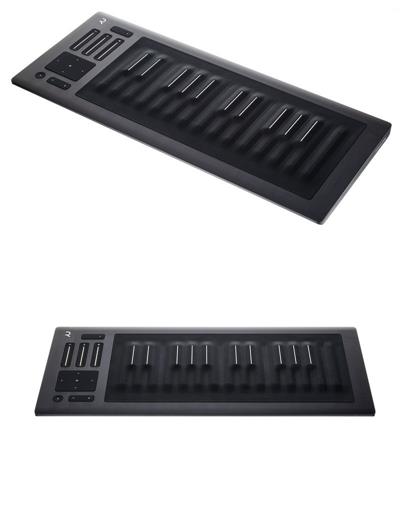
Create new sound possibilities by mapping sound parameters to unique gestures. Perform and record tracks with subtle and sensual details that previously required post-production. Includes built-in MIDI over Bluetooth with up to 8 hours of continuous performance
Now that we have seen the features of this Roli Seaboard Rise 25 keyboard watch these related videos to learn more.
Posts you may be interested in
- Ranking with the best midi keyboards
- My selection of cheap midi keyboards.
- Best MIDI Software to work with.
- MIDI Basic Guide.
- Midi Keyboards by Brand.
Roli Seaboard Rise 25 vs Roli Seaboard Block Studio Edition
The Roli Seaboard Rise 25 MIDI Keyboard is priced at €755/£679/$749 while the Roli Seaboard Block Studio Edition is priced at €349/£311/$345. Let’s go head to head:
- The Roli Seaboard Rise 25 provides 25 ‘Keywaves’, with a range of 4 octaves similar to a keyboard. The Roli Seaboard Block Studio Edition provides 24 ‘Keywaves’ with a range of 2 octaves similar to that of a keyboard. Keywaves are pads/keypads on which you can use 5D-Touch Technology: Tapping, Pressing, Rubbing, Sliding and Lifting.
- Besides the Keywaves, the Roli Seaboard Rise 25 offers a trackpad and 3 touch-sensitive faders, as well as octave up/down buttons and movement buttons.
- The Roli Seaboard Rise 25 features an integrated sustain pedal input, a USB-A connection, a USB-B connection and a power supply input, and offers Bluetooth MIDI. The Roli Seaboard Block Studio Edition integrates a USB-C port as MIDI output and also power supply, it also has Bluetooth MIDI.
- The Roli Seaboard Rise 25 includes the software licenses for Equator Synth, Strobe2, Bitwig 8-Track, Tracktion Waveform, Cypher2 Player, Max MSP 3 (3 month trial) and Seabaord Dashboard. The Roli Seaboard Block Studio Edition includes the licenses for Roli Studio (includes Roli Studio Player and Roli Studio Drums), Strobe2 Full, Ableton Live Lite 9, Max MSP 8 (6 month free trial), Roli Dashboard and Roli Connect.
Let’s put the features of these keyboards in a table so you can compare
|
Roli Seaboard Rise 25 |
Roli Seaboard Block Studio Edition |
|---|---|
|
|
In our first comparison, we have two Roli MIDI controllers, on one hand, the Seaboard Rise 25 which offers 25 ‘Keywaves’ and on the other hand the Seaboard Block Studio Edition which offers 24 ‘Keywaves’, which we can use in 5 different dimensions: Push, push, pull, slide and lift. This is a great way to express yourself.
As an advantage of the Roli Seaboard Rise 49 we have a normal size controller with 25 ‘Keywaves’ and also certain control functions like 3 faders and a touchpad that will also allow us to modify different parameters. The Roli Seaboard Block Studio Edition has a much lower price and a more compact and lighter model. If you want 25 ‘Keybeds’ you will go for the Roli Seaboard Rise 25. And if you want the same expression but with a more compact and portable controller, apart from being economical, the Roli Seaboard Block Studio Edition will be a better option. As a note, it is worth mentioning that the Roli Seaboard Block Studio Edition can be joined with another similar model to form a controller with a wider range of notes.
Here is a video of the Roli Seaboard Block Studio Edition keyboard
If you want to know more about this option, click on the following link to see the Roli Seaboard Block Studio Edition review.
Roli Seaboard Rise 25 vs Roli Seaboard Rise 49
The Roli Seaboard Rise 25 MIDI Keyboard is priced at €755/£679/$749 while the Roli Seaboard Rise 49 is priced at €1199/£1,088/$1,195. Let’s go head to head:
- The Roli Seaboard Rise 25 provides 25 ‘Keywaves’ with a 2-octave range similar to a keyboard. Keywaves are pads/keys where you can use 5D-Touch Technology: Tapping, pressing, rubbing, sliding and lifting. 49 Keywaves are provided by the Roli Seaboard Rise 49, with a range of 4 octaves similar to that of a keyboard.
- In addition to the Keywaves, both offer a trackpad and 3 touch-sensitive faders, plus octave up/down buttons and movement buttons.
- Both feature a sustain pedal input, a USB-A connection, a USB-B connection and a power supply input, as well as offering Bluetooth MIDI.
- The Roli Seaboard Rise 25 includes the licenses for Equator Synth, Strobe2, Bitwig 8-Track, Tracktion Waveform and Seaboard Dashboard. The Roli Seaboard Rise 49 includes the software licenses for Equator Synth, Strobe2, Bitwig 8-Track, Tracktion Waveform, Cypher2 Player, Max MSP 3 (3-month trial) and Seaboard Dashboard.
Let’s put the features of these keyboards in a table so you can compare
|
Roli Seaboard Rise 25 |
Roli Seaboard Rise 49 |
|---|---|
|
|
In this comparison, we again have two Roli MIDI controllers, the Seaboard Rise 49 on one hand and the Seaboard Rise 25 on the other. After that they generally have the same functions and features, both having a great possibility of expression using the 5 different dimensions: Pulsation, pressure, rubbing, sliding and lifting. If you need the 4-octave range go for the Seaboard Rise 49, if you are fine with 2 octaves go for the Seaboard Rise 25.
And here is a video of the Roli Seaboard Rise 49 keyboard
If you want to know more about this option, click on the following link to see the Roli Seaboard Rise 49 review.
Roli Seaboard Rise 25 vs Native Instruments Komplete Kontrol S49 MK2
The Roli Seaboard Rise 25 MIDI Keyboard is priced at €755/£679/$749 when the Native Instruments Komplete Kontrol S49 MK2 is priced at €498/£449/$498. Having a difference of 254 Euro, we will move on to the face-to-face:
- The Roli Seaboard Rise 25 offers 25 ‘Keywaves’, with a range of 4 octaves similar to a keyboard. Keywaves are pads/keys on which you can use 5D-Touch Technology: Tapping, pressing, rubbing, sliding and lifting. The Native Instruments Komplete Kontrol S49 MK2 offers Fatar ‘Keybeds’ with aftertouch and 49 semi-balanced keys.
- Apart from the ‘Keywaves’, the Roli Seaboard Rise 25 offers a trackpad and 3 touch-sensitive faders, plus octave up/down buttons and movement buttons. The Native Instruments Komplete Kontrol S49 MK2 offers a 4D push encoder, 8 assignable knobs, 3 transport buttons (network, play, pause) and buttons for different functions.
- The Roli Seaboard Rise 25 integrates a sustain pedal input, a USB-A connection, a USB-B connection and a power supply input, and offers Bluetooth MIDI. The Native Instruments Kompletete Kontrol S49 MK2 features an integrated MIDI input and output, two assignable pedal inputs and an external power supply, as well as a USB connection.
- The Roli Seaboard Rise 25 includes the software licenses for Equator Synth, Strobe2, Bitwig 8-Track, Tracktion Waveform, Cypher2 Player, Max MSP 3 (3-month trial) and Seaboard Dashboard. The Native Instruments Komplete Kontrol S49 MK2 includes KOMPLETE SELECT plus KOMPLETE SELECT for free (11 premium instruments and effects: Massive, Monark, The Gentleman, Drumlab, Reaktor Prism, Scarbee Mark I, Retro Machines, Vintage Organs, West Africa, Solid Bus Comp, and Replica).
Let’s put the features of these keyboards in a table so you can compare
|
Roli Seaboard Rise 25 |
Native Instruments Komplete Kontrol S49 K12 |
|---|---|
|
|
In this comparison, we have on the one hand the Roli Seaboard Rise 25 with its functions and features that we have already analyzed before, and on the other hand the Native Instruments Komplete Kontrol S49 MKII that offers ‘Keybeds’ Fatar with aftertouch and 49 semi-weighted keys, 4D push encoder, 8 assignable knobs, 3 transport buttons (network, play, pause) and buttons with different functions.
The advantage of the Roli Seaboard Rise 25 is its great capacity for expression thanks to its 5-dimensional touches: Push, press, rub, slide and lift. In addition to its Bluetooth MIDI function that allows it to be used without cables. And by the Native Instruments Kompletete Kontrol S49 MKII as advantages, we find certain control functions as its 8 assignable knobs, or its 4D encoder that allows being used in 4 dimensions. If you need a current MIDI controller, and to experiment there is no doubt that the Roli Seaboard Rise 25 will be your best option, but if you need a more standard controller with its more traditional and classic functions and with a quality keyboard, go for the Native Instruments Komplete Kontrol S49 MKII.
And here is a video of the Native Instruments Komplete Kontrol S49 K12 keyboard
If you want to know more about this option, click on the following link to see the Native Instruments Komplete Kontrol S88 K12 review.
Roli Seaboard Rise 25 vs Native Instruments Komplete Kontrol S61 K12
The Roli Seaboard Rise 25 MIDI Keyboard is priced at €755/£679/$749 when the Native Instruments Komplete Kontrol S61 K12 is priced at €622/£569/£569. Let’s see the face to face:
- The Roli Seaboard Rise 25 provides 25 ‘Keywaves’, with a range of 4 octaves similar to a keyboard. Keywaves are pads/keys on which you can use 5D-Touch Technology: Tapping, pressing, rubbing, sliding and lifting. The Native Instruments Komplete Kontrol S61 MK2 offers 61 semi-weighted Fatar keys with aftertouch.
- Besides the ‘Keywaves’, the Roli Seaboard Rise 25 offers a trackpad and 3 touch-sensitive faders, plus octave up/down buttons and movement buttons. The Native Instruments Kompletete Kontrol S61 MK2 offers a 4D push encoder, 8 assignable knobs, 3 transport buttons (network, play, pause) and different function buttons.
- The Roli Seaboard Rise 25 integrates a sustain pedal input, a USB-A connection, a USB-B connection and a power supply input, and offers Bluetooth MIDI. The Native Instruments Kompletete Kontrol S61 MK2 features an integrated MIDI input and output, two assignable pedal inputs and an external power supply, as well as a USB connection.
- The Roli Seaboard Rise 25 includes the software licenses for Equator Synth, Strobe2, Bitwig 8-Track, Tracktion Waveform, Cypher2 Player, Max MSP 3 (3-month trial) and Seaboard Dashboard. The Native Instruments Komplete Kontrol S61 MK2 includes KOMPLETE SELECT plus KOMPLETE SELECT for free (11 premium instruments and effects: Massive, Monark, The Gentleman, Drumlab, Reaktor Prism, Scarbee Mark I, Retro Machines, Vintage Organs, West Africa, Solid Bus Comp, and Replica).
Let’s put the features of these keyboards in a table so you can compare
|
Roli Seaboard Rise 25 |
Native Instruments Komplete Kontrol S61 K12 |
|---|---|
|
|
In this comparison, we have on the one hand the Roli Seaboard Rise 25 with its functions and features that we have already analyzed before, and on the other hand the Native Instruments Komplete Kontrol S49 MKII that offers 61 semi-weighted Fatar keys with aftertouch, 4D push encoder, 8 assignable knobs, 3 transport buttons (network, play, pause) and buttons with different functions.
As an advantage of the Roli Seaboard Rise 25 we have its great capacity of expression thanks to its 5-dimensional touches: Push, press, rub, slide and lift. In addition to its Bluetooth MIDI function that allows it to be used without cables. And by the Native Instruments Kompletete Kontrol S49 MKII as advantages, we find certain control functions as its 8 assignable knobs, or its 4D encoder that allows being used in 4 dimensions. If you need a current MIDI controller, and to experiment there is no doubt that the Roli Seaboard Rise 25 will be your best option, but if you need a more standard controller with its more traditional and classic functions and with a quality keyboard, go for the Native Instruments Komplete Kontrol S61 MKII.
And here is a video of the Native Instruments Komplete Kontrol S61 K12 keyboard
What is the best of these MIDI keyboards if I am a beginner on a low budget?
While the answer to this question lies mostly in what specific need you have, for example, if you want to have a keyboard with the widest range of notes possible, or if you want to have as many control functions as possible, or perhaps a mix between the two, that is without leaving behind the different connections and software licenses that most MIDI controllers offer, we will give an objective opinion according to our experience in music production and thus also with the price demanded by the controllers, a kind of value for money.
In this post, we have a series of good MIDI controllers that have a medium-high price range and therefore their functions are of quality. And as a star product we can and the most suitable one for a beginner in music production is the Roli Seaboard Block Studio Edition that offers 24 ‘keybeds’ that can be used both as keys and pads, and we also have its great expression capacity thanks to its 5-dimensional touches: Tapping, pressing, rubbing, sliding and lifting. If you have the opportunity to acquire it, don’t think twice.
Where to buy the Roli Seaboard Rise 25 keyboard
Thomann
- Free Shipping.
- Full warranty. If you have any problems, they take care of everything.
- 100% reliable payment.
- A leader in trouble-free shipping.
- Usually the Best price.
- Best Reputation: They are the leading online store in Europe and have the best catalog and information.
Amazon
- Free Shipping and the possibility of shipping in one day with Amazon Premium.
- Full Guarantee but they are no experts in music equipment.
- Sometimes a better price.
- He’s got worse stock than Thomann.
Also, look at these models with a similar price and features:
- Roli Seaboard Rise 25
- Roli Seaboard Block Studio Edition
- Roli Songmaker Kit Studio Edition
- Haken Audio ContinuuMini
- Roli Seaboard Rise 49
- Native Instruments Komplete Kontrol S49 MK2
- Arturia KeyLab MkII 49 Black
- Akai MPK 249
- Arturia KeyLab MkII 49 White
- Novation 49SL MKIII
- Korg Triton taktile 49
- Keith McMillen K-Board Pro 4
- Native Instruments Komplete Kontrol S61 MK2
- Novation 61SL MKIII
- Novation Impulse 61
- Arturia KeyLab MkII 61 White
- Arturia KeyLab MkII 61 Black
- Nektar Panorama P6
- Akai MPK 261
- Nektar Panorama T6
- Studiologic SL73 Studio
- Native Instruments Komplete Kontrol S88 MK2
- Studiologic SL88 Studio
- Arturia KeyLab 88 MkII
- M-Audio Hammer 88
- Studiologic SL88 Grand
- Studiologic Numa Stage
- Doepfer PK88 GH
- Doepfer PK88 GH without Case

Review MIDI keyboard Roli Seaboard Block Studio Edition. Where to buy it?
I’ll tell you how this post is built. First I list the features of the Roli Seaboard Block Studio Edition keyboard. Then you have a video or two, purchase links and useful comments from other users and then you have one of the most useful parts; comparison tables with similar keyboards so you can compare.

This keyboard usually has a price around 349.00 €
Now that we’ve seen the features of this keyboard Roli Seaboard Block Studio Edition watch these related videos to learn more.
Post you may be interested in
- Ranking with the best midi keyboards
- My selection of cheap midi keyboards.
- Best MIDI Software to work with.
- MIDI Basic Guide.
- Midi Keyboards by Brand.
Roli Seaboard Block Studio Edition vs Novation Impulse 61
The keyboard Roli Seaboard Block Studio Edition is usually 16 € more expensive than Novation Impulse 61, but the difference is so small that this can vary..
And then a video of the keyboard
|
Roli Seaboard Block Studio Edition |
Novation Impulse 61 |
|---|---|
|
Roli Seaboard Block Studio Edition; MIDI- and MPE-Controller; Seaboard screen with soft and stress sensitive and painful surface; 5D touch technology: touch, press, slide, slide, lift; 24 keywaves, two octaves playing surface; cordless MIDI via Bluetooth LE with around 15 meters range; magnetic connections permit the combination with other Roli Blocks via 4 DNA-Connectors; USB-C connector (MIDI out and energy); complete MIDI compatibility via USB and Bluetooth LE; power supply: battery operated with around 10 hours of play time; included program: Roli Studio (with Roli Studio Player and Roli Studio Drums), Strobe2 Full, Ableton Live Lite 9, Max MSP 8 (6 months free trial offer), Roli Dashboard and Roli Connect; system requirements: Windows 10, Mac OSX 10.12 or later, iOS9.0 or later; included: USB-C to USB-A adapter cable; dimensions (WxDxH): 282 x 25 x 141 mm; weight: 650 g |
|
And then a video of the keyboardNovation Impulse 61
If you want to know more about this option, click on the following link to see the Novation Impulse 61 review
Roli Seaboard Block Studio Edition vs Studiologic SL88 Studio
The keyboard Roli Seaboard Block Studio Editionis usually 39 € cheaper than Studiologic SL88 Studio, but the difference is so small that this can vary..
And then a video of the keyboard
|
Roli Seaboard Block Studio Edition |
Studiologic SL88 Studio |
|---|---|
|
Roli Seaboard Block Studio Edition; MIDI- and MPE-Controller; Seaboard screen with soft and stress sensitive and painful surface; 5D touch technology: touch, press, slide, slide, lift; 24 keywaves, two octaves playing surface; cordless MIDI via Bluetooth LE with around 15 meters range; magnetic connections permit the combination with other Roli Blocks via 4 DNA-Connectors; USB-C connector (MIDI out and energy); complete MIDI compatibility via USB and Bluetooth LE; power supply: battery operated with around 10 hours of play time; included program: Roli Studio (with Roli Studio Player and Roli Studio Drums), Strobe2 Full, Ableton Live Lite 9, Max MSP 8 (6 months free trial offer), Roli Dashboard and Roli Connect; system requirements: Windows 10, Mac OSX 10.12 or later, iOS9.0 or later; included: USB-C to USB-A adapter cable; dimensions (WxDxH): 282 x 25 x 141 mm; weight: 650 g |
|
And then a video of the keyboardStudiologic SL88 Studio
If you want to know more about this option, click on the following link to see the Studiologic SL88 Studio review
Roli Seaboard Block Studio Edition vs Nektar Impact LX88+
The keyboard Roli Seaboard Block Studio Edition is usually 100 € more expensive than Nektar Impact LX88+.
And then a video of the keyboard
|
Roli Seaboard Block Studio Edition |
Nektar Impact LX88+ |
|---|---|
|
Roli Seaboard Block Studio Edition; MIDI- and MPE-Controller; Seaboard screen with soft and stress sensitive and painful surface; 5D touch technology: touch, press, slide, slide, lift; 24 keywaves, two octaves playing surface; cordless MIDI via Bluetooth LE with around 15 meters range; magnetic connections permit the combination with other Roli Blocks via 4 DNA-Connectors; USB-C connector (MIDI out and energy); complete MIDI compatibility via USB and Bluetooth LE; power supply: battery operated with around 10 hours of play time; included program: Roli Studio (with Roli Studio Player and Roli Studio Drums), Strobe2 Full, Ableton Live Lite 9, Max MSP 8 (6 months free trial offer), Roli Dashboard and Roli Connect; system requirements: Windows 10, Mac OSX 10.12 or later, iOS9.0 or later; included: USB-C to USB-A adapter cable; dimensions (WxDxH): 282 x 25 x 141 mm; weight: 650 g |
|
And then a video of the keyboardNektar Impact LX88+
If you want to know more about this option, click on the following link to see the Nektar Impact LX88+ review
Roli Seaboard Block Studio Edition vs Roland A-800 Pro
The keyboard Roli Seaboard Block Studio Edition is usually 51 € more expensive than Roland A-800 Pro.
And then a video of the keyboard
|
Roli Seaboard Block Studio Edition |
Roland A-800 Pro |
|---|---|
|
Roli Seaboard Block Studio Edition; MIDI- and MPE-Controller; Seaboard screen with soft and stress sensitive and painful surface; 5D touch technology: touch, press, slide, slide, lift; 24 keywaves, two octaves playing surface; cordless MIDI via Bluetooth LE with around 15 meters range; magnetic connections permit the combination with other Roli Blocks via 4 DNA-Connectors; USB-C connector (MIDI out and energy); complete MIDI compatibility via USB and Bluetooth LE; power supply: battery operated with around 10 hours of play time; included program: Roli Studio (with Roli Studio Player and Roli Studio Drums), Strobe2 Full, Ableton Live Lite 9, Max MSP 8 (6 months free trial offer), Roli Dashboard and Roli Connect; system requirements: Windows 10, Mac OSX 10.12 or later, iOS9.0 or later; included: USB-C to USB-A adapter cable; dimensions (WxDxH): 282 x 25 x 141 mm; weight: 650 g |
|
And then a video of the keyboardRoland A-800 Pro
If you want to know more about this option, click on the following link to see the Roland A-800 Pro review
Where to buy the keyboard Roli Seaboard Block Studio Edition
Thomann
- Free Shipping.
- Full warranty. If you have any problems, they take care of everything.
- 100% reliable payment.
- Leader in trouble-free shipping.
- Usually Best price.
- Best Reputation: They are the leading online store in Europe and have the best catalogue and information.
Amazon
- Free Shipping and possibility of shipping in one day with Amazon Premium.
- Full Guarantee but they are no experts in music equipment.
- Sometimes better price.
- He’s got worse stock than Thomann.
Also look at these models with a similar price and features:
- Roli Seaboard Rise 25
- Roli Seaboard Block Studio Edition
- Roli Songmaker Kit Studio Edition
- Haken Audio ContinuuMini
- Roli Seaboard Rise 49
- Native Instruments Komplete Kontrol S49 MK2
- Arturia KeyLab MkII 49 Black
- Akai MPK 249
- Arturia KeyLab MkII 49 White
- Novation 49SL MKIII
- Korg Triton taktile 49
- Keith McMillen K-Board Pro 4
- Native Instruments Komplete Kontrol S61 MK2
- Novation 61SL MKIII
- Novation Impulse 61
- Arturia KeyLab MkII 61 White
- Arturia KeyLab MkII 61 Black
- Nektar Panorama P6
- Akai MPK 261
- Nektar Panorama T6
- Studiologic SL73 Studio
- Native Instruments Komplete Kontrol S88 MK2
- Studiologic SL88 Studio
- Arturia KeyLab 88 MkII
- M-Audio Hammer 88
- Studiologic SL88 Grand
- Studiologic Numa Stage
- Doepfer PK88 GH
- Doepfer PK88 GH without Case