
- Home
- Author's Archive:
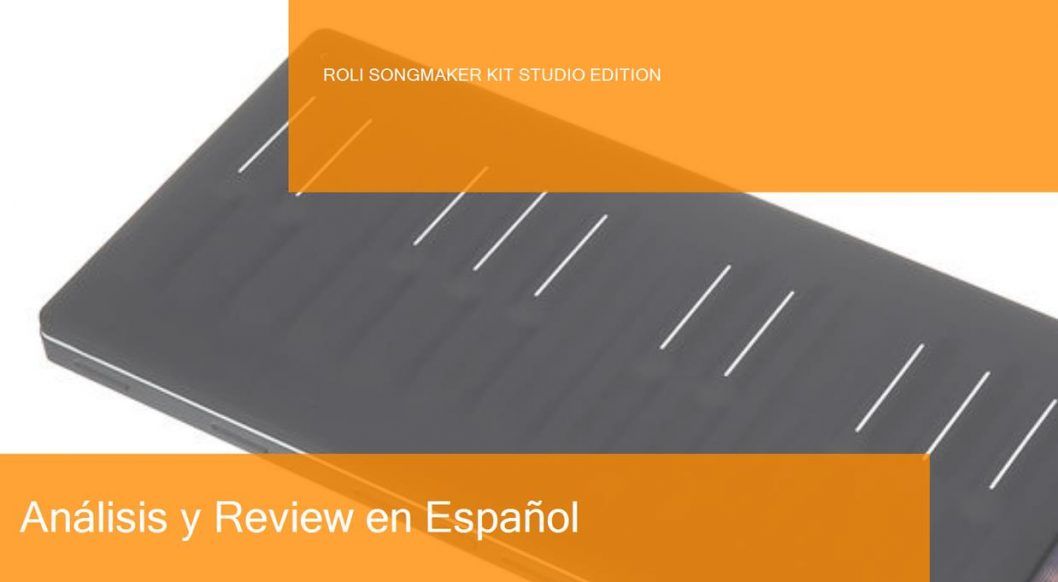
Review MIDI keyboard Roli Songmaker Kit Studio Edition. Where to buy it?
I’ll tell you how this post is built. First I list the features of the Roli Songmaker Kit Studio Edition keyboard. Then you have a video or two, purchase links and useful comments from other users and then you have one of the most useful parts; comparison tables with similar keyboards so you can compare.
Features
Roli Songmaker Kit Studio Edition
Native Instruments Komplete Kontrol S61 MK2
Roli Songmaker Kit Studio Edition; Production Bundle containing three Roli Blocks: Seaboard Block with 24 Keywaves, illuminated playing surface and drumpad Lightpad Block M and real time Block for pc software control; customizable and expandable system; included software program: Roli Studio (with Roli Studio Player and Roli Studio Drums), Equator, Strobe2 Comprehensive, Tracktion Waveform, Ableton Live Lite 9, Max MSP 8 (half a year free trial), Roli Dashboard and Roli Connect; system needs: Windows 10, Mac OSX 10.12 or later, iOS9.0 or later; included: USB-C to USB-A adapter cable and Roli Snapcase

Now that we’ve seen the features of this keyboard Roli Songmaker Kit Studio Edition watch these related videos to learn more.
Post you may be interested in
- Ranking with the best midi keyboards
- My selection of cheap midi keyboards.
- Best MIDI Software to work with.
- MIDI Basic Guide.
- Midi Keyboards by Brand.
Roli Songmaker Kit Studio Edition vs Native Instruments Komplete Kontrol S61 MK2
The keyboard Roli Songmaker Kit Studio Edition is usually 70 € more expensive than Native Instruments Komplete Kontrol S61 MK2.
And then a video of the keyboard
|
Roli Songmaker Kit Studio Edition |
Native Instruments Komplete Kontrol S61 MK2 |
|---|---|
|
Roli Songmaker Kit Studio Edition; Production Bundle containing three Roli Blocks: Seaboard Block with 24 Keywaves, illuminated playing surface and drumpad Lightpad Block M and real time Block for pc software control; customizable and expandable system; included software program: Roli Studio (with Roli Studio Player and Roli Studio Drums), Equator, Strobe2 Comprehensive, Tracktion Waveform, Ableton Live Lite 9, Max MSP 8 (half a year free trial), Roli Dashboard and Roli Connect; system needs: Windows 10, Mac OSX 10.12 or later, iOS9.0 or later; included: USB-C to USB-A adapter cable and Roli Snapcase |
|
And then a video of the keyboardNative Instruments Komplete Kontrol S61 MK2
If you want to know more about this option, click on the following link to see the Native Instruments Komplete Kontrol S61 MK2 review
Roli Songmaker Kit Studio Edition vs Novation 61SL MKIII
The keyboard Roli Songmaker Kit Studio Edition is usually 74 € more expensive than Novation 61SL MKIII.
And then a video of the keyboard
|
Roli Songmaker Kit Studio Edition |
Novation 61SL MKIII |
|---|---|
|
Roli Songmaker Kit Studio Edition; Production Bundle containing three Roli Blocks: Seaboard Block with 24 Keywaves, illuminated playing surface and drumpad Lightpad Block M and real time Block for pc software control; customizable and expandable system; included software program: Roli Studio (with Roli Studio Player and Roli Studio Drums), Equator, Strobe2 Comprehensive, Tracktion Waveform, Ableton Live Lite 9, Max MSP 8 (half a year free trial), Roli Dashboard and Roli Connect; system needs: Windows 10, Mac OSX 10.12 or later, iOS9.0 or later; included: USB-C to USB-A adapter cable and Roli Snapcase |
|
And then a video of the keyboardNovation 61SL MKIII
If you want to know more about this option, click on the following link to see the Novation 61SL MKIII review
Where to buy the keyboard Roli Songmaker Kit Studio Edition
Amazon
- Free Shipping and possibility of shipping in one day with Amazon Premium.
- Full Guarantee but they are no experts in music equipment.
- Sometimes better price.
- He’s got worse stock than Thomann.
Thomann
- Free Shipping.
- Full warranty. If you have any problems, they take care of everything.
- 100% reliable payment.
- Leader in trouble-free shipping.
- Usually Best price.
- Best Reputation: They are the leading online store in Europe and have the best catalogue and information.
Also look at these models with a similar price and features:
- Roli Seaboard Rise 25
- Roli Seaboard Block Studio Edition
- Roli Songmaker Kit Studio Edition
- Haken Audio ContinuuMini
- Roli Seaboard Rise 49
- Native Instruments Komplete Kontrol S49 MK2
- Arturia KeyLab MkII 49 Black
- Akai MPK 249
- Arturia KeyLab MkII 49 White
- Novation 49SL MKIII
- Korg Triton taktile 49
- Keith McMillen K-Board Pro 4
- Native Instruments Komplete Kontrol S61 MK2
- Novation 61SL MKIII
- Novation Impulse 61
- Arturia KeyLab MkII 61 White
- Arturia KeyLab MkII 61 Black
- Nektar Panorama P6
- Akai MPK 261
- Nektar Panorama T6
- Studiologic SL73 Studio
- Native Instruments Komplete Kontrol S88 MK2
- Studiologic SL88 Studio
- Arturia KeyLab 88 MkII
- M-Audio Hammer 88
- Studiologic SL88 Grand
- Studiologic Numa Stage
- Doepfer PK88 GH
- Doepfer PK88 GH without Case

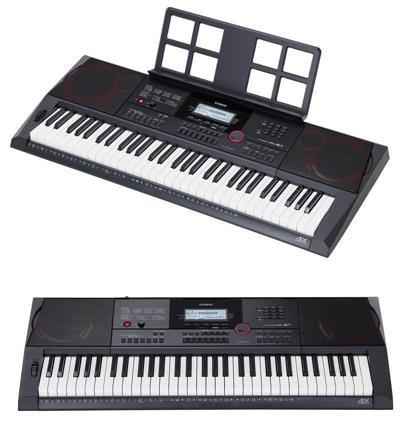
Digital Piano Casio CT X3000 Full Review. Is it a good purchase?
Casio Digital Piano CT-X3000 Review Complete Is it a good piano?
Casio is a Japanese company that produces electronic devices, including electronic musical keyboards. Today we are looking at the Casio CT-X3000 digital keyboard, which for a fair price has everything a beginner’s keyboard needs: sensitive keys, decent polyphony, sustain pedal connection, and USB MIDI connection. With a price of €282/£257 it is a keyboard for beginners, let’s see its features and then with the comparisons:
- 61 touch-sensitive keys
- 64 notes of polyphony (Number of notes that can be played at once. This includes accompaniments that also consume notes. So if you play over an accompaniment, more notes will be accumulated)
- aiX sound generation engine
- 800 different sounds (different piano and other instrument sounds)
- 30 pre-installed songs
- 235 types of rhythms (Rhythms of accompaniment that adapt to what you are playing. There are bossa nova rhythms, etc. Sometimes they are also known as accompaniment styles)
- Pitch Bend Wheel
- Four-sentence pads to improve usability and speed
- It brings the following basic effects: reverb (Reverb effect), Chorus
- Function harmony
- DSP (Digital Signal Processing) effects. These are digital effects that modify the sound of the keyboard)
- 100 types of Arpeggio function (The Arpeggio function allows you to play an entire passage of notes by pressing just one key. Many come pre-recorded and some keyboards allow you to create them)
- One-Touch Presets
- Transposition (Transposition allows you to move the note spectrum of a keyboard. This is to be able to play with transposing instruments. It is not an easy concept but it is made to facilitate the writing of an orchestration for instruments with very different bass and treble registers)
- MIDI Recorder
- LC display for improved usability
- Auto shut-off function (energy saving)
- Combined headset/line connection
- Pedal connection
- Usb to Host (This is a more modern MIDI connector. MIDI allows you to do such wonderful things as connect your keyboard to your computer, record a sound track, and with certain programs pass on what you have played to musical notes in a score with a single click. MIDI tracks store the information of the notes)
- USB to Device
- Sustain pedal connection (The sustain pedal of a piano or keyboard is used to keep the note playing even if you stop pressing the key)
- Speaker system with an acceptable power of 6 W (enough for a small restaurant)
- Can be battery operated and comes with power supply
- It measures 948 x 384 x 116 mm
- It has a weight of 6.9 kg (not the lightest but it can be carried easily)
Related post you can be interested in
- Ranking with the best digital pianos
- My selection of cheap musical keyboards.
- Basic concepts you need to know about digital pianos.
- The best resources to learn to play the piano by yourself.
- The best Casio Digital Pianos.
Now let’s compare the Casio CT X3000 with its more common alternatives. Also at the end of the post you will find a section with the best shopping possibilities for this digital piano. But you can go directly to that part of the post by pressing the following button.
Casio CT-X3000 vs. Casio CT-X700
First we will compare two keyboards The Casio CT-X3000 with a price of €282/£257, while the Casio CT-X700 has a price of €209/$174/£189, with a difference of 77 euro. We will put them face to face to verify their similarities and differences:
- Both keyboards have 61 keys with touch sensitivity, sensitivity refers to the function of being able to play with dynamics, i.e. when we press a key with force, it sounds louder than when we press a key with less force.
- The Casio CT-X3000 offers 800 different voices/sounds, with 64 notes of polyphony and 235 rhythms/styles for accompaniments. The Casio CT-X700 provides 600 different voices/sounds, 48 notes of polyphony and 195 rhythms/styles for accompaniment. Remember that polyphony is the largest number of notes that can be played simultaneously.
- Both keyboards have a Casio branded AiX sound generation engine.
- The Casio CT-X3000 has the following effects: Reverb, Chorus, Delay, and other DSP (Digital Signal Process), while the Casio CT-X700 has Chorus and Reverb effects. Both have the Harmony function and 100 arpeggio types, also metronome and transposition.
- Both keyboards have a combined headphone and line output, sustain pedal connection, AND USB to host connection, meaning that they can be connected to a computer for use as a MIDI controller in a music composition or production program.
- The Casio CT-X3000 has a USB to device connection, which means that it accepts USB SD sticks for storing MIDI recordings. And as another difference, it has Pitch Bend wheels, which allow you to change the height of a note while you’re at it.
- The Casio CT-X3000 weighs 6.9 kg and measures 948 × 384 × 116 mm, while the Casio CT-X700 weighs 4.3 kg and measures 948 × 350 × 109 mm mm.
Both are excellent keyboards for beginners, but as we noticed the Casio C T-X 3000 has better performance, plus a pitch bend wheel and the option of connecting USB sticks to increase MIDI recording storage. So if you’re on a tight budget, you might want to go for the cheaper one. If you want more and better performance, the Casio C T-X 3000 will be your keyboard of choice.
We will put the features of each of these pianos in 2 different columns to make it easier to see the differences:
|
Casio CT-X3000 |
Casio CT-X700 |
|---|---|
|
|
And now a video of the Casio CT-X700
If you want to know more about this model, don’t miss our review of the Casio CT-X700.
Casio CT-X3000 vs. Casio CT-X5000
Now let’s compare two very similar Casio brand keyboards, the Casio CT-X3000 with a price of €282/£257 and the Casio CT-X5000 with a price of €365/$450/£333, giving a difference of £77, let’s see their faces:
- Both keyboards have 61 touch-sensitive keys, which on the Casio CT-X5000 are configurable. Sensitivity refers to the function of being able to play dynamically, i.e. when a key is pressed with force, it sounds louder than when a key is pressed with less force.
- Both keyboards offer 800 different voices/sounds, with 64 notes of polyphony and 235 rhythms/styles for accompaniment. Generated by the AiX sound engine. Remember that polyphony is the highest number of notes that can be played at the same time.
- The Casio CT-X3000 has the following effects: Reverb (24 types), Chorus (12 types), Delay (15 types) and 100 DSP (Digital Signal Process). The Casio CT-X5000 has the following effects: Reverb (32 types), Chorus (16 types), Delay(20 types), and 100 DSP (Digital Signal Process). Both have a Harmony function and 100 arpeggio types, also metronome and transposition. Although they are the same effects on the X5000 we can find more variety.
- Both keyboards have a combined headphone and line output, Sustain pedal connection, AND USB to host connection, meaning that they can be connected to a computer to be used as a MIDI controller in a music composition or production program. They also have a USB to device connection, which means that they accept USB SD sticks for storing MIDI recordings.
- Both have Pitch Bend wheels, which allow you to change the height of a note while playing.
- The Casio CT-X3000 has two 6 W speakers, which is an acceptable power level. The Casio CT-X5 1000 has two 15-watt speakers, having a higher power.
- The Casio CT-X3000 weighs 6.9 kg and measures 948 × 384 × 116 mm, while the Casio CT-X5000 weighs 7 kg and measures 948 × 350 × 109 mm.
- The Casio CT-X3000 comes with a power supply and is battery-powered. The Casio CT-X5000 also includes a power supply but does NOT support batteries, so it cannot be used on the road or in a portable manner.
As you can see, both keyboards are very similar. The main difference is that the Casio C T-X 5000 has a higher speaker power of 15W and does not support batteries. The higher power allows you to rehearse with other musicians or friends without using external amplification.
We will put the characteristics of each of these pianos in 2 different columns to make it easier to see the differences:
|
Casio CT-X3000 |
Casio CT-X5000 |
|---|---|
|
|
Now a video of the Casio CT-X5000:
If you want to know more about this model, don’t miss our review of the Casio CT-X5000.
Casio CT-X3000 vs Yamaha PSR-E463
Now we’ll buy the Casio C T-3000 beginner’s keyboard at a price of €282/£257 and the Yamaha PSR-E463 digital keyboard at a price of €285/$350/£259, let’s see their differences and similarities in the following face-to-face:
- Both keyboards have 61 touch-sensitive keys.
- The Casio C T-X3000 has 800 different sounds or voices, with 64 notes of polyphony and 235 types of styles or rhythms for accompaniment, all generated by its AiX sound engine. While the Yamaha PSR-E463 has 758 different sounds or voices, with 48 notes of polyphony and 235 styles or rhythms for accompaniment, all generated by its sound engine AWM, own brand Yamaha.
- The Casio CT-X3000 has the following effects: Reverb (24 types), Chorus (12 types), Delay (15 types), 100 DSP (Digital Signal Process), Harmony and 100 arpeggio types. The Yamaha PSR-E463 has the following effects: Reverb (12 types), Chorus (5 types) Harmony (26 types) and 10 DSP, assignable with control knobs and 150 arpeggio types. Both have metronome and transposition.
- Both keyboards have a combined line and headphone output, with a sustain pedal connection. As well as a USB to host connection, this means they can be connected to a computer to be used as a MIDI controller in a music composition or production program. And only the Casio CT-X3000 has a USB to device connection, which means that it accepts USB SD sticks for storing MIDI recordings.
- The Casio CT-X3000 has a Pitch Bend wheel, which allows you to change the pitch of a note as it is played.
- Both keyboards have an acceptable power output from their 6 W speakers.
- The Casio CT-X3000 weighs 6.9 kg and measures 948 × 384 × 116 mm, while the Yamaha weighs 6.6 kg and measures 946 × 404 × 139 mm.
- Both keyboards include their power supply and also allow the use of batteries for operation.
- The Yamaha allows the use of applications from an iPhone or iPad, and an additional cable is required.
As we can see here we also find very similar keyboards. With few differences that we could comment as: The Casio has a slightly higher amount of sounds and polyphony notes, the Casio also has pitch bend wheels, plus USB to device connection. The Yamaha has 50 more arpeggio types, and applications available alongside devices such as the iPhone or iPad. We invite you to watch the Videos below and compare the sounds of both, with such a small difference in price, will not be an easy decision.
We will put the features of each of these pianos in 2 different columns to make it easier to see the differences:
|
Casio CT-X3000 |
Yamaha PSR-E463 |
|---|---|
|
|
And now a video of the Yamaha PSR-E463:
If you want to know more about this model don’t miss our review of the Yamaha PSR-E463.
Casio CT-X3000 vs Korg EK50
Finally, we will have the comparison of these two digital keyboards: the Casio C T-X3000 with a price of €282/£257 and the Korg EK 50 with a price of €294/$450/£272, with a slight difference of £12. So let’s see what the differences and similarities are in these two entry-level devices:
- Both keyboards have 61 touch-sensitive keys.
- The Casio C T-X3000 has 800 different sounds or voices, with 64 notes of polyphony and 235 types of styles or rhythms for accompaniment, all generated by its AiX sound engine. While the Korg EK50 has more than 700 different sounds or voices with 64 polyphony voices and 280 styles or rhythms for accompaniment +16 musical styles, generated by its PCM sound engine, the Korg brand.
- The Casio CT-X3000 has the following effects: Reverb (24 types), Chorus (12 types), Delay (15 types), 100 DSP (Digital Signal Process), Harmony and 100 arpeggio types. The Korg EK50 has 34 different effect types with 148 variations. Both have metronome and transposition.
- The Casio CT-X3000 has a combined line and headphone output, while the Korg EK50 has a 6.3 mm main L and R output and separate headphone output. Both have a USB to host connection, which means that they can be connected to a computer for use as a MIDI controller in a music composition or production program. Both also have a USB to device connection, which means that they accept USB SD sticks for storing MIDI recordings.
- The Casio CT-X3000 has a Pitch Bend wheel, which allows you to change the pitch of a note as it is played.
- The Casio CT-X3000 has an acceptable power output of 6W, while the Korg EK50 has two 10W speakers, enhancing the power of the Casio.
- The Casio CT-X3000 weighs 6.9 kg and measures 948 × 384 × 116 mm, while the Korg EK50 weighs 7.5 kg and measures 994 × 392 × 132 mm.
- The Korg EK50 has a four-position joystick, a song recorder and an upgradeable operating system.
- Both keyboards include their power supply and also allow the use of batteries for operation.
- The Yamaha allows the use of applications from an iPhone or iPad, and an additional cable is required.
Once again, we have two entry-level keyboards, each with its own functions and features. The Yamaha allows the use of apps from iOS devices. While the Korg offers a four-position joystick, a song recorder and an upgradeable operating system for the same keyboard. We invite you to watch the Videos of each keyboard and compare their sounds, according to this you can make a better decision.
We will put the characteristics of each of these pianos in 2 different columns to make it easier to see the differences:
|
Casio CT-X3000 |
Korg EK50 |
|---|---|
|
|
We show you a video of the Korg EK50:
If you want to know more about this model don’t miss our review of the Korg EK50.
Where to buy Casio CT X3000
Thomann
- Free Shipping.
- Full warranty. If you have any problems, they take care of everything.
- 100% reliable payment.
- Leader in trouble-free shipping.
- Usually Best price.
- Best Reputation: They are the leading online store in Europe and have the best catalogue and information.
Amazon
- Free Shipping and possibility of shipping in one day with Amazon Premium.
- Full Guarantee but they are no experts in music equipment.
- Sometimes better price.
- He’s got worse stock than Thomann.
Check below related models with similar price and features:
- Thomann SP 5600
- Yamaha YDP 143
- Roland FP 30
- Yamaha YDP 163
- Yamaha YDP S52
- Hemingway DP 201 MKII
- Casio PX S1000
- Thomann DP 33
- Casio PX S3000
- Casio PX 870
- Yamaha YDP S54
- Yamaha YDP 144
- Korg B1
- Casio CDP S100
- Casio PX 360
- Casio PX 770
- Korg LP 380
- Korg C1 Air
- Casio CDP S350
- Thomann DP 32
- Yamaha YDP S34
- Korg LP 180
- Korg PA 600
- Casio CT X5000
- Yamaha DGX 660
- Korg EK 50
- Yamaha PSR S670
- Yamaha PSR S775
- Yamaha PSR EW410
- Roland 5
- Casio CT X3000
- Yamaha PSR A350
- Casio WK 7600
- Casio WK 6600
- Yamaha P45
- Yamaha P125
- Kawai ES 110
- Alesis Recital Pro
- Kurzweil SPS4 8
- Roland FP 10
- Korg D1
- Studiologic Numa Compact 2
- Korg SP 280
- Yamaha P121
- Studiologic Numa Compact 2x
- Roland GO PIANO 88
- Studiologic Numa Stage

Digital Piano Yamaha YPT 260 Full Review. Is it a good one?
Digital Piano Yamaha YPT 260 Full Review. Is it a good choice?
Yamaha Corporation is a Japanese company with a wide range of products and services, especially musical instruments and electronic devices. Today we will analyze the Yamaha YPT 260 digital wall piano, which is very interesting. We are talking about a digital piano that is around 900 euros and that I love because of its small size.
Digital Piano Yamaha YPT 260 has a lot of different features, let’s get to know it better and find out if it is a good option for you.
- 61 Standard keys
- 384 Sounds + 16 Kits Drum/SFX (Means Sound Effect, a different set of sounds)
- 130 Preset Styles (That is to say accompanying styles that adapt to the chords we are playing. For example, they will put bass and a drum set that will adapt and synchronize with the notes we are playing on the keyboard.)
- 112 Internal songs
- 32 voice polyphony (In other words, this is the number of notes that can sound at once. This includes songs that sound at once. So if you play over an accompaniment sound, more notes will accumulate.)
- Effects: Reverb, Chorus, Ultra-Wide Stereo
- Master EQ (Refers to the master equalizer that allows you to adjust the parameters of the mix of sounds that come out of your speakers.)
- One-Touch Setting Function
- Metronome (Element of basic study to study and practice the tempo of a piece of music.)
- Transposer (Transposition allows you to move the note spectrum of a keyboard. This allows you to play with transposing instruments. It is not an easy concept but it is made to facilitate the writing of orchestration for instruments with very different bass and treble registers.)
- Four hands mode (Four hands mode allows you to divide the keyboard into two pianos to play four hands or the teacher and student on the same keyboard.)
- Learning function (but it is not really useful.)
- Includes Yamaha Education Suite.
- Connections: Auxiliary audio input (stereo mini-jack), headphone output, Sustain pedal input (not included)
- Speakers 2 x 2.5 W
- Measurements (W x D x H): 940 x 317 x 106 mm and a weight of 4 kg
- Includes power supply and sheet music sheet holder
- Battery operation is possible
- Includes power supply and sheet music sheet holder
Now that we’ve listed and described the features of this digital piano there’s no better than taking a look at the following video where they tell us more about the Yamaha YPT 260 and you can hear the different sounds of this piano.
Related post you can be interested in
- Ranking with the best digital pianos
- My selection of cheap musical keyboards.
- Basic concepts you need to know about digital pianos.
- The best resources to learn to play the piano by yourself.
- The best Yamaha Digital Pianos.
Now let’s compare the Yamaha YPT 260 with its more common alternatives. Also at the end of the post, you will find a section with the best shopping possibilities for this digital piano. But you can go directly to that part of the post by pressing the following button.
Yamaha YPT 260 vs Yamaha PSR A350
The digital piano Yamaha YPT 260 is usually about 214 € cheaper than Yamaha PSR A350. Let´s compare these two keyboards and get to know their differences.
In the first place, Yamaha PSR A350 has 61 touch-sensitive keys while the Yamaha YPT 260 simply has 61 standard keys.
Secondly, the PSR A350 model has 613 sounds (includes 45 oriental voices and oriental drum kits) while Yamaha YPT 260 Keyboard contains just 384 sounds + 16 drum / SFX kits.
Additionally, the PSR A350 model has 210 programmed styles including 115 oriental styles and 154 presets songs while the YPT 260 model has 130 preset styles programmed and 112 internal songs.
On the other hand, the YPT 260 model has reverberation, chorus, and ultra-wide stereo effects while PSR A350 only has the functions of chorus and reverberation.
Both models have 32 polyphonic notes, two 2.5W speakers and connections of Auxiliary audio input, headphone output, and sustained pedal input (sustained pedal not included). They both also have support for sheet music and power supply.
The YPT 260 model measures (width x depth x height) of 940 x 317 x 106 mm and weighs 4 kg. While the PSR A350 model measures 945 x 369 x 122 mm and weighs 4.6 kg.
And below a video of the Yamaha PSR A350
If you want to know more about this model do not miss our Yamaha PSR A350 review
Yamaha YPT 260 vs Yamaha PSR E263
The digital piano Yamaha YPT 260 is usually about 17 € cheaper than Yamaha PSR E263, but with so little price difference this can vary. These two models have a lot of things in common, let´s see it here.
They both have 61 standard keys and Master EQ. Additionally, they have 130 preset styles and 32 polyphonic voices or notes.
The Yamaha YPT 260 has 384 sounds + 16 drum / SFX kits, likewise the PSR E263.
One little difference is that the YPT model has 112 default songs while the PSR E263 only has 102 internal songs.
Another one is that YPT 260 model has the following reverberation, chorus, and ultra-wide stereo effects. While the PSR A350 only has the functions of chorus and reverberation.
These two models have the one-touch setting function, metronome and transposer. Also, they both have a learning function and the “Yamaha Education Suite”
Similarly, both models have connections of Auxiliary audio input, headphone output and sustained pedal input (sustained pedal not included).
Also, both models have 2 x 2.5W speakers and they measure (width x depth x height) 940 x 317 x 106mm and weight 4 kg.
These keyboards can be used with a battery. Additionally, they have support for sheet music and power supply PA-130.
Another unique feature of the YPT 260 is that it has a Four Hands mode, which allows the keyboard to be used by two persons at the same time in the same tone.
The PSR E263 has a dual function instead, which allows you to divide the keyboard into 2 different sounds, the PSR E263 is also the next model for the PSR E-253.
And below a video of the Yamaha PSR E263
If you want to know more about this model do not miss our Yamaha PSR E263 review
Yamaha YPT 260 vs Startone MK 300
The digital piano Yamaha YPT 260 is usually about 9 € more expensive than Startone MK 300, but with so little price difference this can vary.
What is the best option for you? Let’s analyze carefully the differences between these two models.
- Yamaha YPT 260 has 61 standard keys while Startone MK 300 has velocity sensitivity.
- Yamaha YPT 260 allows only 32 polyphonic notes while Startone MK 300 allows 64 polyphonic notes.
- Startone MK 300 has 390 sounds while the Yamaha YPT 260 has 384 Sounds + 16 Drum / SFX Kits.
- Startone MK 300 has 110 presets songs and 8 demo songs while Yamaha YPT has 112 internal songs.
- Yamaha YPT also has 130 preset styles while the Startone model has only 100.
Both keyboards have a metronome but only the Yamaha model has transposer and four hands mode also includes Yamaha Education Suite and Learning Function. It also has Effects: Reverb, Chorus, Ultra-Wide Stereo, Master EQ, and One Touch Setting Function.
Startone MK 300 has functions that Yamaha YPT 260 does not have, such as recording and reduction function, modulation On / Off, pitch bend and Effect: Reverb, Chorus, Ultra-Wide Stereo.
It is also important to note both keyboards can be powered by batteries or power supply. Their dimensions are: 940 x 317 x 106mm (W x D x H) and weight of 4kg.
And below a video from Startone MK 200
If you want to know more about this model do not miss our Startone MK 300 review
Yamaha YPT 260 vs Startone MK 200
The digital piano Yamaha YPT 260 is usually about 35 € more expensive than Startone MK 200, but with so little price difference this can vary.
This comparison is really similar to the “Yamaha YPT 260 vs Startone MK 300” analysis.
- Yamaha YPT 260 has 61 standard keys and Startone MK 200 has 61 velocity sensitivity keys.
- Startone MK 200 has 320 sounds while the Yamaha YPT 260 has 384 Sounds + 16 Drum / SFX Kits.
- Startone MK 200 has 100 preset songs while Yamaha YPT has 112 internal songs.
- Yamaha YPT has 130 preset styles while the Startone model has only 110.
- Both models allow 32 polyphonic notes.
Both keyboards have a metronome but only the Yamaha model has transposer and four hands mode also includes Yamaha Education Suite and Learning Function. It also has Effects: Reverb, Chorus, Ultra-Wide Stereo, Master EQ, and One-Touch Setting Function.
It is also important to note both keyboards can be powered by batteries or power supply. Yamaha YPT 260 measures 940 x 317 x 106mm (W x D x H) and weighs 4kg, Startone MK 200 measures 940 x 360 x 136mm and a weights 4.5Kg.
If you want to know more about this model do not miss our Startone MK 200 review
Where to buy Yamaha YPT 260
Thomann
- Free Shipping.
- Full warranty. If you have any problems, they take care of everything.
- 100% reliable payment.
- A leader in trouble-free shipping.
- Usually the Best price.
- Best Reputation: They are the leading online store in Europe and have the best catalog and information.
Amazon
- Free Shipping and the possibility of shipping in one day with Amazon Premium.
- Full Guarantee but they are no experts in music equipment.
- Sometimes a better price.
- He’s got worse stock than Thomann.
Check below-related models with similar price and features:
- Yamaha EZ 220
- Yamaha PSR E263
- Thomann DP 26
- Thomann SP 320
- Yamaha NP 32 Piaggero
- Korg Tiny Piano
- Startone MK 300
- Startone MK 200
- Yamaha PSR E463
- Yamaha PSR E363
- Casio SA 46
- Casio SA 47
- Startone MKR 61
- Roland GO KEYS
- Casio CTK 240
- Casio CT X700
- Yamaha PSR EW300
- Casio LK 280
- Yamaha sonogenic SHS 500
- Casio SA 78
- Casio CTK 2500
- Yamaha YPT 260
- Casio CTK 1500
- Casio SA 77
- Roland GO PIANO
- Casio LK 265
- Casio LK 136
- Midiplus Stage 88
- Casio SA 76
- Casio CTK 3500