
- Home
- Author's Archive:

Yamaha Digital Piano YDP 164 Full Review. Is it a good choice?
Review Yamaha Digital Piano YDP-164 Arius. Where to buy it?
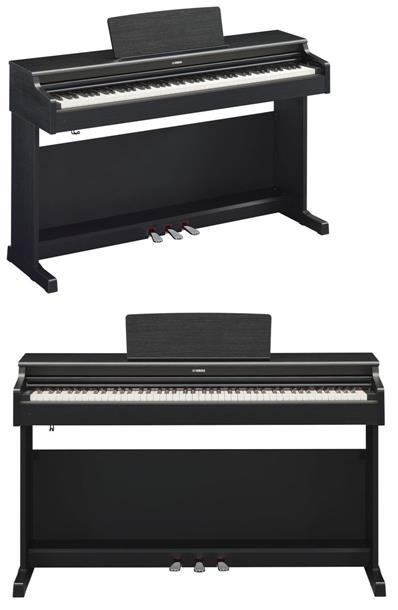
Yamaha Corporation is a Japanese company with a wide range of products and services, mainly musical instruments and electronic devices. Today we are going to talk about a very interesting digital piano whose price is usually around €990/$1200/£899. The Yamaha YDP 164 is a digital piano that tries to imitate an acoustic piano and is intended for people who want to study classical piano or a classical technique. Of course, it is designed to be studied at home and not to move the piano.
Digital pianos of this type have the advantage that they weigh much less than an upright. They can weigh up to 150 kg. Otherwise it is quite suitable for most houses. However, below I will compare it with other models of the same brand, which are cheaper and have smaller dimensions, such as the YDP S34
- 88 hammer-action notes Graded Hammer 3 (GH3) with synthetic ivory and ebony key tops This keyboard imitates the weighted keys of a real piano and its hammer mechanism. The GH3 weighted keys is top of the range on the Yamaha and is the cheapest in the Arius range that has this type of weighted keys. The cheapest ones have the GHS
- Yamaha CFX piano sound. The sound samples have been recorded with a superior quality system to the AWM standard. This makes the digital sounds of this piano even better.
- Three factors that help improve the experience of playing this piano and make it more like playing an acoustic piano:
- Intelligent Acoustic Control: When you turn down the volume on a digital piano, the lower and higher frequencies are not heard well. IAC helps balance this frequency imbalance so that they sound even.
- Acoustic Optimizer — Detects speaker connections, measures distances from the listening position, and automatically optimizes speaker settings, such as volume balance and acoustic parameters, to suit the room
- Stereophonic Optimizer: Interesting feature that adjusts the distance between you and the piano when you play with headphones so you have the feeling that the sound is coming from the piano and make the experience of playing the piano even more real.
- 192 notes of polyphony. These are the notes that can be played at the same time on a piano including the accompaniment. With this polyphony you can play everything.
- 10 high quality piano sounds
- 4 types of reverb (Reverberation effect which is a reflection effect of the sound)
- Dual or split function to divide the keyboard into two different instruments and duo mode (to play at the same time with your teacher)
- Metronome
- Key-Off Samples
- 2 track recorder (1 song)
- 10 demo songs and 50 piano songs
- 3 pedal. The most important is the sustain pedal. The others are usually important in advanced scores.
- Keyboard cover
- USB host connection. USB MIDI connection that allows you to connect to your computer and do such wonderful things as recording what you play on a MIDI track and then exporting it from one click to a score as the MIDI track stores the note information.
- 2 headphone jacks
- 2 x 20W speaker system. This is its strong point. Very powerful speakers that even allow you to install it in a restaurant although it is not the most common option. Or they allow you to practice with other instruments that are amplified or sound very loud like a drum kit.
- Dimensions: 1357 x 849 x 422 mm About this comment that now we will see them smaller too.
- Weight: 42 Kg
- Color: Black
Also if you have read more articles in my blog you know that I like to be realistic. Not many people can study 3 or 4 hours a day and most of the musical goals can be achieved by studying much less. Even be professional. Not everything is studying for a philharmonic orchestra. In fact, most people who study piano don’t study for that purpose.
For those of you who study classical at the upper-middle level, the GH3 weighted keyboard is much better than the GHS
Let’s go with a video review in English where you can hear how their sound sounds and see live many of their features. There are also some very interesting apps to manage their functions.
It must be said that this Yamaha is the new model of the Yamaha YDP 163. It doesn’t make much sense to compare them with the 163 you can’t buy anymore and the Yamaha 164 is at the same price. There is very little difference, improvements in the usability, the electronics and the apps that come with it.
Related post you can be interested in
- Ranking with the best digital pianos
- My selection of cheap musical keyboards.
- Basic concepts you need to know about digital pianos.
- The best resources to learn to play the piano by yourself.
- The best Yamaha Digital Pianos.
Now let’s compare the Yamaha YDP 164 with its more common alternatives. Also at the end of the post you will find a section with the best shopping possibilities for this digital piano. But you can go directly to that part of the post by pressing the following button.
Yamaha YDP-164 Arius vs Yamaha YDP-144 Arius
The Yamaha YDP-164 Keyboard is usually about 200 euros more expensive than the YDP 144 which is usually around €777/£715. The truth is that the Yamaha YDP 144 sells for more than the 164 because the price difference is significant while retaining many of the features that the Yamaha YDP 164 has. The main differences between the two are
- The price as we said before.
- The Yamaha YDP 164 has superior weighted keyboard to make it look more like a real piano. The YDP 144 has the GHS system
- The YDP 164 has much more powerful and better balanced speakers, although the YDP 144’s 8W isn’t bad either
Otherwise they’re pretty much the same. If you have a beginner’s or intermediate level, buy the Yamaha YDP 144 because you don’t need to spend that 200 euro difference. If you are already at a higher level and have the budget, the Yamaha YDP 164 is the right choice.
The problem with studying for 4 hours and buying the YDP 144 is that you will wear it out very quickly. But it can also work for you.
Let’s put the characteristics of these pianos on a chart so you can compare
|
Yamaha YDP-164 Arius |
Yamaha YDP-144 |
|---|---|
|
|
And then a video of the Yamaha YDP-144 digital piano to hear how it sounds. Actually, the quality is the same as on the 164, but the speakers on the latter are better
If you want to know more about this option click on the following link to see the Yamaha YDP-144 digital piano file
Yamaha YDP-164 B Arius vs Yamaha YDP-S54 B
The Yamaha YDP-164 and S54 Keyboard cost about the same and are almost the same. What is the difference? Well the size and this can be important if you have little space at home. We can say that this is your reduced version.
If we look at the table we see that the YDP S54 is more than 10 cm shallower than the YDP 164 and this for some people can be very important.
Otherwise they are the same. They have the same GH3 weighted keyboard and the same features already mentioned.
I put the dimensions and weight as the only difference in the table:
|
Yamaha YDP-164 B Arius |
Yamaha YDP-S54 B |
|---|---|
|
|
And as always a video if you want to listen to it although there is no difference either in the speakers with the 164. Both pianos have 20 W of power.
https://www.youtube.com/watch?v=s1pxZUTQH_Y
Here’s the review of the Yamaha YDP-S54 digital piano.
Yamaha YDP-164 B Arius vs Kawai KDP-110
Now we will make the comparison between digital piano teeth: on the one hand the Yamaha YDP-164 Arius which has a price of €990/$1200/£899 and on the other hand the Kawai KDP-110 which has a price of about £850. Having a difference of approximately £150 in the price of both, we will have an expensive face with their similarities and differences:
- Both digital pianos have an 88-note hammer-action keyboard, the Yamaha uses GH3 technology with synthetic ivory and ebony keys, the Kawai uses Responsive Hammer Compact Action technology, which is not bad, but the Yamaha’s is better.
- When it comes to sound, the Yamaha offers its Yamaha CFX sound engine with 10 different sounds and 192 polyphonic notes. The Kawai has the Harmonic Imaging sound engine which has 15 sounds and 192 notes of polyphony, plus 100 styles or rhythms.
- In terms of effects and functions, the Yamaha offers Optimizers: acoustic and stereo. It offers four types of Reverb, dual function and duo mode, an intelligent acoustic control, and the metronome function. While the Kawai offers: 13 virtual technical parameters, which can be modified through an application called Virtual Technician, to review them further you can find it here. It also offers six types of Reverb, Brilliance, Dual and Four-Hand modes, Bluetooth connection and the metronome function.
- Both of these already digital offer a recorder, three pedals or triple pedalboard, keyboard cover and USB connection to host, which allows them to be connected to a computer to be used as a MIDI controller in a composition or music production program.
- Call has two 20 watt speakers, a weight of 42 kg and measures 1357 × 849 × 422 mm. The Kawai has two 7 Watt speakers, a weight of 37 kg and the measurements of 1,312 x 286 x 820mm.
We found good digital pianos for the first years of study of the piano, with very similar characteristics, however the Kawai has slight advantages; Five more sounds in their repertoire, functions that can be modified by an application that helps the simulation of a real acoustic piano, and the function of Bluetooth MIDI but also has disadvantages such as less power in their speakers. We invite you to watch the Videos so that you can hear the quality of sounds offered by both pianos.
I’m putting dimensions and weight as the only difference on the table:
|
Yamaha YDP-164 B Arius |
Kawai KDP-110 |
|---|---|
|
|
We will now have a video of the Kawai KDP-110
Yamaha YDP-164 B Arius vs Kawai CN29
Finally we have the comparison of the following digital pianos: the Yamaha YDP 164 Arius with a price of €990/$1200/£899 and the Kawai CN 29 which has a price of €1.259/£1,177. Having a difference of approximately £270 between them. We will check their similarities and differences in the following face-to-face:
- Both digital pianos have an 88-note hammer-action keyboard, the Yamaha uses GH3 technology with synthetic ivory and ebony keys, the Kawai uses Responsive Hammer III technology with ivory touch and “Let-Off” simulation that recreates the same smooth feel of grand pianos.
- When it comes to sound, the Yamaha offers its Yamaha CFX sound engine with 10 different sounds and 192 polyphonic notes. The Kawai has the Progressive Harmonic Imaging sound engine with 19 sounds and 192 polyphonic notes.
- In effects and functions, the Yamaha offers Optimizers: acoustic and stereo, offers four types of Reverb, dual function and duo mode, an intelligent acoustic control, and the metronome function. While the Kawai offers: 17 virtual technical parameters, which can be modified through an application called Virtual Technician, to review them further you can find it here. It also offers six types of Reverb, Brilliance, Dual and Four-Hand modes, Bluetooth connection and the metronome function.
- Both already digital offer us a recorder, three pedals or triple pedalboard, keyboard cover and USB connection to host, which allows them to be connected to a computer to be used as a MIDI controller in a composition or music production program.
- Call has two 20 watt speakers, a weight of 42 kg and measures 1357 × 849 × 422 mm. The Kawai has two 20-watt speakers as well, a weight of 43 kg and the measurements of 1360 x 405 x 860 mm.
As we can see we have two good digital pianos, with great performances for our first years of study in the piano and for live performances. However, due to its price difference and as we had mentioned it is £270, the Kawai surpasses in certain specifications of the Yamaha: with a greater amount of sounds and a greater amount of functions that bring its simulation closer to that of a real acoustic piano.
I put dimensions and weight as the only difference on the board:
|
Yamaha YDP-164 B Arius |
Kawai CN29 |
|---|---|
|
|
Now a video of the Kawai CN29:
Here’s the review of the Kawai CN29 digital piano.
Where to buy Yamaha YDP 164
Amazon
- Free Shipping and possibility of shipping in one day with Amazon Premium.
- Full Guarantee but they are no experts in music equipment.
- Sometimes better price.
- He’s got worse stock than Thomann.
Thomann
- Free Shipping.
- Full warranty. If you have any problems, they take care of everything.
- 100% reliable payment.
- Leader in trouble-free shipping.
- Usually Best price.
- Best Reputation: They are the leading online store in Europe and have the best catalogue and information.
Check below related models with similar price and features:
- Roland FP 60
- Yamaha P515
- Yamaha YDP 164
- Roland FP 90
- Korg G1 Air
- Casio PX 560
- Roland Kiyola KF 10
- Korg PA 1000
- Korg PA 700 Oriental
- Yamaha PSR S975
- Korg Havian 30
- Korg PA 700
- Kawai EN 8
- Kawai MP 11
- Kawai MP 7
- Clavia Nord Electro 6D 61
- Clavia Nord Stage 3 88
- Kurzweil SP6
- Korg SV1 73
- Kurzweil Forte 8
- Clavia Nord Electro 6D 73
- Clavia Nord Stage 3 HP76
- Roland RD 2000
- Kurzweil Artis 7
- Clavia Nord Piano 4
- Clavia Nord Stage 3 compact
- Crumar Seven
- Clavia Nord Electro 6
- Korg Grandstage 73
- Dexibell Vivo Stage S9
- Dexibell Vivo Stage S1
- Korg SV1 88
- Korg Grandstage 88
- Kurzweil Forte SE
- Yamaha CP88
- Roland VR 730
- Studiologic Numa Concert
- Yamaha CP73
- Dexibell Vivo Stage S7
- Yamaha CP300
- Yamaha CP1
- Clavia Nord Grand
- Viscount Physis Piano K4 EX
- Viscount Physis Piano K5 EX
- Dexibell Vivo Portable P7
- Kurzweil Artis
- Dexibell Vivo Portable P3
- Dexibell Vivo Stage S3
Yamaha Digital Piano YDP 144 Full Review. Is it a good choice?
Yamaha Digital Piano YDP 144 Full Review Is it a good choice?
Yamaha Corporation is a Japanese company with a wide range of products and services, mainly musical instruments and electronics. Now we will have the review of the Yamaha YDP-144 B Arius. This piano is a top seller and I always include it in my top selection of the best digital pianos. This is a very balanced digital piano for an appropriate price. One of the best values for the money.
Features:
- 88-note GHS keyboard with matte black key tops (the GHS is the same weighted keyboard that is included in bestsellers such as the Yamaha P125)
- Yamaha CFX piano sound. Superior engraving technology compared to inferior models
- Three factors that help enhance the experience of playing this piano and make it more like playing an acoustic piano:
- Intelligent Acoustic Control: When you turn down the volume on a digital piano, the lower and higher frequencies are not heard well. IAC helps balance this frequency imbalance so that they sound even.
- Acoustic Optimizer – Detects speaker connections, measures distances from the listening position, and automatically optimizes speaker settings, such as volume balance and acoustic parameters, to suit the room
- Stereophonic Optimizer: Interesting feature that adjusts the distance between you and the piano when you play with headphones so you have the feeling that the sound comes from the piano and make the experience of playing the piano even more real.
- 192 notes of polyphony. More than enough to play all the pieces we want. Polyphony, that’s how many notes can be played at once.
- 10 sounds.
- Reverb and damping resonance.
- Duo mode
- Key-Off samples (escape effect of acoustic pianos, which is the bounce of the hammer and the type of attack that can be made with the mechanism of a piano)
- 2 track recording (1 song). It’s very useful to be able to record what you play, especially if you want to hear how you played a piece later or want to record something fast without having to use the computer.
- 3 pedals, including the sustain pedal, which is the most important to keep the note in time.
- 10 sound demonstrations and 50 pre-recorded songs
- Keyboard cover
- USB to host connection (very important MIDI connection for the computer).
- 2 headphone jacks (so two people can play).
- Speaker system: 2 x 8W (enough power to rehearse at home, or with friends)
- Dimensions: 1357 x 815 x 422 mm
- Weight: 38 Kg.
- Color: Black.

This is a piano thought for someone who wants to study at the conservatory or wants to study piano thinking a little bit about the classical or acquiring a strong technique. It is suitable for intermediate level of classical music conservatory and also for beginners. It must be said that there are also people with a small budget who study the higher level with digital pianos from this range. This is not at all unusual. Not everyone has a budget of 3000 euros or more.
The good thing about these pianos is that they don’t go out of tune, although sometimes they need to be replaced, but these are cheap repairs. They depend on whether you study for many hours.
It is a piano that also has a very acceptable counterbalance, plus it has USB MIDI which allows you to connect it to a laptop and write MIDI tracks that can then be exported directly to a score.
Sound
Now that we have seen the features of this Yamaha YDP-144 B Arius piano look at this video review. Although it is in English it describes quite a lot of the functions, and you can also hear how the piano sounds. You will also see how the piano functions can be controlled with the accompanying Yamaha Smart Piano app.
Related post you can be interested in
- Ranking with the best digital pianos
- My selection of cheap musical keyboards.
- Basic concepts you need to know about digital pianos.
- The best resources to learn to play the piano by yourself.
- The best Yamaha Digital Pianos
Well, let’s compare this piano with other options that are around its price and are very interesting. Let’s compare it with two digital pianos without support and two with acoustic piano support.
Yamaha YDP-144 Arius vs Casio PX-S3000 Privia
The Yamaha YDP-144 B Arius Keyboard is usually €777/$800/£715 and the Casio PX-S3000 BK Privia is around €825/$849/£755 . The letters B and BK only refer to the color black, not that they are different models.
Casio presents a very interesting model to compete in the £755 range and does so with a very complete keyboard.
The main difference is that it is not a piano with furniture and it is a portable piano with a very light weight of 11.4 kg. This makes it perfect if you want to go to a concert with a keyboard that has many functions and will give you a lot of freedom of interpretation without giving up the keyboard with weighted keys and a real piano feel. Portability is one of the main reasons why you have to decide between the Casio or the Yamaha. The YDP 144 is not a model designed to be moved. It’s more suited to practice at home.
The Casio PX 3000 is a very interesting proposal because it has a lot of sounds and it also has the weighted keyboard of a piano. This allows you to experiment with many effects and sounds without sacrificing a real acoustic piano feeling.
In addition, the Casio PX S3000 has enough polyphony to play all existing scores.
The Yamaha P144 with its IAC systems described above offers a more realistic acoustic piano feel. The Casio PX 3000, on the other hand, is designed for you to be able to practice with it but also to take it to concerts and rehearsals.
In addition, the Casio PX has speakers with decent power.
The Casio PX S3000 offers the possibility of battery operation but also has 8 W speakers with enough power to play indoors. If you want to play in the street in a very open space it might be short, so I recommend you to accompany it with the popular Roland Cube street amplifier
I think the differences between the two pianos are already very clear and the choice is much clearer. If you only want to practice the YDP 144, but if you want to go outside or move it to the rehearsal room, the S300 is a real wonder at a very good price.
Let’s put the characteristics of these pianos on a table so you can compare
|
Yamaha YDP-144 B Arius |
Casio PX-S3000 BK Privia |
|---|---|
|
|
And here is a video of the Casio PX-S3000 Privia digital piano with its enormous number of rhythms:
If you want to know more about this option, click on the following link to see the Casio PX-S3000 Privia
Yamaha YDP-144 Arius vs Yamaha DGX-660
The Yamaha DGX-660 is around €735/$800/£666, so it’s really close to the Yamaha YDP-144 Arius.
In this case we are dealing with a case similar to the previous one. The Yamaha DGX 660 is also designed to be transported, although in this case it is more suitable for the rehearsal room, since it can be used to play in the street or in a place without electricity.
What we talked about in the previous point also applies when comparing these two models. The Yamaha YDP 144 aims to imitate an acoustic piano more and gives you more stability when playing thanks to its structure.
I mention this option too because it’s cheaper than the previous Casio PX and also has a good weighted keyboard and many sounds and effects to experiment with.
An interesting feature is that it has an “In” input so you can connect a microphone and have the signal output through the piano speakers. On the other hand it has no line output as such and that can limit a bit in case you want to play in big concerts because of the power of its audio output signal. The above Casio does not have this problem because it has a line output with enough power.
It is cheaper than the Casio we have seen before and has a very good sound quality. It’s a top seller for its price.
Let’s put the features of these pianos in a table so you can compare:
|
Yamaha YDP-144 B Arius |
Yamaha DGX-660 B |
|---|---|
|
|
And here is a video of the Yamaha DGX-660 digital piano:
If you want to know more about this option click on the following link to see the Yamaha DGX-660 digital piano review
Yamaha YDP-144 B Arius v Yamaha YDP-S34 B Arius
The Yamaha YDP-S34 Arius is around €792/$999/£722, so it’s really close to the price of the Yamaha YDP-144 Arius.
Well, let’s go now with another digital piano that this case is very similar to the Yamaha YDP 144. We could say that they are almost twin pianos but there are some differences.
To start with the YDP S34 is a slightly smaller and lighter model. This is an important factor if you want to bring it into the house and have just enough space.
The Yamaha YDP 144 also has a duet mode for playing two people but the most important point is the previous one. The S34 was created in case you didn’t have enough space for the Yamaha YDP 144
Let’s put the characteristics of these pianos on a chart so you can compare
|
Yamaha YDP-144 Arius |
Yamaha YDP-S34 B Arius |
|---|---|
|
|
And here is a video of the Yamaha YDP-S34 B Arius digital piano:
If you want to know more about this option click on the following link to see the Yamaha YDP-S34 review digital piano
Yamaha YDP-144 B Arius vs Korg LP-380
The Korg LP-380 is around €689/$1150/£679. In this case we compare it with another model that is also designed for studying piano, has furniture and is a little cheaper, but it depends on your country or store.
The Korg is a digital piano that has much less background and this can be important if you have little space. On the other hand, the Korg LP 380 has more sounds and a decent polyphony of 120 notes that you can play almost anything.
The Yamaha has several escape effects and the Korg doesn’t.
The Korg has much more powerful speakers but does not have the added features of the Yamaha YDP 144 to control the sound sensation and make it more real. On the other hand the Yamaha has a duo mode for playing with an instructor.
The Korg LP 380 can be a very interesting option if the price difference reaches 80 euros. But if you can afford it you will have a better experience with the Yamaha YDP 144
Let’s put the characteristics of these pianos on a chart so you can compare:
|
Yamaha YDP-144 B Arius |
Korg LP-380 |
|---|---|
|
|
And here is a video of the Korg LP-380 WH digital piano
If you want to know more about this option click on the following link to see the Korg LP-380 digital review
Yamaha YDP-144 B Arius vs Kawai KDP-110
We will now compare the Yamaha YDP-144 with the Kawai KDP-110. The Kawai is about 90 euros more expensive than the Yamaha, we will analyze if this increase is valid according to the features it offers.
Both are digital pianos with furniture included, the Yamaha as we have seen has its CFX piano sound and the Kawai offers the SHIGERU KAWAI SK-EX concert piano sound capture, which is an excellent grand piano.
Both have 88 weighted keys, with different hammer actions, typical of their respective brands. An important difference is the number of sounds, which in the Yamaha we find 10, while the Kawai is 15.
Both have 3 pedals. And they have a cover to protect the keys.
A relevant difference is the output of the speakers, while in the Yamaha we have 8W of power per speaker, in the Kawai we find stereo speakers that add up to 40W (20W and 20W).
In a matter of measures they are very similar and in weight exactly the same, both in 38 kg.
Let’s put the characteristics of these pianos on a table so you can compare:
|
Yamaha YDP-144 B Arius |
Kawai KDP – 110 |
|---|---|
|
|
And here is a video comparing the pianos:
Yamaha YDP-144 B Arius vs Casio AP 470
We will now have a comparison between the following digital pianos: the Yamaha YDP-144 which is priced at €777/$1000/£715 and the Casio AP 470 which is priced at €858/$1500/£777 , with a difference between them of approximately €120. We will see their similarities and differences in the following face-to-face:
- Both digital pianos have 88 weighted, touch-sensitive keys, the Yamaha with its GHS technology and the Casio with its Scaled Action Hammer II technology with synthetic ebony and ivory, giving a greater simulation of a real piano.
- In terms of sound, the Yamaha has a Yamaha CFX sound engine, with 10 sounds and 192 notes of polyphony. The Casio with its Air Morphing Multidimensional sound engine has 22 sounds and 256 polyphony voices.
- Both digital pianos have the following modes: Duo, Split and Dual.
- The Yamaha offers: An Acoustic Optimizer, and a Stereo Optimizer, Reverb and Damping Resonance Effects, Keyboard Cover, and two 8w speakers.
- The Casio offers: DSP (Digital Signal Process) effects, Chorus, Brilliance and Hall simulation (Reverb), Cover and Note deactivation simulator, concert performance and four 20W two-day speakers having a total of 80W.
- The Casio is slightly heavier with a total of 43.3 kg.
As we can see, we have two pianos with excellent digital performance. For its part, the Casio offers optimizers that help to simulate a real piano.s that help to simulate a real piano. However, the Casio is the winner having a greater amount of sounds and polyphony also taking into account its great power of speakers that could serve in a closed room without the need for another amplification.
Let’s put the characteristics of these pianos on a table so that you can compare:
|
Yamaha YDP-144 B Arius |
Casio AP470 |
|---|---|
|
|
And then a video of the Casio AP470:
Yamaha YDP-144 B Arius vs Roland FP30
Finally, we have the comparison between these two digital pianos the Yamaha GDT-144 aryan which as we have seen has a price of €777/$1000/£715 and the Roland FP 30 which has a price of €619/$700/£555, having a remarkable difference of £150 between both. We will have their differences and similarities in the following versus:
- Both digital pianos have 88 touch-sensitive weighted keys, the Yamaha with its GHS technology and the Roland with its PHA-4 technology with ivory touch and fugue release, giving a greater simulation of a real piano.
- In terms of sound, the Yamaha has a Yamaha CFX sound engine, with 10 sounds and 192 notes of polyphony. The Roland with its SuperNATURAL sound engine has 35 sounds and 128 polyphony voices.
- Both digital pianos have the following modes: Duo, Split and Dual.
- The Yamaha offers: An Acoustic Optimizer, and a Stereo Optimizer, Reverb and Damping Resonance Effects, Keyboard Cover, and two 8w speakers.
- The Roland offers: Bluetooth wireless connection, a built-in microphone input, eight preset rhythms, and a light weight of 14. 1 kg (no cabinet included).
We found excellent digital pianos, however the Roland has better performance for its wall microphone input (if you like to sing), Bluetooth wireless connection, slightly more powerful speakers reaching 11 W each and its light weight of 14. 1 kg make it a very portable option too.
Let’s put the features of these pianos in a table so you can compare:
|
Yamaha YDP-144 B Arius |
Roland FP30 |
|---|---|
|
|
And now for our review of the Roland FP30:
If you’re interested in learning more, we invite you to see our review of the Roland FP30 Digital Piano
Where to buy Yamaha YDP 144
Amazon
- Free Shipping and possibility of shipping in one day with Amazon Premium.
- Full Guarantee but they are no experts in music equipment.
- Sometimes better price.
- He’s got worse stock than Thomann.
Thomann
- Free Shipping.
- Full warranty. If you have any problems, they take care of everything.
- 100% reliable payment.
- Leader in trouble-free shipping.
- Usually Best price.
- Best Reputation: They are the leading online store in Europe and have the best catalogue and information.
Check below related models with similar price and features:
- Thomann SP 5600
- Yamaha YDP 143
- Roland FP 30
- Yamaha YDP 163
- Yamaha YDP S52
- Hemingway DP 201 MKII
- Casio PX S1000
- Thomann DP 33
- Casio PX S3000
- Casio PX 870
- Yamaha YDP S54
- Yamaha YDP 144
- Korg B1
- Casio CDP S100
- Casio PX 360
- Casio PX 770
- Korg LP 380
- Korg C1 Air
- Casio CDP S350
- Thomann DP 32
- Yamaha YDP S34
- Korg LP 180
- Korg PA 600
- Casio CT X5000
- Yamaha DGX 660
- Korg EK 50
- Yamaha PSR S670
- Yamaha PSR S775
- Yamaha PSR EW410
- Roland 5
- Casio CT X3000
- Yamaha PSR A350
- Casio WK 7600
- Casio WK 6600
- Yamaha P45
- Yamaha P125
- Kawai ES 110
- Alesis Recital Pro
- Kurzweil SPS4 8
- Roland FP 10
- Korg D1
- Studiologic Numa Compact 2
- Korg SP 280
- Yamaha P121
- Studiologic Numa Compact 2x
- Roland GO PIANO 88
- Studiologic Numa Stage
Did you like this post? > > > [/one_half_first]
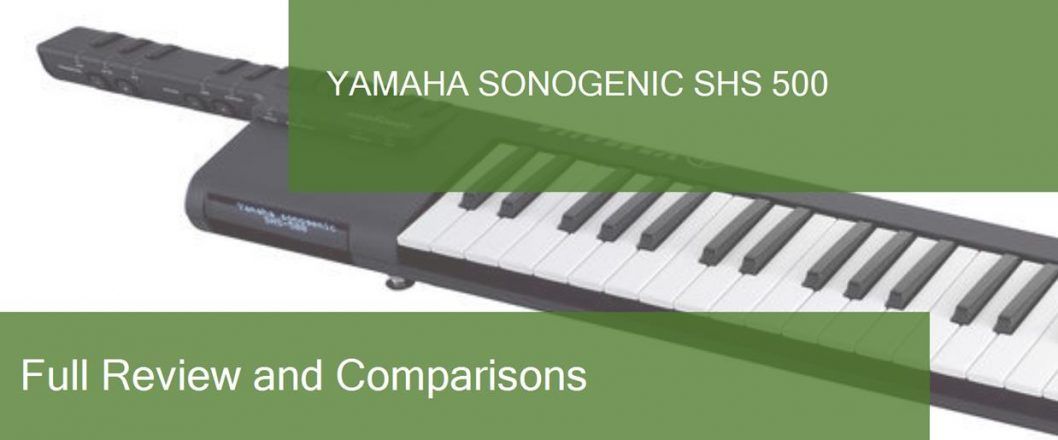
Digital Piano Yamaha sonogenic SHS 500 Full Review. Is it a good purchase?
Digital Piano Yamaha sonogenic SHS 500 Full Review. Is it a good purchase?
- 37 touch-sensitive keys
- 30 Sounds (Different sounds of piano and other instruments)
- 10 peset songs
- 48-voice polyphony (Number of notes that can sound at once. This includes songs that sound at once. So if you play over an accompaniment sound, more notes will accumulate.)
- knobs controls
- Tone control and modulation wheel
- Transposer (Transposition allows you to move the note spectrum of a keyboard. This allows you to play with transposing instruments. It is not an easy concept but it is made to facilitate the writing of an orchestration for instruments with very different bass and treble registers.)
- DSP (Digital Signal Processing (DSP) effects. These are digital effects that modify the sound of the keyboard.)
- Master EQ (Refers to the master equalizer that allows you to adjust the parameters of the mix of sounds that come out of your speakers.)ualizer
- USB audio interface
- Usb to Host (It’s a more modern MIDI connector. MIDI allows you to do such wonderful things as connect the keyboard to the computer, record a soundtrack and with certain programs pass with a single click what you have played to musical notes in a score. MIDI tracks store note information)
- Auxiliary audio input
- Line audio output
- Headphone output
- Can work with batteries
- Free application Chord Tracker available
- Compatible with iOS (8.1 or later)
- It works with iPhone and IPAD
- The Yamaha Chord Tracker application will display the chord symbols of a song for you
- Power supply source PA-130
- Dimensions: 821 x 121 x 65 mm (width x depth x height) and a weight of 1.5 kg

Now that we’ve listed and described the features of this digital piano there’s no better than taking a look at the following video where they tell us more about the Yamaha sonogenic SHS 500 and you can hear the different sounds of this piano.
Related post you can be interested in
- Ranking with the best digital pianos
- My selection of cheap musical keyboards.
- Basic concepts you need to know about digital pianos.
- The best resources to learn to play the piano by yourself.
- The best Yamaha Digital Pianos.
Now let’s compare the Yamaha sonogenic SHS 500 with its more common alternatives. Also at the end of the post you will find a section with the best shopping possibilities for this digital piano. But you can go directly to that part of the post by pressing the following button.
Yamaha sonogenic SHS 500 vs Roland GO KEYS
The digital piano Yamaha sonogenic SHS 500 is usually about 8 € more expensive than Roland GO KEYS, but with so little price difference this can vary.
Let’s put the features of each of these pianos in 2 different columns to make it easier to see the differences
|
Yamaha sonogenic SHS 500 |
Roland GO KEYS |
|---|---|
|
>
|
And below a video of the Roland GO KEYS
If you want to know more about this model do not miss our Roland GO KEYS review
Yamaha sonogenic SHS 500 vs Startone MKR 61
The digital piano Yamaha sonogenic SHS 500 is usually about 248 € more expensive than Startone MKR 61.
Let’s put the features of each of these pianos in 2 different columns to make it easier to see the differences
|
Yamaha sonogenic SHS 500 |
Startone MKR 61 |
|---|---|
|
|
And below a video of the Startone MKR 61
If you want to know more about this model do not miss our Startone MKR 61 review
Yamaha sonogenic SHS 500 vs Startone MK 200
The digital piano Yamaha sonogenic SHS 500 is usually about 204 € more expensive than Startone MK 200.
Let’s put the features of each of these pianos in 2 different columns to make it easier to see the differences
|
Yamaha sonogenic SHS 500 |
Startone MK 200 |
|---|---|
|
|
If you want to know more about this model do not miss our Startone MK 200 review
Yamaha sonogenic SHS 500 vs Thomann DP 26
The digital piano Yamaha sonogenic SHS 500 is usually about 2 € cheaper than Thomann DP 26, but with so little price difference this can vary.
Let’s put the features of each of these pianos in 2 different columns to make it easier to see the differences
|
Yamaha sonogenic SHS 500 |
Thomann DP 26 |
|---|---|
|
Successor of the Thomann DP-25
|
If you want to know more about this model do not miss our Thomann DP 26 review
Where to buy Yamaha sonogenic SHS 500
Amazon
- Free Shipping and possibility of shipping in one day with Amazon Premium.
- Full Guarantee but they are no experts in music equipment.
- Sometimes better price.
- He’s got worse stock than Thomann.
Thomann
- Free Shipping.
- Full warranty. If you have any problems, they take care of everything.
- 100% reliable payment.
- Leader in trouble-free shipping.
- Usually Best price.
- Best Reputation: They are the leading online store in Europe and have the best catalogue and information.
- Thomann DP 26
- Thomann SP 320
- Yamaha NP 32 Piaggero
- Korg Tiny Piano
- Startone MK 300
- Startone MK 200
- Yamaha PSR E463
- Yamaha PSR E363
- Startone MKR 61
- Roland GO KEYS
- Casio SA 46
- Casio SA 47
- Casio CTK 240
- Casio CT X700
- Yamaha EZ 220
- Yamaha PSR E263
- Yamaha PSR EW300
- Casio LK 280
- Casio SA 76
- Casio CTK 3500
- Casio LK 265
- Casio LK 136
- Casio CTK 1500
- Casio SA 77
- Yamaha sonogenic SHS 500
- Casio SA 78
- Casio CTK 2500
- Yamaha YPT 260
- Roland GO PIANO
- Midiplus Stage 88
Did you like this post? > > > >