
- Home
- Author's Archive:
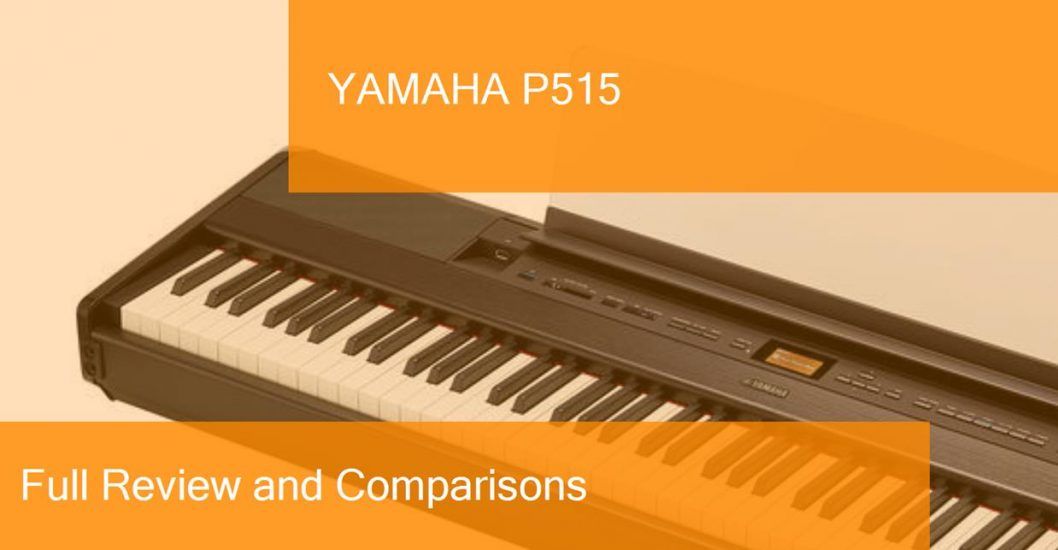
Yamaha Digital Piano P515 Full Review. Is it a good keyboard?
Review and Opinion of the Yamaha P-515 and Where to Buy It?
Yamaha Corporation is a Japanese company with a wide range of products and services, mainly musical instruments and electronic devices. Today we will thoroughly analyze the characteristics of the Yamaha P515 a digital piano with many and very good features. And this is the least we could expect from both the brand and the price of this luxurious musical instrument, reaching a price of €1399/$1500/£1,290, in short we introduce you a very powerful digital piano:
- 88 weighted keys with Natural Wood X and synthetic ivory (Weighted keyboard, is the weight that the keys of an acoustic piano have and that digital pianos try to imitate to equal the touch of it. The keys in the high register are heavier and in the high register less. This is different from the sensitivity on the keyboard which serves to regulate the volume of the note, but a weighted keyboard always has sensitivity on the keys)
- The Yamaha CFX Binaural engine has been used for sampling.
- Enhanced Virtual Resonance Modeling
- Key-off Tracks
- 256 notes of polyphony (Number of notes that can be played at once. This includes accompaniments that also consume notes. So if you play over an accompaniment more notes will be accumulated)
- 40 sounds (Different sounds of piano and other instruments)
- Duo function
- Split function (dividing the keyboard into two different instruments) or layer
- Dual function (Dual mode allows you to combine two sounds to create a more complete one. Typical is the combination of piano + stringed instrument sound)
- Reverb Effect
- Brilliance Effect
- Chorus effect
- Sounds demo preset
- 16-track recorder
- Internal memory
- Metronome (Basic study element to study and practice the tempo of a piece of music)
- LCD screen
- Transcription
- USB midi (MIDI allows you to do such wonderful things as connect your keyboard to your computer, record a sound track and with certain programs click through what you have played to musical notes on a score. MIDI tracks store the information of the musical notes)
- Bluetooth Technology
- USB for pendrives
- 2 hull exits
- Input for sustain pedal (The sustain pedal of a piano or keyboard is used to keep the note playing even if you stop pressing the key) and supports triple pedalboard
- Conventional MIDI
- Stereo input
- Stereo line output
- 2 powerful 15W + 5W speakers
- Acoustic optimizer
- IAC control for when you play too loud adjust the sound parameters
- A weight of 22 kg
- Includes lectern, power cord but no sustain pedal
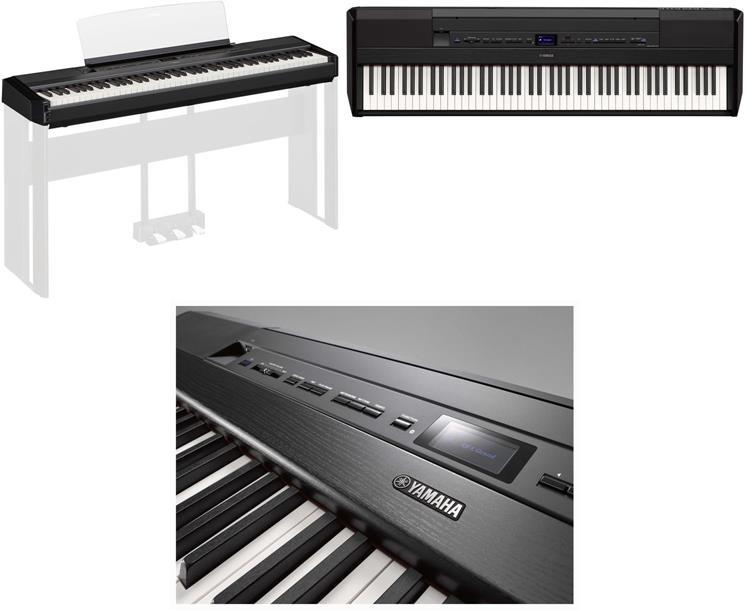
As you can see it is a great instrument that has the best characteristics to be used live, in the studio or as a piano for practice. Talking a little about its NWX (Natural Wood X) keys, they are the same ones Yamaha uses for its grand pianos, made using the best woods that were dried with the only intention of making musical instruments, this gives us a greater resistance to possible malformations due to their use or abuse. The white keys have a synthetic ivory coating, while the black keys have a synthetic ebony coating. The feel of the release mechanism is also the same as that of a grand piano.
From its improved VRM (Virtual Resonance Modeling), we can comment that it is able to calculate the string state of the 88 keys it has continuously, and it also calculates certain resonances produced by the strings and also includes harmonics that sound both on the soundboard, the soundboard and the frame, thus adding brightness, sonority and complexity to the sound. And because it has no dampers, they continue to sound subtle, even after you have lifted your fingers from the keys.
With the 256 notes of polyphony we have to play any composition in front of us. Really the Yamaha P515 is a marvel that you can see in these 2 very powerful videos of the and then we go with the comparison tables:
Related post you can be interested in
- Ranking with the best digital pianos
- My selection of cheap musical keyboards.
- Basic concepts you need to know about digital pianos.
- The best resources to learn to play the piano by yourself.
- The best Yamaha Digital Pianos.
Now let’s compare the Yamaha P515 with its more common alternatives. Also at the end of the post you will find a section with the best shopping possibilities for this digital piano. But you can go directly to that part of the post by pressing the following button.
Yamaha P-515 vs Yamaha P125
As a first comparison we will have the following digital pianos: the Yamaha P515 with a price of €1399/$1500/£1,290 and the Yamaha P125 with a price of €566/$650/£518, with such a big difference that they cost almost twice as much as each other, we will see according to their characteristics who has the best value for money and what in your case fulfills as a good digital piano:
- Both digital pianos have 88 weighted keys, the Yamaha p515 with Natural Wood X technology and synthetic ivory, while the P125 has plastic keys. And they have sensitivity, which is the option of making dynamics when playing, when a note is pressed more strongly it sounds higher and while pressed less strongly it sounds lower.
- Both have a sound engine from their Yamaha brands, the 515, the Yamaha CFX Binaural and P125, the Pure CF.
- The P515 has 40 sounds and 256 notes of polyphony, while the P125 has 24 sounds and 192 notes of polyphony. Polyphony is the most notes that can sound simultaneously.
- Both have effects like Reverb and Chorus, and piano functions like Split, Dual, Layer and transposition and metronome.
- The P515 has a built-in 16-track recorder, when the Yamaha P125 has a 1-track recorder.
- Both have a USB connection for computers, to be used as MIDI controllers in a music composition or production program, and USB for pen drives.
- Both pianos have two headphone outputs, a stereo output, a line output, a sustain input with a pedal and a triple pedal input.
- The P515 has two powerful 15w + 5w speakers, weighing 22kg when the P125 has two 7w speakers, and weighs 11.8kg.
- Both include power supply and music stand.
As we can see, they are two digital pianos of the same brand and with very similar functions, although the Yamaha P 515 always has the advantage in its functions and features, of course, it is almost twice as expensive and the Yamaha P 125.
We are going to put the features of each of these pianos in 2 different columns to make it easier to see the differences and then from these will come the videos.
|
Yamaha P-515 |
Yamaha P125 |
|---|---|
|
|
Now a video of the Yamaha p125:
If you are interested in knowing more, we invite you to our review of the Yamaha P125.
Yamaha P-515 vs Kawai ES8
As a first comparison we have the following digital pianos: the Yamaha P515 with a price of €1399/$1500/£1,290 and the Kawai ES8 with a price of €1.175/$1650/£1,099, with a not so big difference of 233 euros. We will see according to their characteristics who has the best value for money and what in your case meets as a good digital piano:
- Both digital pianos have 88 weighted keys, the Yamaha p515 with Natural Wood X technology and synthetic ivory, while the Kawai with hammer action, pressure point simulation, and triple sensor. And they have sensitivity, which is the option to make dynamics when playing, when a note.
- Both have a sound engine of their own brands: Yamaha, the Yamaha CFX and Kawai, the Harmonic Imaging XL. We’ll talk about both of them later on, and in the video below you can also compare the sounds of each digital piano.
- The Yamaha has 40 sounds and 256 notes of polyphony, while the Kawai has 34 sounds and 256 notes of polyphony. Polyphony is the most notes that can be played simultaneously.
- Both have effects like: Reverb and Chorus, and piano functions like: Split, Dual, Layer and transposition and metronome.
- The Yamaha has a built-in 16-track recorder, when the Kawai has a 2-track recorder.
- Both have USB connections for computers, to be used as MIDI controllers in a music composition or production program, and USB for pen drives.
- Both pianos have two headphone outputs, stereo output, line output, sustain input with pedal (included only on the Kawai) and triple pedal input.
- The Yamaha has 2 powerful 15w + 5w speakers, a weight of 22Kg, when the Kawai has 2 15w speakers, and a weight of 22.5Kg.
- Both include power supply and music stand, when the Kawai only includes a sustain pedal.
You can see its features where each piano has an advantage in a certain function, when the Yamaha has a little more power in its speakers, a wider track recorder, the Kawai includes the sustain pedal.
We will also talk about the sound engines of each instrument, as we already mentioned the Yamaha P515 has the Yamaha CFX sound engine which refers to the grand piano with the same name with more than 17 years of development. The CFX delivers brilliant highs, powerful basses with incredible dynamic range and the power to project over a full symphony orchestra.
While Kawai gives us the Harmonic Imaging XL sound engine, when we play a note using dynamics, not only is its intensity changed, but also the character of the note and the overall performance. Therefore, using the Kawai Shigeru (Kawai’s best product), not only each note is recorded individually, but also on various levels of expression from pianissimo to fortissimo.
We are going to put the characteristics of each of these pianos in 2 different columns to make it easier to see the differences and then from these will come the videos.
|
Yamaha P-515 |
Kawai ES8 |
|---|---|
|
|
First a video review of the Kawai ES8:
And now a video comparing both digital pianos where you can see the sound of each one:
If you want to know more about this model don’t miss our review the Kawai ES8.
Yamaha P-515 vs Roland FP-90
Now we will compare two digital pianos of different brands: the Yamaha P-515 with a price of €1399/$1500/£1,290 and the Roland FP-90 with a price of €1.659/$2000/£1,499, arriving at a considerable difference of 260 euros that are worth considering, verifying what each one offers for its respective value, here we go with the face-to-face:
- Both digital pianos have 88 weighted keys, the Yamaha p515 with Natural Wood X technology and synthetic ivory, while the Roland with PHA-50 technology emulates the keys of a piano very well. And they have sensitivity.
- Both have a sound engine of their own brands: Yamaha, the Yamaha CHX and Roland, the SuperNATURAL. In the video below you can compare the sounds of each digital piano.
- The Yamaha has 40 sounds and 256 notes of polyphony, while the Roland has 350 sounds and 384 notes of polyphony. That’s a big difference. Polyphony, that’s the most notes that can be played simultaneously.
- Both have effects like: Reverb and Chorus, and piano functions like: Split, Dual, Layer and transposition and metronome.
- The Yamaha has a built-in 16-track recorder, when the Roland has a recorder that works with the USB stick connected, having more freedom and space.
- Both have USB connections for computers, to be used as MIDI controllers in a music composition or production program, and USB for pen drives.
- Both pianos have two headphone outputs, stereo output, line output, input for sustain with pedal (included only in the Roland) and triple pedalboard input.
- The Roland FP90 has a microphone input, which can also be modified with voice effects.
- The Yamaha has 2 powerful speakers of 15w + 5w, a weight of 22Kg, when the Roland has 4 speakers of 60w in total, and a weight of 23.6Kg.
- Both include power supply and music stand, when the Roland only includes a sustain pedal.
Excellent comparison taking into account that the difference is 260 Euros, we see how the Roland has many advantages starting with the amount of sounds and its great output of 60 Watts in total, with a power like this you could play very well in a closed room, like a bar, restaurant, etc. In addition to having the microphone input function. Now we’ll talk a little bit about the sound engines of these pianos, as we already reviewed the Yamaha CFX, now we’ll review Roland’s SuperNATURAL.
As Roland herself says, the SuperNATURAL sound engine has a multi-sampling system, where each note has a unique sample to control its pitch, intensity and release. It also has the characteristic of having a curve without jumps in its intensity range to have a dynamic more emulated to a real acoustic piano. Finally, at the release of each note, the SuperNATURAL sound engine does not create loops of the same sound, but a release similar to that of an acoustic piano. To better understand here is a video of the sound engine only:
We’re going to put the characteristics of each of these pianos in 2 different columns to make it easier to see the differences:
|
Yamaha P-515 |
Roland FP-90 |
|---|---|
|
|
And now a video of the Roland FP-90
And another video comparing the last three digital pianos:
If you want to know more about this model don’t miss our review of the Roland FP-90.
Yamaha P-515 vs Yamaha CP88
Finally we will have a comparison of two Yamaha digital pianos: the Yamaha P-515 which as we already know has a price of €1399/$1500/£1,290 and the Yamaha CP88 which has a price of €2.069/$2500/£1,890, they have a big difference, about 600 Euro, which for obvious reasons should have better and more features than the previous one. However we will see which one is better for you and your needs. Let’s compare them:
- Both digital pianos have 88 weighted keys, the Yamaha p515 with Natural Wood X technology and synthetic ivory, while the Yamaha CP88 with NW-GH3 has many improvements such as progressive hammers and real weights on each key, giving even more realism to the emulation of an acoustic piano. Both have sensitivity.
- Both have a sound engine from their own series: the Yamaha P515 a Yamaha CFX engine. And the Yamaha CP88 has an AWM2 (Advanced Wave Memory 2) engine. In the video below you can compare the sounds of each digital piano.
- The Yamaha p515 has 40 sounds and 256 notes of polyphony, while the Yamaha CP88 has 57 sounds and 128 notes of polyphony, not counting its 160 live set sounds with which we can create sounds (like a synthesizer). Polyphony, is the largest number of notes that can sound at the same time.
- Both have effects like: Reverb and Chorus, it is worth mentioning that the Yamaha CP88 has many more effects. Both have also piano functions like: Split, Dual, Layer and transposition and metronome.
- The Yamaha P515 has a built-in 16-track recorder, when the Yamaha CP88 has a recorder that works with the USB stick connected, having more freedom and space.
- Both have a USB connection for computers, to be used as MIDI controllers in a music composition or production program, and USB for pen drives.
- Both pianos have two headphone outputs, stereo output, line output, input for sustain with pedal (included only in the Yamaha CP88) and triple pedal input.
- The Yamaha P515 has 2 powerful 15w + 5w speakers, weighing 22 kg, when the Yamaha CP88 has no built-in speakers, it only works with the outputs, and weighs 18.6 kg.
- A big difference is that in the Yamaha CP88 we have an integrated interface for recording directly to a computer and a music production program.
- Both include power supply and music stand, when only the Yamaha CP88 includes a sustain pedal.
Let’s also analyze as we have done with the previous digital pianos, the sound engine of the Yamaha CP88 where we have the AWM2, which highlights the amount of
57 voices that are divided into:
- (Yellow Section) 10 Acoustic pianos: including three high-end concert grand pianos: Yamaha CFX, Yamaha S700 and Bösendorfer; two upright pianos: U1 and S7.
- (Red Section) 14 Electric Pianos, some of which are CP80, 76Rd, 75 Rd, 73 Rd, Wr, among others.
- (Green Section) 33 “Sub”, which are sounds of strings, synthesizers, organs, harpsichords, FM pianos, basses, brasses and so on.
and quality of voices that it has as a factory, but that we could still modify with the great amount of parameters that it offers us.
It also has the SSS (Seamless Sound Switching) feature, which allows the change of voices when switching from one performance to another without sound cuts or effects of the initial performance. It is very useful to play live, seen from its LC screen.
Finally, the integrated “one-to-one” interface allows real-time interaction for sound creation. No programming is required, no searching through menus. The CP interface is intuitive and allows you to split the keyboard, create layers or shape the sound quickly and easily directly from the front panel.
Well, as we told you from the beginning the Yamaha CP88 is a great instrument that perhaps only experienced and professional pianists will have the pleasure and desire to acquire due to its high price and professional features, where we will have many more features to work with. However, the Yamaha P515 is also an excellent option for professionals.
We will put the characteristics of each of these pianos in 2 different columns to make it easier to see the differences:
|
Yamaha P-515 |
Yamaha CP88 |
|---|---|
|
|
And now a video of the Yamaha CP88:
And a video comparison between these two models and another Nord brand:
If you want to know more about this model don’t miss our review of the Yamaha CP88.
Where to buy Yamaha P515
Amazon
- Free Shipping and possibility of shipping in one day with Amazon Premium.
- Full Guarantee but they are no experts in music equipment.
- Sometimes better price.
- He’s got worse stock than Thomann.
Thomann
- Free Shipping.
- Full warranty. If you have any problems, they take care of everything.
- 100% reliable payment.
- Leader in trouble-free shipping.
- Usually Best price.
- Best Reputation: They are the leading online store in Europe and have the best catalogue and information.
Check below related models with similar price and features:
- Roland FP 60
- Yamaha P515
- Yamaha YDP 164
- Roland FP 90
- Korg G1 Air
- Casio PX 560
- Roland Kiyola KF 10
- Korg PA 1000
- Korg PA 700 Oriental
- Yamaha PSR S975
- Korg Havian 30
- Korg PA 700
- Kawai EN 8
- Kawai MP 11
- Kawai MP 7
- Clavia Nord Electro 6D 61
- Clavia Nord Stage 3 88
- Kurzweil SP6
- Korg SV1 73
- Kurzweil Forte 8
- Clavia Nord Electro 6D 73
- Clavia Nord Stage 3 HP76
- Roland RD 2000
- Kurzweil Artis 7
- Clavia Nord Piano 4
- Clavia Nord Stage 3 compact
- Crumar Seven
- Clavia Nord Electro 6
- Korg Grandstage 73
- Dexibell Vivo Stage S9
- Dexibell Vivo Stage S1
- Korg SV1 88
- Korg Grandstage 88
- Kurzweil Forte SE
- Yamaha CP88
- Roland VR 730
- Studiologic Numa Concert
- Yamaha CP73
- Dexibell Vivo Stage S7
- Yamaha CP300
- Yamaha CP1
- Clavia Nord Grand
- Viscount Physis Piano K4 EX
- Viscount Physis Piano K5 EX
- Dexibell Vivo Portable P7
- Kurzweil Artis
- Dexibell Vivo Portable P3
- Dexibell Vivo Stage S3
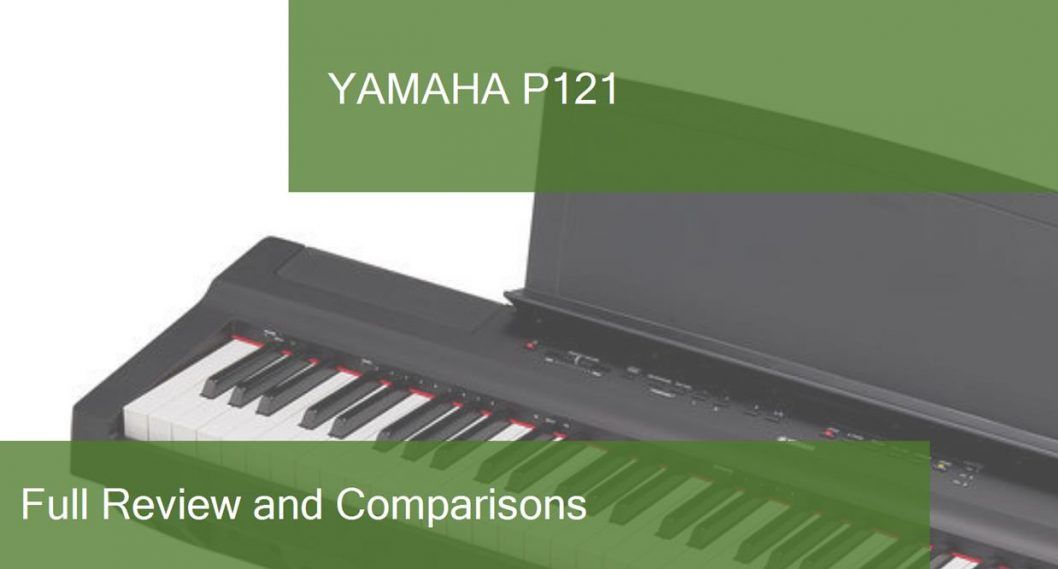
Yamaha Digital Piano P121 Full Review. Is it a good choice?
Yamaha Digital Piano P-121 Review Complete. Good choice?
Yamaha Corporation is a Japanese company with a wide range of products and services, mainly musical instruments and electronic devices. Today we will be looking at the Yamaha P 121 which is a very interesting variant of the Yamaha P125 for those who have space problems at home and whose price is around 500 euros.
Like the Yamaha P125 the Yamaha P121 has GHS weighted keys, comes with a sustain pedal, some quality sounds and also has USB MIDI output and line output in case you want to take it to big concerts. When you see that it says BK or WH it refers to the color. Black or white, nothing else, it’s not that they are different models.
There are many people who share a flat and sometimes the piano takes up little space is something very useful. The problem is that there are not many pianos with less than 88 weighted keys to make the experience of playing the piano as close as possible to that of a real piano. And that’s where the Yamaha P121 comes in. It can also be a good option if you want to take it on public transport because it weighs less than other portable digital pianos.
Let’s list and comment on their characteristics:
- 73 weighted keys (Weight that the keys of an acoustic piano have and that digital pianos try to imitate to equal the touch of the piano. The keys in the high register are heavier and in the high register less. This is different from the sensitivity on the keyboard which serves to regulate the volume of the note. But a weighted keyboard always has sensitivity in the keys) GHS
- 24 sounds (different piano and other instrument sounds) with Pure CF Sound Engine. Piano sounds with very good quality.
- 192 notes of polyphony (Number of notes that can be played at once. This includes accompaniments that also consume notes. So if you play over an accompaniment more notes will be accumulated)
- Dual, Split function and duo function
- Duo function
- Recording function)
- 20 rhythms (Accompanying rhythms that adapt to what you are playing. There are bossa nova rhythms, etc. Sometimes they are also known as accompaniment styles)
- Dampening effect
- IAC to improve the bass and treble balance
- 21 demo songs
- Reverb effect (Reverb effect)
- Chorus effect
- Metronome (Basic study element to study and practice the tempo of a piece of music)
- String Resonance Effect
- USB midi (MIDI allows you to do such wonderful things as connect your keyboard to your computer, record a sound track and with certain programs click through what you’ve played to musical notes on a score. MIDI tracks store the information of the musical notes)
- Transposition (Transposition allows you to move the note spectrum of a keyboard. This is to be able to play with transposing instruments. It is not an easy concept but it is made to facilitate the writing of an orchestration for instruments with very different bass and treble registers)
- Speakers (various piano sounds and other instruments) 7 W
- Line output Stereo jack
- 2 headphone jack outputs
- Sustain pedal input (The sustain pedal of a piano or keyboard is used to keep the note playing even if you stop pressing the key), the pedal is included
- Weight 10 kg and dimensions 1114 x 295 x 166 mm
- Includes power supply

Also with this piano comes some very interesting Yamaha apps such as Smart Pianist that are very useful for handling the piano functions.
Related post you can be interested in
- Ranking with the best digital pianos
- My selection of cheap musical keyboards.
- Basic concepts you need to know about digital pianos.
- The best resources to learn to play the piano by yourself.
- The best Yamaha Digital Pianos.
Now let’s compare the Yamaha P121 with its more common alternatives. Also at the end of the post, you will find a section with the best shopping possibilities for this digital piano. But you can go directly to that part of the post by pressing the following button.
Yamaha P-121 vs Yamaha P-125
The Yamaha P-121 Keyboard is usually 72 Euros cheaper than the Yamaha P-125 and this is another difference to be taken into account. The differences with the following:
- The price as we said
- The Yamaha P121 weighs almost 2 kg less than the Yamaha P125
- The dimensions of the Yamaha P12 are (W x H x D): 1326 x 166 x 295 mm compared to 1114 x 295 x 166 mm for the Yamaha P121
The Yamaha P125 is a true best seller in its class and both have the same technical features but if you have space problems at home and want to spend less the Yamaha P121 can be a great option. I personally like to have 88 keys available because with the duo mode you can play teacher and student.
Both support triple pedalboard that you buy separately although you need it for very advanced levels.
Let’s put the characteristics of these pianos on a chart so you can compare
|
Yamaha P-121 |
Yamaha P-125 |
|---|---|
|
|
And now a video of the Yamaha P-125 in which all its features are explained very well:
If you want to know more about this model don’t miss our review of the Yamaha P-125
Yamaha P-121 BK vs Yamaha P-45
The Yamaha P-121 Keyboard is usually £68 more expensive than the Yamaha P-45 .
The Yamaha P45 is in a slightly lower category than the Yamaha P121 and the Yamaha P125 although it is the best value 88-key digital piano you can find today. That is why it is the best-selling digital piano today.
If you have a budget of around 400 euros the Yamaha P45 can be a great option. The differences with the Yamaha P121 are:
- The sound of the Yamaha P45 is a little bit lower in quality than the Yamaha P121 because it doesn’t have Pure CF quality
- The Yamaha P45 has less piano sounds
- The P45 has less polyphony than the Yamaha P121
- Weighs and occupies more
- The Yamaha P121 has more technology that helps to improve the feeling of playing a real piano with different key off effects
- Yamaha P121 has more powerful speakers
- The P121 has a line output to connect you to very powerful amplification equipment without the need for an injection box to give more power to the signal. This is important if you are a professional and give concerts.
- The P121 supports a triple pedalboard and the Yamaha P45 does not. But as we said before, it’s for advanced levels.
On the other hand it is true that for less money the Yamaha P45 has the same quality counterbalance, good effects, not bad sound quality and USB MIDI at a great price. So it also depends on your needs and budget as we said before.
Let’s put the features of these pianos on a table so you can compare
|
Yamaha P-121 |
Yamaha P-45 |
|---|---|
|
|
And here’s a video of the Yamaha P-45 digital piano:
If you want to know more about this option, click on the following link to see the Yamaha P-45 review
Yamaha P-121 vs Thomann DP-33
The Yamaha Keyboard P-121 is usually 98 euros more expensive than the Thomann DP-33.
If you are on a tight budget and want a lot of features with “little” less quality than the Yamaha P45, Thomann is definitely what you need as they are offering weighted keys pianos with a reasonable level of quality at a very good price.
- The Thomann has more sounds
- The Thomann DP 33 comes with a triple pedalboard and has a cabinet that gives it more stability
- The Yamaha P212’s weighted keyboard is higher quality.
- I like the sounds of the Yamaha P121 a little better
In this case, if you want stability when playing, you won’t have to transport the piano and you have room at home for 88 keys, the Thomann DP 33 is an interesting option you should know about. If you want to transport it the Yamaha P121 is a great option at a good price.
Let’s put the features of these pianos on a table so you can compare
|
Yamaha P-121 |
Thomann DP-33 |
|---|---|
|
|
And then a video of the Thomann DP-33 digital piano where you can hear how it sounds:
If you want to know more about this option, click on the following link to see the Thomann DP-33 digital piano’s file
Where to buy Yamaha P121
Amazon
- Free Shipping and possibility of shipping in one day with Amazon Premium.
- Full Guarantee but they are no experts in music equipment.
- Sometimes better price.
Thomann
- Best option at Europe
- Free Shipping.
- Full warranty. If you have any problems, they take care of everything.
- 100% reliable payment.
- Leader in trouble-free shipping.
- Usually Best price.
- Best Reputation: They are the leading online store in Europe and have the best catalogue and information.
Check below related models with similar price and features:
- Thomann SP 5600
- Yamaha YDP 143
- Roland FP 30
- Yamaha YDP 163
- Yamaha YDP S52
- Hemingway DP 201 MKII
- Casio PX S1000
- Thomann DP 33
- Casio PX S3000
- Casio PX 870
- Yamaha YDP S54
- Yamaha YDP 144
- Korg B1
- Casio PX 360
- Casio PX 770
- Korg LP 380
- Korg C1 Air
- Casio CDP S350
- Thomann DP 32
- Yamaha YDP S34
- Casio CDP S100
- Korg LP 180
- Korg PA 600
- Yamaha PSR EW410
- Casio CT X5000
- Yamaha DGX 660
- Korg EK 50
- Yamaha PSR S670
- Yamaha PSR S775
- Roland 5
- Casio CT X3000
- Yamaha PSR A350
- Casio WK 7600
- Casio WK 6600
- Yamaha P45
- Yamaha P125
- Kawai ES 110
- Alesis Recital Pro
- Kurzweil SPS4 8
- Roland FP 10
- Korg D1
- Studiologic Numa Compact 2
- Korg SP 280
- Yamaha P121
- Studiologic Numa Compact 2x
- Roland GO PIANO 88
- Studiologic Numa Stage

Digital Piano Yamaha NP 32 Piaggero Full Review. Is it a good piano?
Review and Opinion of the Yamaha NP-32 Piaggero Where to Buy It?
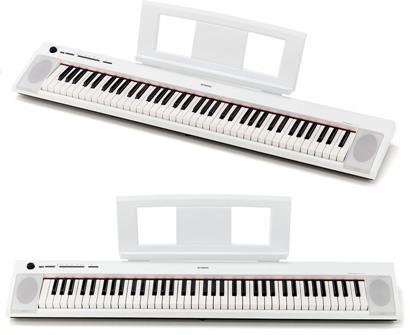
Yamaha has been for some time now one of the biggest producers of musical instruments, including digital pianos. Now we will have the review of the Yamaha NP-32 Piaggero which is priced at €298/£272. A well-priced keyboard that has a good mix of features:
- 76 touch-sensitive keys
- 64 notes of polyphony (Number of notes that can be played at once. This includes accompaniments that also consume notes. So if you play on top of an accompaniment more notes will be accumulated)
- 10 sounds (Different sounds of piano and other instruments)
- 10 demo songs
- Dual function (Dual mode allows you to combine two sounds to create a more complete one. Typical is the combination of piano + stringed instrument sound) or layer
- Reverb effect (Reverb effect)
- Metronome (Basic study element to study and practice the tempo of a piece of music)
- Transposition (Transposition allows you to move the note spectrum of a keyboard. This is to be able to play with transposing instruments. It is not an easy concept but it is made to facilitate the writing of an orchestration for instruments with very different bass and treble registers)
- Recording capacity
- 2 x 6W medium power speakers
- Input for sustain pedal (The sustain pedal of a piano or keyboard is used to keep the note playing even if you stop pressing the key) not included
- Hull exit
- USB midi (MIDI allows you to do such wonderful things as connect your keyboard to your computer, record a sound track and with certain programs click through what you’ve played to musical notes on a score. MIDI tracks store the information of the musical notes)
- Includes lectern
- Also supports batteries
- Includes PA-150 power supply
- A weight of 5.7kg and measures 1244 x 259 x 105mm
I’ll leave a one video to hear how it sounds. The first is an unofficial review and the second is the official Yamaha video:
Related post you can be interested in
- Ranking with the best digital pianos
- My selection of cheap musical keyboards.
- Basic concepts you need to know about digital pianos.
- The best resources to learn to play the piano by yourself.
- The best Yamaha Digital Pianos.
Now let’s compare the Yamaha NP 32 Piaggero with its more common alternatives. Also at the end of the post you will find a section with the best shopping possibilities for this digital piano. But you can go directly to that part of the post by pressing the following button.
Yamaha NP-32 Piaggero vs Casio CDP-130
Let’s compare the Yamaha NP-32 Piaggero keyboard with a price of €298/£272 and the Casio CDP-130 with a price of €313. Now we’ll have a face-to-face look at their respective features to see their most notable differences:
- First of all we find that the Yamaha has 76 keys with touch sensitivity, while the Casio has 88 weighted keys with touch sensitivity and hammer simulation. Weighted keyboard, is the weight that the keys have to simulate those of an acoustic piano, in the bass more weight and while going to the higher more lightweight. Sensitivity refers to that s can give dynamics by pressing the stronger keys, sounds higher and pressing with less force. lower.
- The Yamaha has 10 sounds, 64 notes of polyphony and 10 demo songs, while the Casio has 10 sounds, 48 notes of polyphony and 5 demo songs. Polyphony is the maximum number of notes that can be played simultaneously on a piano.
- Both have effects like: Reverb, Chorus.
- The Yamaha has 2 x 6W speakers and the Casio has 2 x 8W speakers, with the second one being slightly more powerful.
- Both have metronome and transposition capabilities, as well as a USB MIDI connection that allows them to be connected to a computer to be used as MIDI controllers in a music composition or production program. The Yamaha can be connected to iOS devices such as iPhone/iPad for use with Apps such as Flowkey, to enhance learning.
- Both have a sustain pedal input, on the NP32 this is not included, while on the CDP130 it is.
- The Yamaha NP32 has a very light weight of 5.7kg and measures 1244 x 259 x 105mm, while the Casio DP130 weighs 11.4kg and measures 322 x 286 x 129mm (W x D x H).
The NP 32 is a very lightweight, high-performance keyboard. This makes it perfect for moving around as it supports batteries. A very interesting option if you do not find the Casio CDP 130 is the Casio CDP S100.
We will put the characteristics of each of these pianos in 2 different columns to make it easier to see the differences:
|
Yamaha NP-32 Piaggero |
Casio CDP-130 |
|---|---|
|
|
And now a video of the Casio CDP-130
If you want to know more about this model don’t miss our review of the Casio CDP-130.
Yamaha NP-32 Piaggero vs Thomann DP-26
Now let’s compare two Yamaha NP32 Piaggero digital pianos that are priced at €298/£272 and the Thomann DP-26 that is priced at €311/£279. One difference we can notice at first glance is that the DP33 is a digital piano with a cabinet included, while the DP26 is a digital piano without a cabinet. Let’s check which is the best keyboard for you according to the features each one offers:
- The Yamaha has 76 keys with touch sensitivity, while the Thomann DP26 has 88 weighted keys with touch sensitivity and hammer action. Weighted keyboard is the weight of the keys to simulate those of an acoustic piano, with the bass keys being heavier and the treble keys lighter. Sensitivity refers to that s can give dynamics by pressing the stronger keys, sounds higher and pressing with less force. lower.
- The Yamaha has 10 sounds, 64 notes of polyphony and 10 demo songs, when the DP26 has 20 sounds, 64 notes of polyphony and 2 demo songs. Polyphony is the maximum number of notes that can be played simultaneously on a piano.
- Both have modes: dual, layer and split, and effects like: Reverb, Chorus. The Thomann also includes a Master EQ.
- The Yamaha has two 6W speakers and the Thomann has two 10W speakers, being more powerful than the second one.
- Both have metronome and transposition capabilities, as well as a USB MIDI connection that allows them to be connected to a computer to be used as MIDI controllers in a music composition or production program. The Yamaha can be connected to iOS devices such as iPhone/iPad for use with Apps such as Flowkey, to enhance learning.
- Both have sustain pedal input, on the Yamaha it is not included, while on the Thomann it is.
- The Yamaha NP32 has a very light weight of 5.7 kg and measures 1244 x 259 x 105mm, while the Thomann DP-26 has a weight of 13 kg and dimensions of 1365 x 366 x 137mm (length x width x height).
- The Thomann DP 26’s Duo mode is great because it allows two people to play on the same piano at the same time by splitting the keyboard in two.
With a minimum difference of 12 Euros, it is very relevant to think which is the best option according to the needs you require, on the one hand a digital piano to practice at home, or rehearsal room (Thomann DP26) and on the other hand an excellent portable digital piano with its incredibly light weight that you can take anywhere (Yamaha NP-32 Piaggero).
We will put the characteristics of each of these pianos in 2 different columns to make it easier to see the differences:
|
Yamaha NP-32 Piaggero |
Thomann DP-26 |
|---|---|
|
|
And now a video of the Thomann DP-26
https://www.youtube.com/watch?v=6pFY7SD6HLY
If you want to know more about this model don’t miss our review of the Thomann DP-26.
Yamaha NP-32 Piaggero vs Yamaha P45
Finally, we will have the comparison of these two Yamaha branded digital pianos the Yamaha NP32 Piaggero with a price of €298/£272 and one of the most quoted digital pianos, the Yamaha P45 with a price of €425/$500/£389. Let’s see which one is the best for your needs according to its features:
- The NP32 has 76 touch-sensitive keys and the DP33 has 88 weighted keys that also integrate hammer action. Weighted keyboard is the weight of the keys to simulate those of an acoustic piano, with the bass keys being heavier and the treble keys lighter. Sensitivity refers to that s can give dynamics by pressing the stronger keys, sounds higher and pressing less strongly. lower.
- The NP32 has 10 sounds, 64 notes of polyphony and 10 demo songs, while the Yamaha P45 has 10 sounds, 64 notes of polyphony (a little short for a digital piano) and 10 demo songs. Polyphony is the maximum number of notes that can be played simultaneously on a piano.
- Both have modes: dual, and effects like: Reverb. The P45 includes the Chorus effect.
- Both have 2 medium power speakers: 6W.
- Both have a USB MIDI connection option that allows them to be connected to a computer to be used as MIDI controllers in a music composition or production program. They can also be connected to iOS devices such as iPhone/iPad for use with Apps such as Flowkey, to enhance learning.
- Both have a sustain pedal input, on the NP32 it is not included, while on the P45 it is.
- Both have a stereo auxiliary output that may need injection box in large concert amplification system.
- The NP32 weighs 5.7kg and measures 1244 x 259 x 105mm, while the P45 weighs 11.5kg and measures 1326 x 154 x 295mm (W x H x D).
According to its characteristics we can clearly say that the P45 has a lot of advantages, starting with the number of its keys, and certain characteristics that the NP32 lacks. However, there are small or very compact places where the NP32 would fit very well because of its number of keys.
We will put the characteristics of each of these pianos in 2 different columns to make it easier to see the differences:
|
Yamaha NP-32 Piaggero |
Yamaha P45 |
|---|---|
|
|
And now our video review of Yamaha p45:
If you want to know more about this model don’t miss our review of the Yamaha P45.
Where to buy Yamaha NP 32 Piaggero
Thomann
- Free Shipping.
- Full warranty. If you have any problems, they take care of everything.
- 100% reliable payment.
- Leader in trouble-free shipping.
- Usually Best price.
- Best Reputation: They are the leading online store in Europe and have the best catalogue and information.
Amazon
- Free Shipping and possibility of shipping in one day with Amazon Premium.
- Full Guarantee but they are no experts in music equipment.
- Sometimes better price.
- He’s got worse stock than Thomann.
Check below related models with similar price and features:
- Thomann DP 26
- Thomann SP 320
- Yamaha NP 32 Piaggero
- Korg Tiny Piano
- Startone MK 300
- Startone MK 200
- Yamaha PSR E463
- Yamaha PSR E363
- Startone MKR 61
- Roland GO KEYS
- Casio SA 46
- Casio SA 47
- Casio CTK 240
- Casio CT X700
- Yamaha EZ 220
- Yamaha PSR E263
- Yamaha PSR EW300
- Casio LK 280
- Casio SA 76
- Casio CTK 3500
- Casio LK 265
- Casio LK 136
- Casio CTK 1500
- Casio SA 77
- Yamaha Sonogenic SHS 500
- Casio SA 78
- Casio CTK 2500
- Yamaha YPT 260
- Roland GO PIANO
- Midiplus Stage 88