
- Home
- Author's Archive:
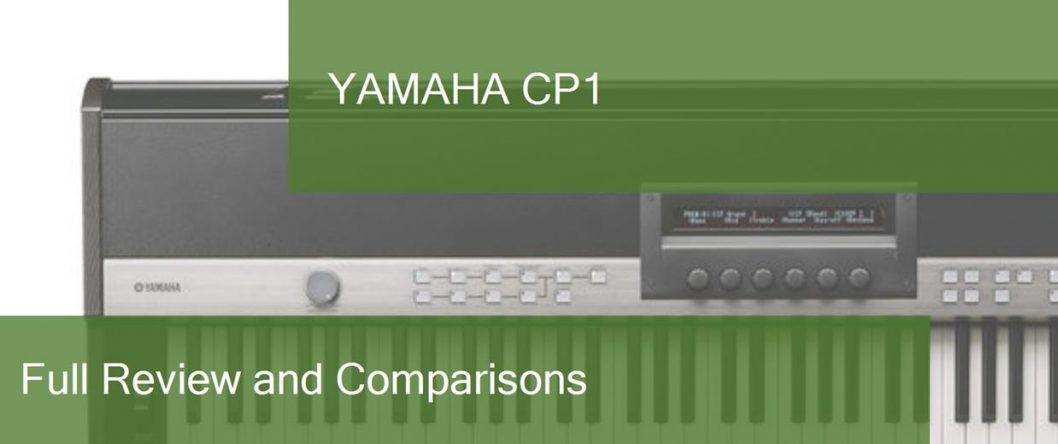
Yamaha Digital Piano CP1 Full Review. Is it a good keyboard?
Review and Opinion of Yamaha CP1 and Where to Buy it?
Yamaha Corporation is a Japanese company with a wide range of products and services, mainly musical instruments and electronic devices. And this time we will analyze this excellent digital piano the Yamaha CP1 that currently has a price of €4666/$5199/£4,277 that is a digital piano with a professional level, we will analyze some of its features:
- 88 weighted keys (Weight that the keys of an acoustic piano have and that digital pianos try to imitate to equal the touch of the piano. The keys in the high register are heavier and in the high register less. This is different from the sensitivity on the keyboard which serves to regulate the volume of the note. But a weighted keyboard always has sensitivity in the keys) with synthetic ivory NW-STAGE touch
- 120 notes of polyphony (Number of notes that can be played at once. This includes accompaniments that also consume notes. So if you play over an accompaniment more notes will be accumulated)
- 17 sounds (Different sounds of piano and other instruments)
- Sound generation engine SCM (Spectral Component Modeling)
- 5 modeling system blocks: Acoustic/electric piano, preamplifier, modulation effects and power/compressor stage and speaker emulation
- Split the keyboard into 4 zones (Split the keyboard into two different instruments)
- Dual mode (Dual mode allows you to combine two sounds to create a more complete one. Typical is the combination of piano + string sound) or layer
- Pitch bend wheel control (Functionality that changes the sound wave of what you play and then returns to its original state)
- VFD type display
- Symmetrical and asymmetrical line outputs
- Hull exit
- Triple footswitch included with sustain pedal (The sustain pedal of a piano or keyboard is used to keep the note playing even if you stop pressing the key)
- USB midi (MIDI allows you to do such wonderful things as connect your keyboard to your computer, record a sound track and with certain programs click through what you’ve played to musical notes on a score. MIDI tracks store the information of the musical notes)
- Conventional MIDI
- USB for storage devices
- Including feeder
- It also comes with a Steinberg Cubase AI license
- Weight 27.2 kg and dimensions 1385 x 173 x 420 mm

We found a digital piano with the performance and functions of a professional digital piano, with an excellent keyboard and a great feeling in its synthetic ivory keys that simulate very well those of a real acoustic piano. With a remarkable amount of sounds reaching 17, being generated by the Spectral Component Modeling sound engine, which are high quality samples. With its 5 blocks of modeling system: Acoustic/electric piano, preamplifier, modulation effects and power stage or compressor and speaker emulation, allows to be specific when requesting a function. In addition, it different modes such as: Split and dual allow us to have new sound capabilities. It has a triple pedalboard included which will be excellent for the professional study of the classical piano. It also has USB input and output, to be connected to a computer, or to be connected to USB memories in it. In addition to all these features, if you like music production, a Cubase Al license is included.
Now that we have listed and described the features of this keyboard there is no better way to do so than to take a look at the following videos where they tell us more about the Yamaha CP1 and you can hear how its different sounds sound.
Related post you can be interested in
- Ranking with the best digital pianos
- My selection of cheap musical keyboards.
- Basic concepts you need to know about digital pianos.
- The best resources to learn to play the piano by yourself.
- The best Yamaha Digital Pianos.
Now let’s compare the Yamaha CP1 with its more common alternatives. Also at the end of the post you will find a section with the best shopping possibilities for this digital piano. But you can go directly to that part of the post by pressing the following button.
Yamaha CP1 vs Yamaha CP4 Stage
As a first comparison we will have the Yamaha CP1 and as we had mentioned it has a price of €4666/$5199/£4,277 and the Yamaha CP4 Stage, with a slightly lower level, and with the price of £1500 approximately, and knowing this we see that the price of the CP1 is almost triple that of the CP4. We will therefore analyze their differences and similarities in the next section:
- Both acoustic pianos have 88 weighted, touch-sensitive keys. The Yamaha CP1’s are completely made of wood and have a much higher quality, which satisfies the most demanding requirements of professionals. And those of the Yamaha CP4 Stage use the Natural Wood Graded technology, which are also made of wood and of a high quality. But the CP1’s are better. Remember the weight of the keys of a real acoustic piano, in the low register they are heavier keys while in the high register they are Liliana declamations. The sensitivity refers to the fact that we can play dynamics in our performances, that is, when we press a key with force it sounds higher while when we press one with less force it sounds lower.
- The Yamaha CP1 offers 17 sounds and 120 notes of polyphony, generated by its SCM (Spectral Component Modeling) sound engine, while the CP4 Stage has 433 sounds and 128 notes of polyphony, generated by the SCM and AWM2 sound engines. Interesting difference between both of them knowing its different prices. Polyphony is the highest number of notes that can be added at the same time in a unit.
- The functions that characterize the Yamaha CP1 are: 5 blocks of modeling system: acoustic/electric piano, preamplifier, modulation effects and power/compressor stage and speaker emulation, VFD type display and Pitch Bend wheel.
- The functions that characterize the Yamaha CP4 stage are: 11 effects including reverb, chorus, etc, Pitch Bend and modulation wheel.
- Both digital pianos have the 4 zone split function, and dual mode or layer, USB MIDI which allows them to be connected to a computer in order to be used as a MIDI controller in a production or music composition program. And both have conventional MIDI.
- CP1 also has a Steinberg Cubase Al
- The Yamaha CP1 weighs 27.2 kg and has dimensions of 1385 x 173 x 420 mm, while the Yamaha CP4 Stage weighs 17.5 kg and has dimensions of 1332 x 161 x 352 mm.
We find excellent digital pianos that have good functions and performance, in the Yamaha CP1 we find very very fine keys and in the Yamaha CP4 Stage we find a lot of sounds, it would be good if you could listen to the sounds offered by each of these devices with quality headphones or studio monitors, in order to appreciate the differences between the two. Another relevant difference is the lighter weight of the CP4 Stage.
We will put the characteristics of each of these pianos in 2 different columns to make it easier to see the differences:
|
Yamaha CP1 |
Yamaha CP4 Stage |
|---|---|
|
|
Here you have a video comparing some Yamaha digital pianos including CP1 and CP4:
And now a video of the Yamaha CP4 Stage:
If you want to know more about this model don’t miss our review of the Yamaha CP4 Stage
Yamaha CP1 vs Yamaha CP300
Now we will buy the following Yamaha branded keyboards: Yamaha CP1 which as we mentioned before is priced at €4666/$5199/£4,277 and the Yamaha CP 300 which is priced at €2.290/$2500/£2,090, where we found a difference of approximately €2300. We will see their differences and similarities in the following face-to-face:
- Both acoustic pianos have 88 weighted, touch-sensitive keys. The Yamaha CP1’s are completely made of wood and are of a much higher quality, which satisfies the highest demands of professionals. And those of the Yamaha CP300 use GH keyboard technology. The ones on the CP1 are much better. Remember the weight of the keys of a real acoustic piano, in the low register they are heavier keys while in the high register they are light keys. The sensitivity refers to the fact that we can play dynamics in our performances, that is to say, when we press a key with force it sounds higher while when we press one with less force it sounds lower.
- The Yamaha CP1 offers 17 sounds and 120 notes of polyphony, generated by its SCM (Spectral Component Modeling) sound engine, while the CP300 has 542 sounds and 128 notes of polyphony with the AMW2 engine. Interesting difference between both of them knowing its different prices.
- The functions that characterize the Yamaha CP1 are: 5 blocks of modeling system: acoustic/electric piano, preamplifier, modulation effects and power/compressor stage and speaker emulation, VFD type display and Pitch Bend wheel. Polyphony is the largest number of notes that can be added at the same time in a computer.
- The functions that characterize the Yamaha CP300 stage are Modulation and Pitch Bend Wheels, Integrated 16-track sequencer, FLASH ROM memory for songs and programs you have designed, 5-band equalizer, sustain pedal, and effects such as: reverb, chorus, etc
- Both digital pianos have the function of splitting the CP1 into 4 zones and the CP300 into 2 zones, and dual mode or layer, USB MIDI which allows them to be connected to a computer in order to be used as a MIDI controller in a production or music composition program. And both have conventional MIDI.
- The CP1 also has a Steinberg Cubase Al
- The Yamaha CP1 has a weight of 27.2kg and dimensions of 1385 x 173 x 420mm, while the Yamaha CP300 has a weight of 32.5kg and dimensions of 1391 x 460 x 170mm.
Again, we find good digital pianos with their respective advantages and disadvantages, while the Yamaha CP1 offers a keyboard of the best possible quality, a greater number of split zones, several new effects, while the Yamaha CP 300 offers a large number of sounds, here it depends a lot if you want quantity or quality, as we have already communicated before look at the videos to buy the sounds of each instrument and so you can get a better impression of them. Another thing, if you get the music production you should have a license for Cubase.
We will put the characteristics of each of these pianos in 2 different columns to make it easier to see the differences:
|
Yamaha CP1 |
Yamaha CP300 |
|---|---|
|
|
And now a video of the Yamaha CP300
If you want to know more about this model don’t miss our review of the Yamaha CP300
Yamaha CP1 vs Clavia Nord Stage 3 88
In the last comparison we have the Yamaha CP1 keyboard, with a price of €4666/$5199/£4,277 and on the other side the Clavia Nord Stage 3 88 with a price of €3.490/$4499/£3,185. Having a difference close to £1100, we will analyze its similarities and differences:
- Both acoustic pianos have 88 weighted, touch-sensitive keys. The Yamaha CP1’s are made entirely of wood and are of a much higher quality, meeting the highest demands of professionals. And those of the Clavia Nord Stage 3 88 use GH keyboard technology. The ones on the CP1 are much better.
- The Yamaha CP1 offers 17 sounds and 120 notes of polyphony, generated by its SCM (Spectral Component Modeling) sound engine, while the Clavia Nord Stage 3 88 has 2 GB of memory storage, to include your Nord Piano Library or Nord Samples Library samples with a maximum polyphony of 120 notes.
- The functions that characterize the Yamaha CP1 are: 5 blocks of modeling system: acoustic/electric piano, preamplifier, modulation effects and power/compressor stage and speaker emulation, VFD type display and Pitch Bend wheel.
- The features that characterize the Clavia Nord Stage 3 88 are Creative Piano filters and effects, Smooth transitions between sounds, String Resonance function (Gen 2), Noise pedal and Long-Release option, Input for sustain pedal and supports triple pedal, Input for rotor jack pedal, Also simulates the Leslie Vintage 122 and an ICC c14 type network cable, Also supports organ, switch and control pedal with stereo jack
- Both digital pianos have the Split function, the CP1 in 4 zones and the Clavia Nord Stage in 2 zones, and dual mode or layer, USB MIDI which allows them to be connected to a computer in order to be used as a MIDI controller in a production or music composition program. And both have conventional MIDI.
- The CP1 also has a Steinberg Cubase Al
- The Yamaha CP1 weighs 27.2kg and measures 1385 x 173 x 420mm, while the Clavia Nord Stage 3 88 weighs 32.5kg and measures 1391 x 460 x 170mm.
We find two digital pianos are excellent proposals each, however for all its functions and features we can say that the Claudia Nord Stage 3 88 is the winner. Thanks to its Fluid Transition functions, the large amount of effects that can be fitted, its string resonance, Leslie simulations and different pedal inputs. They make this one of the best keyboards to play live. Not for nothing is the Clavia Nord Stage 3 88 one of the most famous digital pianos among professional musicians.
We will put the characteristics of each of these pianos in 2 different columns to make it easier to see the differences:
|
Yamaha CP1 |
Clavia Nord Stage 3 88 |
|---|---|
|
|
And now a video of the Clavia Nord Stage 3 88
If you want to know more about this model don’t miss our review of the Clavia Nord Stage 3 88
Where to buy Yamaha CP1
Amazon
- Free Shipping and possibility of shipping in one day with Amazon Premium.
- Full Guarantee but they are no experts in music equipment.
- Sometimes better price.
- He’s got worse stock than Thomann.
Thomann
- Free Shipping.
- Full warranty. If you have any problems, they take care of everything.
- 100% reliable payment.
- Leader in trouble-free shipping.
- Usually Best price.
- Best Reputation: They are the leading online store in Europe and have the best catalogue and information.
Check below related models with similar price and features:
- Roland FP 60
- Yamaha P515
- Yamaha YDP 164
- Roland FP 90
- Korg G1 Air
- Casio PX 560
- Roland Kiyola KF 10
- Korg PA 1000
- Korg PA 700 Oriental
- Yamaha PSR S975
- Korg Havian 30
- Korg PA 700
- Kawai EN 8
- Kawai MP 11
- Kawai MP 7
- Clavia Nord Electro 6D 61
- Clavia Nord Stage 3 88
- Kurzweil SP6
- Korg SV1 73
- Kurzweil Forte 8
- Clavia Nord Electro 6D 73
- Clavia Nord Stage 3 HP76
- Roland RD 2000
- Kurzweil Artis 7
- Clavia Nord Piano 4
- Clavia Nord Stage 3 compact
- Crumar Seven
- Clavia Nord Electro 6
- Korg Grandstage 73
- Dexibell Vivo Stage S9
- Dexibell Vivo Stage S1
- Korg SV1 88
- Korg Grandstage 88
- Kurzweil Forte SE
- Yamaha CP88
- Roland VR 730
- Studiologic Numa Concert
- Yamaha CP73
- Dexibell Vivo Stage S7
- Yamaha CP300
- Yamaha CP1
- Clavia Nord Grand
- Viscount Physis Piano K4 EX
- Viscount Physis Piano K5 EX
- Dexibell Vivo Portable P7
- Kurzweil Artis
- Dexibell Vivo Portable P3
- Dexibell Vivo Stage S3
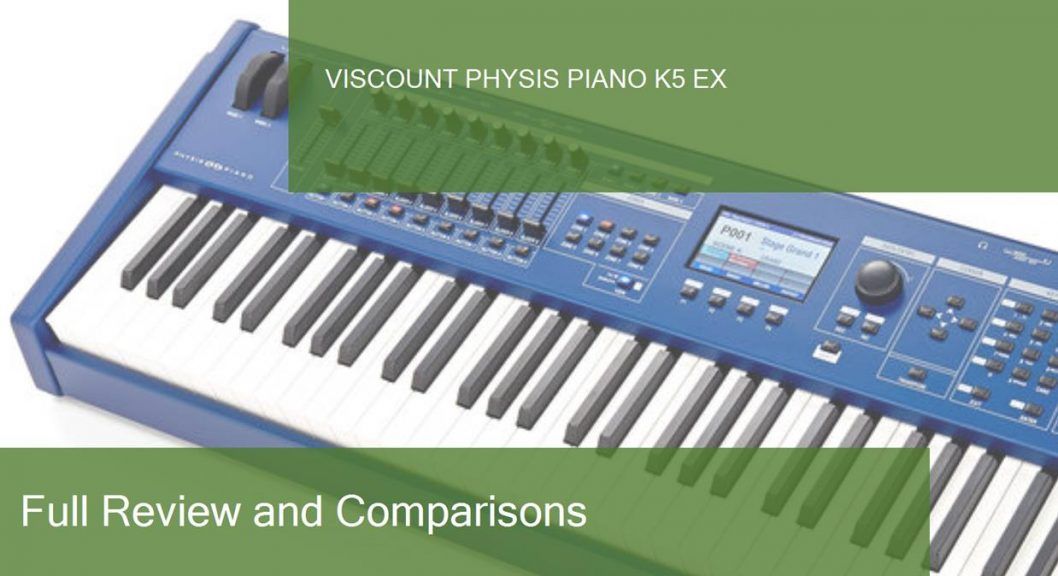
Digital Piano Viscount Physis Piano K5 EX Full Review. Is it a good choice?
Digital Piano Viscount Physis Piano K5 EX Full Review. Is it a good choice?
- 76 Weighted keys with Hammer Action (The weight of the keys on an acoustic piano that digital pianos try to imitate to match the touch of a real acoustic piano. The keys in the high register are heavier and in the high register less. This is a different concept of sensitivity on the keyboard that serves to regulate the volume of the note. But a hammer action keyboard always has sensitivity on the keys.)
- 192 Sounds (Different sounds of piano and other instruments)
- 128 voice poliphony
- 9 Freely assignable sliders
- 9 Endless knobs
- 9 Buttons
- 4 Controller banks
- 8 Split (Split the keyboard into two different instruments) zones and layering function
- Colour screen
- Includes built-in Physis-Piano EX Soundboard with all physical modeling sounds from the Physis Piano H1
- Connections: 2 x midi (MIDI allows you to do such wonderful things as connect the keyboard to the computer, record a soundtrack and with certain programs pass with a click what you have played to musical notes in a score. MIDI tracks store information from musical notes) input
- Eight MIDI output
- USB-to-Device
- 4 USB ports
- pitch bend (Functionality that changes the sound wave of what you play and then returns to its original state) and modulation wheel
- Eight pedal (The most important pedal of a piano or keyboard is the sustain pedal and is used to keep the note playing even if you stop pressing the key.) connections
- Jack Headphone output
- Jack L / R audio output
- Sustain pedal included
- Dimensions (W x D x H): 1120 x 355 x 134 mm and a weight of 14.8 kg
- Made in Italy

Related post you can be interested in
- Ranking with the best digital pianos
- My selection of cheap musical keyboards.
- Basic concepts you need to know about digital pianos.
- The best resources to learn to play the piano by yourself.
Now let’s compare the Viscount Physis Piano K5 EX with its more common alternatives. Also at the end of the post you will find a section with the best shopping possibilities for this digital piano. But you can go directly to that part of the post by pressing the following button.
Viscount Physis Piano K5 EX vs Roland FP 60
The digital piano Viscount Physis Piano K5 EX is usually about 100 € cheaper than Roland FP 60.
Let’s put the features of each of these pianos in 2 different columns to make it easier to see the differences
|
Viscount Physis Piano K5 EX |
Roland FP 60 |
|---|---|
|
|
And below a video of the Roland FP 60
If you want to know more about this model do not miss our Roland FP 60 review
Viscount Physis Piano K5 EX vs Yamaha YDP 164
The digital piano Viscount Physis Piano K5 EX is usually about 45 € more expensive than Yamaha YDP 164, but with so little price difference this can vary.
Let’s put the features of each of these pianos in 2 different columns to make it easier to see the differences
|
Viscount Physis Piano K5 EX |
Yamaha YDP 164 |
|---|---|
|
|
And below a video of the Yamaha YDP 164
Viscount Physis Piano K5 EX vs Korg G1 Air
The digital piano Viscount Physis Piano K5 EX is usually about 50 € more expensive than Korg G1 Air.
Let’s put the features of each of these pianos in 2 different columns to make it easier to see the differences
|
Viscount Physis Piano K5 EX |
Korg G1 Air |
|---|---|
|
|
And below a video of the Korg G1 Air
If you want to know more about this model do not miss our Korg G1 Air review
Viscount Physis Piano K5 EX vs Korg Havian 30
The digital piano Viscount Physis Piano K5 EX is usually about 21 € more expensive than Korg Havian 30, but with so little price difference this can vary.
Let’s put the features of each of these pianos in 2 different columns to make it easier to see the differences
|
Viscount Physis Piano K5 EX |
Korg Havian 30 |
|---|---|
|
|
And below a video of the Korg Havian 30
If you want to know more about this model do not miss our Korg Havian 30 review
Where to buy Viscount Physis Piano K5 EX
Amazon
- Free Shipping and possibility of shipping in one day with Amazon Premium.
- Full Guarantee but they are no experts in music equipment.
- Sometimes better price.
- He’s got worse stock than Thomann.
Thomann
- Free Shipping.
- Full warranty. If you have any problems, they take care of everything.
- 100% reliable payment.
- Leader in trouble-free shipping.
- Usually Best price.
- Best Reputation: They are the leading online store in Europe and have the best catalogue and information.
- Roland FP 60
- Yamaha P515
- Yamaha YDP 164
- Roland FP 90
- Korg G1 Air
- Casio PX 560
- Roland Kiyola KF 10
- Korg PA 1000
- Korg PA 700 Oriental
- Yamaha PSR S975
- Korg Havian 30
- Korg PA 700
- Kawai ES 8
- Kawai MP 11
- Kawai MP 7
- Clavia Nord Electro 6D 61
- Clavia Nord Stage 3 88
- Kurzweil SP6
- Korg SV1 73
- Kurzweil Forte 8
- Clavia Nord Electro 6D 73
- Clavia Nord Stage 3 HP76
- Roland RD 2000
- Kurzweil Artis 7
- Clavia Nord Piano 4
- Clavia Nord Stage 3 compact
- Crumar Seven
- Clavia Nord Electro 6
- Korg Grandstage 73
- Dexibell Vivo Stage S9
- Dexibell Vivo Stage S1
- Korg SV1 88
- Korg Grandstage 88
- Kurzweil Forte SE
- Yamaha CP88
- Roland VR 730
- Studiologic Numa Concert
- Yamaha CP73
- Dexibell Vivo Stage S7
- Yamaha CP300
- Yamaha CP1
- Clavia Nord Grand
- Viscount Physis Piano K4 EX
- Viscount Physis Piano K5 EX
- Dexibell Vivo Portable P7
- Kurzweil Artis
- Dexibell Vivo Portable P3
- Dexibell Vivo Stage S3
Did you like this post? > > > >

Digital Piano Viscount Physis Piano K4 EX Full Review. Is it a good choice?
Digital Piano Viscount Physis Piano K4 EX Full Review. Is it a good choice?
- 88 Weighted keys with Hammer Action (The weight of the keys on an acoustic piano that digital pianos try to imitate to match the touch of a real acoustic piano. The keys in the high register are heavier and in the high register less. This is a different concept of sensitivity on the keyboard that serves to regulate the volume of the note. But a hammer action keyboard always has sensitivity on the keys.)
- 192 Sounds (Different sounds of piano and other instruments)
- 128 voice poliphony
- 9 Freely assignable sliders
- 9 Endless knobs
- 9 Buttons
- 4 Controller banks
- 8 Split (Split the keyboard into two different instruments) zones and layering function
- Colour screen
- Includes built-in Physis-Piano EX Soundboard with all physical modeling sounds from the Physis Piano H1
- Connections: 2 x midi (MIDI allows you to do such wonderful things as connect the keyboard to the computer, record a soundtrack and with certain programs pass with a click what you have played to musical notes in a score. MIDI tracks store information from musical notes) input
- Eight MIDI output
- USB-to-Device
- 4 USB ports
- pitch bend (Functionality that changes the sound wave of what you play and then returns to its original state) and modulation wheel
- Eight pedal (The most important pedal of a piano or keyboard is the sustain pedal and is used to keep the note playing even if you stop pressing the key.) connections
- Jack Headphone output
- Jack L / R audio output
- Sustain pedal included
- Dimensions (W x D x H): 1287 x 355 x 134 mm and a weight of 18 kg
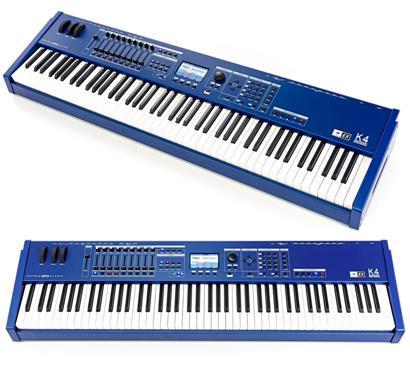
Now that we’ve listed and described the features of this digital piano there’s no better than taking a look at the following video where they tell us more about the Viscount Physis Piano K4 EX and you can hear the different sounds of this piano.
Related post you can be interested in
- Ranking with the best digital pianos
- My selection of cheap musical keyboards.
- Basic concepts you need to know about digital pianos.
- The best resources to learn to play the piano by yourself.
Now let’s compare the Viscount Physis Piano K4 EX with its more common alternatives. Also at the end of the post you will find a section with the best shopping possibilities for this digital piano. But you can go directly to that part of the post by pressing the following button.
Viscount Physis Piano K4 EX vs Yamaha P515
The digital piano Viscount Physis Piano K4 EX is usually about 30 € more expensive than Yamaha P515, but with so little price difference this can vary.
Let’s put the features of each of these pianos in 2 different columns to make it easier to see the differences
|
Viscount Physis Piano K4 EX |
Yamaha P515 |
|---|---|
|
|
And below a video of the Yamaha P515
Viscount Physis Piano K4 EX vs Clavia Nord Electro 6D 61
The digital piano Viscount Physis Piano K4 EX is usually about 100 € cheaper than Clavia Nord Electro 6D 61.
Let’s put the features of each of these pianos in 2 different columns to make it easier to see the differences
|
Viscount Physis Piano K4 EX |
Clavia Nord Electro 6D 61 |
|---|---|
|
|
And below a video of the Clavia Nord Electro 6D 61
If you want to know more about this model do not miss our Clavia Nord Electro 6D 61 review
Viscount Physis Piano K4 EX vs Kurzweil Artis 7
The digital piano Viscount Physis Piano K4 EX is usually about 20 € more expensive than Kurzweil Artis 7, but with so little price difference this can vary.
Let’s put the features of each of these pianos in 2 different columns to make it easier to see the differences
|
Viscount Physis Piano K4 EX |
Kurzweil Artis 7 |
|---|---|
|
|
And below a video of the Kurzweil Artis 7
If you want to know more about this model do not miss our Kurzweil Artis 7 review
Viscount Physis Piano K4 EX vs Korg SV1 88
The digital piano Viscount Physis Piano K4 EX is usually about 40 € cheaper than Korg SV1 88, but with so little price difference this can vary.
Let’s put the features of each of these pianos in 2 different columns to make it easier to see the differences
|
Viscount Physis Piano K4 EX |
Korg SV1 88 |
|---|---|
|
|
And below a video of the Korg SV1 88
If you want to know more about this model do not miss our Korg SV1 88 review
Where to buy Viscount Physis Piano K4 EX
Amazon
- Free Shipping and possibility of shipping in one day with Amazon Premium.
- Full Guarantee but they are no experts in music equipment.
- Sometimes better price.
- He’s got worse stock than Thomann.
Thomann
- Free Shipping.
- Full warranty. If you have any problems, they take care of everything.
- 100% reliable payment.
- Leader in trouble-free shipping.
- Usually Best price.
- Best Reputation: They are the leading online store in Europe and have the best catalogue and information.
- Roland FP 60
- Yamaha P515
- Yamaha YDP 164
- Roland FP 90
- Korg G1 Air
- Casio PX 560
- Roland Kiyola KF 10
- Korg PA 1000
- Korg PA 700 Oriental
- Yamaha PSR S975
- Korg Havian 30
- Korg PA 700
- Kawai ES 8
- Kawai MP 11
- Kawai MP 7
- Clavia Nord Electro 6D 61
- Clavia Nord Stage 3 88
- Kurzweil SP6
- Korg SV1 73
- Kurzweil Forte 8
- Clavia Nord Electro 6D 73
- Clavia Nord Stage 3 HP76
- Roland RD 2000
- Kurzweil Artis 7
- Clavia Nord Piano 4
- Clavia Nord Stage 3 compact
- Crumar Seven
- Clavia Nord Electro 6
- Korg Grandstage 73
- Dexibell Vivo Stage S9
- Dexibell Vivo Stage S1
- Korg SV1 88
- Korg Grandstage 88
- Kurzweil Forte SE
- Yamaha CP88
- Roland VR 730
- Studiologic Numa Concert
- Yamaha CP73
- Dexibell Vivo Stage S7
- Yamaha CP300
- Yamaha CP1
- Clavia Nord Grand
- Viscount Physis Piano K4 EX
- Viscount Physis Piano K5 EX
- Dexibell Vivo Portable P7
- Kurzweil Artis
- Dexibell Vivo Portable P3
- Dexibell Vivo Stage S3
Did you like this post? > > > >