
- Home
- Author's Archive:
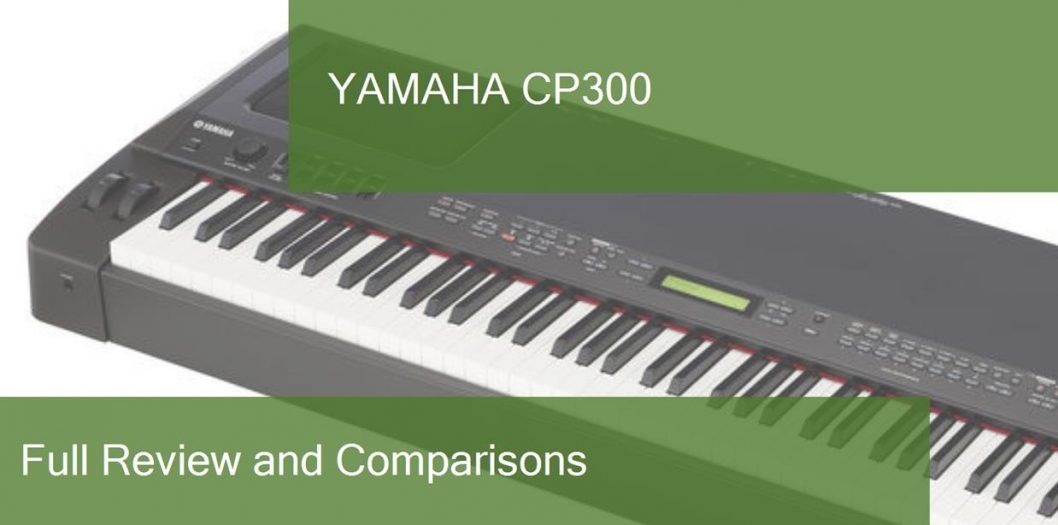
Yamaha Digital Piano CP300 Full Review. Is it a great choice?
Yamaha CP300 Digital Piano Review Complete Is it a good choice?
Yamaha Corporation is a Japanese company with a wide range of products and services, mainly musical instruments and electronic devices. The Yamaha brand is always a plus when it comes to digital pianos, and now we will look at your CP300 digital piano, which is priced at €2.290/$2500/£2,090, and the following features:
- 88-key hammer-action weighted keyboard (Weight that the keys of an acoustic piano have and that digital pianos try to imitate to match the touch of the piano. The keys in the high register are heavier and in the high register less. This is different from the sensitivity on the keyboard which serves to regulate the volume of the note. But a weighted keyboard always has sensitivity in the keys) with a professional sensitive keyboard. Keyboard with GH technology (See video).
- 128 notes of polyphony (Number of notes that can be played at once. This includes accompaniments that also consume notes. So if you play over an accompaniment more notes will be accumulated)
- 542 sounds (480 voices + 12 Drum kits + 50 voices XG) Where we have instruments like: grand pianos, electric pianos, strings, vibraphones, guitars, basses, and so on.
- Modulation wheel, which serves to modify a note with modulation effects such as tremolo or vibrato.
- Pitch bend wheel (Functionality that changes the height of a note you play and then returns to its original state)
- Split function (divide the keyboard into two different instruments) in 2 zones
- Dual function (Dual mode allows you to combine two sounds to create a more complete one. Typical is the combination of piano + stringed instrument sound) or layer
- Reverb effects, chorus, etc
- Five-band equalizer, which allows an increase or decrease in the intensity of five different frequency ranges
- AWM2 technology with 48MB waveform ROM
- Integrated 16-track sequencer
- FLASH ROM memory for songs and software you have designed
- XLR line output and jack, for connection to a mixer/mixer or amplifier.
- USB midi (MIDI allows you to do such wonderful things as connect your keyboard to your computer, record a sound track and with certain programs click through what you’ve played to musical notes on a score. MIDI tracks store the information of the musical notes)
- Midi conventional
- Hull exit
- Very powerful 30W speakers (various piano and other instrument sounds)
- It comes with a sustain pedal (The sustain pedal of a piano or keyboard is used to keep the note playing even if you stop pressing the key) included
- a weight of 32,5Kg and dimensions of 1391 x 460 x 170mm
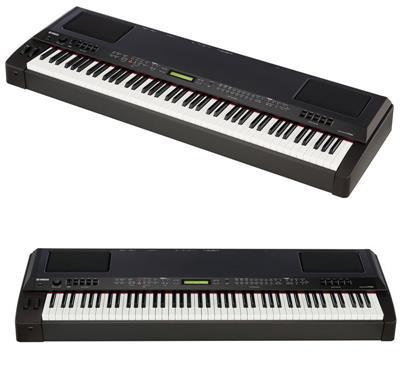
Thanks to Yamaha’s tradition and experience, these instruments provide the player with all the sound and expressiveness of an excellently sounding grand piano, with the advantage of the portability and versatility of a modern digital instrument. It is an excellent instrument more than anything else thought for playing live, thanks to its powerful 30W speakers, allowing you to play with them in a closed room without extra amplification.
Here is a video explaining how the GH technology of Yamaha digital pianos works:
Now that we have listed and described the features of this keyboard there is no better way than to take a look at the following videos where they tell us more about the Yamaha CP300 and you can hear how its different sounds sound.
Related post you can be interested in
- Ranking with the best digital pianos
- My selection of cheap musical keyboards.
- Basic concepts you need to know about digital pianos.
- The best resources to learn to play the piano by yourself.
- The best Yamaha Digital Pianos.
Now let’s compare the Yamaha CP300 with its more common alternatives. Also at the end of the post you will find a section with the best shopping possibilities for this digital piano. But you can go directly to that part of the post by pressing the following button.
Yamaha CP300 vs Yamaha CP4 Stage
Now let’s make a comparison of the Yamaha digital pianos: the CP300 which as we have already seen is priced at €2.290/$2500/£2,090, and the Yamaha CP4 stage which is priced at about €1500/$2500, so the price difference between the two is about £700. With the following face-to-face, we will see their similarities and differences, so that you can find the best one for you:
- Both digital pianos have 88 weighted keys, remember that the counterweight is the weight of the keys on a real acoustic piano, in the low range the keys are heavier while in the high range they are lighter. They also have sensitivity in their keys, sensitivity refers to the fact that we can play dynamics in the performances, that is to say when we press a key with force it sounds higher than another one pressed with less force.
- While both keyboards are very similar in their number of keys and functions, they have different technologies: the CP 300 uses GH technology (which we have already reviewed) and the CP4 stage uses NW-GH or Natural Wood Graded Hammer technology, which are white keys made of real wood, with black keys with synthetic ebony. Where the CP4 Stage has a great advantage.
- In terms of sounds, the CP 300 offers 542 sounds, 128 notes of polyphony and all this produced with its WM2 Sound Engine with a 48Mb table wave rom memory, while the CP4 offers 433 sounds, with 128 notes of polyphony and two sound generation engines that are the SCM and AW2. Polyphony is the maximum number of notes that can be played at the same time in a computer.
- Both equipments have pitch bend and modulation wheels. Both also have Split functions, the CP300 in 2 zones and the CP4 Stage in 4 zones, and dual or layer.
- In terms of effects, the CP300 has Reverb (24 types), Chorus (24 types), and insert effects (112 effects), and the CP4 Stage has Reverb (11 types), Chorus (9 types), insert effects (62 types) and a Master Compressor. Both have a 5-band Master EQ.
- As mentioned earlier, the CP 300 has a Flash ROM for storing songs and user-designed programs
- In connections, the CP300 has XLR and Jack output, headphone output, MIDI input and output, AND very powerful 30W speakers. The CP4 Stage offers Stereo Jack outputs, Headphone output, MIDI input and output.
- Both digital pianos have USB MIDI, which allows them to be connected to a computer to be used as MIDI controllers, in a production or music composition program.
- In terms of weight, the CP 300 has a weight of 32.5 kg and dimensions of 1391 × 460 × 170 mm. The CP 4 has a weight of 17.5 kg and dimensions of 1332 × 161 × 352 mm. In both units the Sustain pedal is included.
We found two digital pianos with good performance, however the Yamaha CP4 Stage is not bad at all, for the price. With an NW-GH keyboard and its Flash Rom, it stands out from the CP300, which also stands out for its greater number of sounds, effects and balanced outputs. Something else to see is its portability, the CP300 has 32.5Kg of weight making it less portable than the CP4 with only 17.5Kg.
We will put the characteristics of each of these pianos in 2 different columns to make it easier to see the differences:
|
Yamaha CP300 |
Yamaha CP4 Stage |
|---|---|
|
|
And now a video of the Yamaha CP4 Stage
If you want to know more about this model don’t miss our review of the Yamaha CP4 Stage
Yamaha CP300 vs Clavia Nord Electro 6 HP
Now we will analyze and face the Yamaha CP 300 which as we mentioned before is priced at €2.290/$2500/£2,090 and the Clavia Nord Electro 6 HP digital piano which is priced at €2.139/$3000/£1,955. With a minimum difference between them of about £150, we will see their differences and similarities in the next section:
- The Yamaha has 88 weighted keys with NW-GH (Natural wood graded hammer) technology and the Nord has 73 weighted keys with Nord Hammer Action Portable technology. Both have sensitivity in their keys. Remember that the weighted keyboard is the weight of the keys of a real acoustic piano, in the low range the keys are heavier while in the high range they are lighter. And sensitivity refers to the fact that we can play dynamics in the performances, that is, when we press a key with force it sounds higher than another one pressed with less force.
- In terms of sound, the Yamaha offers 542 sounds, 128 polyphony notes and all this produced with its WM2 Sound Engine with a 48Mb table wave rom memory, while the Nord offers 1GB of memory storage for the Nord Piano sound library with 120 polyphony notes AND 512MB of memory storage for the Nord Sample sound library with 46 polyphony notes. Polyphony is the highest number of notes that can be played simultaneously.
- Both units have pitch bend and modulation wheels. Both also have Split functions, the Yamaha in 2 zones and the Nord in 6 zones, and dual or layer.
- In terms of effects, the Yamaha has Reverb (24 types), Chorus (24 types), and insertion effects (112 effects), and the Nord has a large list of effects, which among others, we have: Pan, Tremolo, Wah and Ring Modulator. Master effects and the interesting option of having all effects in stereo.
- Other features of the Nord are: Main functionality Pipe Organ Model, The Leslie 122 simulation of the Nord C2D (rotary speaker), Seamless Transitions sound changes, Tube Overdrive and Vibe organ effect, three pedal inputs: for control, for sustain and for the rotary speaker.
- In connections, the CP300 has XLR and Jack output, headphone output, MIDI input and output, AND very powerful 30 W speakers. The Nord offers Stereo Jack outputs, Headphone output, MIDI input and output.
- Both digital pianos have USB MIDI, which allows them to be connected to a computer to be used as MIDI controllers, in a production or music composition program.
- In terms of weight, the CP 300 has a weight of 32.5 kg and dimensions of 1391 × 460 × 170 mm, the Nord has a weight of 11.4 kg and dimensions of 1332 × 161 × 352 mm.
- In both equipments we find the Sustain pedal included.
Both are excellent options as stage pianos, however the Nord has many advantages over the Yamaha, starting with the large amount of samples we will have, as well as its effects. Going through all the extra features that the Nord offers and finally in the weight the CP300 has 32.5 kg compared to the 11.4 kg of the Nord, almost triple the difference in weight. One of the advantages of the CP300 is its integrated 30W speakers, which the Nord does not have.
We will put the characteristics of each of these pianos in 2 different columns to make it easier to see the differences:
|
Yamaha CP300 |
Clavia Nord Electro 6 |
|---|---|
|
|
And now a video of the Clavia Nord Electro 6
If you want to know more about this model don’t miss our review of the Clavia Nord Electro 6
Yamaha CP300 vs Roland FP-90
Now we will analyze the following digital pianos: the Yamaha CP300 And as we have already mentioned at the price of €2.290/$2500/£2,090 and the Roland FP-90 at €1.659/$2000/£1.499, we will analyze their differences and similarities in the following face-to-face:
- Both digital pianos have 88 weighted keys, let’s remember that the weighted keyboard is the weight of the keys of a real acoustic piano, in the low range the keys are heavier while in the high range they are lighter. They also have sensitivity.
- While both keyboards are very similar in their number of keys, they have different technologies: the Yamaha uses GH Graded Hammer technology. The Roland offers the PHA-5 technology, which also provides a great simulation of a real acoustic piano keyboard.
- In terms of sound, the Yamaha offers 542 sounds, 128 notes of polyphony and all this produced with its WM2 Sound Engine with a 48Mb table wave rom memory, while the Roland offers 350 sounds, with 384 notes of polyphony and the Roland’s own SuperNATURAL sound generation engine.
- The Yamaha has pitch bend and modulation wheels. Both also have split, and dual or layer functions. The Roland has USB memory stick input.
- In terms of effects, the CP300 has Reverb (24 types), Chorus (24 types), and insert effects (112 effects), and a 5 band Master EQ and the Roland has Ambience, Rotary Speaker and Speed modulation and has a 3 band Master EQ.
- As mentioned above the CP 300 has a Flash ROM to store songs and designed programs.
- In connections, the CP300 has XLR and Jack output, headphone output, MIDI input and output, AND very powerful 30W speakers. Roland offers Stereo Jack outputs, Headphone output, MIDI input and output, and microphone input.
- Both digital pianos are equipped with USB MIDI, which allows them to be connected to a computer for use as a MIDI controller in a music production or composition program.
- In terms of weight, the CP 300 has a weight of 32.5 kg and dimensions of 1391 × 460 x 170 mm. The Roland has a weight of 23.6 kg and dimensions of 1340 × 390 x 136 mm.
- In both equipments we find the Sustain pedal included, in the Roland we have a triple pedal input.
We found two good pianos, with a big difference in their keyboards, the Roland has an improvement in its simulation to a real acoustic piano and with a polyphony of 384 notes sure to delight many, the advantages of the Yamaha are: its powerful 30W speakers and its greater amount of sound.
We will put the characteristics of each of these pianos in 2 different columns to make it easier to see the differences:
|
Yamaha CP300 |
Roland FP-90 |
|---|---|
|
|
And now a video of the Roland FP-90
If you want to know more about this model don’t miss our review of the Roland FP-90.
Yamaha CP300 vs Roland RD-2000
Finally we will analyze the digital pianos: the Yamaha CP300 which as we have seen before has a price of €2.290/$2500/£2,090 and the Roland RD-2000 which has exactly the same price, €2.290/$2600/£2,090. We will see their similarities or differences in the following face-to-face:
- Both digital pianos have 88 weighted keys. They also have sensitivity, they have different technologies: the Yamaha uses GH technology. The Roland offers the PHA-5 technology, which also offers a great simulation of a real acoustic piano keyboard.
- In terms of sound, the Yamaha offers 542 sounds, 128 notes of polyphony and all this produced with its Sound Engine at WM2 with a table wave rom memory of 48Mb, while the Roland offers 1113 sounds, and two sound engines, the first for piano with a complete polyphony, i.e. infinite and the second for other sounds with a maximum polyphony of 128 notes.
- The Yamaha has pitch bend and modulation wheels. Both also have split functions (the CP300 with 2 zones and the RD2000 with 8 zones), and dual or layer functions. The Roland has two USB stick inputs.
- In terms of effects, the CP300 has Reverb (24 types), Chorus (24 types), and insert effects (112 effects), and a 5-band Master EQ and the Roland has Modulation (4 systems and 62 types), Tremolo/Amplifier Simulator (4 systems and 6 types), Reverb (6 types), Delay (5 types), a 3-band Compressor and a 5-band EQ.
- As mentioned above, the CP 300 has a flash memory rom to store songs and designed programs, and the RD2000 has 2 USB inputs for USB sticks.
- Both have XLR and Jack outputs, headphone output, MIDI input and output, and also offer Stereo Jack outputs, headphone output, MIDI output and input, as well as a microphone input.
- Both digital pianos have USB MIDI, which allows them to be connected to a computer to be used as MIDI controllers, in a production or music composition program.
- The CP300 features powerful 30W speakers
- In terms of weight, the CP 300 has a weight of 32.5 kg and dimensions of 1391 × 460 x 170 mm, theRD2000 has a weight of 21.7 kg and dimensions of 1412 x 367 x 140mm.
- Only the CP300 includes a sustaining pedal.
Interesting both proposals, however starting with the quality of the keyboard, the Roland has the advantage of having a PHA-5 technology that has a great simulation of real piano, a quantity of sounds that almost doubles that of the Yamaha, and also a greater quantity of effects. The advantage of the Yamaha is, as always, its 30W speakers, which would serve us very well for playing live in an enclosure.
We will put the characteristics of each of these pianos in 2 different columns to make it easier to see the differences:
|
Yamaha CP300 |
Roland RD-2000 |
|---|---|
|
|
And now a video of the Roland RD-2000
If you want to know more about this model don’t miss our review of the Roland RD-2000.
Where to buy Yamaha CP300
Thomann
- The leader in non-trouble Free Shipping.
- Full warranty. If you have any problems, they take care of everything.
- Unbeatable price (almost every time).
- The leading online music store in Europe with the best catalog.
Amazon
- Free Shipping always. or one-day shipping (Amazon Premium).
- Full Guarantee
- In general, better pricing.
- Limited stock.
Check below related models with similar price and features:
- Roland FP 60
- Yamaha P515
- Yamaha YDP 164
- Roland FP 90
- Korg G1 Air
- Casio PX 560
- Roland Kiyola KF 10
- Korg PA 1000
- Korg PA 700 Oriental
- Yamaha PSR S975
- Korg Havian 30
- Korg PA 700
- Kawai EN 8
- Kawai MP 11
- Kawai MP 7
- Clavia Nord Electro 6D 61
- Clavia Nord Stage 3 88
- Kurzweil SP6
- Korg SV1 73
- Kurzweil Forte 8
- Clavia Nord Electro 6D 73
- Clavia Nord Stage 3 HP76
- Roland RD 2000
- Kurzweil Artis 7
- Clavia Nord Piano 4
- Clavia Nord Stage 3 compact
- Crumar Seven
- Clavia Nord Electro 6
- Korg Grandstage 73
- Dexibell Vivo Stage S9
- Dexibell Vivo Stage S1
- Korg SV1 88
- Korg Grandstage 88
- Kurzweil Forte SE
- Yamaha CP88
- Roland VR 730
- Studiologic Numa Concert
- Yamaha CP73
- Dexibell Vivo Stage S7
- Yamaha CP300
- Yamaha CP1
- Clavia Nord Grand
- Viscount Physis Piano K4 EX
- Viscount Physis Piano K5 EX
- Dexibell Vivo Portable P7
- Kurzweil Artis
- Dexibell Vivo Portable P3
- Dexibell Vivo Stage S3
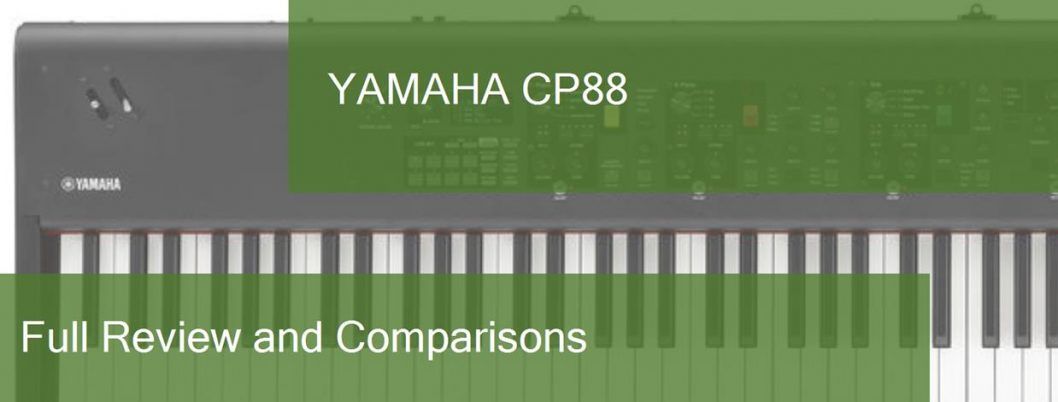
Digital Piano Yamaha CP88 Full Review. Is it a good choice?
Digital Piano Yamaha CP88 Full Review. Is it a good choice?
Let’s start off by saying… Yes! It is more than a good choice. It is an incredible choice that seems to have it all. It appears as this instrument was made by musicians for musicians that know what you are looking for. Versatile High-quality sound, impressive building quality, simple and clean interface, user friendly. And the real feel of real piano keys, Want to know more about it? The Yamaha CP88 costs around €2.069/£1,888.
Let’s check out its features:
- 88 weighted Keys made of the weighted and synthetic ivory top layer
- 128-voice polyphony
- 80 Sounds (Different sounds of piano and other instruments)
- All functions directly accessible – optimized for live musicians
- Seamless Sound Switching (SSS) for uninterrupted sound changes
- Sound generation with AWM2
- 57 voices (Different sounds of piano and other instruments) (10 piano, 14 electric piano, 33 subs)
- 160 Live set sounds (80 presets)
- 23 Insert effects, 2 delay effects, reverb (Reverberation effect which is a reflection effect of the sound), 3-band EQ
- pitch bend (Functionality that changes the sound wave of what you play and then returns to its original state) and modulation wheel
- LC screen
- Split (Split the keyboard into two different instruments) and layer function
- Stereo output (6.3 mm jack and XLR)
- Stereo headphone output (6.3 mm jack)
- External stereo input (6.3 mm jack)
- Foot pedal (The most important pedal of a piano or keyboard is the sustain pedal and is used to keep the note playing even if you stop pressing the key.) 1 & 2 (6.3 mm jack)
- Footswitch and sustain pedal (6.3 mm jack). Pedals not included
- Standard midi (MIDI allows you to do such wonderful things as connect the keyboard to the computer, record a soundtrack, and with certain programs pass with a click what you have played to musical notes in a score. MIDI tracks store information from musical notes) input/output
- USB to Host (It’s a more modern MIDI connector. MIDI allows you to do such wonderful things as connect the keyboard to the computer, record a soundtrack and with certain programs pass with a single click what you have played to musical notes in a score. MIDI tracks store note information)
- USB to Device
- Dimensions (W x D x H): 1298 x 364 x 141 mm and a weight of 18.6 kg

Now that you have seen the listed and described features of this digital piano. I know you have a very good idea of what it sounds like. But, if you are the person that likes to see more than just words. Here I leave you a Yamaha CP88 demo video where you can hear and appreciate Its sound in a better way.
Check out the demo here: Yamaha CP88 demo video
Related post you can be interested in
- Ranking with the best digital pianos
- My selection of cheap musical keyboards.
- Basic concepts you need to know about digital pianos.
- The best resources to learn to play the piano by yourself.
- The best Yamaha Digital Pianos.
At the end of the post, you will find a section with the best shopping possibilities for this digital piano. But feel free to go directly thereby pressing the following button.
Still, feel this is not a completely good choice and need to see more? –Ok. let’s do something. Let me give you some comparisons between this model and other similar models that are considered common alternatives for it. So you can compare more in deep.
Yamaha CP88 vs Clavia Nord Piano 4
The Yamaha CP88 costs around €2.069/£1,888 and the Clavia Nord Piano 4 costs around €2.399/£2,199. To understand this is an easy way all I can say is:
“It’s all about library”.
I know people will agree with me when I say the library from Nord Piano 4 is way larger than Yamaha CP88 yet… Beauty is in the eye of the beholder. And the sound of Yamaha is widely known due to Its magical sound and stage pianos which are just unique and resemble more the real thing. Talking about uniqueness it has the CFX, just to mention something that you will not find in Nord. Also, the incredible improvement of the UI on the CP gives it a similar immediacy like the Nord. With effects that you can develop into all three sections instead of two (like in the Nord)
But… I know you’re looking here is for the quality of the sound so here I leave you a sound review of both understandings why sometimes spending less… Is more.
If you want to know more about this model do not miss our Clavia Nord Piano 4 review
Yamaha CP88 vs Yamaha CP73
The digital piano Yamaha CP88 is usually about 440 € more expensive than Yamaha CP73. But once again, I know you’re here because what you want is to know why you’re money is worth it? —So… without further due: I leave you here with a video review checking out the different sounds and features of each of these pianos, so you get to understand with the sound right away… Why cost? the CP88 is simply more versatile, wide-ranged, and also more durable than the CP73 when it comes to living musicians.
Yamaha CP88 vs Yamaha CP300
The Yamaha CP88 costs around €2.069/£1,888 and the Yamaha CP300 costs around €2.290/£2,089.
Now here’s a tricky one because prices are quite alike. But, I want you to understand here something. In this case, here is not about the quality of the instrument. Actually, is about the features of the instrument. —let me explain this in a very simple way: It’s not like the quality of the CP300 is better or worse than the CP88. It’s simply a thing that the CP300 includes Powerful speakers 2 x 30 W, and a sustain pedal with the purchase that is not included on the Yamaha CP88. And, in the case of the speakers… The CP88 simply doesn’t have them.
The versatility on both of them it’s quite amazing and the sound on both of them it’s incredible. So, if you want to save up some extra money at the very beginning of your purchase that you can improve on more sound afterward on an incredible digital piano, Yamaha CP88 is still a winner here because, at the end of the day, you can add more pedals and effects, and more concrete sound to your live performances than the CP300. Which is also an incredible option once again.
Down below I leave you a video of the Yamaha CP300 if you want to check out how amazing this digital piano is and understand why the concrete sound of the CP88 is also a better choice. (In the eyes of your fellow server over here.)
If you want to know more about this model do not miss our Yamaha CP300 review
Yamaha CP88 vs Yamaha P515
The Yamaha CP88 costs around €2.069/£1,888 and the Yamaha P515 costs around €1.419/£1,290. And let me tell you… There is a reason for this.
Although Yamaha has been working for quite a while now on the real feel of the keyboards making them feel like they were real pianos for a while now. There is a huge difference between the two of them when it comes to the matter of the live spectrum. The Yamaha CP88 is way superior to the Yamaha P515 in that sense. By the way, I need to clarify this right over here. —Not bashing the Yamaha 515 at all! This a brutal digital piano. Is just that the sound and feel are not at the same level as the CP series. These are just state of the art now with sound clarity and greatness included that can give us a better and enhanced performance for live musicians… That is beyond compare with the Yamaha P515.
And here below I leave you a video of the Yamaha P515 so you can check out I’m not lying when I say this is a magic digital piano as well. Is just that it is beyond compare with the quality sound you can see on the above videos of the Yamaha CP88 as well.
If you want to know more about this model do not miss our Yamaha P515 review.
Where to buy Yamaha CP88
Amazon
- Free Shipping and the possibility of shipping in one day with Amazon Premium.
- Full Guarantee but they are no experts in music equipment.
- Sometimes a better price.
- He’s got worse stock than Thomann.
Thomann
- Free Shipping.
- Full warranty. If you have any problems, they take care of everything.
- 100% reliable payment.
- A leader in trouble-free shipping.
- Usually the Best price.
- Best Reputation: They are the leading online store in Europe and have the best catalog and information.
Check below related models with similar price and features:
- Roland FP 60
- Yamaha P515
- Yamaha YDP 164
- Roland FP 90
- Korg G1 Air
- Casio PX 560
- Roland Kiyola KF 10
- Korg PA 1000
- Korg PA 700 Oriental
- Yamaha PSR S975
- Korg Havian 30
- Korg PA 700
- Kawai ES 8
- Kawai MP 11
- Kawai MP 7
- Clavia Nord Electro 6D 61
- Clavia Nord Stage 3 88
- Kurzweil SP6
- Korg SV1 73
- Kurzweil Forte 8
- Clavia Nord Electro 6D 73
- Clavia Nord Stage 3 HP76
- Roland RD 2000
- Kurzweil Artis 7
- Clavia Nord Piano 4
- Clavia Nord Stage 3 compact
- Crumar Seven
- Clavia Nord Electro 6
- Korg Grandstage 73
- Dexibell Vivo Stage S9
- Dexibell Vivo Stage S1
- Korg SV1 88
- Korg Grandstage 88
- Kurzweil Forte SE
- Yamaha CP88
- Roland VR 730
- Studiologic Numa Concert
- Yamaha CP73
- Dexibell Vivo Stage S7
- Yamaha CP300
- Yamaha CP1
- Clavia Nord Grand
- Viscount Physis Piano K4 EX
- Viscount Physis Piano K5 EX
- Dexibell Vivo Portable P7
- Kurzweil Artis
- Dexibell Vivo Portable P3
- Dexibell Vivo Stage S3
Did you like this post? > > > >
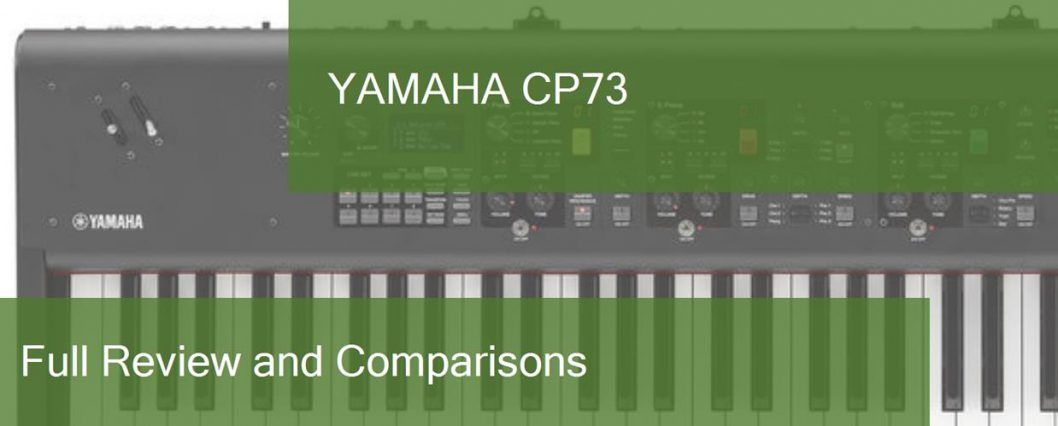
Digital Piano Yamaha CP73 Full Review. Is it a good piano?
Digital Piano Yamaha CP73 Full Review. Is it a good choice?
Yamaha Corporation is a Japanese company with a wide range of products and services, mainly musical instruments and electronic devices. Today we will look at the Yamaha YDP — S52 digital wall piano, which is very interesting. Now we are going to analyze the Yamaha CP73 which costs around €1.644/£1,498
- 73 Keys with Balanced Hammer Action (The weight of the keys on an acoustic piano that digital pianos try to imitate to match the touch of a real acoustic piano. The keys in the high register are heavier and in the high register less. This is a different concept of sensitivity on the keyboard that serves to regulate the volume of the note. But a hammer action keyboard always has sensitivity on the keys.)
- 80 Sounds (Different sounds of piano and other instruments)
- 128-voice polyphony with AWM2 technology
- All functions directly accessible – optimized for live gigs
- Seamless Sound Switching (SSS) for uninterrupted transitions
- Sound generation: AWM2, 128 voices (Different sounds of piano and other instruments)
- 57 Voices (10 piano, 14 electric piano, 33 subs)
- 160 Live set sounds (80 presets)
- 23 Insert effects, 2 delay effects, reverb (Reverberation effect which is a reflection effect of the sound), 3-band EQ
- LC screen
- Line output (jack and XLR)
- Headphones output
- External stereo input (6.3 mm jack)
- Footswitch and sustain pedal (the most important pedal of a piano or keyboard is the sustain pedal and is used to keep the note playing even if you stop pressing the key, (pedal: the most important pedal of a piano or keyboard is the sustain pedal and is used to keep the note playing even if you stop pressing the key.)
- Standard MIDI input/output (MIDI allows you to do such wonderful things as connect the keyboard to the computer, record a soundtrack and with certain programs pass with a click what you have played to musical notes in a score. MIDI tracks store information from musical notes)
- USB to Host (It’s a more modern MIDI connector. MIDI allows you to do such wonderful things as connect the keyboard to the computer, record a soundtrack and with certain programs pass with a single click what you have played to musical notes in a score. MIDI tracks store note information)
- USB to device
- Dimensions (W x D x H): 1086 x 355 x 144 mm and a weight of 13.1 k
Now that we’ve listed and described the features of this digital piano there’s no better than taking a look at the following video where they tell us more about the Yamaha CP73 and you can hear the different sounds of this piano.
Related post you can be interested in
- Ranking with the best digital pianos
- My selection of cheap musical keyboards.
- Basic concepts you need to know about digital pianos.
- The best resources to learn to play the piano by yourself.
- The best Yamaha Digital Pianos.
Now let’s compare the Yamaha CP73 with its more common alternatives. Also at the end of the post, you will find a section with the best shopping possibilities for this digital piano. But you can go directly to that part of the post by pressing the following button.
Yamaha CP73 vs Yamaha CP88
The digital piano Yamaha CP73 which costs around €1.644/£1,498 and the Yamaha CP88 €2.069/£1,498.
Take a look at their differences:
- The Yamaha CP88 has 88 weighted Keys made of the weighted and synthetic ivory top layer, 128-voice polyphony, and 80 sounds (same as the Yamaha CP73), all functions are directly accessible – optimized for live musicians, seamless Sound Switching (SSS) for uninterrupted sound changes and sound generation with AWM2.
- It has 57 Voices (10 piano, 14 electric piano, 33 subs, as the Yamaha CP73 does), 160 Live set sounds (80 presets), 23 Insert effects, 2 delay effects, reverb, 3-band EQ, Pitch bend, and modulation wheel, LC screen, Split and layer function.
- It sounds and inputs/outputs, the Yamaha CP88 has a stereo output (6.3 mm jack and XLR), Stereo headphone output (6.3 mm jack), External stereo input (6.3 mm jack), Foot pedal 1 & 2 (6.3 mm jack), Footswitch and sustain pedal (6.3 mm jack). Pedals are not included.
- Both keyboard pianos have no difference in their standard MIDI input/output, USB to Host and USB to Device connections.
- However, their dimensions and weight are different (W x D x H), as the Yamaha CP88 has 1298 x 364 x 141 mm and a weight of 18.6 kg, which means it is larger and heavier than the keyboard piano Yamaha CP73.
And below a video of the Yamaha CP88
If you want to know more about this model do not miss our Yamaha CP88 review.
Yamaha CP73 vs Korg Grandstage 73
The digital piano Yamaha CP73 which costs around €1.644/£1,498 and the Korg Grandstage 73 costs around €1.599/£1,499
These are the differences between both of these keyboard pianos:
- The digital piano Korg Grandstage has a 73 RH3 Weighted Hammer Action Keyboard, includes five grand pianos plus an Upright piano (Berlin, German, Austrian, Japanese, and Italian), 7 different sound engines with up to 128-voice polyphony, 500 Sounds, 3-Band EQ and 4 insert effects and Reverb/Delay section.
- Also, it has 2 OLED Displays, a split and layer function, a pitch bend and modulation wheel, a USB port for pen drive, 2 Line outputs XLR CANON L/R balanced and two line outputs jack.
- Both have in common the USB to HOST, sustain pedal included and damper and also switch pedal input, stereo headphone output jack, and has a piano stand included.
- Dimensions (W x D x H): 1099 x 359 x 140 mm and a weight of 17 kg. The Korg Grandstage 73 remains with only 4 kg. over the Yamaha CP73, and is only a few mm. larger.
And below a video of the Korg Grandstage 73
If you want to know more about this model do not miss our Korg Grandstage 73 review
Yamaha CP73 vs Roland RD 2000
The digital piano Yamaha CP73 which costs around €1.644/£1,498 and the Roland RD 2000 costs around €2.299/£2,090.
Let’s compare the features of each of these pianos to see their differences:
- The keyboard piano Roland RD 2000 has a PHA-50 weighted keyboard made of wood and plastics, 128-voice polyphony (as the Yamaha CP73 does), 2 independent sound engines and modern controller features and 1113 sounds (a lot more of sounds than the Yamaha CP73).
- It also has 8 knobs with LED status indicators and nine sliders for real-time control of sounds and effects, 8 fully assignable zones for combining internal sounds and external sources, recreations of vintage analog effects, including the BOSS CE-1 Chorus, Roland Dimension D (and more) and also 2 wave expansion slots for loading additional sounds from Roland’s Axial website.
- The Roland RD 2000 has 100 Scene memories for saving and recalling setups with one touch, Traditional Roland pitch/mod controls, 2 assignable wheel controllers, 24-Bit/192 kHz USB audio/MIDI interface, Line output (L/Mono, R) Jack and XLR, 3.5 mm stereo jack input, sustain pedal input and others (DAMPER, FC1, FC2, EXT) inputs and sustain pedal not included.
- As the Yamaha CP73, it has standard MIDI input, USB to HOST, USB memory port and headphones jack output.
- Dimensions (L x W x H): 1412 x 367 x 140 mm and a weight of 21.7 kg. The Roland RD 2000 has plenty of difference in size and is considerably heavier than the Yamaha CP73.
And below a video of the Roland RD 2000
If you want to know more about this model do not miss our Roland RD 2000 review
Yamaha CP73 vs Korg SV1 88
The digital piano Yamaha CP73 is usually about 220 € more expensive than Korg SV1 88.
The keyboard piano Korg SV1 88 is very different to the Yamaha CP73:
- It is a keyboard with hammer action RH3 and 88 keys, 8 velocity curves, 8 tuning curves, fine tuning and transpose (every key +/- 12 semitones), EDS sound generation (Enhanced Definition Synthesis) and RX (Real eXperience) technology, 80-voice polyphony and 36 Sounds.
- Also, it has 8 favourite switches for quick control panel registration, tube in pre amp (1 x 12AX7), 36 demo songs, sustain pedal input, headphone input, 2x 6.3 mm Jack sound inputs, line outputs jack unbalanced and 2x XLR balanced, perfect for live music.
- It has a standard MIDI In/Out, USB Host and a especial Korg DS-2H sustain pedal included.
- The measurement of the Korg SV1 88 is larger than the Yamaha CP73 does and is also heavier. (1353 x 347 x 154 mm and a weight of 20.5 kg).
And below a video of the Korg SV1 88
If you want to know more about this model do not miss our Korg SV1 88 review
Where to buy Yamaha CP73
Thomann
- Free Shipping.
- Full warranty. If you have any problems, they take care of everything.
- 100% reliable payment.
- Leader in trouble-free shipping.
- Usually Best price.
- Best Reputation: They are the leading online store in Europe and have the best catalogue and information.
Amazon
- Free Shipping and possibility of shipping in one day with Amazon Premium.
- Full Guarantee but they are no experts in music equipment.
- Sometimes a better price.
- He’s got worse stock than Thomann.
Check below-related models with similar price and features:
- Roland FP 60
- Yamaha P515
- Yamaha YDP 164
- Roland FP 90
- Korg G1 Air
- Casio PX 560
- Roland Kiyola KF 10
- Korg PA 1000
- Korg PA 700 Oriental
- Yamaha PSR S975
- Korg Havian 30
- Korg PA 700
- Kawai ES 8
- Kawai MP 11
- Kawai MP 7
- Clavia Nord Electro 6D 61
- Clavia Nord Stage 3 88
- Kurzweil SP6
- Korg SV1 73
- Kurzweil Forte 8
- Clavia Nord Electro 6D 73
- Clavia Nord Stage 3 HP76
- Roland RD 2000
- Kurzweil Artis 7
- Clavia Nord Piano 4
- Clavia Nord Stage 3 compact
- Crumar Seven
- Clavia Nord Electro 6
- Korg Grandstage 73
- Dexibell Vivo Stage S9
- Dexibell Vivo Stage S1
- Korg SV1 88
- Korg Grandstage 88
- Kurzweil Forte SE
- Yamaha CP88
- Roland VR 730
- Studiologic Numa Concert
- Yamaha CP73
- Dexibell Vivo Stage S7
- Yamaha CP300
- Yamaha CP1
- Clavia Nord Grand
- Viscount Physis Piano K4 EX
- Viscount Physis Piano K5 EX
- Dexibell Vivo Portable P7
- Kurzweil Artis
- Dexibell Vivo Portable P3
- Dexibell Vivo Stage S3