
- Home
- Author's Archive:
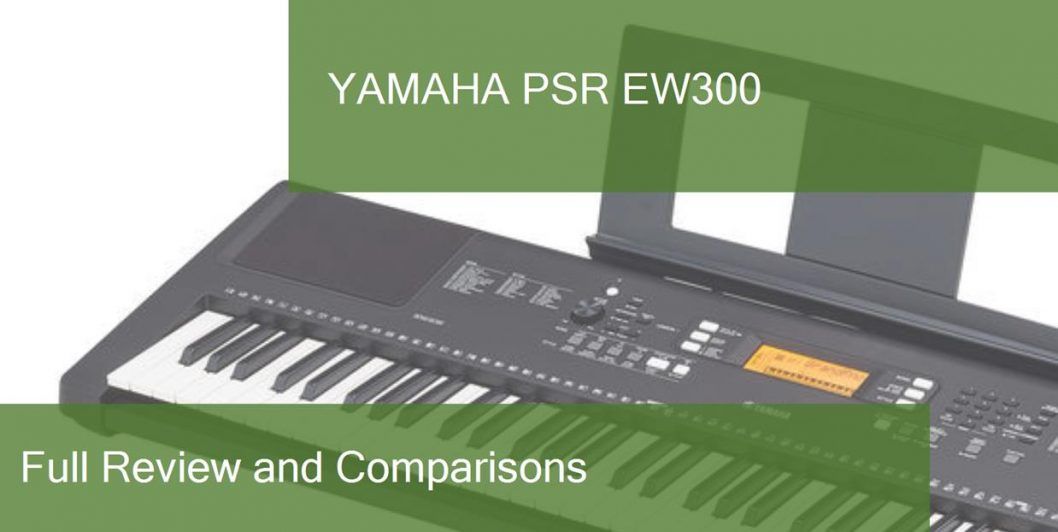
Yamaha Digital Piano PSR EW300 Full Review. Is it a good choice?
Yamaha Digital Piano PSR EW300 Review Complete. Is it a good choice?
Yamaha Corporation is a Japanese company with a wide range of products and services, mainly musical instruments and electronic devices. Today we’ll take a look at the Yamaha PSR EW 300, a truly interesting portable keyboard that deserves in-depth analysis:
- 76 Sensitive keys (You can adjust the volume of the note depending on how you press it. And it’s different from the weighted keys that is the weight of the keys on a piano) to the touch.
- 574 sounds (Different sounds of piano and other instruments).
- 48 notes of polyphony (Number of notes that can be played at the same time. This includes accompaniments that also consume notes. So if you play over an accompaniment more notes will be accumulated).
- 165 styles (Accompanying styles that adapt to the chords we are playing. For example they will put a bass and a drum kit that will adapt and synchronize with the notes we are playing on the keyboard).
- Reverb effect.
- Chorus effect.
- Master EQ (refers to the master equalizer that allows you to adjust the parameters of the sound mix that comes out of your speakers)
- 150 types of Arpeggio (The arpeggio function allows you to play an entire passage of notes by pressing just one key. Many come pre-recorded and some keyboards allow you to create them).
- Recording of 5 tracks or songs.
- Metronome (Basic study element to study and practice the tempo of a piece of music).
- Transposition (Transposition allows you to move the note spectrum of a keyboard. This is to be able to play with transposing instruments. It is not an easy concept but it is made to facilitate the writing of an orchestration for instruments with very different bass and treble registers).
- USB midi (The MIDI allows you to do such wonderful things as connecting the keyboard to the computer, record a sound track and with certain programs pass with a click .what you have played to musical notes in a score. MIDI tracks store the information of the musical notes).
- Auxiliary input.
- Input for sustain pedal (The sustain pedal of a piano or keyboard is used to keep the note playing even if you stop pressing the key).
- Headphones output.
- Speakers (Different sounds of piano and other instruments) not very powerful of 2.5 W.
- Weight 6.2 kg and dimensions (W x H x D): 1152 x 118 x 369 mm.
- Includes mains cable and stand.
- Also supports batteries.
- Include educational applications such as:
- The “Keys to Success” that provides easy and progressive lessons.
- The “Tapping Tutor Function” which allows the student to be taught to play with greater expressiveness.
- Yamaha also includes a downloadable song book, which includes sheet music and text, to facilitate learning.

It is a mid-range keyboard that costs around €257/£234. The quality of its sounds and its 76-key keyboard is quite interesting. A good intermediate option that can interest several people. Don’t hesitate to see the comparisons below, you will surely be interested.
Now that we have listed and described the features of this keyboard there is no better way than to take a look at the following video where they tell us more about the Yamaha PSR-EW300 and you can hear how its different sounds sound.
Related post you can be interested in
- Ranking with the best digital pianos
- My selection of cheap musical keyboards.
- Basic concepts you need to know about digital pianos.
- The best resources to learn to play the piano by yourself.
- The best Yamaha Digital Pianos.
Now let’s compare the Yamaha PSR EW300 with its more common alternatives. Also at the end of the post you will find a section with the best shopping possibilities for this digital piano. But you can go directly to that part of the post by pressing the following button.
Yamaha PSR-EW300 vs Yamaha PSR-E363
Let’s compare two different models from the Yamaha house. The Yamaha PSR-E363 model is presented as a low range model but with very high performance and a very competitive price (around €198/£180). The Yamaha PSR-EW300 model is a mid-range keyboard and its price is around €257/£234.
Both have quite similar characteristics, and some differences. In this section we will analyze them.
The main difference between these two models is the number of keys they have. The Yamaha PSR-E363 has 61 keys while the PSR-EW300 has 76 keys. This is important to keep in mind, because fewer keys will allow us to play fewer songs, especially some classical pieces.
Another important difference is the size and weight of the keyboards. The PSR-EW300 is larger (1152 mm wide x 118 mm high x 369 mm deep) and heavier (6.2kg) compared to the PSR-E363 (dimensions 945 x 368 x 118mm and weight 4.6kg). This is a very important factor in the portability of the models. Both can use batteries.
Most important common features to be considered:
- Repertoire of 574 different sounds and 165 styles. This is a brutal and high quality diversity, as Yamaha is one of the largest instrument makers in the world.
- 48-note polyphony capability.
- Reverb and Chorus effects
- A function of the Master EQ that allows us to control the sound settings, like an equalizer system.
- They include a metronome, to control the rhythm or tempo of our songs.
- Transposition and arpeggio performance functions.
- MIDI connection and recording through USB TO HOST, to connect with devices such as a PC, a tablet or a mobile phone.
- LCD display for easy operation of keyboard functions and communication with the user.
- Sustain pedal input.
- Includes music stand or score support.
- Auxiliary inputs for connecting other devices, and both come with speakers.
- outputs for headphones. This will allow us to play without noise and be able to do it in a concentrated way and without bothering anyone.
- 2.5W speakers. They are not very powerful, they only allow you to listen to yourself when you are rehearsing alone. For accompaniment of other instruments or playing in large rooms, rehearsal rooms or outdoors, it is advisable to use external speaker systems or amplification.
- Duo mode to allow two musicians to play at the same time For example, a teacher and a student.
- Learning functions “Keys to Success” and “Tapping Tutor Function”.
- Both can be equipped with batteries.
Next we are going to put the characteristics of each of these pianos in 2 different columns so that it is easier to see all the differences or peculiarities of each one:
|
Yamaha PSR-EW300 |
Yamaha PSR-E363 |
|---|---|
|
|
And now a video of the Yamaha PSR-E363:
In short, both models offer similar features for composing and producing music, as well as for learning. The factors you should take into account when choosing one of the models are the following:
- Price: If your budget is very tight and you are a beginner, the PSR-E363 can be a more than sufficient keyboard to start playing.
- Portability: If you can always have an electrical connection or have enough batteries, the PSR -E363 is offered as the most portable piano.
- Number of keys: In this section you must take into account the type of songs you are going to play and the note register they have. If it is not very wide or classical, the PSR-E363 keyboard may be sufficient. If you are going to play songs with wide musical registers, the PSR-EW300 can meet your needs.
Both are keyboards. They are suitable for playing at home as a beginner or in a comfortable way, and are easy to transport. However, if you’re looking for a piano that can play all kinds of pieces, including classics, we recommend that you have an 88-key piano with dynamic sensitivity and weighted keys, as these keyboards don’t have them. Next, we will make another comparison with a very competitive piano that may interest you, the Thomann SP-5600.
If you want to know more about this model don’t miss our review of the Yamaha PSR-E363.
Yamaha PSR-EW300 vs Thomann SP-5600
In this section we will compare the Yamaha PSR-EW300 keyboard with a Thomann SP-5600 piano. Both are instruments that are in similar price ranges: the PSR-EW300 can be found for about €257/£234 and the Thomann SP-5600 for about €369/£333.
The first thing to bear in mind is that they are instruments that are a little different, especially in number and type of keys: the Yamaha is a digital keyboard, which offers 71 keys and with sensitivity; while the Thomann is a digital and portable piano that has 88 touch-sensitive and weighted keys. The latter offers the possibility of playing works intended for piano, and that the Yamaha can be limited.
Both feature MIDI connections, allowing you to connect them to devices such as a PC and make changes to your songs or take out your sheet music.
First we will mention and analyze the similar or common characteristics of both instruments:
- Similar repertoire number: 574 sounds on the Yamaha keyboard and 600 sounds on the Thomann piano These sounds may be different in that some are present and others are not.
- Presence of Master EQ and metronome equalization system.
- Reverb and Chorus effects. Both also have note transposition function.
- Duo function. Allows two people to play on the same piano or keyboard, splitting it into two equal keyboards. Ideal for a student to learn with the teacher playing at the same time.
- Both include lectern. Important complement to be able to paper or tablet with the scores of your songs.
Now let’s talk about the most important differences between the Thomann and the Yamaha:
- More musical styles present (230 steles on the Piano Thomann versus 165 styles found on the Yamaha keyboard). The Thomann also offers up to 10 styles to be configured by the user. Although this is a nice extra, the Yamaha offers enough styles for any student, and in addition to great quality.
- The Thomann offers exclusive Split and Layer functions, AND DSP-sound effects
- DSP sound effects. The DSP is a processor that optimizes the processing speed of digital signals and allows an almost instantaneous generation of the signal, making the emulation of sound with respect to a mechanical piano of incredible quality.
- 2 headphone outputs while the Yamaha only has one. This is an advantage if you are playing in duo mode, as each person can listen through different headphones.
- Stereo input and output. The Yamaha only has one jack sound input.
- Microphone IN input. Allows a microphone to be connected to the piano and a voice or accompaniment to be played through the piano speakers. With the Yamaha this would not be possible, and a microphone would have to be connected to an additional speaker system or amplifier.
- Speakers: The Thomann SP-56000 offers a pair of built-in 10W speakers and the Yamaha 2.5W. This difference in power allows the Thomann to do without amplification when playing an instrument such as a guitar or in a rehearsal studio, while with the Yamaha it is not possible.
- Sustain pedal included. The Yamaha only has an input for the pedal. This is an important addition if you want to play all kinds of piano music.
- The Thomann offers 5 demo songs while the Yamaha offers the possibility to record 5 of them. This is important when composing, as it allows you to immediately hear the tunes you are creating while composing on the keyboard.
- Pitch-Bend wheel. Present on the Thomann but it’s possible to add this plug-in on Yamaha devices that don’t have it via the “Yamaha Controller” app, which you can download for iOS devices from the Apple Store.
- Portability:
- Both can be equipped with batteries so that they are not dependent on the power supply.
- The Thomann is a piano that is heavier and bulkier than a keyboard like the Yamaha. This can be a difficulty if you want an instrument that is manageable and can be taken with you to many places. Especially on public transport.
We will put the characteristics of each of these pianos in 2 different columns to make it easier to see the differences:
|
Yamaha PSR-EW300 |
Thomann SP-5600 |
|---|---|
|
|
And now a video for you to see what the Thomann SP-5600 sounds like:
In short, they are very similarly priced instruments ( their difference can be as much as 30 euros) but they can be useful in different ways:
- The Yamaha PSR- E300 is presented as a mid-range keyboard, suitable for a musician who wants to start playing an instrument and wants very high sound quality. It also offers very suitable portability options, due to its weight and the possibility of connecting with batteries.
- The Thomann SP-56000 is now available as a major change for the weighted keys. It is ideal for playing classics, as it has 88 keys and many sounds. This is the factor that allows you to compare it with the PSR E300. Here the difference is a little bit the weight you want to carry. If you’re not too keen on counterbalancing either and you want a lighter weight with acceptable sound quality, the Yamaha is the choice. If the 14 kg is acceptable to you then the Thomann will give you a better feel when playing the piano.
If you want to know more about this model don’t miss our review of the Thomann SP-5600
Yamaha PSR-EW300 vs Startone MK-300
In this case the comparison is similar to that made with the Yamaha PSR E363. The advantage that the Startone has is that it offers the same as the Yamaha PSR E363 for about €257/£234 and the price of the Startone is about €115/£102. It has MIDI, sensitivity on the keys and pedal input for sustain. Well, it looks like a marvel but the sound quality in the Yamaha PSR 363 is a little better. But if you have a budget that can’t exceed 120 euros this can be a good option.
After the above consideration the Yamaha PSR EW300 is certainly far superior in sound quality and key texture. So it already depends on your budget.
We will put the characteristics of each of these pianos in 2 different columns to make it easier to see the differences:
|
Yamaha PSR-EW300 |
Startone MK-300 |
|---|---|
|
|
And now a video of the Startone MK-300
If you want to know more about this model don’t miss our review of the Startone MK-300.
Yamaha PSR-EW300 vs Yamaha NP-32 Piaggero
Let’s compare two different models from the Yamaha house. The Yamaha NP32 is presented as a low range model but with very high performance and a very competitive price (€298/£272). The Yamaha PSR-EW300 model is a mid-range keyboard and its price is around €257/£234.
Both have quite similar features, and some differences. In this section we will be analyzing them. Both digital keyboards have 76 touch-sensitive keys and being of the same brand it is very likely that it has the same quality.
Another important difference is the type and use of the keyboards. When the Yamaha PSR-EW300 is an arrangement keyboard with its many sounds and different styles or rhythms to accompany, the Yamaha NP 32 playero is a digital keyboard more like a real acoustic piano
The most important common characteristics that we must take into account:
- Repertoire of 574 different sounds and 165 styles. This is a brutal and high quality diversity, as Yamaha is one of the largest instrument makers in the world. While the NP32 offers only 10 sounds.
- In the PSR 48-note polyphony capability, while the NP32 up to 64 notes of polyphony.
- Reverb and Chorus Effects
- A function of the Master EQ that will allow us to control the sound settings, like an equalizer system.
- They include metronome, to control the rhythm or tempo of our songs.
- Transposition and arpeggio functions.
- MIDI connection and recording through USB TO HOST, to connect with devices such as a PC, a tablet or a mobile phone.
- The LCD display makes it easy to operate the keyboard functions and communicate with the user.
- Sustain pedal input.
- Includes music stand.
- Auxiliary inputs for connecting other devices, and both come with speakers.
- headset outputs. This will allow us to play without noise and be able to do it in a concentrated way and without disturbing anyone.
- 2.5W speakers. They are not very powerful, they only allow you to listen to yourself when you are rehearsing alone. For accompaniment of other instruments or playing in large rooms, rehearsal rooms or outdoors, it is advisable to use external speaker systems or amplification.
- Duo mode to allow two musicians to play at the same time For example, a teacher and a student.
- Learning functions “Keys to Success” and “Tapping Tutor Function”.
- Both can be battery operated.
We will put the characteristics of each of these pianos in 2 different columns to make it easier to see the differences:
|
Yamaha PSR-EW300 |
Yamaha NP32 Piaggero. |
|---|---|
|
|
And now a video for you to see what the Yamaha NP32 Piaggero sounds like:
If you want to know more about this model don’t miss our review of the Yamaha NP 32.
Where to buy Yamaha PSR EW300
Amazon
- Free Shipping and possibility of shipping in one day with Amazon Premium.
- Full Guarantee but they are no experts in music equipment.
- Sometimes better price.
- He’s got worse stock than Thomann.
Thomann
- Free Shipping.
- Full warranty. If you have any problems, they take care of everything.
- 100% reliable payment.
- Leader in trouble-free shipping.
- Usually Best price.
- Best Reputation: They are the leading online store in Europe and have the best catalogue and information.
Check below related models with similar price and features:
- Thomann DP 26
- Thomann SP 320
- Yamaha NP 32 Piaggero
- Korg Tiny Piano
- Startone MK 300
- Startone MK 200
- Yamaha PSR E463
- Yamaha PSR E363
- Startone MKR 61
- Roland GO KEYS
- Casio SA 46
- Casio SA 47
- Casio CTK 240
- Casio CT X700
- Yamaha EZ 220
- Yamaha PSR E263
- Yamaha PSR EW300
- Casio LK 280
- Casio SA 76
- Casio CTK 3500
- Casio LK 265
- Casio LK 136
- Casio CTK 1500
- Casio SA 77
- Yamaha Sonogenic SHS 500
- Casio SA 78
- Casio CTK 2500
- Yamaha YPT 260
- Roland GO PIANO
- Midiplus Stage 88
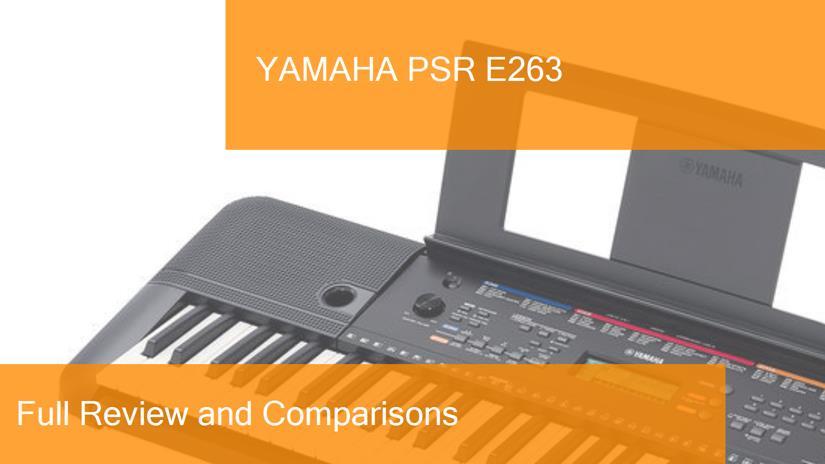
Yamaha Digital Piano PSR E263 Full Review Is it a good choice?
Complete Review Yamaha Digital Piano PSR E263. Is it a good choice?
Yamaha Corporation is a Japanese company with a wide range of products and services, mainly musical instruments and electronic devices. The Yamaha PSR E263 is a very interesting keyboard that costs around 100 euros (120 USD more or less). It has a lot of sounds and is good to experiment with if your budget is very low although you have to take into account that it has no sensitivity on the keys and it does not have MIDI to connect to the computer. It costs around It’s truth that the models which cost more than €50 if they have those important features. Anyway we go with it because it is a top seller.
Let’s start by showing you the features of the Yamaha PSR-E263
- 61 keys.
- 32 notes of polyphony (Number of notes that can be played at the same time. This includes accompaniments that also consume notes. So if you play over an accompaniment more notes will be accumulated).
- 384 sounds and 16 drum set/SFX (Meaning Sound Effect, different sound sets).
- 130 styles (Accompanying styles that adapt to the chords we are playing. For example, you will put a bass and a drum kit that will adapt and synchronize with the notes you are playing on the keyboard).
- 102 demo songs.
- Dual function (Dual mode allows you to combine two sounds to create a more complete one. Typical is the combination of piano + stringed instrument sound) or layer.
- Reverb effect.
- Chorus effect.
- Master EQ (refers to the master equalizer that allows you to adjust the parameters of the mix of sounds that come out of your speakers).
- 1-touch configuration.
- Metronome (Basic study element to study and practice the tempo of a piece of music).
- Transposition (Transposition allows you to move the note spectrum of a keyboard. This is to be able to play with transposing instruments. It is not an easy concept but it is made to facilitate the writing of an orchestration for instruments with very different bass and treble registers).
- Duo function.
- Sustain pedal input (The sustain pedal of a piano or keyboard is used to keep the note playing even if you stop pressing the key).
- Mini stereo auxiliary input, which allows you to connect an instrument or a player and play over it.
- Hoofbeats.
- 2 x 2.5W speakers which is medium low power.
- A weight of 4kg and measures 940 x 317 x 106mm (width x depth x height).
- Includes PA-130 power cable and score holder.
- Battery-operated.

Now that we have listed and described the features of this keyboard, there is nothing better than taking a look at the two videos I have selected where they tell us more about the Yamaha PSR-E263 and you can hear how its different sounds sound.
Related post you can be interested in
- Ranking with the best digital pianos
- My selection of cheap musical keyboards.
- Basic concepts you need to know about digital pianos.
- The best resources to learn to play the piano by yourself.
- The best Yamaha Digital Pianos.
Now let’s compare the Yamaha PSR-E263 with its more common alternatives. Also at the end of the post you will find a section with the best purchase possibilities for this keyboard. But you can go directly to that part of the post by pressing the next button.
Yamaha PSR-E263 vs Yamaha PSR-E363
These keyboards are of a similar range. There is usually a difference of about €50 between one and the other. Let’s see if that price difference is worth it. You have to keep in mind that the Yamaha PSR 363 is the real top seller. It is Yamaha’s best-selling piano. It has no competitors in its range.
How can these musical keyboards come with many sounds. Not only piano sounds, but also dance sounds, from other instruments. They are made to “play” and have fun. They are low-end keyboards for beginners but can be used to start the first year.
The main differences between these keyboards are:
- The Yamaha PSR E263 doesn’t have MIDI Connectivity and the 363 does. This is very limiting because connecting it to the computer offers many advantages for composing, writing scores and using music editing programs, since it allows you to record MIDI tracks.
- A good thing about the PSR 263 is that it has a sustain pedal input. This is quite an important expressive resource when learning to play the piano.
- The PSR 263 has no sensitivity on the keys while the Yamaha PSR 363 does. So you can regulate the volume with it and make dynamic sound.
- In addition the Yamaha PSR 363 has more sounds and has more polyphony. You also have the possibility to save a setting and assign it to a button.
- Both have batteries and are similar in weight, so in that respect they are very similar.
- There is no noticeable difference in the power of your speakers. Both have speakers with low power, which is useful for rehearsing at home with another musician but not for going to a rehearsal place.
- In addition the 363 has the possibility of making arpeggios. Which are phrases or notes in a row that come out with just one keystroke.
- Different inputs to be able to connect and play over a composition recorded in a player or over another instrument: mini-stereo in the model PSR-E263 and mini-jack in the model PSR-E363.
- Both models can be equipped with batteries (allows playing anywhere) and the difference in weight is not very noticeable: 4kg for the PSR 263 and 4.6Kg for the PSR 363.
If you don’t intend to use it with the computer then the PSR 263 is a good choice. On the other hand, if you want to do composition, the extra money €50 is worth it.
Below is a table showing all the technical features of both models:
|
Yamaha PSR-E263 |
Yamaha PSR-E363 |
|---|---|
|
|
And now a video of the Yamaha PSR-E363:
If you want to know more about this model, don’t miss our review of the Yamaha PSR-E363
Yamaha PSR-E263 vs Casio CTK-3500
In this section we will compare two keyboards from two different manufacturers, Yamaha and Casio. As we did before, we continue comparing two models that are from the same range, but the price difference is slightly higher than the one you write before. Although there is usually less price difference between the Casio CTK 3500 and this Yamaha PSR 263 although I like the quality of the keys more in the Yamaha PSR 363 which is usually 20 euros more expensive than the CTK 3500. This Casio is also a good alternative,
Both models are suitable for learning to play in the first year.
The main differences we can find between both keyboards are:
- The Yamaha PSR E263 does not have MIDI and the Casio CTK-3500 does. As we discussed in the comparison of the Yamaha models, this is a major limitation, since we will not have the possibility to connect it to a computer and the advantage it has for composing, for writing scores and for handling music editing programs.
- Both models have sustain pedal input. An advantageous resource when learning to play the piano and improving the expressiveness of our performances.
- The Yamaha PSR E263 has no sensitivity on its keys while the Casio CTK3500 does. The Casio model has two types of sensitivity, allowing you to play a key harder or softer.
- One feature that makes the Yamaha keyboard very strong for learning is the Duo function, which allows the keyboard to “split in two” so that student and teacher can play together on the same instrument. This system is not offered by the Casio keyboard.
- The Yamaha model offers the possibility of saving a setting and assigning it to a button, which Casio does not have.
- The Casio CTK-3500 offers more polyphonic notes (48 sounds) than the Yamaha PSR-E263 (32 sounds). The Casio also has more sounds (400) than its competitor Yamaha (384).
- The Yamaha is superior to the Casio model in the demo or pre-recorded songs it features. In the first one we find 100 songs while in the Casio only 60 pre-recorded songs. It can be interesting if we want to start experimenting with different sounds or songs when we are in the beginning of our learning, but as we advance, we will surely look outside our piano for other resources for our musical composition and production.
- The Yamaha’s speakers are 2.5 watts while the Casio’s are 2 watts. This is a handicap for the Casio keyboard compared to the Yamaha, because its price is higher, but it is not a big disadvantage if we consider that the keyboard will be used in rehearsal rooms or in public passes, accompanied by amplification.
- Each has unique sound tuning systems:
- The Yamaha PSR-E263 keyboard has its own equalizer with its EQ master.
- The Casio CTK-3500 keyboard has a Pitch Bend wheel, which allows to make sound variations, causing a bending effect.
- The weight is a factor very to consider in the portability of the keyboards. Here the Casio model gains a lot with its 3.4 kg compared to the 4kg of the Yamaha model.
- Both can be equipped with batteries. Good, because it can be transported and played anywhere without depending on a power connection.
- Both have an IN input so you can connect a player and play over it and have the sound come out of the speakers.
- The Casio CTK-3500 has an LCD screen that can make it more intuitive to configure, at least in several of its functions and features. This feature is not found on the Yamaha PSR-E236 keyboard.
In few words, I can tell you that the Casio CTK-3500 offers better features and a more complete experience for composing and producing music with MIDI, and you can take out and write the scores of your songs or compositions with the help of MIDI technology. On the other hand, if your desire is only for initial training and beginning with a keyboard, the Yamaha PSR-E263 may be an economical and reasonable alternative.
Below is a table showing all the technical features of both models:
|
Yamaha PSR-E263 |
Casio CTK-3500 |
|---|---|
|
|
And now a video of the Casio CTK-3500:
If you want to know more about this model, don’t miss our review of the Casio CTK-3500
Yamaha PSR-E263 vs Casio CTK-2500
In the final part of this review we will compare two very similar models, which could be the equivalent in performance and quality that Yamaha and Casio have in the market respectively. Both cost about 120 euros or less at times.
Both models can be used to familiarize yourself with a keyboard and learning the first year.
These models feature no USB MIDI connectors, so you can’t connect to a computer and transcribe sample songs to sheet music. We dispense with one of the main advantages if we want to compose or produce our own music. Having highlighted this common feature of both keyboards, I will now describe and comment on their most important differences:
- The price of the Casio CTK-2500 is cheaper. Its price ranges from 109-120 euros. The difference with the price of the Yamaha PSR-E363 (which for this piano is about 130 Euro) is only 10-20 Euro. This difference makes it not a great determinant when deciding on one of the keyboards, and it is better to look at its performance to know which one to choose.
- Both models do not have a MIDI connector. As I mentioned before, this is a major limitation, since we won’t have the possibility to connect it to a computer and the advantage it offers for composing, writing scores and using music editing programs.
- The Yamaha model offers the possibility of saving a configuration and assigning it to a button, which the Casio does not have
- Both models have a sustain pedal input. Advantageous to create an extension of the notes we want to play and an almost essential resource for the interpretation a little advanced.
- They do not have sensitivity in their keys, which can make them a little rough or far from the feeling of playing in a piano or a higher performance keyboard.
- One feature that makes the Yamaha keyboard very strong for learning is the Duo function, which allows the keyboard to “split in two” so that student and teacher can play together on the same instrument. This system is not offered by the Casio CKT 2500 keyboard, as is the case with the CTK-3500 modeo
- The Casio CTK-2500 offers more notes of polyphony (48 sounds) compared to the Yamaha PSR-E263 (32 sounds). The Casio also has more sounds (400) than its competitor Yamaha (384).
- The Yamaha is superior to the Casio model in the demo or pre-recorded songs it features. In the first one we find 102 songs while in the Casio only 60 pre-recorded songs.
- Both have a headphone output.
- The Yamaha’s speakers are 2.5 watts while the Casio’s are 2 watts. Enough to play in a room or accompanied by a single instrument. For rehearsal rooms, with accompaniment of several instruments or playing in a music room, additional amplifier systems are required.
- The Yamaha comes with a built-in equalizer system (Master EQ) that the Casio keyboard does not have.
- The portability of the keyboards, as I have mentioned many times, becomes necessary when you want to take the keyboard to different places to work with it. The Casio CTK-2500 model gains quite a bit in this respect with its 3.4 kg compared to the 4kg of the Yamaha model.
- Both models can also be equipped with batteries (a plus for playing anywhere).
- Different inputs for connecting and playing a composition recorded on a player or another instrument: mini stereo on the Yamaha PSR-E263 and mini jack on the Casio CTK-3500.
- The Casio CTK-2500 features an LCD screen for improved usability, a feature not found on the Yamaha PSR-E263 keyboard.
The Yamaha model offers more features that can make it more suitable for learning, especially with advantages such as Duo mode for playing with a teacher. In price, it may seem less competitive, but the difference in performance with the Casio makes it worth spending about 15-20 euros more.
Below is a table showing all the technical features of both models:
|
Yamaha PSR-E263 |
Casio CTK-2500 |
|---|---|
|
|
And now a video of the Casio CTK-2500
If you want to know more about this model don’t miss our review of the Casio CTK-2200, the previous keyboard of the Casio CTK-2500.
Where to buy Yamaha PSR E263
Amazon
- Free Shipping and possibility of shipping in one day with Amazon Premium.
- Full Guarantee but they are no experts in music equipment.
- Sometimes better price.
- He’s got worse stock than Thomann.
Thomann
If you are at Europe Thomann is the main top seller by far. It is the main competitor of Amazon and they are music instruments focused.
- Free Shipping.
- Full warranty. If you have any problems, they take care of everything.
- 100% reliable payment.
- Leader in trouble-free shipping.
- Usually Best price.
- Best Reputation: They are the leading online store in Europe and have the best catalogue and information.
Check below related models with similar price and features:
- Thomann DP 26
- Casio SA 46
- Casio SA 47
- Thomann SP 320
- Yamaha NP 32 Piaggero
- Korg Tiny Piano
- Startone MK 300
- Startone MK 200
- Casio CTK 1500
- Yamaha PSR E463
- Yamaha PSR E363
- Startone MKR 61
- Roland GO KEYS
- Casio CTK 240
- Casio CT X700
- Yamaha EZ 220
- Casio SA 76
- Casio CTK 3500
- Yamaha PSR E263
- Yamaha PSR EW300
- Casio LK 280
- Casio SA 77
- Yamaha Sonogenic SHS 500
- Casio SA 78
- Casio CTK 2500
- Yamaha YPT 260
- Roland GO PIANO
- Midiplus Stage 88
- Casio LK 265
- Casio LK 136

Yamaha Digital Piano PSR A350 Full Review. Is it a good choice?
Yamaha PSR A350 Digital Piano. Is it a good choice?
Yamaha Corporation is a Japanese company with a wide range of products and services, mainly musical instruments and electronic devices. Let’s take a look at the Yamaha PSR A350 digital keyboard, an affordable keyboard with the basics you need for a keyboard at a good price. It is priced at €327/£299. Let’s take a look at its features, the truth is that its oriental sounds are very attractive:
- 61 Sensitive keys (You can adjust the volume of the note depending on how you press it. And it is different from the counterbalance which is the weight of the keys on a piano)
- 32 notes of polyphony (Number of notes that can be played at once. This includes accompaniments that also consume notes. So if you play on top of an accompaniment more notes will be accumulated)
- 613 sounds (different sounds of piano and other instruments) with many oriental touches
- 210 styles (Accompanying styles that adapt to the chords we are playing. For example they will put a bass and drums that will adapt and synchronize with the notes we are playing on the keyboard) including 115 oriental
- Arpeggio function (The arpeggio function allows you to play an entire passage of notes by pressing just one key. Many come pre-recorded and some keyboards allow you to create them) with 152 variants
- 154 songs
- Transposition (Transposition allows you to move the note spectrum of a keyboard. This is to be able to play with transposing instruments. It is not an easy concept but it is made to facilitate the writing of an orchestration for instruments with very different bass and treble registers)
- Pitch bend wheel (Functionality that changes the sound wave of what you play and then returns to its original state)
- Split function (dividing the keyboard into two different instruments)
- Dual function (Dual mode allows you to combine two sounds to create a more complete one. Typical is the combination of piano + string instrument sound) or layer
- Reverb effect (Reverb effect)
- Chorus effect
- Sustain pedal input (The sustain pedal of a piano or keyboard is used to keep the note playing even if you stop pressing the key)
- USB midi (MIDI allows you to do such wonderful things as connect your keyboard to your computer, record a sound track and with certain programs click through what you’ve played to musical notes on a score. MIDI tracks store the information of the musical notes)
- Hull exit
- Music stand and power cable
- Not very powerful 2.5W speakers
- Pedal not included
- A weight of 4,6Kg and a size of 945 x 369 x 122mm

Now that we have listed and described the features of this keyboard there is no better way than to take a look at the following video where they tell us more about the Yamaha PSR-A350 and you can hear how its different sounds and also the oriental sounds sound:
Related post you can be interested in
- Ranking with the best digital pianos
- My selection of cheap musical keyboards.
- Basic concepts you need to know about digital pianos.
- The best resources to learn to play the piano by yourself.
- The best Yamaha Digital Pianos.
Now let’s compare the Yamaha PSR A350 with its more common alternatives. Also at the end of the post you will find a section with the best shopping possibilities for this digital piano. But you can go directly to that part of the post by pressing the following button.
Yamaha PSR A350 vs Yamaha PSR e463
For comparison we will have the following Yamaha keyboards: the Yamaha PSR a350 and as we had mentioned it has a price of €327/£299. and the Yamaha PSR e463 that currently has a price of €285/£259, having a difference of €40, we will see their similarities and differences in the next section:
- Both digital keyboards have 61 standard-size touch-sensitive keys. When we talk about sensitivity, we mean the option of being able to make our musical performances dynamic, i.e. when we press a key with force it sounds louder than when we press another one with less force.
- The PSR A350 offers 613 different sounds or voices (including 45 oriental voices) and 210 accompaniment styles (including 115 oriental styles) with a 32-note polyphony. The PSR e463 offers 758 different sounds or voices, 235 accompaniment styles and 48-note polyphony. When we talk about polyphony, we mean the most notes you can use simultaneously on a computer.
- The A350 has a scale function and a pitch bend wheel, as well as keyboard split and dual function. Effects such as: Reverb and Chorus. Also 152 arpeggios.
- The e463 has 1 One touch setting per style, and effects such as: Reverb, Chorus, Master EQ and Harmony, 150 arpeggios. Transposition and Recorder in SMF format.
- The A350 has Auxiliary Input, USB to Host, Sustain Pedal and Headphones. The e463 has Auxiliary Input (stereo mini jack), Headphone Connection and Sustain Pedal Connection, plus it has a USB to Host function, which allows it to be connected to a computer to function as a MIDI controller in a production or music composition program.
- The a350 has 2 x 2.5W speakers and the e463 has 2 x 6W speakers.
- The a350 has a weight of 4.6Kg and dimensions of 945 x 369 x 122mm, while the e463 has a weight of 6.6Kg and dimensions of 946 x 404 x 139mm.
Both digital keyboards are good for beginners, however the Yamaha PSR e 463 offers better performance with more sounds and styles for accompaniment and a greater note polyphony, as well as more effects and has the option of USB to Host, to work as a MIDI controller, its speakers are also more powerful, so that difference of 40, is a big difference in features, which is worth paying.
Let’s put the characteristics of these pianos on a chart so you can compare
|
Yamaha PSR A350 |
Yamaha PSR e463 |
|---|---|
|
|
And now a video of the Yamaha PSR e463:
If you are interested in knowing more, we invite you to see our Review of the Yamaha PSR 463.
Yamaha PSR A350 vs Casio CT-X5000
Now we will compare these two digital keyboards: Yamaha PSR a350 and as we have already mentioned it has a price of €327/£299 and the Casio CT-X5000 that currently has a price of €365/$450/£333, with a difference close to €22 we will analyze their similarities and differences in the following face-to-face:
- Both digital keyboards have 61 standard-size touch-sensitive keys. When we talk about sensitivity, we mean the option of being able to make our musical performances dynamic, i.e. when we press a key with force it sounds louder than when we press another one with less force.
- The Yamaha offers 613 different sounds or voices (including 45 oriental voices) and 210 accompaniment styles (including 115 oriental styles) with a 32-note polyphony. The Casio offers 800 different sounds or voices, 235 styles for accompaniment and 64-note polyphony. When we talk about polyphony, we mean the most notes you can use simultaneously on a computer.
- The Yamaha has a scale function and a pitch bend wheel, as well as a keyboard division and dual function. Effects like: Reverb and Chorus. Also 152 arpeggios.
- The Casio features the functions: Pitch-Bend Wheel, Four-Phrase Pads, Effects: Reverb, Chorus, Harmony and DSP. 100 arpeggio types, One-Touch Presets, Transposition and Midi Recorder.
- The Yamaha has Auxiliary Input, USB to Host, Sustain Pedal and Headphones. The Casio has Auxiliary Input (stereo mini jack), Headphone Connection and Sustain Pedal Connection, plus it has a USB to Host function, which allows it to be connected to a computer to function as a MIDI controller in a production or music composition program. And USB to device for a USB stick
- The Yamaha has 2 x 2.5W speakers and the Casio has 2 x 15W speakers.
- The Casio CT-X5000 does not allow the use of batteries. Only by means of the included power adapter.
- The Yamaha weighs 4.6 kg and measures 945 x 369 x 122 mm, while the Casio weighs 7 kg and measures 948 x 384 x 116 mm.
The Casio has a good digital keyboard, but in many of the functions it is the winner. Starting with its many sounds and rhythms, it also has the most versatile voices. The USB-to-host and USB-to-device functions are also highly valued. In addition to the power that the Casio offers, it is much more powerful than the Yamaha. So as in the last comparison the price difference is more than fair and it is more convenient to buy the most expensive one, with many and better features that it gives us.
Let’s put the features of these pianos in a table so you can compare
|
Yamaha PSR A350 |
Casio CT-X5000 |
|---|---|
|
|
And now a video of the Casio CT-X5000:
If you want to know more, check out our review of the Casio CT-X5000.
Where to buy Yamaha PSR A350
Amazon
- Free Shipping and possibility of shipping in one day with Amazon Premium.
- Full Guarantee but they are no experts in music equipment.
- Sometimes better price.
- He’s got worse stock than Thomann.
Thomann
- Free Shipping.
- Full warranty. If you have any problems, they take care of everything.
- 100% reliable payment.
- Leader in trouble-free shipping.
- Usually Best price.
- Best Reputation: They are the leading online store in Europe and have the best catalogue and information.
Check below related models with similar price and features:
- Thomann SP 5600
- Yamaha YDP 143
- Roland FP 30
- Yamaha YDP 163
- Yamaha YDP S52
- Hemingway DP 201 MKII
- Casio PX S1000
- Thomann DP 33
- Casio PX S3000
- Casio PX 870
- Yamaha YDP S54
- Yamaha YDP 144
- Korg B1
- Casio CDP S100
- Casio PX 360
- Casio PX 770
- Korg LP 380
- Korg C1 Air
- Casio CDP S350
- Thomann DP 32
- Yamaha YDP S34
- Korg LP 180
- Korg PA 600
- Casio CT X5000
- Yamaha DGX 660
- Korg EK 50
- Yamaha PSR S670
- Yamaha PSR S775
- Yamaha PSR EW410
- Roland 5
- Casio CT X3000
- Yamaha PSR A350
- Casio WK 7600
- Casio WK 6600
- Yamaha P45
- Yamaha P125
- Kawai ES 110
- Alesis Recital Pro
- Kurzweil SPS4 8
- Roland FP 10
- Korg D1
- Studiologic Numa Compact 2
- Korg SP 280
- Yamaha P121
- Studiologic Numa Compact 2x
- Roland GO PIANO 88
- Studiologic Numa Stage