
- Home
- Author's Archive:
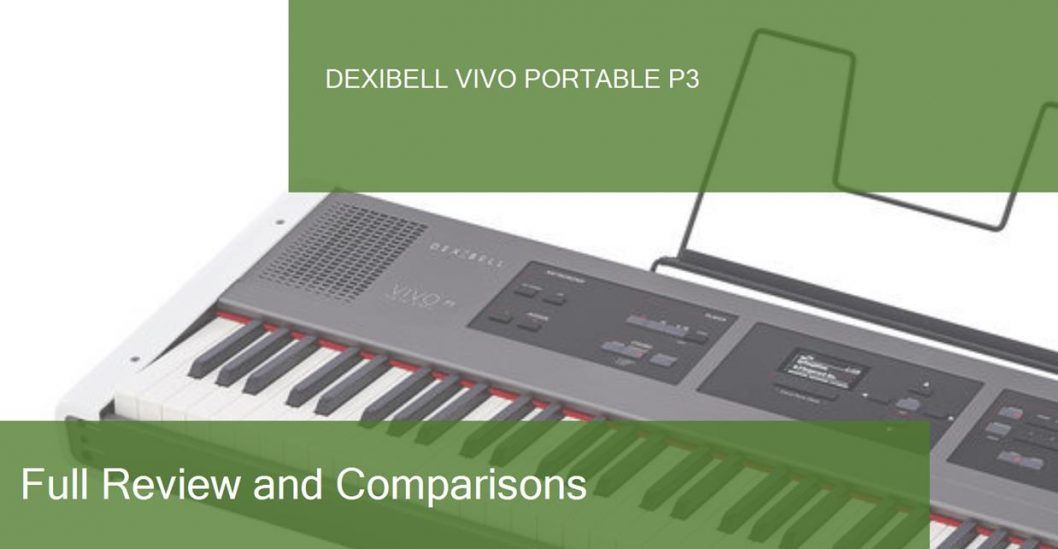
Digital Piano Dexibell Vivo Portable P3 Full Review. Is it a good choice?
Digital Piano Dexibell Vivo Portable P3 Full Review. Is it a good choice?
Dexibell is an Italian brand that is gradually filling the market with its digital keyboard models. Now we will review the Dexibell Vivo Portable P-3, which has an approximate price of 1,500 euros and the following features:
- 73-weighted Hammer Action (The weight of the keys on an acoustic piano that digital pianos try to imitate to match the touch of a real acoustic piano. The keys in the high register are heavier and in the high register less. This is a different concept of sensitivity on the keyboard that serves to regulate the volume of the note. But a hammer action keyboard always has sensitivity on the keys.) keys
- Tri-Sensors per key
- 79 Sounds (Different sounds of piano and other instruments)
- Sound Font compatible
- Registry Storage Locations 49+
- User unlimited USB memory
- Sustain pedal (The most important pedal of a piano or keyboard is the sustain pedal and is used to keep the note playing even if you stop pressing the key.)
- 1 extra Pedal connections
- 2x Assignable buttons
- Bluetooth audio streaming
- Speakers: 2 x 35 W (very powerfull)
- DBass Enhancer
- Dynamic EQ
- 3-Band compressor
- Stereo Jack outputs
- Stereo Audio In
- Usb to Host (It’s a more modern MIDI connector. MIDI allows you to do such wonderful things as connect the keyboard to the computer, record a soundtrack and with certain programs pass with a single click what you have played to musical notes in a score. MIDI tracks store note information)
- USB port
- 2 Headphone outputs
- Dimensions (W x D x H): 1118 x 372 x 135 mm and a weight of 12,5 kg
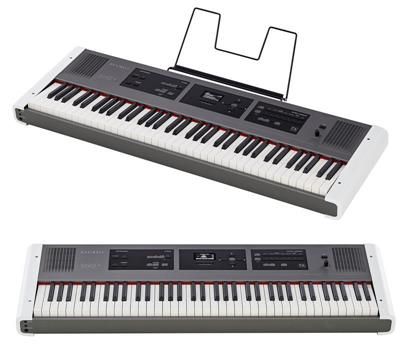
Now that we’ve listed and described the features of this digital piano there’s no better than taking a look at the following video where they tell us more about the Dexibell Vivo Portable P3 and you can hear the different sounds of this piano.
Related post you can be interested in
- Ranking with the best digital pianos
- My selection of cheap musical keyboards.
- Basic concepts you need to know about digital pianos.
- The best resources to learn to play the piano by yourself.
Now let’s compare the Dexibell Vivo Portable P3 with its more common alternatives. Also at the end of the post, you will find a section with the best shopping possibilities for this digital piano. But you can go directly to that part of the post by pressing the following button.
Dexibell Vivo Portable P-3 vs Dexibell Vivo S-3
As a first comparison, we will have two digital pianos of the brand Dexibell Vivo, the Portable P-3 which as we have already mentioned has a price of approximately 1500 euros and the Vivo S-3 Pro which has a price of 1390 euros. We will analyze their differences and characteristics using the following table:
|
Dexibell Vivo Portable P-3 |
Dexibell Vivo Stage S-3 Pro |
|---|---|
|
|
We found digital pianos of the same brand, similar price, as well as similar weight and dimensions. However, it is in their functions where their differences are appreciated. We find that both have 73 weighted keys, the P3 with 79 sounds, and a wide range in polyphony reaching a maximum of 320 notes. When the S3 Pro has 113 sounds and unlimited polyphony of notes. Having a clear advantage in the second one. The P3 has 2 pedal inputs, while the S3 has 3 inputs, and other selectors such as 7 rotary knobs and 2 assignable buttons. The advantage of the S3 is its powerful 35W speakers that would serve very well for a closed space when the P3 Pro doesn’t have integrated speakers, but line outputs. Depending on your needs, you’ll choose the best option, but both are good choices.
If you want to know more, we invite you to see our review of the Dexibell Vivo Stage S3.
Dexibell Vivo Portable P-3 vs Clavia Nord Stage 3 HP76
Now we will compare the Dexibell Vivo Portable P-3 which as we have already mentioned has a price of approximately 1500 euros and the Clavia Nord Stage 3 HP76 which has a price of 3290 euros. We will analyze their differences and characteristics using the following table:
|
Dexibell Vivo Portable P-3 |
Clavia Nord Stage 3 HP76 |
|---|---|
|
|
We find a somewhat unfair versus, we have previously analyzed the functions and characteristics of the Dexibell Vivo Portable P-3, which by its price, has good performance. Now if we double the price, we can reach a Clavia Nord, which without presenting itself, we can already say that it would be an excellent option. And indeed, along with all the functions and features the Clavia Nord Stage 3 HP76 (such as 2GB for storage, effects, triple pedal, and connections.) would be the best option to have an excellent stage piano with excellent portability.
If you are interested in learning more, we invite you to see our review of the Clavia Nord Stage 3 HP76.
Dexibell Vivo Portable P-3 vs Yamaha CP4
Now we will compare the Dexibell Vivo Portable P-3 that as we have already mentioned has a price of approximately 1500 euros and the Yamaha CP4 that has a very similar price of 1400 euros to 1500 euros. We will analyze their differences and characteristics using the following table:
|
Dexibell Vivo Portable P-3 |
Yamaha CP4 |
|---|---|
|
|
Interesting comparison, due to its very similar price. On the one hand, the Dexibell offers us 73 weighted keys, 79 different sounds, and 320 notes of polyphony, on the other hand, the Yamaha has 88 keys, the white ones are made of wood, but the black ones of plastic, have 433 different voices, with a somewhat limited polyphony of 128 notes of polyphony. This is just a point where they differ a lot and depend on much of the use that will be given to the digital piano, certain compositions need a wide polyphony, however for most themes in general 128 is a very good number. So as we have also said before, depending on the needs you have, you will make the best decision.
If you are interested in knowing more, we invite you to see our review of the Yamaha CP4.
Where to buy Dexibell Vivo Portable P3
Amazon
- Free Shipping and possibility of shipping in one day with Amazon Premium.
- Full Guarantee but they are no experts in music equipment.
- Sometimes better price.
- He’s got worse stock than Thomann.
Thomann
- Free Shipping.
- Full warranty. If you have any problems, they take care of everything.
- 100% reliable payment.
- Leader in trouble-free shipping.
- Usually Best price.
- Best Reputation: They are the leading online store in Europe and have the best catalogue and information.
Check below-related models with similar price and features:
- Roland FP 60
- Yamaha P515
- Yamaha YDP 164
- Roland FP 90
- Korg G1 Air
- Casio PX 560
- Roland Kiyola KF 10
- Korg PA 1000
- Korg PA 700 Oriental
- Yamaha PSR S975
- Korg Havian 30
- Korg PA 700
- Kawai EN 8
- Kawai MP 11
- Kawai MP 7
- Clavia Nord Electro 6D 61
- Clavia Nord Stage 3 88
- Kurzweil SP6
- Korg SV1 73
- Kurzweil Forte 8
- Clavia Nord Electro 6D 73
- Clavia Nord Stage 3 HP76
- Roland RD 2000
- Kurzweil Artis 7
- Clavia Nord Piano 4
- Clavia Nord Stage 3 compact
- Crumar Seven
- Clavia Nord Electro 6
- Korg Grandstage 73
- Dexibell Vivo Stage S9
- Dexibell Vivo Stage S1
- Korg SV1 88
- Korg Grandstage 88
- Kurzweil Forte SE
- Yamaha CP88
- Roland VR 730
- Studiologic Numa Concert
- Yamaha CP73
- Dexibell Vivo Stage S7
- Yamaha CP300
- Yamaha CP1
- Clavia Nord Grand
- Viscount Physis Piano K4 EX
- Viscount Physis Piano K5 EX
- Dexibell Vivo Portable P7
- Kurzweil Artis
- Dexibell Vivo Portable P3
- Dexibell Vivo Stage S3

Digital Piano Crumar Seven Full Review. Is it a good choice?
Crumar Seven Review and Opinion and Where to Buy It?
Crumar is an Italian brand of electronic musical instruments that began in the late 60s, and in the 70s and 80s began to manufacture synthesizers and keyboards, which were very famous and surprisingly contemporary to Moog synthesizers. Its name comes from CRUcianelli (creator) and MARchetti (business partner).
Now we will analyze one of his latest products, the Crumar Seven, a digital piano that really recreates a new concept: it works digitally, but looks and feels like it is analog. It is built inside a portable wooden case, which reminds us of most electric pianos from the early 70s. A digital piano with a price of 1850 euros that despite not being very common in Spain is an interesting option:
- 73 weighted keys (Weight that the keys of an acoustic piano have and that digital pianos try to imitate to equal the touch of the piano. The keys in the high register are heavier and in the high register less. This is different from the sensitivity on the keyboard which serves to regulate the volume of the note. But a weighted keyboard always has sensitivity in the keys) that imitate the hammer effect and touch-sensitive keys
- 32 sounds (32 Presets: 8 factory + 24 user-created presets)
- 9 different sound generators with tremendous quality: MKS Digital E.P.,Tine Electric Piano, DX Digital E.P., Electric Baby Grand, Clavi E.P., Vibraphone, Acoustic Grand Piano, Sample Playback, Reed Electric Piano
- 2 slots with different effects
- Amplifier simulation (no speakers)
- Reverb Effect (Reverb Effect)
- Semi-parametric equalizer
- Comes in a wooden box with a handle for transport
- Internal WiFi-Hot-Spot for Web-App Editor
- Connections: Expression and sustain pedal inputs (the sustain pedal on a piano or keyboard is used to keep the note playing even if you stop pressing the key), MIDI and USB-MIDI output, 2 x 6.3mm jack outputs, headphone output 6.3mm stereo jack
- Exit helmets Jack
- Sustain pedal and expression pedal
- Internal power supply
- USB midi output (MIDI allows you to do such wonderful things as connect your keyboard to your computer, record a sound track, and with certain programs click through what you’ve played to musical notes on a score. MIDI tracks store the information of the musical notes) and also conventional midi
- Stereo line output for live performance with good power
- 1 stereo jack headset output
- Dimensions (with cover): 1106 x 447 x 190 mm
- Dimensions (without cover): 1106 x 447 x 162 mm
- A weight of 15 kg. It can be carried on public transport, but with the included metal lid and legs it is 23.5 kg

Something that is surprising is its 9 physical sound generators that it has, that really simulate very well each integrated instrument. And not to mention its 2 slots with different effects, which to be more precise are the following
— Slot 1: Tremolo, auto-panner, LFO Wha-Wha and Pedal Wha-Wha
— Slot 2: Chorus, Phaser, Flanger, Delay (all stereo effects)
— Amp. Simulators and parametric EQ.
— Reverb
— 3 band – Master EQ .
— PAD Effect.
This is why it is difficult to classify the polyphony of this equipment which changes according to the sound generator you are using, starting with 16 notes of polyphony and up to 128 notes of polyphony. Remember that polyphony is the maximum number of notes that can be played simultaneously.
As we mentioned before, Crumar Seven has 32 sounds, of which 8 are preset and 24 can be modified with many parameters by the user, creating an infinite number of sounds for a musician, both classic and contemporary, and why not experimental.
Another important function of the Crumar Seven is the Wifi Hot Spot, or integrated Wifi that it has and that serves to enter through a computer, laptop, tablet or smartphone into the Web-App editor, where you can edit many piano parameters such as: tuning, MIDI channels, sustain pedal polarity (open or closed), and others.
I have selected two interesting videos:
Related post you can be interested in
- Ranking with the best digital pianos
- My selection of cheap musical keyboards.
- Basic concepts you need to know about digital pianos.
- The best resources to learn to play the piano by yourself.
Now let’s compare the Crumar Seven with its more common alternatives. Also at the end of the post you will find a section with the best shopping possibilities for this digital piano. But you can go directly to that part of the post by pressing the following button.
Crumar Seven vs Korg SV2 73
Let’s now compare these two digital pianos, the Crumar Seven with a price of €1.850/$2300/£1,733 and the Korg SV2 73 with a price of €1.799/$1900/£1,666 slightly cheaper than the first one. We will compare the features of each one face to face and see which one has a better value for money because of the features and functions they provide:
- Both have 73 weighted keys that imitate the hammer effect and touch-sensitive keys. The Korg SV2 73 has RH3 technology (Real Weighted Hammer Action 3, which is a real hammer system, typical of the Korg brand).
- One notable difference is that the Cruman Seven has 9 different sound generators: MKS Digital E.P.,Tine Electric Piano, DX Digital E.P., Electric Baby Grand, Clavi E.P., Vibraphone, Acoustic Grand Piano, Sample Playback, Reed Electric Piano, with excellent quality. While the Korg SV2 73 has only one sound engine: EDS-X (Enhanced Definition Synthesis – eXpanded)
- The Cruman Seven has different polyphonies, depending on the sound engine to be used, reaching a maximum of 128 notes of polyphony, and the Korg SV2 73 has a polyphony of 128 notes. Polyphony, is the amount of notes that can be played at the same time.
- When the Cruman Seven has two effect slots: that includes a considerable amount, when the Korg SV2 73 has a genuine tube circuit effect section, which gives an analog sound to the output (less artificial than something that sounds more digital).
- Both pianos have the connections: MIDI and USB-MIDI output, 2 x 6.3mm jack outputs, 6.3mm stereo jack headphone output. The Crumar has 2 pedal inputs, while the Korg has 3 pedal inputs.
- The Crumar Seven has a sustain and expression pedal input, while the Korg has 3 pedal inputs, and includes the Korg DS-2H pedal.
- The Crumar Seven weighs 15 kg. It can be carried on public transport, but with the lid and metal legs included it weighs 23.5 kg and measures 1106 x 447 x 162 mm without the lid, while the Korg SV2 73 weighs 17.2 kg and measures 1143 x 347 x 157 mm.
The first difference between the Crumar Seven and the Korg SV2 73 are found in their keys, which are both counterbalanced and sensitive, those of the Korg have the RH3 technology, which for better appreciation I leave you a video in Spanish to see how it works:
Another very relevant feature that the Korg SV2 73 offers us is its effects section with authentic tube circuit, the same ones used by guitar amplifiers in their different sections, giving a better quality to the sound of the different effects, which are among them:
- EQUALIZER 3-BAND (Bass, Mid andTreble)
- PPRE FX (Red Compressor, Treble Boost, U-Vibe, Vibrato, Tremolo, VOX Wah)
- AMPLIFIER MODELING (Clean, Twin, Tweed, AC30, Boutique, Organ, plus seven types of Acoustic Box Simulation and Noise Reduction)
- MODULATION FX MODULATION FX (Classic Chorus, Black Chorus, Orange Phaser, Small Phaser, MX Flanger, Rotary)
- REVERB/DELAY (Room, Plate, Hall, Spring, Tape Echo and Stereo Delay)
- LIMITER Y (StereoLimiter, Stereo Mastering Limiter)
We will put the characteristics of each of these pianos in 2 different columns to make it easier to see the differences:
|
Crumar Seven |
Korg SV2 73 |
|---|---|
|
|
And now a video of the Korg SV2 73
If you want to know more about this model don’t miss our review of the Korg SV1 73 (predecessor of the Korg SV2 73)
Crumar Seven vs Clavia Nord Electro 6D 73
Now let’s compare two digital pianos, the Crumar Seven at a price of €1.850/$2300/£1,733 and the Clavia Nord Electro 6D 61 at a price of €1.769/€2500/£1,599, both excellent pianos that we will compare face to face to see their different features and functions:
- Both digital pianos have 73 keys, which in the Crumar Seven are counterbalanced to imitate the hammer effect and the Nord Electro 6D 73 has semi-balanced keys. Both have touch sensitivity.
- One notable difference is that the Cruman Seven has 9 different sound generators: MKS Digital E.P.,Tine Electric Piano, DX Digital E.P., Electric Baby Grand, Clavi E.P., Vibraphone, Acoustic Grand Piano, Sample Playback, Reed Electric Piano, with excellent quality. Very different from the Clavia Nord Electro 6D 73 which has a lot of samples in the Nord Samples library, in which it has 1Gb of piano storage, 512 Mb of Synth Pad, having a lot of sounds.
- The Cruman Seven has different polyphonies, depending on the sound engine to use, reaching a maximum of 128 notes of polyphony, being somehow similar to the Nord Electro 6D 73 that changes its polyphony as we change the section to use: if we use the Organ section it has a complete polyphony, that is unlimited, if we use the Piano section we have a polyphony of 120 sounds and if we use the Synth Pad section we will have 46 voices when using 512Mb of the available memory.
- When the Cruman Seven has two slots for effects: that includes a considerable amount, when the Nord Electro 6D 73 gives us a similar option of effects, that we will talk about later in more detail, interesting that in the Nord all the effects are in stereo.
- Both pianos have the connections: MIDI and USB-MIDI output, 2 x 6.3mm jack outputs, headphone output 6.3mm stereo jack.
- Both have sustain and expression pedal input.
- The Crumar Seven weighs 15 kg. It can be carried on public transport, but with the cover and metal legs included it weighs 23.5 kg and measures 1106 x 447 x 162 mm without cover, while the Clavia Nord Electro 6D 73 weighs 9.2 kg, making it extremely portable, measuring 1066 x 296 x 97 mm.
- A notable difference from the Clavia Nord Electro 6D is: The Leslie 122 Nord C2D Simulation, the Nord C2D B3 Tone Wheel Simulation and its Rotary Speaker pedal input. So you can achieve emulations of the old Hammond with their rotary speakers, known as Leslie, which gives a “Chorus”/”Tremolo”-like effect.
First we’ll talk about the sound sections of the Clavia Nord Electro 6D,
In the Organ section we have by default the following tones: C2D B3 Simulation, Farfisa, Vox and Pipe Organ 1 & 2, and it also has the C2D 122 rotary speaker simulation and unlimited polyphony.
In the Piano section we find a 1Gb storage to have the samples of different piano from the nordkeyboards.com website, where you can find samples of different instruments like: Grand Pianos, Wall Pianos, Electric Pianos, and more. It has the effect of Advanced String Resonance, to simulate the production of the real piano sound. And a maximum polyphony of 120 notes.
In the Synth Pad section we find a 512 Mb storage to have the samples of instruments like accordions, winds. basses, guitars, strings, and more that can be found in the Nord Sample Library page and a maximum polyphony of 46 voices.
We will put the characteristics of each of these pianos in 2 different columns to make it easier to see the differences:
|
Crumar Seven |
Clavia Nord Electro 6D 73 |
|---|---|
|
|
And now a video of the Clavia Nord Electro 6D 73
If you want to know more about this model don’t miss our review of the Clavia Nord Electro 6D 73.
Crumar Seven vs Kawai MP-11 SE
Finally we will have the comparison of the Crumar Seven digital pianos with a price of €1.850/$2300/£1,733 and the Kawai MP-11 Se with a price of €2.135/$2800/£1,998, with a difference of 285 euros, we will also see what are the differences in functions and characteristics:
- The Crumar Seven has 73 keys that are weighted keyboard to imitate the hammer effect and the Kawai MP-11 SE has 88 wooden keys with an ivory touch surface, giving greater realism and simulation to the keys of a real acoustic piano.
- One notable difference is that the Crumar Seven has 9 different sound generators: MKS Digital E.P.,Tine Electric Piano, DX Digital E.P., Electric Baby Grand, Clavi E.P., Vibraphone, Acoustic Grand Piano, Sample Playback, Reed Electric Piano, with excellent quality. When the Kawai MP-11 SE has a Harmonic Imaging XL sound engine, we’ll talk about it in depth later.
- The Cruman Seven has different polyphonies, depending on the sound engine used, reaching a maximum of 128 notes of polyphony, when the Kawai has 256 notes of polyphony. A relevant difference.
- When the Cruman Seven has two effect slots: that includes a considerable amount, when the Kawai has DSP (Digital Signal Processing) effects or digital processed signal, that although digital have a great sound quality, reaching the amount of 129 types of effects.
- Both pianos have the following connections: MIDI and USB-MIDI output, 2 x 6.3mm jack outputs, headphone output 6.3mm stereo jack.
- The Crumar Seven has a sustain and expression pedal input, while the Kawai also has two damper inputs (pedals) that are assignable to some effects, and includes a GFP-30 pedal.
- The Crumar Seven weighs 15kg. The Crumar Seven weighs 15 kg. It can be carried on public transport, but with the included lid and metal legs it weighs 23.5 kg. and measures 1106 x 447 x 162 mm without a lid, while the Kawai MP11 SE weighs 34 kg, so it is not considered so portable.
As mentioned above the Kawai MP11 SE gives us the Harmonic Imaging XL sound engine, which when we play a note using dynamics, not only changes its intensity, but also the character of the note and the overall performance. Therefore, using the Kawai Shigeru (Kawai’s best product), not only is each note recorded individually, but also on various levels of expression from pianissimo to fortissimo. This allows us to achieve a dynamic very similar to that of a real acoustic piano.
Something that is also very interesting about the sound engine that we see is that they can be modified, reaching the best piano sounds with the Virtual Technician that has 17 parameters that are:
- Touch Curve (incl. User Touch Curve).
- Voicing (incl. 88-key User Voicing)
- Damper Resonance
- Damper Noise
- String Resonance
- Key-off Effect
- Fall-back Noise
- Hammer Delay
- Topboard Simulation
- Decay Time
- Minimum Touch
- Stretch Tuning (incl. 88-key User Tuning)
- Temperament (incl. User Temperament)
- Temperament Key
- Key Volume (incl. 88-key User Key Volume)
- Half-Pedal Adjust
- Soft Pedal Depth
We will put the characteristics of each of these digital pianos in 2 different columns to make it easier to see the differences:
|
Crumar Seven |
Kawai MP-11 SE |
|---|---|
|
|
And now a video of the Kawai MP11 SE:
If you want to know more about this model don’t miss our review of the Kawai MP11 SE.
Where to buy Crumar Seven
Thomann
- Free Shipping.
- Full warranty. If you have any problems, they take care of everything.
- 100% reliable payment.
- Leader in trouble-free shipping.
- Usually Best price.
- Best Reputation: They are the leading online store in Europe and have the best catalogue and information.
Amazon
- Free Shipping and possibility of shipping in one day with Amazon Premium.
- Full Guarantee but they are no experts in music equipment.
- Sometimes better price.
- He’s got worse stock than Thomann.
Check below related models with similar price and features:
- Roland FP 60
- Yamaha P515
- Kawai MP 11
- Yamaha YDP 164
- Roland FP 90
- Korg G1 Air
- Casio PX 560
- Roland Kiyola KF 10
- Korg PA 1000
- Korg PA 700 Oriental
- Yamaha PSR S975
- Korg Havian 30
- Korg PA 700
- Kawai EN 8
- Clavia Nord Electro 6D 61
- Clavia Nord Stage 3 88
- Kurzweil SP6
- Korg SV1 73
- Kurzweil Forte 8
- Clavia Nord Electro 6D 73
- Clavia Nord Stage 3 HP76
- Roland RD 2000
- Kurzweil Artis 7
- Clavia Nord Piano 4
- Clavia Nord Stage 3 compact
- Crumar Seven
- Clavia Nord Electro 6
- Korg Grandstage 73
- Dexibell Vivo Stage S9
- Dexibell Vivo Stage S1
- Korg SV1 88
- Korg Grandstage 88
- Kurzweil Forte SE
- Yamaha CP88
- Roland VR 730
- Studiologic Numa Concert
- Yamaha CP73
- Dexibell Vivo Stage S7
- Yamaha CP300
- Yamaha CP1
- Kawai MP 7
- Clavia Nord Grand
- Viscount Physis Piano K4 EX
- Viscount Physis Piano K5 EX
- Dexibell Vivo Portable P7
- Kurzweil Artis
- Dexibell Vivo Portable P3
- Dexibell Vivo Stage S3

Digital Piano Clavia Nord Stage 3 HP76 Full Review. Is it a good keyboard?
Digital Piano Clavia Nord Stage 3 HP76 Full Review. Is it a good choice?
Clavia Digital Musical Instruments (Clavia DMI AB) is a Swedish manufacturer of virtual analog synthesizers, virtual electromechanical pianos and stage pianos, founded in Stockholm, Sweden in 1983 by Hans Nordelius and Mikael Carlsson. Since 1995, Clavia’s keyboards carry the Nord brand. The Nord Stage is one of the most used professional pianos in nowadays and this version brings the following:
- 76 Keys with Weighted Hammer Action (The weight of the keys on an acoustic piano that digital pianos try to imitate to match the touch of a real acoustic piano. The keys in the high register are heavier and in the high register less. This is a different concept of sensitivity on the keyboard that serves to regulate the volume of the note. But a hammer action keyboard always has sensitivity on the keys.) system
- 2 GB of memory
- 120-voice polyphony (Number of notes that can sound at once. This includes songs that sound at once. So if you play over an accompaniment sound, more notes will accumulate.)
- Creative Piano Filters
- Seamless transitions for inaudible program changes
- Song mode for a set-list functionality
- Comprehensive piano section
- String Resonance (Gen 2), pedal (The most important pedal of a piano or keyboard is the sustain pedal and is used to keep the note playing even if you stop pressing the key.) Noise and Long-Release Option
- Powerful synth section provides subtractive, FM, and wavetable synthesis
- Arpeggiator, Unison mode and Master Clock
- True to original B3, Vox / Farfisa, and Principal Pipe organ simulations
- Vintage 122 Leslie simulation
- Extended effect section
- OLED display for program and synth section
- 4 Assignable audio outputs: 1/4″ jack, unbalanced
- Stereo headphone output: 1/4″ stereo jack
- 1 Monitor input: 3.5mm stereo jack
- Sustain pedal jack – Sustain input compatible with Nord Triple Pedal (sold separately). Sustain pedal included
- Rotor pedal 6.35 mm connection
- Organ sill pedal TRS stereo jack
- Control pedal TRS stereo jack
- Program change pedal input jack
- Standard midi (MIDI allows you to do such wonderful things as connect the keyboard to the computer, record a soundtrack, and with certain programs pass with a click what you have played to musical notes in a score. MIDI tracks store information from musical notes) in/out
- USB to Host (It’s a more modern MIDI connector. MIDI allows you to do such wonderful things as connect the keyboard to the computer, record a soundtrack and with certain programs pass with a single click what you have played to musical notes in a score. MIDI tracks store note information) Type B
- Power cable with ICC c14 plug
- Dimensions (W x D x H): 1122 x 347 x 127 mm and a weight of 12.5 kg
- Includes dust cover, power cord, Nord Samples and piano DVDs, USB cable
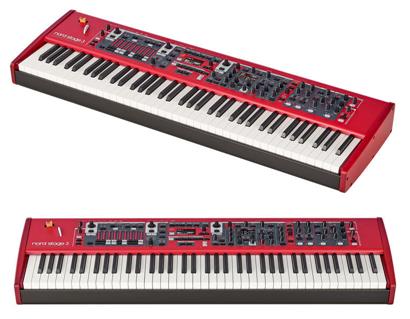
Now that we’ve listed and described the features of this digital piano there’s no better than taking a look at the following video where they tell us more about the Clavia Nord Stage 3 HP76 and you can hear the different sounds of this piano.
Related post you can be interested in
- Ranking with the best digital pianos
- My selection of cheap musical keyboards.
- Basic concepts you need to know about digital pianos.
- The best resources to learn to play the piano by yourself.
Now let’s compare the Clavia Nord Stage 3 HP76 with its more common alternatives. Also at the end of the post, you will find a section with the best shopping possibilities for this digital piano. But you can go directly to that part of the post by pressing the following button.
Clavia Nord Stage 3 HP76 vs Clavia Nord Electro 6
The digital piano Clavia Nord Stage 3 HP76 is usually about 1150 € more expensive than Clavia Nord Electro 6.
Let’s put the features of each of these pianos in 2 different columns to make it easier to see the differences
|
Clavia Nord Stage 3 HP76 |
Clavia Nord Electro 6 |
|---|---|
|
|
We have two digital pianos with the best features, however with different purposes or general proposals. The Clavia Nord Stage 3 HP76 for its part offers us an excellent and portable option for a stage piano, where its keyboard stands out, and its 2Gb of storage to have a large number of samples or different sounds, in addition to accepting the Nord Triple Pedal, simulating the pedalboard of a real acoustic piano. On the other hand, the Clavia Nord Electro 6 has functions of the organ, piano, and other samples, with specialized effects in these instruments, such as the rotary speaker, called Leslie.
And below a video of the Clavia Nord Electro 6
If you want to know more about this model do not miss our Clavia Nord Electro 6 review
Clavia Nord Stage 3 HP76 vs Clavia Nord Stage 3 compact
The digital piano Clavia Nord Stage 3 HP76 is usually about 300 € more expensive than Clavia Nord Stage 3 compact.
Let’s put the features of each of these pianos in 2 different columns to make it easier to see the differences
|
Clavia Nord Stage 3 HP76 |
Clavia Nord Stage 3 compact |
|---|---|
|
|
The Clavia Nord Stage 3 c0mpact has 73 keys and weighs 10 Kg, as we have already mentioned. And the Clavia Nord Stage 3 Hp 76, we can say that it is the brother of “in the middle” (compared to the older Clavia Nord Stage 3 88), and has 76 keys and weighs 12.5 Kg, in the other functions and characteristics are equal.
If you want to know more about this model do not miss our Clavia Nord Stage 3 compact review
Clavia Nord Stage 3 HP76 vs Clavia Nord Electro 6D 73
The digital piano Clavia Nord Stage 3 HP76 is usually about 1520 € more expensive than Clavia Nord Electro 6D 73.
Let’s put the features of each of these pianos in 2 different columns to make it easier to see the differences
|
Clavia Nord Stage 3 HP76 |
Clavia Nord Electro 6D 73 |
|---|---|
|
|
We have two digital pianos with the best features, however with different purposes or general proposals. The Clavia Nord Stage 3 HP76 for its part offers us an excellent and portable option for a stage piano, where its keyboard stands out, and its 2Gb of storage to have a large number of samples or different sounds, in addition to accepting the Nord Triple Pedal, simulating the pedalboard of a real acoustic piano. On the other hand, the Clavia Nord Electro 6D 73 has 73 keys and functions of the organ, piano, and other samples, with specialized effects in these instruments, such as the rotary speaker, called Leslie.
If you want to know more about this model do not miss our Clavia Nord Electro 6D 73 review
Clavia Nord Stage 3 HP76 vs Clavia Nord Stage 3 88
The digital piano Clavia Nord Stage 3 HP76 is usually about 200 € cheaper than Clavia Nord Stage 3 88.
Let’s put the features of each of these pianos in 2 different columns to make it easier to see the differences
|
Clavia Nord Stage 3 HP76 |
Clavia Nord Stage 3 88 |
|---|---|
|
|
Like the previous comparison, we find two brothers, who have the same functions and characteristics among them, the older Clavia Nord Stage 33 88, which as its name indicates has the keyboard of a Grand Piano, while the younger brother is the Clavia Nord Stage 3 HP76, with 76 keys. An advantage of the smaller (12Kg) is that it weighs much less than the older (19 Kg).
If you want to know more about this model do not miss our Clavia Nord Stage 3 88 review
Where to buy Clavia Nord Stage 3 HP76
Amazon
- Free Shipping and the possibility of shipping in one day with Amazon Premium.
- Full Guarantee but they are no experts in music equipment.
- Sometimes a better price.
- He’s got worse stock than Thomann.
Thomann
- Free Shipping.
- Full warranty. If you have any problems, they take care of everything.
- 100% reliable payment.
- A leader in trouble-free shipping.
- Usually the Best price.
- Best Reputation: They are the leading online store in Europe and have the best catalogue and information.
- Roland FP 60
- Yamaha P515
- Yamaha YDP 164
- Roland FP 90
- Korg G1 Air
- Casio PX 560
- Roland Kiyola KF 10
- Korg PA 1000
- Korg PA 700 Oriental
- Yamaha PSR S975
- Korg Havian 30
- Korg PA 700
- Kawai ES 8
- Kawai MP 11
- Kawai MP 7
- Clavia Nord Electro 6D 61
- Clavia Nord Stage 3 88
- Kurzweil SP6
- Korg SV1 73
- Kurzweil Forte 8
- Clavia Nord Electro 6D 73
- Clavia Nord Stage 3 HP76
- Roland RD 2000
- Kurzweil Artis 7
- Clavia Nord Piano 4
- Clavia Nord Stage 3 compact
- Crumar Seven
- Clavia Nord Electro 6
- Korg Grandstage 73
- Dexibell Vivo Stage S9
- Dexibell Vivo Stage S1
- Korg SV1 88
- Korg Grandstage 88
- Kurzweil Forte SE
- Yamaha CP88
- Roland VR 730
- Studiologic Numa Concert
- Yamaha CP73
- Dexibell Vivo Stage S7
- Yamaha CP300
- Yamaha CP1
- Clavia Nord Grand
- Viscount Physis Piano K4 EX
- Viscount Physis Piano K5 EX
- Dexibell Vivo Portable P7
- Kurzweil Artis
- Dexibell Vivo Portable P3
- Dexibell Vivo Stage S3
Did you like this post? > > > >