
- Home
- Author's Archive:

Digital Piano Clavia Nord Stage 3 compact Full Review. Is it a good one?
Digital Piano Clavia Nord Stage 3 compact Full Review. Is it a good choice?
Clavia Digital Musical Instruments (Clavia DMI AB) is a Swedish manufacturer of virtual analog synthesizers, virtual electromechanical pianos and stage pianos, founded in Stockholm, Sweden in 1983 by Hans Nordelius and Mikael Carlsson. Since 1995, Clavia’s keyboards have been branded Nord. Now, we are going to review the Clavia Nord Stage 3 compact, one of the most popular choice by a sort of pianists in the world. It costs around €2.990/$3600/£2,699.
- 73 Half-Weighted Hammer Action (The weight of the keys on an acoustic piano that digital pianos try to imitate to match the touch of a real acoustic piano. The keys in the high register are heavier and in the high register less. This is a different concept of sensitivity on the keyboard that serves to regulate the volume of the note. But a hammer action keyboard always has sensitivity on the keys.) keys
- 2 GB of memory
- 120-Voice polyphony (Number of notes that can sound at once. This includes songs that sound at once. So if you play over an accompaniment sound, more notes will accumulate.)
- Creative Piano Filters
- Continuous transitions for inaudible program changes
- Song mode for a set-list functionality
- Comprehensive piano section
- String Resonance (Gen 2), pedal (The most important pedal of a piano or keyboard is the sustain pedal and is used to keep the note playing even if you stop pressing the key.) Noise and Long-Release Option
- Powerful synth section provides subtractive, FM, and wavetable synthesis, arpeggiator, unison mode, and master clock
- True to original B3, Vox / Farfisa and Principal Pipe organ simulations
- Vintage 122 Leslie simulation
- Extended effect section
- OLED display for program and synth section
- 4 Assignable audio outputs: 1/4″ jack, unbalanced
- Stereo headphone output: 1/4″ stereo jack
- 1 Monitor input mini jack
- Sustain pedal jack – Sustain input compatible with Nord Triple Pedal (sold separately). Sustain pedal not included
- Rotor pedal Jack
- Organ sill pedal TRS stereo jack
- Control pedal TRS stereo jack
- Program change pedal input jack
- Standar midi (MIDI allows you to do such wonderful things as connect the keyboard to the computer, record a soundtrack and with certain programs pass with a click what you have played to musical notes in a score. MIDI tracks store information from musical notes) in/out
- Usb to Host (It’s a more modern MIDI connector. MIDI allows you to do such wonderful things as connect the keyboard to the computer, record a soundtrack and with certain programs pass with a single click what you have played to musical notes in a score. MIDI tracks store note information) Type B
- Power cable with ICC c14 plug
- Dimensions 1070 x 302 x 104 mm and Weight of 10 kg
- Includes power cord, USB cable

Now that we’ve listed and described the features of this digital piano there’s no better than taking a look at the following video where they tell us more about the Clavia Nord Stage 3 compact and you can hear the different sounds of this piano.
Related post you can be interested in
- Ranking with the best digital pianos
- My selection of cheap musical keyboards.
- Basic concepts you need to know about digital pianos.
- The best resources to learn to play the piano by yourself.
Now let’s compare the Clavia Nord Stage 3 compact with its more common alternatives. Also at the end of the post you will find a section with the best shopping possibilities for this digital piano. But you can go directly to that part of the post by pressing the following button.
Clavia Nord Stage 3 compact vs Clavia Nord Electro 6
Now, we are going to compare the following models: The digital piano Clavia Nord Stage 3 compact which costs around €2.990/$3600/£2,699 and the Clavia Nord Electro 6 which costs around €1.775/$2500/£1,599.
Let’s put the features of each of these pianos in 2 different columns to make it easier to see the differences
|
Clavia Nord Stage 3 compact |
Clavia Nord Electro 6 |
|---|---|
|
|
And below a video of the Clavia Nord Electro 6
If you want to know more about this model do not miss our Clavia Nord Electro 6 review
Clavia Nord Stage 3 compact vs Clavia Nord Electro 6D 73
Now, we are going to compare the following models: The digital piano Clavia Nord Stage 3 compact which costs around €2.990/$3600/£2,699 and the Clavia Nord Electro 6D 73 which costs around €1.775/$2500/£1,599.
Let’s put the features of each of these pianos in 2 different columns to make it easier to see the differences
|
Clavia Nord Stage 3 compact |
Clavia Nord Electro 6D 73 |
|---|---|
|
|
If you want to know more about this model do not miss our Clavia Nord Electro 6D 73 review
Clavia Nord Stage 3 compact vs Clavia Nord Stage 3 HP76
Now, we are going to compare the following models: The digital piano Clavia Nord Stage 3 compact which costs around €2.990/$3600/£2,699 and the Clavia Nord Stage 3 HP76 which costs around €3.290/$4200/£2,999.
Let’s put the features of each of these pianos in 2 different columns to make it easier to see the differences
|
Clavia Nord Stage 3 compact |
Clavia Nord Stage 3 HP76 |
|---|---|
|
|
If you want to know more about this model do not miss our Clavia Nord Stage 3 HP76 review
Clavia Nord Stage 3 compact vs Clavia Nord Electro 6D 61
Now, we are going to compare the following models: The digital piano Clavia Nord Stage 3 compact which costs around €2.990/$3600/£2,699 and the Clavia Nord Electro 6D 61 which costs €1.625/$2500/£1,479.
Let’s put the features of each of these pianos in 2 different columns to make it easier to see the differences
|
Clavia Nord Stage 3 compact |
Clavia Nord Electro 6D 61 |
|---|---|
|
|
If you want to know more about this model do not miss our Clavia Nord Electro 6D 61 review
Where to buy Clavia Nord Stage 3 compact
Thomann
- Free Shipping.
- Full warranty. If you have any problems, they take care of everything.
- 100% reliable payment.
- Leader in trouble-free shipping.
- Usually Best price.
- Best Reputation: They are the leading online store in Europe and have the best catalogue and information.
Amazon
- Free Shipping and possibility of shipping in one day with Amazon Premium.
- Full Guarantee but they are no experts in music equipment.
- Sometimes better price.
- He’s got worse stock than Thomann.
Check below related models with similar price and features:
- Roland FP 60
- Yamaha P515
- Yamaha YDP 164
- Roland FP 90
- Korg G1 Air
- Casio PX 560
- Roland Kiyola KF 10
- Korg PA 1000
- Korg PA 700 Oriental
- Yamaha PSR S975
- Korg Havian 30
- Korg PA 700
- Kawai ES 8
- Kawai MP 11
- Kawai MP 7
- Clavia Nord Electro 6D 61
- Clavia Nord Stage 3 88
- Kurzweil SP6
- Korg SV1 73
- Kurzweil Forte 8
- Clavia Nord Electro 6D 73
- Clavia Nord Stage 3 HP76
- Roland RD 2000
- Kurzweil Artis 7
- Clavia Nord Piano 4
- Clavia Nord Stage 3 compact
- Crumar Seven
- Clavia Nord Electro 6
- Korg Grandstage 73
- Dexibell Vivo Stage S9
- Dexibell Vivo Stage S1
- Korg SV1 88
- Korg Grandstage 88
- Kurzweil Forte SE
- Yamaha CP88
- Roland VR 730
- Studiologic Numa Concert
- Yamaha CP73
- Dexibell Vivo Stage S7
- Yamaha CP300
- Yamaha CP1
- Clavia Nord Grand
- Viscount Physis Piano K4 EX
- Viscount Physis Piano K5 EX
- Dexibell Vivo Portable P7
- Kurzweil Artis
- Dexibell Vivo Portable P3
- Dexibell Vivo Stage S3
Did you like this post? > > > >

Digital Piano Clavia Nord Stage 3 88 Full Review. Is it a good one?
Digital Piano Clavia Nord Stage 3 88 Full Review. Is it a good choice?
Clavia Digital Musical Instruments (Clavia DMI AB) is a Swedish manufacturer of virtual analog synthesizers, virtual electromechanical pianos and stage pianos, founded in Stockholm, Sweden in 1983 by Hans Nordelius and Mikael Carlsson. Since 1995, Clavia’s keyboards have been branded Nord. Now, we are going to review the Clavia Nord Stage 3 88, one of the most popular choice by a sort of pianists in the world.It costs around €3.490/$4500/£3,175
- 88 Keys with Weighted Hammer Action (The weight of the keys on an acoustic piano that digital pianos try to imitate to match the touch of a real acoustic piano. The keys in the high register are heavier and in the high register less. This is a different concept of sensitivity on the keyboard that serves to regulate the volume of the note. But a hammer action keyboard always has sensitivity on the keys.) keys
- 2 GB of memory
- 120 Notes polyphony (Number of notes that can sound at once. This includes songs that sound at once. So if you play over an accompaniment sound, more notes will accumulate.)
- Creative piano filters
- Continuous transitions for inaudible program changes
- Song mode for a set-list functionality
- Comprehensive piano section
- String Resonance (Gen 2), pedal (The most important pedal of a piano or keyboard is the sustain pedal and is used to keep the note playing even if you stop pressing the key.) Noise and Long-Release option
- The powerful synth section provides subtractive, FM, and wavetable synthesis
- Arpeggiator, Unison mode and Master Clock
- Genuine B3, Vox/Farfisa and Principal Pipe organ simulations
- Vintage 122 Leslie simulation
- Extended effect section
- OLED Display for program and synth section
- 4x Assignable audio outputs: 6.35 mm unbalanced jack sockets
- Stereo headphone output: 6.35 mm stereo jack
- 1 Monitor input: 3.5 mm stereo jack
- Sustain pedal Jack input compatible with Nord Triple Pedal (sold separately)
- Rotor pedal jack
- Organ swell pedal TRS stereo jack
- Control pedal TRS stereo jack
- Program change pedal input jack
- Standar midi (MIDI allows you to do such wonderful things as connect the keyboard to the computer, record a soundtrack and with certain programs pass with a click what you have played to musical notes in a score. MIDI tracks store information from musical notes) in/out
- Usb to Host (It’s a more modern MIDI connector. MIDI allows you to do such wonderful things as connect the keyboard to the computer, record a soundtrack and with certain programs pass with a single click what you have played to musical notes in a score. MIDI tracks store note information) Type B
- Power cable with ICC c14 plug
- Dimensions (W x D x H): 1287 x 334 x 118 mm and a Weight of 19 kg
- Sustain pedal
- Includes dust cover, power cord and USB cable

Now that we’ve listed and described the features of this digital piano there’s no better than taking a look at the following video where they tell us more about the Clavia Nord Stage 3 88 and you can hear the different sounds of this piano.
Related post you can be interested in
- Ranking with the best digital pianos
- My selection of cheap musical keyboards.
- Basic concepts you need to know about digital pianos.
- The best resources to learn to play the piano by yourself.
Now let’s compare the Clavia Nord Stage 3 88 with its more common alternatives. Also at the end of the post you will find a section with the best shopping possibilities for this digital piano. But you can go directly to that part of the post by pressing the following button.
Clavia Nord Stage 3 88 vs Clavia Nord Electro 6
Now, let’s compare the digital piano Clavia Nord Stage 3 88 which costs around €3.490/$4500/£3,175 and the Clavia Nord Electro 6 which costs around €1.775/$2500/£1,599
Let’s put the features of each of these pianos in 2 different columns to make it easier to see the differences
|
Clavia Nord Stage 3 88 |
Clavia Nord Electro 6 |
|---|---|
|
|
And below a video of the Clavia Nord Electro 6
If you want to know more about this model do not miss our Clavia Nord Electro 6 review
Clavia Nord Stage 3 88 vs Clavia Nord Stage 3 compact
Now, let’s compare the digital piano Clavia Nord Stage 3 88 which costs around €3.490/$4500/£3,175 and the Clavia Nord Stage 3 compact which costs around €2.990/$3600/£2,699.
Let’s put the features of each of these pianos in 2 different columns to make it easier to see the differences
|
Clavia Nord Stage 3 88 |
Clavia Nord Stage 3 compact |
|---|---|
|
|
If you want to know more about this model do not miss our Clavia Nord Stage 3 compact review
Where to buy Clavia Nord Stage 3 88
Amazon
- Free Shipping and possibility of shipping in one day with Amazon Premium.
- Full Guarantee but they are no experts in music equipment.
- Sometimes better price.
- He’s got worse stock than Thomann.
Thomann
- Free Shipping.
- Full warranty. If you have any problems, they take care of everything.
- 100% reliable payment.
- Leader in trouble-free shipping.
- Usually Best price.
- Best Reputation: They are the leading online store in Europe and have the best catalogue and information.
- Roland FP 60
- Yamaha P515
- Yamaha YDP 164
- Roland FP 90
- Korg G1 Air
- Casio PX 560
- Roland Kiyola KF 10
- Korg PA 1000
- Korg PA 700 Oriental
- Yamaha PSR S975
- Korg Havian 30
- Korg PA 700
- Kawai ES 8
- Kawai MP 11
- Kawai MP 7
- Clavia Nord Electro 6D 61
- Clavia Nord Stage 3 88
- Kurzweil SP6
- Korg SV1 73
- Kurzweil Forte 8
- Clavia Nord Electro 6D 73
- Clavia Nord Stage 3 HP76
- Roland RD 2000
- Kurzweil Artis 7
- Clavia Nord Piano 4
- Clavia Nord Stage 3 compact
- Crumar Seven
- Clavia Nord Electro 6
- Korg Grandstage 73
- Dexibell Vivo Stage S9
- Dexibell Vivo Stage S1
- Korg SV1 88
- Korg Grandstage 88
- Kurzweil Forte SE
- Yamaha CP88
- Roland VR 730
- Studiologic Numa Concert
- Yamaha CP73
- Dexibell Vivo Stage S7
- Yamaha CP300
- Yamaha CP1
- Clavia Nord Grand
- Viscount Physis Piano K4 EX
- Viscount Physis Piano K5 EX
- Dexibell Vivo Portable P7
- Kurzweil Artis
- Dexibell Vivo Portable P3
- Dexibell Vivo Stage S3
Did you like this post? > > > >

Digital Piano Clavia Nord Piano 4 Full Review. Is it a good choice?
Digital Piano Clavia Nord Piano 4 Review Complete Is it a good choice?
The Nord Piano is a digital piano developed in Sweden by Clavia. Although Nord Pianos are sample players that can play any of the sounds in the Nord Sample Library, their main purpose is to replace the electronic or acoustic piano.
Let’s take a look at the history of this digital piano:
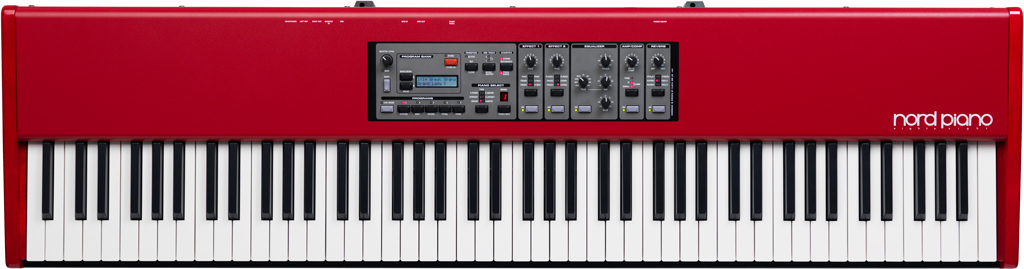
- In 2010, the original Nord Piano is released, it has 88 hammer action keys, an effects section with effects such as reverb and amp simulations. It also has some unusual features designed to make the piano sound more realistic, such as a simulation of unplayed strings that resonate in sympathy with the strings played, and samples of the pedal noises. Up to 120 programs in 24 banks can be used, with a total of 500 MB of RAM available for sampling.
- Then in 2012, the Nord Piano 2 will be launched. The main differences are that Nord Piano 2 adds a second section of samples dedicated to playing non-piano samples in layers with the piano sounds or by splitting the keyboard.

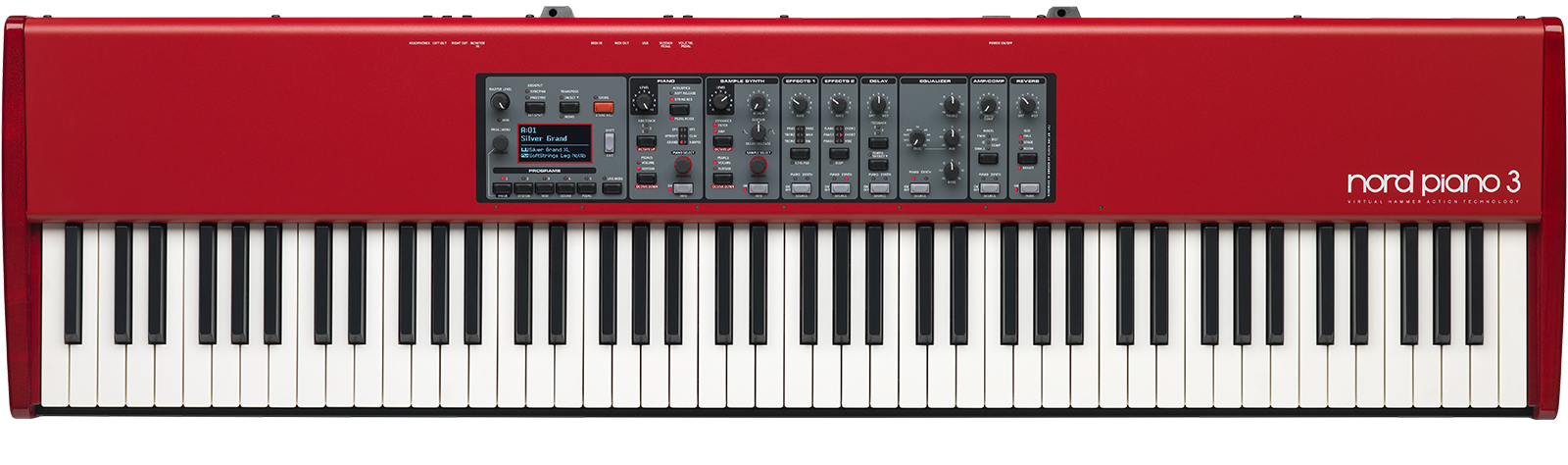
- In 2016, Clavia released Nord Piano 3, which includes an improved 88-key keyboard and expanded memory (1 GB dedicated to piano samples, with 256 MB dedicated to additional samples).
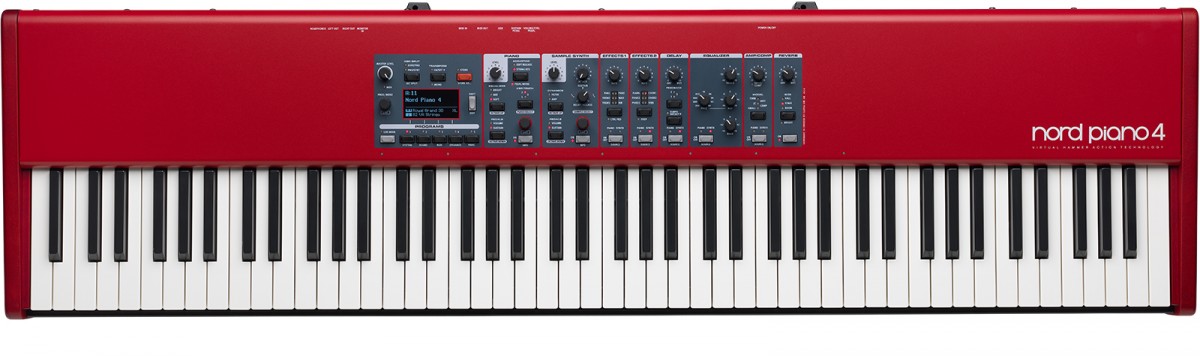
- The Nord Piano 4 was presented physically in 2018 and on the web on April 11, 2018 by the manufacturer. Some of the enhancements to the previous model include: 120 voice polyphony, creative piano filters, seamless transitions, 7 split points with optional crossfades, a 512 MB duplicate memory for the sample section synthesizer, refined organization mode, and a numeric keypad mode for direct program access.
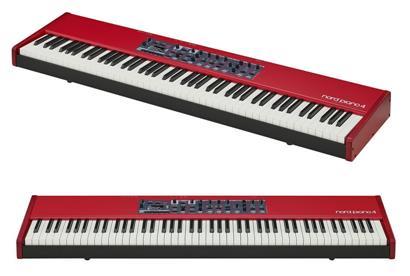
On this occasion we will analyze the Nord Piano 4 Digital Piano, which is one of the most used professional digital pianos in Spain in recent times, has a price of ? 2399 and the following features:
- 88-key weighted keyboard with sensitive keys (You can adjust the volume of the note depending on how you press it. And it is different from the weighted keyboard that is the weight of the keys on a piano) to the touch
- It imitates very well the hammer mechanism of an acoustic piano and has a TRI-SENSOR system called Virtual Hammer-Action
- Display screen with improved visualization (very remarkable). We are talking about one of the most purchased professional stage pianos
- 1 GB memory storage for sound library (various piano and other instrument sounds) Nord Piano
- 512 MB in memory for the Nord Sample sound library
- Sound changes without any interruption in the sound. This is the Seamless Transitions system
- 120 notes of polyphony (Number of notes that can be played at once. This includes accompaniments that also consume notes. So if you play over an accompaniment, more notes will be added) and 30 extra for the synth part
- Optimized and easy management of programs and samples
- Numeric Pad mode for super-fast live program selection
- Layer and Split functionality (dividing the keyboard into two different instruments) in the three keyboard registers
- Filters that allow you to customize the sounds to very advanced levels
- nord Triple Quality Pedalboard including of course the sustain pedal (The sustain pedal of a piano or keyboard serves to keep the note playing even if you stop pressing the key)
- All effects in stereo
- Three types of reverb effect (Reverb Effect) with Bright option
- Mini-jack monitor input very useful for live performances
- 1 Jack helmet output
- 1 JACK input for the pedal board
- Also a Jack TRS volume pedal input
- Midi input and output (MIDI allows you to do such wonderful things as connect your keyboard to your computer, record a sound track, and with certain programs click through what you’ve played to musical notes on a score. MIDI tracks store the information of the musical notes) conventional
- It also has USB MIDI
- Dimensions (W x D x H): 1287 x 121 x 340 mm, pedal: 264 x 224 x 70 mm
- With the pedal it weighs about 20 kg so it is portable but with a car.
- It has a power cable, the triple pedal board and a lot of software with extras on DVDs
Now that we have listed and described the features of this keyboard, there is no better way to do so than to take a look at the following video where they tell us more about the Clavia Nord Piano 4 and you can hear how its different sounds sound.
Related post you can be interested in
- Ranking with the best digital pianos
- My selection of cheap musical keyboards.
- Basic concepts you need to know about digital pianos.
- The best resources to learn to play the piano by yourself.
Now let’s compare the Clavia Nord Piano 4 with its more common alternatives. Also at the end of the post you will find a section with the best shopping possibilities for this digital piano. But you can go directly to that part of the post by pressing the following button.
Clavia Nord Piano 4 vs Clavia Nord Stage 3 88
First we will have the comparison with two digital pianos from the Swedish brand Clavia: the Nord Piano 4 which as we have already mentioned has a price of €2399/$2999/£2,199 and the Nord Stage 3 88 which has a price of €3490/$4499/£3,185, with a small difference of €1091, we will see their differences and similarities in their functions and performance in the following section:
- Both digital pianos have a weighted keyboard with 88 keys which in turn have touch sensitivity. The keyboard of the Clavia Nord Piano 4 has a Triple Sensor, helping to have a more realistic sensitivity, compared to a real acoustic piano. The keyboard of the Clavia Nord Stage 3 has an Aftertouch function, which allows you to have more control over the sensitivity when you lift your finger from a key. Counterweight refers to the weight of the keys of a real acoustic piano, which in the low register has heavier keys while in the high register has lighter keys. When we talk about sensitivity we mean that when we press a key with force it sounds louder than another one we press with less force.
- In terms of sounds, we find that the Nord Piano 4 has 400 preset sounds, we have 1Gb for the Nord Piano Library with a polyphony of 120 voices, and 512 Mb for the Sample Nord Library with a polyphony of 46 voices. The Clavia Nord Stage 3 88 also has 400 preset sounds, and offers 2Gb for the Nord Piano Library with 120 notes of polyphony, and 480 Mb for the Nord Sample Library with 34 notes of polyphony.
- The functions that characterize the Clavia Nord Piano 4 are Numeric Pad mode, Layer and Split functionality in all three registers of the keyboard, Filters that allow you to customize the sounds to very advanced levels, Triple Pedal quality Nord Triple Pedal, All effects in stereo and Three types of Reverb effect with Bright option
- The features that characterize the Clavia Nord Stage 3 88 are Creative Piano filters and effects, very smooth transitions between sounds. String Resonance (Gen 2), Noise Pedal and Long-Release option, Powerful synthesizer capabilities with Subtractive, FM, and Wavetable synthesis, Arpeggiator function, plus modes. Master Clock and Unison and includes modes for the famous B3, Vox/Farfisa and Main Pipe organs very similar to the original and simulates the Vintage 122 Leslie.
- In connections we have, the Clavia Nord Piano 4: Monitor input minijack very useful for live, 1 output jack headphones, 1 input jack for the pedalboard, also a volume pedal input jack TRS, input and output conventional MIDI. While the Clavia Nord Stage 3 88 has: Stereo Headphone Jack Output, 1 Monitor Mini-Jack Input, Input for sustain pedal which supports Triple Nord Triple Pedal not included, Input for Rotor Jack Pedal. It also supports organ, switch and control pedals with stereo jack, DIN MIDI type input and output, and ICC c14 type network cable.
- Both digital pianos have the USB MIDI function, which allows them to be connected to a computer to be used as MIDI controllers in a music production or composition program.
- In weight and measures the Clavia Nord Piano 4 has a weight of about 20 kg so it is portable but with a car and a 1287 x 121 x 340 mm, and the pedal: 264 x 224 x 70 mm. The Clavia Nord Stage 3 88 weighs 19 kg and measures 1287 x 334 x 118 mm.
Here we find two digital pianos with excellent performance and functions of a professional digital piano. However, as their names indicate, the Clavia Nord Piano has mainly digital piano functions in its range, while the Clavia Nord Stage 3 88 has piano functions, organ functions and generally more instruments, not just piano functions. Both have excellent functions and features, so with neither you will make a mistake, however the price increase of more than 1000 Euro is worth it when we look at the functions offered by the Stage 3.
We are going to put the features of each of these pianos in 2 different columns to make it easier to see the differences:
|
Clavia Nord Piano 4 |
Clavia Nord Stage 3 88 |
|---|---|
|
|
First a video comparison between these two models:
And now a video of the Clavia Nord Stage 3 88
If you want to know more about this model don’t miss our review of the Clavia Nord Stage 3 88
Clavia Nord Piano 4 vs Clavia Nord Electro 6 HP
We will proceed to analyse again two digital pianos of the Clavia brand, the Nord Piano 4 which is priced at €2399/$2999/£2,199 and the Clavia Nord Electro 6 HP with a price of €2.139/$2999/£1,955, which as we will see later each one has specific functions for the area for which they were created, let’s see their face to face:
- The Clavia Nord Piano 4 has a weighted keyboard with 88 keys which in turn have touch sensitivity, plus Triple Sensor, helping to give a more realistic sensitivity, compared to a real acoustic piano. The keyboard of the Clavia Nord Electro 6 HP has a 73-key weighted and sensitive keyboard with Nord Hammer Action Portable technology. Counterbalance refers to the weight of the keys of a real acoustic piano, which in the low register has heavier keys while in the high register has lighter keys. When we talk about sensitivity, we mean that when we press a key with force it sounds louder than another one we press with less force.
- In terms of sounds, we find that Nord Piano 4 has 400 preset sounds, we have 1Gb for the Nord Piano Library with a polyphony of 120 voices, and 512 Mb for the Sample Nord Library with a polyphony of 46 voices. The Clavia Nord Electro 6 HP offers 8 preset sounds and 1GB of memory storage for the Nord Piano Sound Library, and 512MB of memory storage for the Nord Sample Sound Library with a maximum polyphony of 120 notes.
- The functions that characterize the Clavia Nord Piano 4 are Numeric Pad mode, Layer and Split functionality in all three keyboard registers, Filters that allow you to customize the sounds to very advanced levels, Triple Pedal quality Nord Triple Pedal, All effects in stereo, and Three types of Reverb effect with Bright option.
- The features that characterize the Clavia Nord Electro 6 are Split and dual functions in all sections of the keyboard, 6 split points with LEDs as indicators, Nord C2D B3 Tone Wheel Simulation, Pipe Organ Model main functionality, Leslie 122 Nord C2D simulation, Seamless Transitions system, New Dual-Organ mode that allows quick access to two manual settings, 9 physical handles, Support for the Nord Half-Moon-Switch, Effects come all in stereo, Tube Overdrive and Vibe organ effect, both in stereo, Reverb effects, Separate reverb delay effects.
- In connections we have that, the Clavia Nord Piano 4: Monitor input minijack very useful for the live, 1 output of headphones Jack, 1 input JACK for the pedalboard, also a volume pedal input Jack TRS, Input and output conventional MIDI. While the Clavia Nord Electro 6 has: Minijack with monitor input, Headphone output, Input for control pedal, sustain pedal, Rotary Speaker pedal, which is an effect pedal with rotary speakers, loop recording. MIDI input and output.
- Both digital pianos have the USB MIDI function, which allows them to be connected to a computer to be used as MIDI controllers in a production or music composition program.
- In weight and measurements, the Clavia Nord Piano 4 weighs about 20 kg, making it portable, but with a car and a size of 1287 x 121 x 340 mm, and the pedal: 264 x 224 x 70 mm. The Clavia Nord Electro 6 88 weighs 19 kg and measures 1287 x 334 x 118 mm.
Again, two excellent digital pianos with functions that are exclusive to certain instruments or areas, the Clavia Nord Piano has functions mainly for the piano, although it also has a memory of 512 Mb for samples of different instruments. The Clavia Nord Electro, as its name suggests, has synthesizer functions and an interesting effect that we find in a few other Clavia models, the Rotary Speaker, or Leslie, which is a rotary speaker simulation to give a “Chorus Analog” effect in our different sounds. According to your needs and budget you will make the best decision.
We will put the characteristics of each of these pianos in 2 different columns to make it easier to see the differences:
|
Clavia Nord Piano 4 |
Clavia Nord Electro 6 |
|---|---|
|
|
And now a video of the Clavia Nord Electro 6
If you want to know more about this model don’t miss our review of the Clavia Nord Electro 6.
Clavia Nord Piano 4 vs Roland RD-2000
Now we have to analyze the following digital pianos: the Clavia Nord Piano 4 which, as we have already mentioned, has a price of €2399/$2999/£2,199 and the Roland RD-2000 which has a price of €2.290/$2599/£2,090. Because of its functions, we could catalogue it as a WorkStati0n and it is a direct competitor of the Clavia. We will then see their similarities and differences in the next section:
- Both digital pianos have a weighted keyboard with 88 keys which in turn have touch sensitivity. The keyboard of the Clavia Nord Piano 4 has a Triple Sensor, helping it to have a more realistic sensitivity, compared to a real acoustic piano. The keyboard of the Roland RD-2000 has a weighted keyboard of hybrid construction molded from part of the actual mechanism of a piano. With wooden and plastic parts, giving a greater simulation of an acoustic piano keyboard.
- In terms of sounds, we find that the Nord Piano 4 has 400 preset sounds, we have 1Gb for the Nord Piano Library with a polyphony of 120 voices, and 512 Mb for the Sample Nord Library with a polyphony of 46 voices. The Roland RD-2000 offers 1113 sounds including mythical acoustic pianos and something we don’t find in many equipments, in one of its sound engines (since it has two) a total polyphony, that is to say without limit of notes. And the second SuperNATURAL engine with 128 notes of polyphony.
- The functions that characterize the Clavia Nord Piano 4 are: Numeric Pad mode, Layer and Split functionality in all three registers of the keyboard, Filters that allow you to customize the sounds to very advanced levels, Triple Pedal quality Nord Triple Pedal, All effects in stereo and Three types of Reverb effect with Bright option
- The functions that characterize the Roland RD-2000 are Eight knob controls and nine slider controls to control the sound parameters, you can split into 8 different zones and configure each one with the instruments and programs; of course layer function. Two holes to expand the amount of sounds that you can download from Roland’s website, 100 configurations that you can program to recover in a single click, Lever for traditional Roland’s tone and modulation and two assignable wheel controllers and 2 assignable controllers like Picth Bend or whatever. A brutal amount of effects with the typical reverb, chorus, etc, several stereo pedal ‘damper’ or sustain inputs, fc1, fc2. A very complete team.
- In connections we have that, the Clavia Nord Piano 4: Monitor input minijack very useful for live, 1 output of headphones Jack, 1 input JACK for the pedalboard. Also a TRS Jack volume pedal input, conventional MIDI input and output. While the Roland RD-2000 has: MIDI connectors (in, out1, thru/out2), USB port for external storage, Stereo Headset Jack Output, and Stereo Line Jack and XLR Output.
- Both digital pianos have the USB MIDI function, which allows them to be connected to a computer to be used as MIDI controllers in a music production or composition program.
- In weight and measurements, the Clavia Nord Piano 4 weighs about 20 kg, making it portable but with a car and a size of 1287 x 121 x 340 mm, and the pedal: 264 x 224 x 70 mm. The Roland RD-2000 weighs 21.7 kg and measures 1412 x 367 x 140 mm.
With a difference of 300 euros, we find a close comparison between both equipments. Both offer a great amount of sounds, effects, functions, both piano and other instruments. However, they also have differences that cannot be ignored. The Roland RD-2000 has two aspects that it excels in: its keyboard with hybrid technology of wood and plastic, taking the simulation to another level and its total polyphony in the sound engine specified in for piano sounds, this is not found in all the equipment, but rather it was a decision only made by Roland. There is no doubt that Clavia’s are battle pianos, and that their popularity among professional musicians gives us total confidence, but this Roland offers us certain curious features that may make more than one person think.
We are going to put the characteristics of each of these pianos in 2 different columns to make it easier to see the differences:
|
Clavia Nord Piano 4 |
Roland RD-2000 |
|---|---|
|
|
And now a video of the Roland RD-2000
If you want to know more about this model don’t miss our review of the Roland RD-2000.
Clavia Nord Piano 4 vs Yamaha CP4 Stage
As a last comparison we will have the following digital keyboards: the Clavia Nord Piano 4 which as we mentioned before has a price of €2399/$2999/£2,199 and the Yamaha CP4 Stage which has a price of approximately €1500. We will then see their face to face in the next section:
- Both digital pianos have a weighted keyboard with 88 keys which in turn have touch sensitivity. The keyboard of the Clavia Nord Piano 4 has a Triple Sensor, helping to have a more realistic sensitivity, compared to a real acoustic piano. The keyboard of the Yamaha CP4 Stage has high quality Natural Wood Graded Hammer touch sensitive keys, i.e. wooden white keys. Giving a better simulation to those of a real acoustic piano.
- In terms of sounds, we find that the Nord Piano 4 has 400 preset sounds, we have 1Gb for the Nord Piano Library with a polyphony of 120 voices, and 512 Mb for the Sample Nord Library with a polyphony of 46 voices. The Yamaha CP4 Stage offers 433 sounds and 128 notes of polyphony.
- The features that characterize the Clavia Nord Piano 4 are Numeric Pad mode, Layer and Split functionality in all three registers of the keyboard, Filters that allow you to customize the sounds to very advanced levels, Triple Pedal quality Nord Triple Pedal, All effects in stereo and Three types of Reverb effect with Bright option.
- The features that characterize the Yamaha CP4 Stage are Sound generation engine SCM and AWM2, 11 effects including reverb, chorus, etc, Pitch Bend Wheels, Modulation Wheel, 4 Zone Split Function and Dual or Layer Function. Plus 2 sustain pedal inputs included and 2 controller pedal inputs.
- In connections we have that, the Clavia Nord Piano 4: Input of monitor minijack very useful for the live, 1 output of headphones Jack, 1 input JACK for the pedal. Also a TRS Jack volume pedal input, conventional MIDI input and output. While the Yamaha CP4 Stage has: Stereo line jack outputs and Headphone output, in addition to conventional MIDI.
- Both digital pianos have the USB MIDI function, which allows them to be connected to a computer to be used as MIDI controllers in a production or music composition program.
- In weight and measurements the Clavia Nord Piano 4 weighs about 20 kg so it is portable but with a car and a size of 1287 x 121 x 340 mm, and the pedal: 264 x 224 x 70 mm. The Yamaha CP4 Stage weighs 17.5 kg and measures 1332 x 161 x 352 mm.
This is a somewhat unfair comparison, on the one hand the Clavia with all its sounds, effects and functions. And on the other hand a Yamaha that offers a modest amount of sounds, effects and functions, which are to a great extent less than those of the Clavia, but as a point of difference in favor it has a keyboard with real wooden keys, which help the valuation of this equipment, that although it is not bad, by increasing the difference of almost $600 we would get a much more complete and versatile digital keyboard as the Clavia Nord Piano 4.
We will put the characteristics of each of these pianos in 2 different columns to make it easier to see the differences:
|
Clavia Nord Piano 4 |
Yamaha CP4 Stage |
|---|---|
|
|
And now a video of the Yamaha CP4 Stage
If you want to know more about this model don’t miss our review of the Yamaha CP4 Stage
Where to buy Clavia Nord Piano 4
Amazon
- Free Shipping and possibility of shipping in one day with Amazon Premium.
- Full Guarantee but they are no experts in music equipment.
- Sometimes better price.
- He’s got worse stock than Thomann.
Thomann
- Free Shipping.
- Full warranty. If you have any problems, they take care of everything.
- 100% reliable payment.
- Leader in trouble-free shipping.
- Usually Best price.
- Best Reputation: They are the leading online store in Europe and have the best catalogue and information.
Check below related models with similar price and features:
- Roland FP 60
- Yamaha P515
- Yamaha YDP 164
- Roland FP 90
- Korg G1 Air
- Casio PX 560
- Roland Kiyola KF 10
- Korg PA 1000
- Korg PA 700 Oriental
- Yamaha PSR S975
- Korg Havian 30
- Korg PA 700
- Kawai EN 8
- Kawai MP 11
- Kawai MP 7
- Clavia Nord Electro 6D 61
- Clavia Nord Stage 3 88
- Kurzweil SP6
- Korg SV1 73
- Kurzweil Forte 8
- Clavia Nord Electro 6D 73
- Clavia Nord Stage 3 HP76
- Roland RD 2000
- Kurzweil Artis 7
- Clavia Nord Piano 4
- Clavia Nord Stage 3 compact
- Crumar Seven
- Clavia Nord Electro 6
- Korg Grandstage 73
- Dexibell Vivo Stage S9
- Dexibell Vivo Stage S1
- Korg SV1 88
- Korg Grandstage 88
- Kurzweil Forte SE
- Yamaha CP88
- Roland VR 730
- Studiologic Numa Concert
- Yamaha CP73
- Dexibell Vivo Stage S7
- Yamaha CP300
- Yamaha CP1
- Clavia Nord Grand
- Viscount Physis Piano K4 EX
- Viscount Physis Piano K5 EX
- Dexibell Vivo Portable P7
- Kurzweil Artis
- Dexibell Vivo Portable P3
- Dexibell Vivo Stage S3
Did you like this post? > > > [/one_half_first]