
- Home
- Author's Archive:
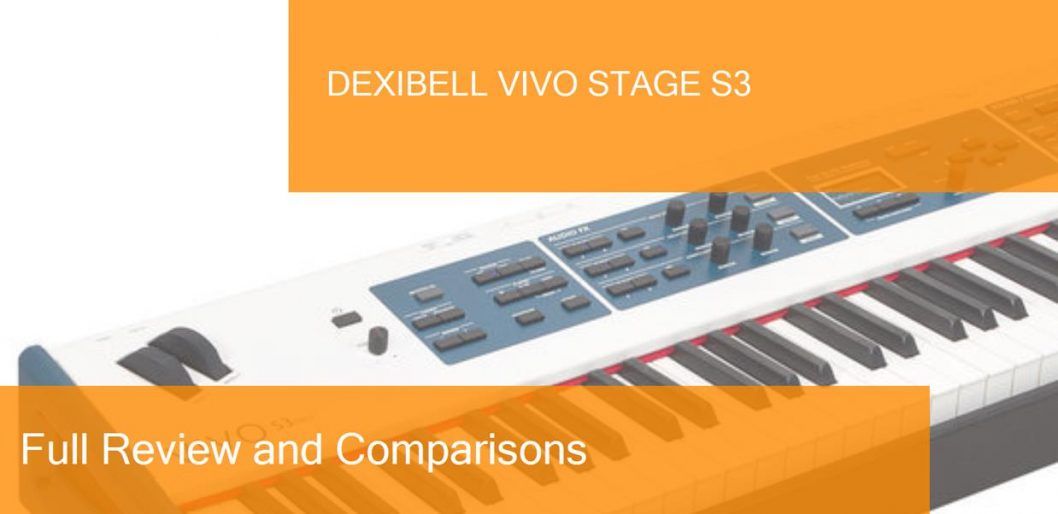
Digital Piano Dexibell Vivo Stage S3 Full Review. Is it a good choice?
Digital Piano Dexibell Vivo Stage S3 Full Review. Is it a good choice?
Dexibell is an Italian brand that little by little is filling the market with its models of digital keyboards. A digital piano from a brand that is reaching popularity, Dexibell, and this model has an approximate price of £1,390:
- 73-weighted hammer mechanism keys
- Tri-Sensors per key
- 113 Sounds (Different sounds of piano and other instruments)
- Sound font compatible
- Memory internal: 81 User
- User unlimited on USB Memory
- Sustain pedal (The most important pedal of a piano or keyboard is the sustain pedal and is used to keep the note playing even if you stop pressing the key.)
- 2 extra Pedal connections
- 7 Rotary controls
- 2 Assignable buttons
- Bluetooth audio streaming
- Stereo Jack outputs
- Stereo Audio In
- Usb to Host (It’s a more modern MIDI connector. MIDI allows you to do such wonderful things as connect the keyboard to the computer, record a soundtrack and with certain programs pass with a single click what you have played to musical notes in a score. MIDI tracks store note information)
- USB to Device
- 2 Headphone outputs for Duet mode (Duet mode allows you to divide the keyboard into two pianos to play four hands or the teacher and student on the same keyboard)
- Standard midi (MIDI allows you to do such wonderful things as connect the keyboard to the computer, record a soundtrack and with certain programs pass with a click what you have played to musical notes in a score. MIDI tracks store information from musical notes) In, Out
- 4 MIDI zones
- Dimensions (W x D x H): 1077 x 370 x 136 mm and a Weight of 11.8 kg
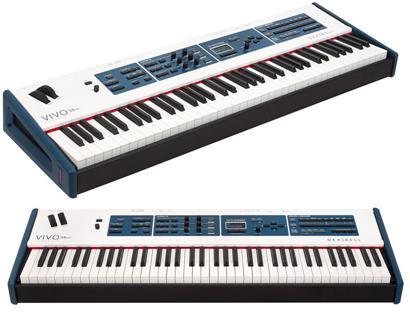
Now that we’ve listed and described the features of this digital piano there’s no better than taking a look at the following video where they tell us more about the Dexibell Vivo Stage S3 and you can hear the different sounds of this piano.
Related post you can be interested in
- Ranking with the best digital pianos
- My selection of cheap musical keyboards.
- Basic concepts you need to know about digital pianos.
- The best resources to learn to play the piano by yourself.
Now let’s compare the Dexibell Vivo Stage S3 with its more common alternatives. Also at the end of the post, you will find a section with the best shopping possibilities for this digital piano. But you can go directly to that part of the post by pressing the following button.
Dexibell Vivo Stage S-3 vs Korg Grandstage 73
We will now compare the Dexibell Vivo Stage S-3 which is priced at 1390, and the Korg Grandstage 73 which is priced at 1599. We will analyze their differences and similarities in the following face-to-face:
|
Dexibell Vivo Portable S-3 |
Korg Grandstage 73 |
|---|---|
|
|
|
We find two digital pianos with good performance, the S3 has 73 keys, when the Korg 73, both are counterbalanced. In its sounds, the S3 has 113 sounds that can be loaded by the user with unlimited polyphony and the Korg with its 500 sounds (from 7 sound engines) with up to 128 notes of polyphony. Both with good effects and good functions, the S3 has an input for the triple pedal, and the Korg has an input for damper, switch, and sustain. They are both very good options, the Korg has time on the market, while the Dexibell has little time but is gaining ground in the music market.
If you are interested in learning more, we invite you to see our review of the Korg Grandstage 73.
Dexibell Vivo Stage S-3 vs Studiologic Numa Concert
As a first comparison we will have the following models of digital pianos, the Dexibell Vivo Stage S-3 which as we have already mentioned has an approximate price of 1,390 euros, and the Studiologic Numa Concert which has an approximate price of 1,258 euros with such a similar price, it will be very interesting to compare them, let’s do it:
|
Dexibell Vivo Portable S-3 |
Studiologic Numa Concert |
|---|---|
|
|
In this comparison, we have two well-performing digital pianos, where it will be difficult to choose a winner. On the one hand, the Dexibell Vivo S3 offers 73 weighted keys, while the Studiologic Numa Compact offers 88 weighted keys. In terms of sounds, the S3 gives us 113 sounds that can be loaded by the user, with unlimited polyphony, which for the price of the piano is highly valued. The Numa Compact offers only 12 sounds and 128-note polyphony. In weight, the S3 is only 11.8 kg, so it is very portable, while the Numa Concert is 20 kg, which even though it is somewhat heavier, it is still very portable. Depending on your needs, you will make the best decision.
Dexibell Vivo Stage S-3 vs Kurzweil SP6
Now we will compare the Dexibell Vivo Stage S-3 which is priced at 1390 euros, and the Kurzweil SP6 which is priced at 999 euros. We will analyze their differences and similarities in the following face-to-face:
|
Dexibell Vivo Portable S-3 |
Kurzweil SP6 |
|---|---|
|
|
As a last comparison, we have these two digital pianos, where we start with the difference in their keys, the S3 has 73, and the SP6 has 88, both counterbalanced. And in terms of sound, the S3 offers 113 sounds that can be loaded by the user, when the SP6 has a large number of sounds, both from the user and from the factory. In pedal inputs, the S3 has 3, when the SP6 has 2. Both have many effects and functions, and in weight, they are similar, with the S3 (11.8 kg) being lighter than the SP6 (12.36 kg). For its price and functions, I would go for the Kurzweil, maybe you have a video so you can hear the sound quality of it.
If you are interested in knowing more, we invite you to see the review of the Kurzweil SP6.
Where to buy Dexibell Vivo Stage S3
Amazon
- Free Shipping and possibility of shipping in one day with Amazon Premium.
- Full Guarantee but they are no experts in music equipment.
- Sometimes better price.
- He’s got worse stock than Thomann.
Thomann
- Free Shipping.
- Full warranty. If you have any problems, they take care of everything.
- 100% reliable payment.
- Leader in trouble-free shipping.
- Usually Best price.
- Best Reputation: They are the leading online store in Europe and have the best catalog and information.
Check below related models with similar price and features:
- Roland FP 60
- Yamaha P515
- Yamaha YDP 164
- Roland FP 90
- Korg G1 Air
- Casio PX 560
- Roland Kiyola KF 10
- Korg PA 1000
- Korg PA 700 Oriental
- Yamaha PSR S975
- Korg Havian 30
- Korg PA 700
- Kawai EN 8
- Kawai MP 11
- Kawai MP 7
- Clavia Nord Electro 6D 61
- Clavia Nord Stage 3 88
- Kurzweil SP6
- Korg SV1 73
- Kurzweil Forte 8
- Clavia Nord Electro 6D 73
- Clavia Nord Stage 3 HP76
- Roland RD 2000
- Kurzweil Artis 7
- Clavia Nord Piano 4
- Clavia Nord Stage 3 compact
- Crumar Seven
- Clavia Nord Electro 6
- Korg Grandstage 73
- Dexibell Vivo Stage S9
- Dexibell Vivo Stage S1
- Korg SV1 88
- Korg Grandstage 88
- Kurzweil Forte SE
- Yamaha CP88
- Roland VR 730
- Studiologic Numa Concert
- Yamaha CP73
- Dexibell Vivo Stage S7
- Yamaha CP300
- Yamaha CP1
- Clavia Nord Grand
- Viscount Physis Piano K4 EX
- Viscount Physis Piano K5 EX
- Dexibell Vivo Portable P7
- Kurzweil Artis
- Dexibell Vivo Portable P3
- Dexibell Vivo Stage S3
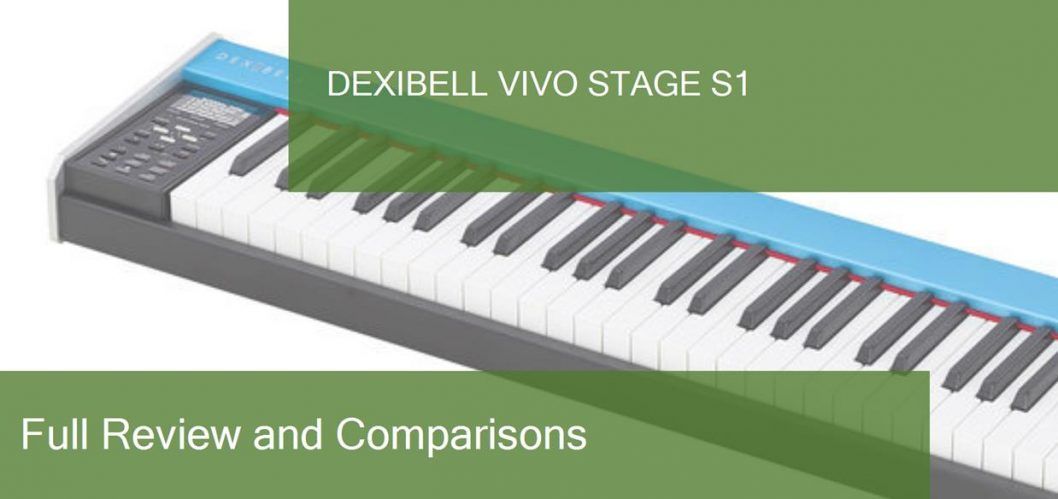
Digital Piano Dexibell Vivo Stage S1 Full Review. Is it a good keyboard?
Digital Piano Dexibell Vivo Stage S1 Full Review. Is it a good choice?
Dexibell is an Italian brand that little by little is filling the market with its models of digital keyboards. We are going to analyze this semi-professional or professional keyboard according to how you want to see that it has sold a few units in Spain, with an approximate price of € 1,266 and from which we have a good opinion:
- Keyboard with 68 half-weighted keys
- Two Sensors per key
- 80+ Loadable user Sounds (Different sounds of piano and other instruments)
- Sound Font compatible
- Registry Storage Locations 81+
- User unlimited USB memory
- Sustain pedal (The most important pedal of a piano or keyboard is the sustain pedal and is used to keep the note playing even if you stop pressing the key.)
- 2 extra Pedal connections
- Stereo Jack outputs
- Stereo Audio In
- Usb to Host (It’s a more modern MIDI connector. MIDI allows you to do such wonderful things as connect the keyboard to the computer, record a soundtrack and with certain programs pass with a single click what you have played to musical notes in a score. MIDI tracks store note information)
- USB port
- 2 Headphone outputs
- 4 midi (MIDI allows you to do such wonderful things as connect the keyboard to the computer, record a soundtrack and with certain programs pass with a click what you have played to musical notes in a score. MIDI tracks store information from musical notes) zones
- Battery operation possible
- Dimensions (W x D x H): 1090 x 242 x 94 mm and a Weight of 8.5 k
- Weight: 8.5 kg

Now that we’ve listed and described the features of this digital piano there’s no better than taking a look at the following video where they tell us more about the Dexibell Vivo Stage S1 and you can hear the different sounds of this piano.
Related post you can be interested in
- Ranking with the best digital pianos
- My selection of cheap musical keyboards.
- Basic concepts you need to know about digital pianos.
- The best resources to learn to play the piano by yourself.
Now let’s compare the Dexibell Vivo Stage S1 with its more common alternatives. Also at the end of the post you will find a section with the best shopping possibilities for this digital piano. But you can go directly to that part of the post by pressing the following button.
Dexibell Vivo Stage S1 vs Studiologic Numa Concert
As a first comparison we will have the following models of digital pianos, the Dexibell Vivo Stage S-1 which as we have already mentioned has an approximate price of 1,266 euros, and the Studiologic Numa Concert which has an approximate price of 1,258 euros with such a similar price, it will be very interesting to compare them, let’s do it:
|
Dexibell Vivo Portable S1 |
Studiologic Numa Concert |
|---|---|
|
|
In this comparison, we have two well-performing digital pianos, where it will be difficult to choose a winner. On the one hand, the Dexibell Vivo S1 offers 68 weighted keys, while the Studiologic Numa Compact offers 88 weighted keys. In terms of sounds, the S1 gives us more than 80 sounds that can be loaded by the user, with unlimited polyphony, which for the price of the piano is highly valued. The Numa Compact offers only 12 sounds and 128-note polyphony. In weight, the S1 is only 8.5 kg, so it is very portable, while the Numa Concert is 20 kg, which even though it is a little heavier, it is still very portable. Depending on your needs, you will make the best decision.
If you are interested in knowing more, we invite you to see our review of the Studiologic Numa Compact
Dexibell Vivo Stage S1 vs Korg Grandstage 73
Now we will compare the Dexibell Vivo Stage S1 which is priced at 1,266 euros, and the Korg Grandstage 73 which is priced at 1,599 euros. We will analyze their differences and similarities in the following face-to-face:
|
Dexibell Vivo Portable S1 |
Korg Grandstage 73 |
|---|---|
|
|
We find two digital pianos with good performance, the S1 has 68 keys, when the Korg 73, both are counterbalanced. In its sounds, the S1 has 80 sounds that can be loaded by the user with unlimited polyphony and the Studiologic with its 500 sounds (from 7 sound engines) with up to 128 notes of polyphony. Both with good effects and good functions, the S1 has an input for the triple pedal, and the Studiologic has an input for damper, switch, and sustain. They are both very good options, the Korg has already been on the market for a while, while the Dexibell has little time but is slowly gaining ground in the music market.
If you are interested in knowing more, we invite you to see the review of Korg Grandstage 73.
Dexibell Vivo Stage S1 vs Kurzweil SP6
Now we will compare the Dexibell Vivo Stage S1 which is priced at 1,266 euros, and the Kurzweil SP6 which is priced at 999 euros. We will analyze their differences and similarities in the following face-to-face:
|
Dexibell Vivo Portable S1 |
Kurzweil SP6 |
|---|---|
|
|
As a last comparison, we have these two digital pianos, where we start with the difference in their keys, the S1 has 68, and the SP6 has 88, both counterbalanced. And in terms of sound, the S1 offers 80 sounds that can be loaded by the user, when the SP6 has a large number of sounds, both from the user and from the factory. In pedal inputs, the S1 has 3, when the SP6 has 2. Both have many effects and functions, and in weight, they are similar, with the S1 (8.5 kg) being lighter than the SP6 (12.36 kg). For its price and functions, I would go for the Kurzweil, maybe you have a video so you can hear the sound quality of it.
If you are interested in knowing more, we invite you to see the review of the Kurzweil SP6.
Where to buy Dexibell Vivo Stage S1
Amazon
- Free Shipping and possibility of shipping in one day with Amazon Premium.
- Full Guarantee but they are no experts in music equipment.
- Sometimes better price.
- He’s got worse stock than Thomann.
Thomann
- Free Shipping.
- Full warranty. If you have any problems, they take care of everything.
- 100% reliable payment.
- Leader in trouble-free shipping.
- Usually Best price.
- Best Reputation: They are the leading online store in Europe and have the best catalogue and information.
Check below-related models with similar price and features:
- Roland FP 60
- Yamaha P515
- Yamaha YDP 164
- Roland FP 90
- Korg G1 Air
- Casio PX 560
- Roland Kiyola KF 10
- Korg PA 1000
- Korg PA 700 Oriental
- Yamaha PSR S975
- Korg Havian 30
- Korg PA 700
- Kawai EN 8
- Kawai MP 11
- Kawai MP 7
- Clavia Nord Electro 6D 61
- Clavia Nord Stage 3 88
- Kurzweil SP6
- Korg SV1 73
- Kurzweil Forte 8
- Clavia Nord Electro 6D 73
- Clavia Nord Stage 3 HP76
- Roland RD 2000
- Kurzweil Artis 7
- Clavia Nord Piano 4
- Clavia Nord Stage 3 compact
- Crumar Seven
- Clavia Nord Electro 6
- Korg Grandstage 73
- Dexibell Vivo Stage S9
- Dexibell Vivo Stage S1
- Korg SV1 88
- Korg Grandstage 88
- Kurzweil Forte SE
- Yamaha CP88
- Roland VR 730
- Studiologic Numa Concert
- Yamaha CP73
- Dexibell Vivo Stage S7
- Yamaha CP300
- Yamaha CP1
- Clavia Nord Grand
- Viscount Physis Piano K4 EX
- Viscount Physis Piano K5 EX
- Dexibell Vivo Portable P7
- Kurzweil Artis
- Dexibell Vivo Portable P3
- Dexibell Vivo Stage S3

Digital Piano Dexibell Vivo Portable P7 Full Review. Is it a good choice?
Digital Piano Dexibell Vivo Portable P7 Full Review. Is it a good choice?
Dexibell, made in Italy, was established in 2013 by the R&D and engineering team of the former Roland Europe, with financial backing from parent company Proel S.p.A., an Italian manufacturer of leading brands of professional audio and lighting equipment, musical instruments, and accessories. In 2017, after several years of international success, Proel began distributing the Dexibell brand in North America. Now, we are going to check the Dexibell Vivo Portable P7.
Dexibell P7 Main Features
- 88-weighted Hammer Action (The weight of the keys on an acoustic piano that digital pianos try to imitate to match the touch of a real acoustic piano. The keys in the high register are heavier and in the high register less. This is a different concept of sensitivity on the keyboard that serves to regulate the volume of the note. But a hammer action keyboard always has sensitivity on the keys.) keys
- Tri-Sensors per key
- 79 + Loadable user Sounds (Different sounds of piano and other instruments)
- Sound Font compatible
- Registry Storage Locations 49+
- User unlimited USB memory
- Sustain pedal (The most important pedal of a piano or keyboard is the sustain pedal and is used to keep the note playing even if you stop pressing the key.) connection
- 1 extra Pedal connection
- 2 Assignable buttons
- Bluetooth audio streaming
- Speakers: 2 x 35 W (very powerfull)
- DBass Enhancer
- Dynamic EQ
- 3-Band compressor
- Stereo Jack outputs
- Stereo Audio In
- Usb to Host (It’s a more modern MIDI connector. MIDI allows you to do such wonderful things as connect the keyboard to the computer, record a soundtrack and with certain programs pass with a single click what you have played to musical notes in a score. MIDI tracks store note information)
- USB to Device
- 2 Headphone outputs for Duet mode (Duet mode allows you to divide the keyboard into two pianos to play four hands or the teacher and student on the same keyboard.)
- Dimensions (W x D x H): 1330 x 372 x 135 mm and a Weight of 14.5 kg
Now that we’ve listed and described the features of this digital piano there’s no better than taking a look at the following video where they tell us more about the Dexibell Vivo Portable P7 and you can hear the different sounds of this piano.
Related post you can be interested in
- Ranking with the best digital pianos
- My selection of cheap musical keyboards.
- Basic concepts you need to know about digital pianos.
- The best resources to learn to play the piano by yourself.
Now let’s compare the Dexibell Vivo Portable P7 with its more common alternatives. Also at the end of the post you will find a section with the best shopping possibilities for this digital piano. But you can go directly to that part of the post by pressing the following button.
Dexibell Vivo Portable P7 vs Kawai ES 8
The Kawai ES8 with its 88 weighted keys and pressure sensitivity, 256 polyphony notes and the possibility of customization similar to an acoustic piano is a very interesting option for any pianist.
The ES8 is a very complete digital piano, it has almost everything, its approach to imitating an acoustic piano makes it a really good choice for pianists.
What about the sound?
No wonder the ES8 has great sound quality, its 2 integrated speakers of 15w each added to 256 polyphony notes, the ability to customize and sample 88 keys a great sound quality.
And below a video with the sound of the Kawai ES 8
If you want to know more about this model do not miss our Kawai ES 8 review
Dexibell Vivo Portable P7 vs Korg SV1 88
The SV-1 contains the most demanded keyboard sounds collected in a single instrument.
Rediscover decades of success with sounds of classic electric pianos, harpsichords, unforgettable organs, string sounds and, of course, pianos.
The SV-1 is loaded with sounds of grand pianos, vertical, along with the electric classics.
Built using Korg RX (Real eXperience) technology, each sound is an authentic and detailed recreation, accurately capturing the entire dynamic expression range of the original instrument.
The resonance of the tongues, the release of the hammer, the click of the contacts, everything has been preserved.
The SV-1 also recreates the effect pedals and studio processors that gave these sounds their peculiar stamp.
The SV-1 is designed for the interpreter and is a delight to play. The RH3 keyboard with real counterbalanced hammer action is the cusp of Korg keyboards, with a solid response that inspires confidence.
And below a video of the Korg SV1 88
If you want to know more about this model do not miss our Korg SV1 88 review
Dexibell Vivo Portable P7 vs Studiologic Numa Concert
The Studiologic Numa Concert is a professional live performance digital piano and a high definition keyboard controller, with 88 keys Graded Hammer Action, solid wood key body and Ivory touch on the top surface of the white keys.
The key action of the Numa Concert provides an absolute authentic touch of a Concert Piano and the triple switch detection system allows a fast repeating rate and a total dynamic control.
Sounds
The new sounds are further made very natural and realistic by the new String Resonance modeling that allows to control and reproduce all the real resonances found in an acoustic piano made by the chords, the damper and the soundboard itself.
A selection of 12 best in class sounds easy to manage through a direct control panel. The instrument provides amazing piano sounds based on 9 dynamic levels interpolated in real time and loudness parameters.
And below a video of the Studiologic Numa Concert
If you want to know more about this model do not miss our Studiologic Numa Concert review
Dexibell Vivo Portable P7 vs Dexibell Vivo Stage S1
The digital piano Dexibell Vivo Portable P7 is a piano that you can take and play anywhere, thanks to its low weight – it comes in at just 8.5kg – battery power and compact size.
The Vivo S1 has a 68-note keyboard and a slick aluminium case, so it looks as good as it sounds.
Speaking of sound, the Vivo S1 operates at 24-bit/48kHz, far exceeding the 16-bit/44.1kHz digital piano standard and delivering 256 times greater levels of detail. This means improved frequency response and dynamic range, resulting in greater realism.
Portabilty and quality
VIVO S1 is a high quality professional keyboard with the added bonus that it can be used literally everywhere, even where there is no power, thanks to its capability of running on batteries.
VIVO S1 is an extraordinary musical instrument for the discerning musician requiring the very best sounds but in an ultra-portable cabinet, unlike traditional heavier stage pianos.
And below a complete video of the Dexibell Vivo Stage S1
If you want to know more about this model do not miss our Dexibell Vivo Stage S1 review
Where to buy Dexibell Vivo Portable P7
Thomann
- Free Shipping.
- Full warranty. If you have any problems, they take care of everything.
- 100% reliable payment.
- Leader in trouble-free shipping.
- Usually Best price.
- Best Reputation: They are the leading online store in Europe and have the best catalogue and information.
Amazon
- Free Shipping and possibility of shipping in one day with Amazon Premium.
- Full Guarantee but they are no experts in music equipment.
- Sometimes better price.
- He’s got worse stock than Thomann.
Check below related models with similar price and features:
- Roland FP 60
- Yamaha P515
- Yamaha YDP 164
- Roland FP 90
- Korg G1 Air
- Casio PX 560
- Kawai MP 7
- Roland Kiyola KF 10
- Korg PA 1000
- Korg PA 700 Oriental
- Yamaha PSR S975
- Korg Havian 30
- Korg PA 700
- Clavia Nord Electro 6D 61
- Clavia Nord Stage 3 88
- Kurzweil SP6
- Korg SV1 73
- Kurzweil Forte 8
- Clavia Nord Electro 6D 73
- Clavia Nord Stage 3 HP76
- Roland RD 2000
- Kurzweil Artis 7
- Clavia Nord Piano 4
- Clavia Nord Stage 3 compact
- Crumar Seven
- Clavia Nord Electro 6
- Korg Grandstage 73
- Dexibell Vivo Stage S9
- Dexibell Vivo Stage S1
- Korg SV1 88
- Korg Grandstage 88
- Kurzweil Forte SE
- Yamaha CP88
- Roland VR 730
- Studiologic Numa Concert
- Yamaha CP73
- Dexibell Vivo Stage S7
- Yamaha CP300
- Yamaha CP1
- Clavia Nord Grand
- Viscount Physis Piano K4 EX
- Viscount Physis Piano K5 EX
- Dexibell Vivo Portable P7
- Kurzweil Artis
- Kawai MP 11
- Dexibell Vivo Portable P3
- Dexibell Vivo Stage S3