
- Home
- Author's Archive:

Digital Piano Korg D1 Full Review. Is it a good choice?
Korg D1 Review Complete Digital Piano. Good choice?
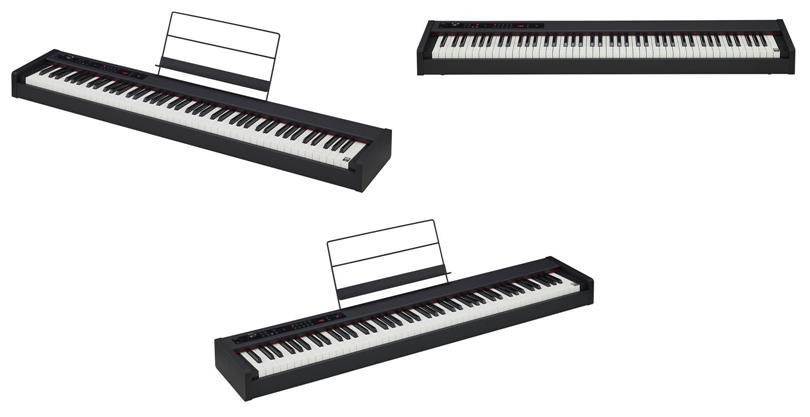
Korg is a Japanese company that in recent years is considered one of the largest producers of synthesizers, digital pianos and keyboards in the world. Now we are going to take some time to analyze the Korg D1, a digital piano that offers excellent features for a musician who is not only interested in the classical, but also in jazz, rock or funk. The comfort of being able to practice and the possibility of taking it anywhere is a key aspect for a price of €555/$800/£514.
Let’s go with a digital piano that is growing quite a bit in popularity:
- 88-key weighted keys digital piano (Weight of the keys of an acoustic piano, which digital pianos try to imitate to match the touch of the piano. The keys in the treble register are heavier and in the treble register less. This is different from the sensitivity on the keyboard which serves to regulate the volume of the note. But a weighted keyboard always has sensitivity in the keys) with RH3 technology (Real Weighted Hammer Action 3)
- 5 levels of dynamic sensitivity on the keys
- A powerful stereo PCM sound engine
- 120 notes of polyphony (Number of notes that can be played at once. This includes accompaniments that also consume notes. So if you play over an accompaniment more notes will be accumulated)
- 30 sounds (Different sounds of piano and other instruments)
- 30 demo songs
- Dual exhaust simulation for a more realistic experience
- Resonance attenuator
- Chorus, reverb
- Split function (dividing the keyboard into two different instruments)
- Dual function (Dual mode allows you to combine two sounds to create a more complete one. Typical is the combination of piano + stringed instrument sound)
- Metronome (Basic study element to study and practice the tempo of a piece of music)
- 2 line jack outputs for connection to any amplifier equipment
- Stereo headphone output 6.3 mm jack
- MIDI In and MIDI Out (MIDI allows you to do such wonderful things as connect your keyboard to the computer, record a sound track and with certain programs click through what you have played to musical notes on a score. MIDI tracks store the information of the musical notes) conventional
- Extra input for damper pedal
- Includes music stand, sustain pedal (The sustain pedal on a piano or keyboard is used to keep the note playing even if you stop pressing the key) and power adapter
- A weight of 16 kg that allows easy transport and measures (W x H x D): 1327 x 128 x 263 mm
Now that we have listed and described the features of this keyboard there is no better way than to take a look at the following video where they tell us more about the Korg D1 and you can hear how its different sounds sound:
Related posts you can be interested in:
- Ranking with the best digital pianos
- My selection of cheap musical keyboards.
- Basic concepts you need to know about digital pianos.
- The best resources to learn to play the piano by yourself.
The Korg D1 can be compared with its more common alternatives and we will do it below. At the end of the post, you will find a section with the best shopping possibilities for this digital piano. However, you can go directly to that area of the post by pressing the following button.
Korg D1 vs Korg B1
We will start by comparing these two Korg brand digital pianos, the D1 which is priced at €555/$800/£514 and the B1 which is priced at 363 euros. Let’s see if the price difference is reflected in the differences in features:
- Both digital pianos have 88 weighted keys, however the technology of the D1 is RH3 (Real Weighted Hammer Action 3), while the B1 has NH (Natural Weight Hammer) technology.
- The first noticeable difference is that the D1 has 5 levels of dynamic sensitivity on the keys, while the B1 has only 3. Remember that sensitivity means that the sound obtained from a note is proportional to the force with which it is played.
- The D1 offers us 30 sounds with 120 notes of polyphony, while the B1 offers us 8 sounds with 120 notes of polyphony. Polyphony means the number of notes that can be played at the same time.
- In the digital piano D1 we find 30 demonstration songs, while in the B1 we have 8 demonstration songs.
- Another difference is that the D1 does not have built-in speakers, when the B1 has 9W speakers, which would serve very well in a restaurant.
- The weight of the D1 is 16 kg while the weight of the B1 is 11.8 kg.
Although both digital pianos have very similar characteristics, we see an advantage in the Korg D1 having a better technology (closer simulation to a real acoustic piano), So it also has a greater amount of sounds, and a simulation of dual exhaust and attenuator from resonance making playing this piano a more real experience to that of an acoustic piano. The disadvantage is that it has no built-in speakers.
We will put the characteristics of each of these pianos in 2 different columns to make it easier to see the differences:
|
Korg D1 |
Korg B1 |
|---|---|
|
|
And now a video of the Korg B1
If you want to know more about this model don’t miss our review of the Korg B1.
Korg D1 vs Korg C1 Air
Now we will have a comparison between the Korg D1 with a price of €555/$800/£514 and the Korg C1 Air with a price of €835/$1499/£769, we will verify if this price increase is justified with the performance offered by the different pianos.
- Both digital pianos have 88 weighted keys with RH3 (Real Weighted Hammer Action 3) technology.
- The pianos also share their 5 levels of sensitivity, so that the performer can generate more dynamics by playing the keys he presses most loudly.
- Both digital pianos have 30 sounds, 120 notes of polyphony, which is the number of notes that can be played at the same time, and have effects such as Chorus, Reverb and Brillance.
- The Korg D1 has 30 demo songs while the C1 Air has 50 demo songs.
- A notable difference is that the C1 Air has a two-track recording option, while the D1 doesn’t. The Korg D1 has no recording.
- Another difference is that the D1 offers a sustain pedal, while the C1 Air integrates three pedals.
- In the D1 as we know it has no integrated speakers, but the C1 Air if it comes with powerful 25 W speakers, it is perfect for playing live in a small place.
- Another notable difference is the weight of both, the D1 is 16 kg while the C1 Air is 35 kg a little more than double, this is due to the furniture that is integrated into the C1 Air.
These are pianos with a different approach. The Korg D1 piano is more oriented towards being a portable piano and connecting directly to a sound system. While the Korg C1 is a piano more thought for not moving it from its place but it takes very little space. Although it is true that with its power it is great enough to play it in a restaurant.
The Korg D1 has no speakers but is very well equipped in functionality. So you can always be sure that there will be a mixer to plug into without the need for speakers.
We will put the characteristics of each of these pianos in 2 different columns to make it easier to see the differences:
|
Korg D1 |
Korg C1 Air |
|---|---|
|
|
And now a video of the Korg C1 Air
If you want to know more about this model don’t miss our review of the Korg C1 Air.
Korg D1 vs Yamaha P125
Another very good comparison will be between the Korg D1 with a price of €555/$800/£514 against the Yamaha P125 with a price of €566/$650/£518. As we see the prices are very similar, having a small difference of 11 euro, let’s check the characteristics of each one to know which will be the best option.
- Both digital pianos have 88 weighted keys, the difference being that the Korg D1 uses RH3 (Real Weighted Hammer Action 3) technology while the Yamaha P125 uses GHS (Graded Hammer Standard) technology.
- One notable difference is that the Korg D1 offers: 30 sounds, 120 notes of polyphony and effects such as Chorus and Reverb. When the Yamaha P125 offers: 24 sounds, 192 notes of polyphony, which polyphony refers to the number of notes that can sound simultaneously, and effects such as: Reverb and Sound Boost.
- Another difference is that the Yamaha P125 has bass and drum rhythms included, which is rare to find on a digital piano, but is a very interesting option. The Korg D1 does not have this feature.
- Both have learning functions like Split and Duo.
- A relevant difference is that the Korg D1 has no speakers, and the Yamaha P125 has 7W speakers each (L and R).
- In weight the Korg D1 has 16 kg and the Yamaha P125 has 11.8 kg. This is a very favorable aspect of the Yamaha P125, because it is much lighter even having integrated speakers.
- Both have line output, so they are good for both live performances.
We are faced with a tough battle between these two digital pianos. The Korg D1 offers a greater amount of sound, and Dual Exhaust Simulation, and Resonance Attenuator, making playing this instrument a more real experience towards an acoustic piano. The Yamaha offers a greater amount of polyphony and with its keyboard technology is not left behind also offers a good realism, towards the simulation of real acoustic piano. It also has integrated speakers.
Depending on your needs, you can make the best decision yourself. Both keyboards are good.
We will put the characteristics of each of these pianos in 2 different columns to make it easier to see the differences:
|
Korg D1 |
Yamaha P125 |
|---|---|
|
|
And now a comparison video of the Korg D1 and the Yamaha P125:
If you want to know more about this model don’t miss our review of the Yamaha P125.
Korg D1 vs Kawai ES110
A comparison we will now have will be the Korg D1 with a price of €555/$800/£514 and the Kawai ES110 with an exactly equal price of €555/$729/£512 (in Euros). Now let’s check which is the best option taking into account that the values are exactly the same. The characteristics of digital pianos are:
- Both have 88 weighted keys, the Korg D1 with RH3 (Real Weighted Hammer Action 3) technology and the Kawai ES110 with Responsive Hammer technology.
- The Korg D1 offers 30 sounds, while the Kawai ES100 offers 19 sounds.
- The Korg D1 offers 120 notes of polyphony, while the Kawai ES110 offers 192 notes of polyphony. Remember that polyphony is the number of notes that can be played simultaneously.
- One notable difference is that the Kawai ES110 has Bluetooth and Bluetooth MIDI connectivity, which allows you to connect to other audio devices and computers to perform other functions, such as MIDI controller if used in a wireless music composition or production program, or using the MIDI Output. The Korg D1 does not have Bluetooth.
- The Korg D1 weighs 16 kg while the Kawai ES110 is much lighter and weighs 12 kg.
The Kawai ES 110 is a very well-balanced bestseller and competes strongly with the Yamaha P125. So the things we said in the previous section when comparing the D1 with the Yamaha P125 also apply to the Kawai ES 110.
We will put the characteristics of each of these pianos in 2 different columns to make it easier to see the differences:
|
Korg D1 |
Kawai ES110 |
|---|---|
|
|
And now a comparison video listening to the sounds of both the Korg D1 and Kawai ES110:
If you want to know more about this model don’t miss our review of the Kawai ES110.
Korg D1 vs Roland FP30
Finally we will make a comparison between these two digital pianos, the Korg D1 with a price of €555/$800/£514 and the Roland FP 30 with a price of €619/$700/£555. We will now look at the features that make them different:
- Both pianos have 88 weighted keys, the Korg D1 with RH3 technology and the Roland FP30 with PHA-4 technology.
- Both have leakage simulation in order to have an experience more similar to a real acoustic piano.
- The Korg D1 offers 30 sounds, and 120 notes of polyphony. The Roland FP30 has 35 sounds, and 128 notes of polyphony, which is how many notes it can play at one time.
- The Roland FP30 has 8 standard rhythms, interesting application to be a digital piano, option that we do not have in the Korg D1.
- Both have keyboard modes like: Dual and Split. To play in layers and split the keyboard into two instruments.
- The Roland FP30 excels at Bluetooth 4.0, and playing audio and MIDI files via USB. Options not found on the Korg D1.
- The Korg D1 does not have integrated speakers, while the Roland FP30 has 2 speakers of 11W each, with a prudent volume for a small restaurant.
- In terms of weight the Korg D1 is at 16kg and the Roland FP30 is at 14.1kg. Although it weighs more it has a built-in microphone and recording capability.
The Roland Fp 30 is also a bestseller and the considerations of the Yamaha P125 apply to it and as mentioned above the main difference is that the Roland FP 30 has a built-in microphone and recording capability.
We’re going to put the characteristics of each of these pianos in 2 different columns to make it easier to see the differences:
|
Korg D1 |
Roland FP30 |
|---|---|
|
|
Now for our video review of the Roland FP30:
If you want to know more about this model don’t miss our review of the Roland FP30.
Where to buy Korg D1
Amazon
- Free shipping and possibility of shipping within one day with Amazon Premium.
- Full warrantry, but they are no experts in music equipment.
- Sometimes has better price.
- Their stock is not so good as Thomann’s.
Thomann
- Free shipping.
- Full warranty. If you have any problems, they cover every issue involved.
- 100% reliable payment.
- Leader in trouble-free shipping.
- Usually best price.
- Best Reputation: They are the leading online store in Europe and have the best catalogue and information.
Check below related models with similar price and features:
- Thomann SP 5600
- Yamaha YDP 143
- Roland FP 30
- Yamaha YDP 163
- Yamaha YDP S52
- Hemingway DP 201 MKII
- Casio PX S1000
- Thomann DP 33
- Casio PX S3000
- Casio PX 870
- Yamaha YDP S54
- Yamaha YDP 144
- Korg B1
- Casio CDP S100
- Casio PX 360
- Casio PX 770
- Korg LP 380
- Korg C1 Air
- Casio CDP S350
- Thomann DP 32
- Yamaha YDP S34
- Korg LP 180
- Korg PA 600
- Casio CT X5000
- Yamaha DGX 660
- Korg EK 50
- Yamaha PSR S670
- Yamaha PSR S775
- Yamaha PSR EW410
- Roland 5
- Casio CT X3000
- Yamaha PSR A350
- Casio WK 7600
- Casio WK 6600
- Yamaha P45
- Yamaha P125
- Kawai ES 110
- Alesis Recital Pro
- Kurzweil SPS4 8
- Roland FP 10
- Korg D1
- Studiologic Numa Compact 2
- Korg SP 280
- Yamaha P121
- Studiologic Numa Compact 2x
- Roland GO PIANO 88
- Studiologic Numa Stage
Did you like this post? > > > [/one_half_first]
Digital Piano Korg C1 Air Full Review. Is it a good choice?
Review and Opinion of the Korg C1 Air and Where to Buy It?
Korg is a Japanese company that in recent years is considered one of the largest producers of synthesizers, digital pianos and keyboards in the world.
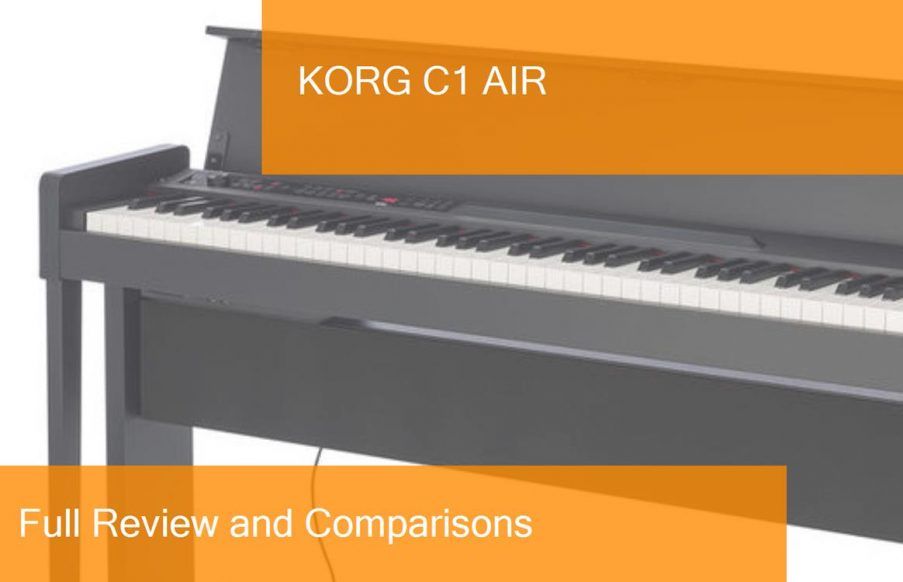
Now we are going to take the time to analyze the Korg C1 Air with a price of €835/$1500/£769, a digital piano that as mentioned by Korg itself, a truly exceptional instrument. Let’s look at the features it offers and see if it really deserves this title, with:
- 88 weighted keys (Weight that the keys of an acoustic piano have and that digital pianos try to imitate to equal the touch of the piano. The keys in the high register are heavier and in the high register less. This is different from the sensitivity on the keyboard which serves to regulate the volume of the note. But a weighted keyboard always has sensitivity in the keys) with the RH30 system that imitates the hammer action of an acoustic piano
- 30 sounds (Different sounds of piano and other instruments)
- polyphony (Number of notes that can be played at once. This includes accompaniments that also consume notes. So if you play on top of an accompaniment more notes will be accumulated) of 120 notes
- 50 demo songs
- Reverb Effects
- Chorus effect
- Brilliance Effects
- Metronome (Basic study element to study and practice the tempo of a piece of music)
- Two-track recording with a maximum of 14,000 notes
- Triple footswitch integrated into the piano stand. Includes the sustain pedal (The sustain pedal of a piano or keyboard serves to keep the note playing even if you stop pressing the key)
- Line output to connect to any Bluetooth amplification system (A2DP Sink)
- Midi input and output (MIDI allows you to do such wonderful things as connect your keyboard to your computer, record a sound track, and with certain programs, click through what you have played to musical notes on a score. MIDI tracks store the information of the musical notes)
- 2 headphone outputs for Duo Mode (Duo Mode allows the keyboard to be divided into two pianos so that four hands can be played or the teacher and student can play on the same keyboard)
- 2 powerful 25W speakers
- Dimensions: 1346 x 347 x 770mm (width x depth x height)
- Weight (with stand) 35kg and dimensions 1346 x 347 x 770mm (W x D x H)
- Premium Japanese manufacturing. (High quality production).
Now that we have listed and described the features of this keyboard there is no better way than to take a look at the following videos where they tell us more about the Korg C1 Air and you can hear how its different sounds sound:
Related post you can be interested in
- Ranking with the best digital pianos
- My selection of cheap musical keyboards.
- Basic concepts you need to know about digital pianos.
- The best resources to learn to play the piano by yourself.
- The best Kawai Digital Pianos.
Now let’s compare the Korg C1 Air with its more common alternatives. Also at the end of the post you will find a section with the best shopping possibilities for this digital piano. But you can go directly to that part of the post by pressing the following button.
Korg C1 Air vs Korg G1 Air
We’ll start the comparisons with a digital piano of the same brand: Korg. The Korg C1 Air that we had already mentioned has a price of €835/$1500/£769 and the Korg G1 Air with a price of €1.239/£1,145, having between both a relevant difference of almost 400 euros. Let’s see then what are their most notable differences and similarities:
- Both have the same keyboard, with 88 weighted keys and its RH3 technology, which imitates the hammer action of an acoustic piano (see video at the end of this face-to-face).
- The Korg C1 Air has 30 built-in sounds, while the Korg G1 Air has 29 piano sounds and 3 bass sounds for a total of 32 built-in sounds. Both have a polyphony of 120 notes. Polyphony is the highest number of notes that can be played simultaneously.
- Both have: 50 demo songs, effects like: Brilliance, Reverb, Chorus and the metronome function. Transposition function.
- The advantages of the G1 Air are: Damper resonance, string resonance simulation and double exhaust simulation to enhance the feel of a real piano.
- Both integrate recording with two tracks, the Korg C1 Air with a maximum of 14,000 notes, while the Korg G1 Air with a maximum of 45,000 notes.
- Both have: triple pedalboard integrated into the piano stand, line output to connect to any Bluetooth amplification system (A2DP Sink), and MIDI input and output, which can be MIDI controllers, using a computer and a composition or production program
- The C1 Air has 2 powerful 25W speakers, when the G1 Air has 2 x 20W speakers.
- The C1 Air has a weight (with stand) of 35kg and dimensions of 1346 x 347 x 770mm (W x D x H), when the Korg G1 Air has a weight of 41kg and dimensions of 1346 x 384 x 985mm (W x D x H)
Let’s see a video of how Korg’s RH3 technology works:
We will put the characteristics of each of these pianos in 2 different columns to make it easier to see the differences:
|
Korg C1 Air |
Korg G1 Air |
|---|---|
|
|
First a comparison video of the Korg C1 Air and G1 Air pianos:
And now a video of the Korg G1 Air:
If you want to know more about this model don’t miss our review of the Korg G1 Air.
Korg C1 Air vs Korg LP-380
Now we will have a comparison of the Korg C1 Air which we have already discussed with a price of €835/$1500/£769 and the Korg LP-380 with a price of €738/$1150/£679 with a difference of about 100 euros, we will see the comparison of the digital pianos:
- Both have the same keyboard with 88 weighted keys and its RH3 technology, which imitates the hammer action of an acoustic piano.
- Both have 30 integrated sounds with 120-note polyphony. Polyphony is the highest number of notes that can be played simultaneously.
- Both have: Effects like: Brilliance, Reverb, Chorus and the metronome function. Triple pedalboard integrated in the piano support (sustain pedal included), line output, and MIDI input and output, so they can be MIDI controllers, using a computer and a composition or production program
- The C1 Air has 2 powerful 25W speakers, when the LP390 has 2 22W speakers.
- The C1 Air has a weight (with stand) of 35kg and dimensions of 1346 x 347 x 770mm (W x D x H), when the Korg LP380 has a weight of 37 and measures 1355 × 351 × 772mm (W x D x H).
As we can see, they are two very similar pianos where the C1 Air has more advantages due to its Bluetooth amplification output, which allows it to be connected to any BT connection equipment, which would logically be without cables and also offers greater power in its speakers, reaching 25W of acoustic power.
We will put the characteristics of each of these pianos in 2 different columns to make it easier to see the differences:
|
Korg C1 Air |
Korg LP-380 |
|---|---|
|
|
And now a video of the Korg LP-380
If you want to know more about this model don’t miss our review of the Korg LP-380.
Korg C1 Air vs Yamaha YDP-164 Arius
Now we will make the comparison of the Korg C1 Air digital pianos which we have already discussed with a price of €835/$1500/£769 and the Yamaha YDP-164 Arius with a price of €990/$1200/£899. With a difference of approximately 150 euros, we will see the functions and characteristics of each one, with their differences and similarities, let’s get to it:
- Both have the same keyboard, 88 weighted keys, which in the Korg has its RH3 technology (which we reviewed in depth earlier), which imitates the hammer action of an acoustic piano. And the Yamaha has the Graded Hammer 3 (GH3) technology of synthetic ivory and ebony keys, technology that is shown in a video below.
- The Korg C1 Air has 30 integrated sounds with 120 notes of polyphony, while the Yamaha YDP-164 Arius has 10 sounds with 192 notes of polyphony.
- Both have: Effects like: Brilliance, Reverb, Chorus and the metronome function.
- Both integrate two-track recording, the Korg C1 Air with up to 14,000 notes, while the Yamaha YDP-164 Arius has a 2 track recorder
- Both have: a triple pedalboard integrated into the piano stand, and MIDI input and output, so they can be MIDI controllers, using a computer and a composition or production program. When only the Korg has line output to be able to connect to any Bluetooth amplification system (A2DP Sink)
- Both have 2 x 20W speakers.
- The C1 Air has a weight (with stand) of 35kg and dimensions of 1346 x 347 x 770mm (W x D x H), while the Yamaha YDP-164 Arius has a weight of 42kg and dimensions of 1357 x 849 x 422mm (W x D x H)
We will put the characteristics of each of these pianos in 2 different columns to make it easier to see the differences:
|
Korg C1 Air |
Yamaha YDP-164 B Arius |
|---|---|
|
|
First a video of the GH3 keyboard with Yamaha’s synthetic ivory and ebony keys:
And now a video of the Yamaha YDP-164 Arius
If you want to know more about this model don’t miss our review of the Yamaha YDP 164.
Korg C1 Air vs Yamaha P125
Finally we will have the comparison of the following digital pianos: the Korg C1 Air with a price of €835/$1500/£769 and the Yamaha P125 with a price of €566/$650/£518, with a difference of 330 euros approximately, we will see according to their characteristics who has the best value for money and what in your case meets as a good digital piano:
- Both digital pianos have 88 weighted keys, the Korg C1 Air with RH3 technology, while the P125 has GHS technology. And they have sensitivity, which is the option to make dynamics when playing.
- The Korg C1 Air has 30 sounds and 120 notes of polyphony, while the P125 has 24 sounds and 192 notes of polyphony. Polyphony is the most notes that can sound simultaneously.
- Both have effects like: Reverb and Chorus, and piano functions like: Split, Dual, Layer and transposition and metronome.
- The Korg C1 Air has a 2 track recorder included, when the Yamaha P125 has a 1 track recorder.
- Both have a USB connection for computers, to be used as MIDI controllers in a music composition or production program, and USB for pen drives. The Korg has a Bluetooth amplification system.
- Both pianos have two headphone outputs, stereo output, line output, sustain input with pedal and triple pedalboard input.
- The Korg C1 has 2 powerful 25w speakers, a weight of 35 kg, when the P125 has 2 speakers of 7w, and a weight of 11.8Kg.
- Both include power supply and music stand.
We find two good digital pianos, which have advantages and disadvantages between them, for example the Korg C1 has a greater amount of sound and the Yamaha P125 has a greater polyphony. The Korg allows a two-track recording, when the Yamaha only allows one track. Both digital pianos have integrated effects and sustain pedal and triple pedal inputs, so they are suitable for the decent piano studio.
We are going to put the characteristics of each of these pianos in 2 different columns to make it easier to see the differences and then the videos will follow.
|
Korg C1 Air |
Yamaha P125 |
|---|---|
|
|
Now a video of the Yamaha p125:
https://www.youtube.com/watch?v=WWFVO-sUEHs
If you want to know more, we invite you to see our review of the Yamaha P125.
Where to buy Korg C1 Air
Thomann
- Free Shipping.
- Full warranty. If you have any problems, they take care of everything.
- 100% reliable payment.
- Leader in trouble-free shipping.
- Usually Best price.
- Best Reputation: They are the leading online store in Europe and have the best catalogue and information.
Amazon
- Free Shipping and possibility of shipping in one day with Amazon Premium.
- Full Guarantee but they are no experts in music equipment.
- Sometimes better price.
- He’s got worse stock than Thomann.
Check below related models with similar price and features:
- Thomann SP 5600
- Yamaha YDP 143
- Roland FP 30
- Yamaha YDP 163
- Yamaha YDP S52
- Hemingway DP 201 MKII
- Casio PX S1000
- Thomann DP 33
- Casio PX S3000
- Casio PX 870
- Yamaha YDP S54
- Yamaha YDP 144
- Korg B1
- Casio CDP S100
- Casio PX 360
- Casio PX 770
- Korg LP 380
- Korg C1 Air
- Casio CDP S350
- Thomann DP 32
- Yamaha YDP S34
- Korg LP 180
- Korg PA 600
- Casio CT X5000
- Yamaha DGX 660
- Korg EK 50
- Yamaha PSR S670
- Yamaha PSR S775
- Yamaha PSR EW410
- Roland 5
- Casio CT X3000
- Yamaha PSR A350
- Casio WK 7600
- Casio WK 6600
- Yamaha P45
- Yamaha P125
- Kawai ES 110
- Alesis Recital Pro
- Kurzweil SPS4 8
- Roland FP 10
- Korg D1
- Studiologic Numa Compact 2
- Korg SP 280
- Yamaha P121
- Studiologic Numa Compact 2x
- Roland GO PIANO 88
- Studiologic Numa Stage

Digital Piano Kawai MP 11 Full Review. Is it a good keyboard?
Complete Review Kawai Digital Piano MP-11. Is it a good keyboard?
Kawai Musical Instruments Manufacturing Co. Ltd. is a Japanese company, founded by Koichi Kawai. And this time we will analyze the Kawai MP-11 SE digital piano, which according to Kawai is a “legacy product”. We will analyze both proposals in a comparison below, and it should be clarified that only the Kawai MP-11 SE is on the market with a price of €2135/£1,998:
- 88 weighted keys (Weight that the keys of an acoustic piano have and that digital pianos try to imitate to equal the touch of the piano. The keys in the high register are heavier and in the high register less. This is different from the sensitivity on the keyboard which serves to regulate the volume of the note. But a counterbalanced keyboard always has sensitivity in the wooden keys that imitate the ivory touch very well. Keys with touch sensitivity very well achieved.
- Grand Feel piano touch enhancement action with 3 sensors per key This is actually one of the best acoustic piano simulations ever made. Very successful (that’s why it’s worth it)
- Includes the famous Shigeru Kawai SK-EX and SK-5 piano sounds (various piano and other instrument sounds)
- 40 sounds
- Includes 208 configuration memories to further expand your possibilities
- 256 notes of polyphony (Number of notes that can be played at once. This includes accompaniments that also consume notes. So if you play over an accompaniment more notes will be accumulated)
- No speakers, but an amplifier simulator
- DSP (Digital Signal Processing) effects. These are digital effects that modify the sound of the keyboard)
- Recording in midi format (MIDI allows you to do such wonderful things as connect your keyboard to your computer, record a sound track and with certain programs pass with a click what you have played to musical notes on a score. MIDI tracks store the information of the musical notes), mp3/WAV.
- It also has USB midi and conventional MIDI output
- 128 x 64 pixel, self-lighted LCD display with good visibility
- Metronome (Basic study element to study and practice the tempo of a piece of music)
- Pitch bend wheel (Functionality that changes the sound wave of what you play and then returns to its original state)
- Modulation wheel
- A weight of 34 kg and dimensions of 1380 x 452 x 190mm (width x depth x height)
- Includes sustain pedal (The sustain pedal on a piano or keyboard is used to keep the note playing even if you stop pressing the key) GFP-30
- Line output in all formats for connection to any amplifier or PA
- XLR outputs
- Helmets
- Input for ‘Damper’/’Soft’ pedal
- Input for Footswitch (configurable)
- Input for Expression pedal (configurable)
- USB input for pendrive and other devices

It is an excellent stage piano in the market for the price it has, its sound engine has a considerable amount of piano sounds, and its quality is really good. Any pianist who makes the purchase of a model like this cannot go wrong with the purchase.
Now that we have listed and described the features of this keyboard there is no better way than to take a look at the following video where they tell us more about the Kawai MP-11 and you can hear how its different sounds sound.
Related post you can be interested in
- Ranking with the best digital pianos
- My selection of cheap musical keyboards.
- Basic concepts you need to know about digital pianos.
- The best resources to learn to play the piano by yourself.
- The best Korg Digital Pianos.
I especially like the pedalboard on this piano.
Now let’s compare the Kawai MP-11 with its more common alternatives. Also at the end of the post you will find a section with the best purchase possibilities for this keyboard. But you can go directly to that part of the post by pressing the next button.
Kawai MP-11 vs Kawai MP-11 SE
As we mentioned before, these two digital piano models are practically the same, only the MP 11 is the predecessor while the Kawai MP 11 SE is the successor and is still on the market. The only essential difference between the two is the difference in their keyboard technologies where that of the MP-11 SE is better and more up-to-date.
We will put the characteristics of each of these pianos in 2 different columns to make it easier to see the differences:
|
Kawai MP-11 |
Kawai MP-11 SE |
|---|---|
|
|
Now a video of the digital pianos:
Kawai MP-11 SE vs Yamaha CP4 Stage
We will now be buying the following digital pianos: the Kawai MP-11 SE which as mentioned above is priced at €2135/£1,998 and the Yamaha CP4 Stage which is priced at approximately €1500. With a difference close to €600 we will see their similarities and differences in the following face-to-face:
- Both keyboards have 88 weighted and sensitive keys. Both keyboards have wood and a high quality touch, with different technologies between them. Weighted keyboard refers to the weight that the keys of a real acoustic piano have, in the low register it has heavy keys while in the high register it has light keys. Sensitivity refers to the fact that we can train dynamics in our musical performances, i.e. when we press a key with force it sounds louder and when we press it with less force it sounds lower.
- In sound, we found that the Kawai has 40 sounds, and 256 notes of polyphony. When the Yamaha has 433 sounds and 128 notes of polyphony. In number of sounds it surpasses the Yamaha and in polyphony notes the Kawai. Polyphony refers to the highest number of notes that can be played simultaneously in a computer
- The Kawai MP-11 SE’s signature features are: its Harmonic Imaging XL sound engine with the highly sought-after Kawai SK-EX and SK-5 Shigeru piano sounds. Pitch bend and modulation wheels, recording in MIDI, mp3/WAV format, input for Damper/soft pedal, Footswitch (configurable), Expression pedal (configurable) and USB input for USB stick and other devices.
- The functions that characterize the Yamaha CP4 Stage are: sound motors: SCM and AWM2, Pitch Bend and modulation wheels, 4 zone split function, dual or layer function, 2 controller pedal inputs and 2 sustain pedal inputs.
- The Kawai offers the connections: Line output in all formats to connect to any amplifier or PA, XLR outputs, Headphone output. The Yamaha offers the connections: Stereo jack line outputs and Headset output.
- Both digital pianos have USB MIDI which allows them to be connected to a computer to be used as a MIDI controller in a music production or composition program.
- The Kawai weighs 34 kg and has dimensions of 1380 x 452 x 190 mm (W x D x H) and the Yamaha weighs 17.5 kg and has dimensions of 1332 x 161 x 352 mm.
We found a couple of good digital pianos, which have their advantages and disadvantages. The Kawai has a lower amount of sound but a higher amount of polyphony in its notes, while the Yamaha has a lower amount of polyphony but a higher amount of sound. Another relevant difference between the two pianos is their weight, the Kawai weighs 34 kg while the Yamaha weighs 17.5 kg, logically the Kawai will be much more difficult to transport due to its great weight.
We will put the characteristics of each of these pianos in 2 different columns to make it easier to see the differences:
|
Kawai MP-11 SE |
Yamaha CP4 Stage |
|---|---|
|
|
And now a video of the Yamaha CP4 Stage:
If you want to know more about this model don’t miss our review of the Yamaha CP4 Stage
Kawai MP-11 vs Kawai MP-7 SE
Now we will compare two Kawai branded keyboards: the Kawai MP-11 SE which as we mentioned before is priced at €2135/£1,998 and the Kawai MP-7 SE which is priced at €1325/£1,248, there being a difference of about €800 between them. We will then have the face-to-face of these digital keyboards:
- Both keyboards have 88 weighted and sensitive keys. Both keyboards have wood and a high quality touch, with different technologies between them. Weighted keyboard refers to the weight that the keys of a real acoustic piano have, in the low register it has heavy keys while in the high register it has light keys. Sensitivity refers to the fact that we can train dynamics in our musical performances, i.e. when we press a key with force it sounds louder and when we press it with less force it sounds lower.
- In sound, we found that the Kawai MP-11 SE has 40 sounds, and 256 notes of polyphony. When the Kawai MP-7 SE has 256 sounds and 256 notes of polyphony. In sound quantity it exceeds the Kawai MP-7 SE and in polyphony notes both have 256. Polyphony refers to the largest number of notes that can be played in a computer simultaneously.
- The Kawai MP-11 SE is characterized by its Harmonic Imaging XL sound engine, which has the highly sought-after Kawai SK-EX and SK-5 piano sounds. Pitch bend and modulation wheels, recording in MIDI, mp3/WAV format, input for Damper/soft pedal, Footswitch (configurable), Expression pedal (configurable) and USB input for pendrive and other devices.
- The Kawai MP-7 SE’s signature features are: its Harmonic Imaging XL sound engine with the highly sought-after Kawai SK-EX and SK-5 piano sounds, mp3/WAV recording, ‘Virtual ToneWheel’ organ and 129 DSP-type effects.
- The Kawai MP-11 SE provides the connections: Line output in all formats for connection to any amplifier or PA, XLR outputs, Headphone output. The Kawai MP-7 SE has the following connections: F-10H sustain pedal, Line Out Jack (L/Mono, R or 2 Mono), Line In Jack and Headset In.
- Both digital pianos are equipped with USB MIDI which allows them to be connected to a computer to be used as a MIDI controller in a music production or composition program.
- The Kawai MP-11 SE weighs 34kg and measures 1380 x 452 x 190mm (W x D x H) and the Kawai MP-7 SE weighs 22.5kg and measures 1352 x 339 x 172mm (W x D x H).
Both digital pianos are very similar to each other. Starting with the keyboard, which has the same technology and therefore the same quality, and the Harmonic Imaging XL sound engine, which has the Shigeru Kawai SK-EX and SK-5 piano sounds, but here we find a big difference in the amount of sounds, the Kawai MP-11 SE offers 40 while the Kawai MP-7 offers 256 sounds. Another difference is found in the weight of both units, the MP11 weighs 34 kg while the MP7 weighs 22.5 kg, being noticeably lighter. As we see the Kawai MP-7 SE sounds better in many ways.
We will put the characteristics of each of these pianos in 2 different columns to make it easier to see the differences:
|
Kawai MP-11 |
Kawai MP-7 |
|---|---|
|
|
And now a video of the Kawai MP-7
If you want to know more about this model don’t miss our review of the Kawai MP-7.
Kawai MP-11 SE vs Kawai ES-8
Now let’s compare these two Kawai brand digital pianos: the Kawai MP-11 SE which as we mentioned before is priced at €2135/£1,998 an1d the Kawai ES-8 with a price of €1.175/£1,099, having a difference aroudf €100 between them, we will see their similarities and differences in the next section:
- Both keyboards have 88 weighted and sensitive keys. Both keyboards have wood and a high quality touch.
- In sounds, we find that the Kawai MP-11 SE has 40 sounds, and 256 notes of polyphony. When the Kawai ES-8 has 34 sounds and 256 notes of polyphony, plus 100 styles that include variations. In number of sounds it exceeds the Kawai MP-11 SE and in polyphony notes both have 256. The Kawai ES8 also has preset styles.
- The Kawai MP-11 SE features a Harmonic Imaging XL sound engine with the highly sought after Kawai SK-EX and SK-5 Shigeru piano sounds. Pitch bend and modulation wheels, recording in MIDI, mp3/WAV format, input for Damper/soft pedal, Footswitch (configurable), Expression pedal (configurable) and USB input for USB stick and other devices.
- The Kawai ES-8’s signature features are: its Harmonic Imaging XL sound engine with the highly sought-after Kawai SK-EX and SK-5 piano sounds, mp3/WAV recording, ‘Virtual ToneWheel’ organ and 129 DSP-type effects. Sustain pedal input.
- The Kawai MP-11 SE offers the connections: Line output in all formats to connect to any amplifier or PA, XLR outputs, Headphone output. The Kawai ES-8 has the following connections: F-10H sustain pedal, Line Out Jack (L/Mono, R or 2 Mono), Line In L and R, USB for connecting a pendrive, and powerful 15W speakers.
- Both digital pianos are equipped with USB MIDI which allows them to be connected to a computer to be used as a MIDI controller in a music production or composition program.
- The Kawai MP-11 SE weighs 34kg and measures 1380 x 452 x 190mm (W x D x H) and the Kawai ES-8 weighs 22.5kg and measures 1362 x 361 x 149mm.
We really found two good digital stage pianos. With slight differences: The MP 11 SE has four more sounds, while the ES8 has a choice of styles. The MP-11 SE has more pedal inputs, while the MP-11 SE only has a sustain pedal input. Also in weight the MP-11 SE has a weight of 34Kg. when the ES8 weighs 22.5Kg, being the second lightest and most portable.
We will put the characteristics of each of these pianos in 2 different columns to make it easier to see the differences:
|
Kawai MP-11 |
Kawai ES-8 |
|---|---|
|
|
And now a video of the Kawai ES-8
If you want to know more about this model don’t miss our review of the Kawai ES-8.
Kawai MP-11 SE vs Roland FP-30
Our latest comparison has the following digital pianos the Kawai MP-11 SE at a price of €2135/£1,998, and the Roland FP30 which is priced at €619/£555. There is a large difference of almost €1500 between the two. We will therefore see their similarities and differences:
- Both keyboards have 88 weighted and sensitive keys. Both keyboards haveN a high quality touch, with different technologies between them.
- In sound, we find that the Kawai has 40 sounds, and 256 notes of polyphony. When the Roland has 35 sounds and 128 notes of polyphony and 8 rhythms. In quantity of sounds and notes of polyphony the Kawai surpasses.
- The functions that characterize the Kawai MP-11 SE are: its Harmonic Imaging XL sound engine that has the highly sought after Kawai SK-EX and SK-5 piano sounds. Pitch bend and modulation wheels, recording in MIDI, mp3/WAV format, input for Damper / Soft pedal, Footswitch (configurable), Expression pedal (configurable) and USB input for USB stick and other devices.
- The functions that characterize the Roland are: its SuperNATURAL sound engine, Includes sustain pedal and extra input for another pedal, Split function, Dual function, Duo mode, Includes microphone input, Recording in SMF format and USB playback of audio (WAV 44.1 / 16 bits) and MIDI.
- The Kawai offers the connections: Line output in all formats to connect to any amplifier or PA, XLR outputs, Headset output. The Roland offers the connections: Stereo jack line outputs and Headset output, plus powerful 11W speakers.
- Both digital pianos are equipped with USB MIDI which allows them to be connected to a computer to be used as a MIDI controller in a music production or composition program.
- The Kawai weighs 34kg and measures 1380 x 452 x 190mm (W x D x H) and the Roland weighs 14.1kg and measures 130 x 28.4 x 15cm.
Considering the large price difference, the Roland FP 30 is not surprising thanks to its functions and features that in many cases are almost equal to those of the Kawai MP-11 SE, as in the case of the sounds the Kawai offers 40 and the Roland offers 35. In the following functions and features it surpasses the Kawai, and because of the price difference, no less is expected. Although for the price the Roland FP 30 is not bad at all.
We will put the characteristics of each of these pianos in 2 different columns to make it easier to see the differences. Although it has to be said that there is quite a difference considering that the MP11 costs almost 4 times more than the Roland, but it is good to take a look and see what each one brings:
|
Kawai MP-11 |
Roland FP-30 |
|---|---|
|
|
Now for our video review of the Roland FP30:
If you want to know more about this model don’t miss our review of the Roland FP-30.
Where to buy Kawai MP 11
Thomann
- Free Shipping.
- Full warranty. If you have any problems, they take care of everything.
- 100% reliable payment.
- Leader in trouble-free shipping.
- Usually Best price.
- Best Reputation: They are the leading online store in Europe and have the best catalogue and information.
Amazon
- Free Shipping and possibility of shipping in one day with Amazon Premium.
- Full Guarantee but they are no experts in music equipment.
- Sometimes better price.
- He’s got worse stock than Thomann.
Check below related models with similar price and features:
- Roland FP 60
- Yamaha P515
- Yamaha YDP 164
- Roland FP 90
- Korg G1 Air
- Casio PX 560
- Roland Kiyola KF 10
- Korg PA 1000
- Korg PA 700 Oriental
- Yamaha PSR S975
- Korg Havian 30
- Korg PA 700
- Kawai EN 8
- Kawai MP 11
- Kawai MP 7
- Clavia Nord Electro 6D 61
- Clavia Nord Stage 3 88
- Kurzweil SP6
- Korg SV1 73
- Kurzweil Forte 8
- Clavia Nord Electro 6D 73
- Clavia Nord Stage 3 HP76
- Roland RD 2000
- Kurzweil Artis 7
- Clavia Nord Piano 4
- Clavia Nord Stage 3 compact
- Crumar Seven
- Clavia Nord Electro 6
- Korg Grandstage 73
- Dexibell Vivo Stage S9
- Dexibell Vivo Stage S1
- Korg SV1 88
- Korg Grandstage 88
- Kurzweil Forte SE
- Yamaha CP88
- Roland VR 730
- Studiologic Numa Concert
- Yamaha CP73
- Dexibell Vivo Stage S7
- Yamaha CP300
- Yamaha CP1
- Clavia Nord Grand
- Viscount Physis Piano K4 EX
- Viscount Physis Piano K5 EX
- Dexibell Vivo Portable P7
- Kurzweil Artis
- Dexibell Vivo Portable P3
- Dexibell Vivo Stage S3