
- Home
- Author's Archive:
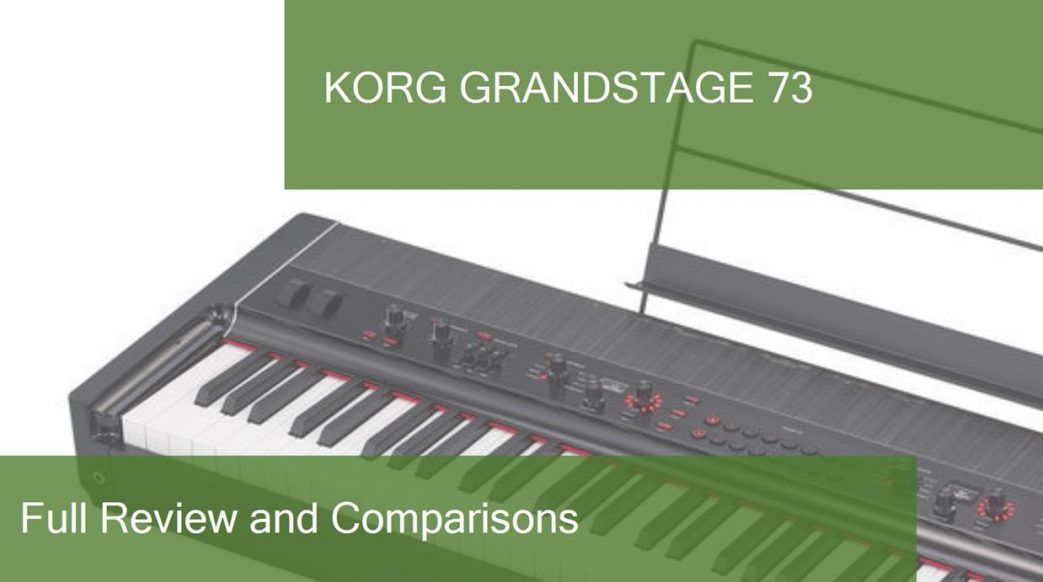
Digital Piano Korg Grandstage 73 Full Review. Is it a good choice?
Korg Grandstage 73 Review Complete Digital Piano. Is it a good choice?
Korg is a Japanese company of electronic musical instruments and guitar tuners. And this time we will analyze a very very powerful digital piano that competes with the CP4 and the all-powerful NORD. We are talking about the Korg Grandstage 73. It has a price of €1.599/$1999/£1,499 and the article is also very interesting:
- 73 weighted keys (Weight that the keys of an acoustic piano have and that digital pianos try to imitate to equal the touch of the piano. The keys in the high register are heavier and in the high register less. This is different from the sensitivity on the keyboard which serves to regulate the volume of the note. But a weighted keyboard always has sensitivity in the keys) with Real Weighted Hammer Action 3 touch and velocity sensitive technology
- It has five concert grand pianos and several upright pianos
- 128 notes of polyphony (Number of notes that can be played at once. This includes accompaniments that also consume notes. So if you play on top of an accompaniment more notes will be accumulated) maximum with 7 sound engines
- 500 sounds (Different sounds of piano and other instruments)
- 2 screens with OLED technology
- 3-band equalizer and 4 insertion effects
- Reverb Effects (Reverb Effect)
- Delay effects
- Split function (dividing the keyboard into two different instruments) and dual
- Modulation wheel
- Pitch bend wheel (Functionality that changes the sound wave of what you play and then returns to its original state)
- It includes a power cable and a music stand (Standard-M-SV)
- Includes ‘Damper’ pedal (DS-1H) which is a sustain pedal (The sustain pedal of a piano or keyboard is used to keep the note playing even if you stop pressing the key)
- 2 balanced Canon XLR stereo line outputs
- 2 line jack outputs
- Stereo headset jack output
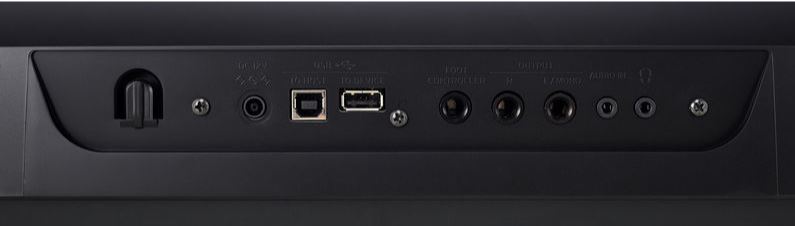
- It has tickets for Damper, Switch and Pedal
- USB-A input for pendrives
- USB midi (MIDI allows you to do such wonderful things as connect your keyboard to your computer, record a sound track and with certain programs click through what you’ve played to musical notes on a score. MIDI tracks store the information of the musical notes)
- A weight of 17 kg and dimensions of 1099 x 359 x 140mm
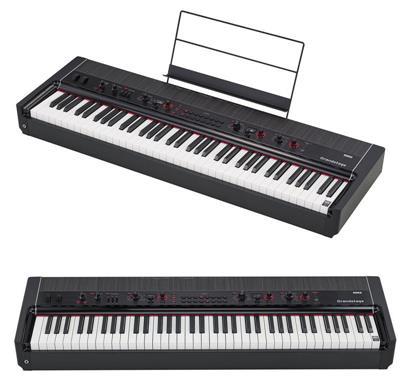
Now that we have listed and described the features of this keyboard there is no better way than to take a look at the following reviews where they tell us more about the Korg Grandstage 73 and you can hear how its different sounds sound.
Related post you can be interested in
- Ranking with the best digital pianos
- My selection of cheap musical keyboards.
- Basic concepts you need to know about digital pianos.
- The best resources to learn to play the piano by yourself.
- The best Kawai Digital Pianos.
Now let’s compare the Korg Grandstage 73 with its more common alternatives. Also at the end of the post you will find a section with the best shopping possibilities for this digital piano. But you can go directly to that part of the post by pressing the following button.
Korg Grandstage 73 vs Korg SV2 73
The first comparison will be of the following keyboards: the Korg Grandstage 73 keyboard which has a price of €1.599/$1999/£1,499 and the Korg SV2 73 with a price €1.799/$1899/£1,666, with a difference of €166 we will analyze the differences and similarities of the equipment:
- Both computers have 73 speed-sensitive and weighted keys. Let’s remember that sensitivity refers to the option or function of being able to make dynamics in our interpretations, that is to say, when we press a key with a higher sonorous force than another when we touch it with less force. Weighted keyboard refers to the weight that the keys have in a real acoustic piano, in the low range they are heavier keys while in the high range they are lighter keys.
- The Korg Grandstage offers 500 sounds, with 128 notes of polyphony with 7 sound engines. The Korg SV2 73 offers 74 preset sounds and 64 you could choose as your favorite, with 128 polyphony voices. Polyphony is the most notes that can dine at the same time on a computer.
- The functions that characterize the Korg Grandstage 73: 3-band equalizer and 4 insert effects, effects such as: Reverb, delay, split and dual function, modulation wheel and pitch bend. It also includes a sustain pedal.
- The functions that characterize the Korg SV2 73: Stereo Mastering Limiter, effects section with real tube circuit (which you normally see on guitar amps), Amp Simulation, and a lot of effects. Plus three pedal inputs.
- The Korg Grandstage 73 has 2 balanced Canon XLR stereo line outputs, 2 jack line outputs, and a stereo headphone jack output.
- The Korg SV2 73 has 2 balanced XLR line/unbalanced 6.3 mm jack outputs, 2 unbalanced 6.3 mm line jack inputs and Stereo Headphone Output.
- Both keyboards have a USB MIDI function, which allows them to be connected to a computer to be used as MIDI controllers in a music production and composition program.
- The Korg Grandstage 73 has a weight of 17 kg and dimensions of 1099 x 359 x 140mm and the Korg SV2 73 has a weight of 17.2 kg and dimensions of 1143 x 157 x 347 mm (W x H x D).
We have two fasting keyboards marked but for two purposes. The Korg Grandstage 73 really is a good stage keyboard given its many flaws and functions. The Korg SV2 73 although also a stage keyboard, has a vintage look and style, besides its functions it also reminds us of keyboards, synthesizers and organs from the 70’s onwards. According to your needs you will make the best decision.
We will put the characteristics of each of these pianos in 2 different columns to make it easier to see the differences:
|
Korg Grandstage 73 |
Korg SV2 73 |
|---|---|
|
|
And now a video of the Korg SV2 73
If you want to know more about this model don’t miss our review of the Korg SV1 73.
Korg Grandstage 73 vs Yamaha CP4 Stage
Now we will compare the following keyboards: the Korg Grandstage 73 keyboard which as we have already mentioned has a price of €1.599/$1999/£1,499 and the Yamaha CP4 Stage which has a price of €1500, we will see their differences and similarities in the next section:
- The Korg has 73 speed-sensitive and weighted keys. While the Yamaha has 88 keys with the same characteristics. Let’s remember that sensitivity refers to the option or function of being able to make dynamics in our interpretations, that is to say, when we press a key with a higher sonorous force than another when we play it with less force. Weighted keyboard refers to the weight that the keys have in a real acoustic piano, in the low range they are heavier keys while in the high range they are lighter keys.
- The Korg Grandstage offers 500 sounds, with 128 notes of polyphony with 7 sound engines. The Yamaha CP4 offers 433 preset sounds, with 128 polyphony voices. Polyphony is the most notes that can dine at the same time on a computer.
- The functions that characterize the Korg Grandstage 73: 3-band equalizer and 4 insert effects, effects such as: Reverb, delay, split and dual function, modulation wheel and pitch bend. It also includes a sustain pedal.
- The functions that characterize the Yamaha CP4: Pitch Bend and Modulation Wheels, 4 Zone Split Function, Dual or Layer Function and 11 different Effects.
- The Korg Grandstage 73 has 2 sustain pedal inputs included and 2 controller pedal inputs.
- The Yamaha CP4 has stereo line jack outputs and headphone output.
- Both keyboards have the USB MIDI function, which allows them to be connected to a computer to be used as MIDI controllers in a music production and composition program.
- The Korg Grandstage 73 has a weight of 17 kg and dimensions of 1099 x 359 x 140mm and the Yamaha CP4 73 has a weight of 17.5 kg and dimensions of 1332 x 161 x 352 mm.
Both interesting proposals in which it is proposed, for its part the Korg has 73 keys, 500 sounds with 128 notes of polyphony and 7 sound engines. And the Yamaha offers a keyboard with 88 wooden keys and 433 sounds with 128 polyphonic notes. Both are good options, but the measurements make a big difference. If you have little space, the Korg will help you more, or if you have some space left over and want to have a full keyboard, the Yamaha is for you.
We will put the characteristics of each of these pianos in 2 different columns to make it easier to see the differences:
|
Korg Grandstage 73 |
Yamaha CP4 Stage |
|---|---|
|
|
And now a video of the Yamaha CP4 Stage
If you want to know more about this model don’t miss our review of the Yamaha CP4 Stage
Korg Grandstage 73 vs Clavia Nord Piano 4
We will now have the following comparison of digital pianos: The Korg Grandstage 73 keyboard which as we mentioned before is priced at €1.599/$1999/£1,499 and the Clavia Nord Piano 4 which is currently priced at €2.399/$2999/£2,199, with a difference between them of €733. Let’s see then its face to face:
- The Korg has 73 speed-sensitive, weighted keys. While the Nord has 88 keys with the same features, sensitive and weighted.
- The Korg Grandstage offers 500 sounds, with 128 notes of polyphony with 7 sound engines. The Nord 1 Gb Storage for the Nord Piano Library and 512 Mb Storage for the Nord Sample Library, with 120 polyphony notes for the piano part and 30 polyphony notes for the synthesizer.
- The functions that characterize the Korg Grandstage 73: 3-band equalizer and 4 insert effects, effects such as: Reverb, delay, split and dual function, modulation wheel and pitch bend. It also includes a sustain pedal.
- The features that characterize the Clavia Nord Piano 4 are Numeric Pad Mode, Layer and Split Function, All Effects in Stereo and three types of Reverb Effects with Bright Option
- The Korg Grandstage 73 has 2 sustain pedal inputs included and 2 controller pedal inputs.
- The Nord has a mini-jack monitor input, 1 jack headset output and 1 jack input for the footswitch. Also a TRS Jack volume pedal input
- Both keyboards have the USB MIDI function, which allows them to be connected to a computer to be used as MIDI controllers in a music production and composition program.
- The Korg Grandstage 73 has a weight of 17 kg and dimensions of 1099 x 359 x 140mm and the Clavia Nord Piano 4 has a weight of 20 kg and dimensions of 1287 x 121 x 340 mm.
We found good equipment for what they were created for, stage pianos. As in the last comparison the measurements are somewhat relevant, however the North offers many more functions and sounds than the Korg, not for nothing this together with other models of the brand are popular among professional musicians. It is really worth going to the other level, if you have the budget to do it.
We will put the characteristics of each of these pianos in 2 different columns to make it easier to see the differences:
|
Korg Grandstage 73 |
Clavia Nord Piano 4 |
|---|---|
|
|
And now a video of the Clavia Nord Piano 4:
If you want to know more about this model don’t miss our review of the Clavia Nord Piano 4.
Korg Grandstage 73 vs Roland RD-2000
This time we will buy the following digital pianos: The Korg Grandstage 73 keyboard which is priced at €1.599/$1999/£1,499 and the Roland RD-2000 which is currently priced at €2.290/$2599/£2,090, giving a difference of €624. We will see their similarities and differences in the next section:
- The Korg has 73 speed-sensitive, weighted keys. While the Roland has 88 keys with the same sensitive and weighted keyboard features of hybrid wood-plastic construction, which are of great quality.
- The Korg Grandstage 73 offers 500 sounds, with 128 polyphonic notes with 7 sound motors. The Roland offers 1113 sounds, with 128 notes of polyphony.
- The functions that characterize the Korg Grandstage 73: 3-band equalizer and 4 insertion effects, effects such as: Reverb, delay, split and dual function, modulation wheel and pitch bend. It also includes a sustain pedal.
- The functions that characterize the Roland RD-2000 are Eight knob controls and nine slide controls, you can also split into eight different zones, layer function.
- The Korg Grandstage 73 has 2 sustain pedal inputs that are included and 2 inputs for controller pedals.
- The Roland has Stereo Line Output Jack and XLR, Stereo Mini-Jack Input and Stereo Headset Output Jack.
- Both keyboards have a USB MIDI function, which allows them to be connected to a computer to be used as MIDI controllers in a music production and composition program.
- The Korg Grandstage 73 has a weight of 17 kg and dimensions of 1099 x 359 x 140mm and the Roland RD-2000 has a weight of 21.7 kg and dimensions of 1412 x 367 x 140mm (width x depth x height).
We can see that the Roland is a winner in many aspects, such as the amount of sounds, many physical controls that allow the use of the different functions that the keyboard has. But as we have also commented in previous comparisons, the width measurements are revealing with 73 and 88-key keyboards. Surely with this face-to-face you know what you need best.
We will put the characteristics of each of these pianos in 2 different columns to make it easier to see the differences:
|
Korg Grandstage 73 |
Roland RD-2000 |
|---|---|
|
|
And now a video of the Roland RD-2000
If you want to know more about this model don’t miss our review of the Roland RD-2000
Korg Grandstage 73 vs Yamaha CP73
Finally we will look at the following digital pianos: The Korg Grandstage 73 keyboard with a price of €1.599/$1999/£1,499 and the Yamaha CP73 which is priced at €1.644/$1999/£1,499 , with a small difference of only about €20, will be a more than interesting face-to-face. Let’s get to it:
- Both units have 73 speed-sensitive and weighted keys.
- The Korg Grandstage offers 500 sounds, with 128 notes of polyphony with 7 sound motors. The Yamaha CP73 offers 80 sounds, with 128 polyphony voices.
- The functions that characterize the Korg Grandstage 73: 3-band equalizer and 4 insertion effects, effects such as: Reverb, delay, split and dual function, modulation wheel and pitch bend. It also includes a sustain pedal.
- The functions that characterize the Yamaha CP73 : Seamless Sound Switching, All the functions with direct access, optimized for musicians of stage, a great amount of effects and two entrances of pedals.
- The Korg Grandstage 73 has 2 balanced Canon XLR stereo line outputs, 2 jack line outputs and Stereo Headphone Jack Output.
- The Yamaha CP73 has Stereo Output (6.3mm jack and XLR), Stereo Headphone Output (6.3mm jack) and External Stereo Input (6.3mm jack).
- Both keyboards have a USB MIDI function, which allows them to be connected to a computer to be used as MIDI controllers in a music production and composition program.
- The Korg Grandstage 73 weighs 17 kg and measures 1099 x 359 x 140 mm, and the Yamaha CP73 weighs 13.1 kg and measures (W x D x H) 1086 x 355 x 144 mm.
We find two interesting proposals for digital stage pianos. On the one hand, the Korg, which as we mentioned before has a great amount of sounds and functions relevant for a stage piano, now we also find Yamaha, which has high quality sounds and a function that I think is essential in a digital stage piano, the SSS, Seamless Sound Switching, so that you can have a better performance on stage. You always have the last decision, we advise you to watch the videos and listen to the sounds with a quality audio equipment.
We will put the characteristics of each of these pianos in 2 different columns to make it easier to see the differences:
|
Korg Grandstage 73 |
Yamaha CP73 |
|---|---|
|
|
And now a video of the Yamaha CP73:
Where to buy Korg Grandstage 73
Amazon
- Free Shipping and possibility of shipping in one day with Amazon Premium.
- Full Guarantee but they are no experts in music equipment.
- Sometimes better price.
- He’s got worse stock than Thomann.
Thomann
- Free Shipping.
- Full warranty. If you have any problems, they take care of everything.
- 100% reliable payment.
- Leader in trouble-free shipping.
- Usually Best price.
- Best Reputation: They are the leading online store in Europe and have the best catalogue and information.
Check below related models with similar price and features:
- Roland FP 60
- Yamaha P515
- Yamaha YDP 164
- Roland FP 90
- Korg G1 Air
- Casio PX 560
- Roland Kiyola KF 10
- Korg PA 1000
- Korg PA 700 Oriental
- Yamaha PSR S975
- Korg Havian 30
- Korg PA 700
- Kawai EN 8
- Kawai MP 11
- Kawai MP 7
- Clavia Nord Electro 6D 61
- Clavia Nord Stage 3 88
- Kurzweil SP6
- Korg SV1 73
- Kurzweil Forte 8
- Clavia Nord Electro 6D 73
- Clavia Nord Stage 3 HP76
- Roland RD 2000
- Kurzweil Artis 7
- Clavia Nord Piano 4
- Clavia Nord Stage 3 compact
- Crumar Seven
- Clavia Nord Electro 6
- Korg Grandstage 73
- Dexibell Vivo Stage S9
- Dexibell Vivo Stage S1
- Korg SV1 88
- Korg Grandstage 88
- Kurzweil Forte SE
- Yamaha CP88
- Roland VR 730
- Studiologic Numa Concert
- Yamaha CP73
- Dexibell Vivo Stage S7
- Yamaha CP300
- Yamaha CP1
- Clavia Nord Grand
- Viscount Physis Piano K4 EX
- Viscount Physis Piano K5 EX
- Dexibell Vivo Portable P7
- Kurzweil Artis
- Dexibell Vivo Portable P3
- Dexibell Vivo Stage S3
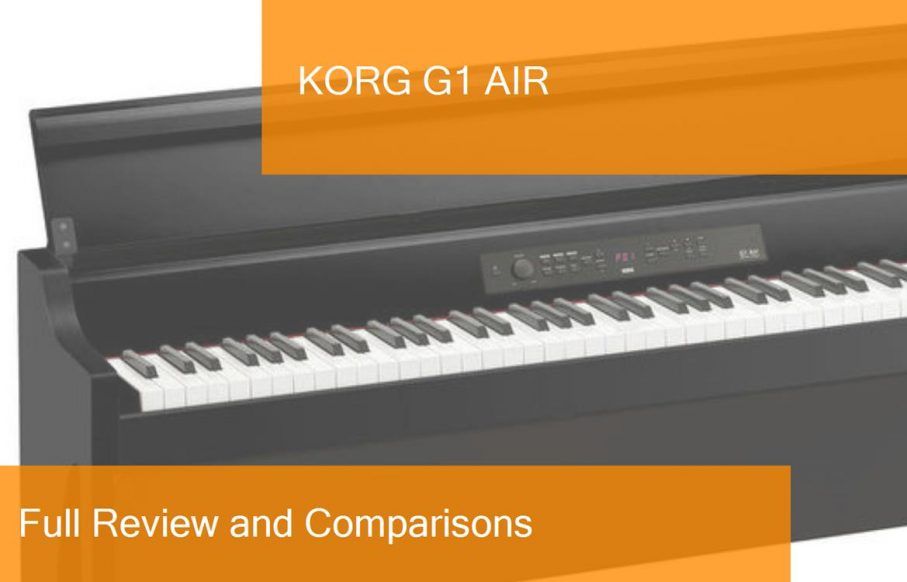
Digital Piano Korg G1 Air Full Review. Is it a good choice?
Review and Opinion of the Korg G1 Air and Where to Buy it
Korg is a Japanese company that makes electronic musical instruments and guitar tuners. Today we will analyze one of their digital wall pianos, the Korg G1 Air, with a price of €1239/£1,145. It sets a new standard in the world of digital pianos. We will look at all the functions and features of this great instrument:
- 88 weighted keys (Weight that the keys of an acoustic piano have and that digital pianos try to imitate to equal the touch of the piano. The keys in the high register are heavier and in the high register less. This is different from the sensitivity on the keyboard which serves to regulate the volume of the note. But a weighted keyboard always has sensitivity in the keys) with RH3 technology
- 29 sounds (Various piano and other instrument sounds) for piano and 3 sounds (Various piano and other instrument sounds) for bass
- 120 notes of polyphony (Number of notes that can be played at once. This includes accompaniments that also consume notes. So if you play on top of an accompaniment more notes will be accumulated)
- 50 demo songs
- Damper resonance to improve the feel of the real piano
- Simulates string resonance
- Simulation of double exhaust
- Transposition function (Transposition allows you to move the note spectrum of a keyboard. This is to be able to play with transposing instruments. It is not an easy concept but it is made to facilitate the writing of an orchestration for instruments with very different bass and treble registers)
- Brilliance Effect
- Reverb effect (Reverb effect)
- Chorus effect
- Metronome (Basic study element to study and practice the tempo of a piece of music)
- Dual mode (Dual mode allows you to combine two sounds to create a more complete one. Typical is the combination of piano + string sound)
- Split function (dividing the keyboard into two different instruments)
- 2 track recorder with a maximum of 45,000 notes)
- Integrated triple footswitch
- Line out, USB, Bluetooth (A2DP Sink)
- Midi input and output (MIDI allows you to do such wonderful things as connect your keyboard to your computer, record a sound track and with certain programs pass with a click what you have played to musical notes on a score. MIDI tracks store the information of the musical notes)
- 2 headphone outputs for Duo Mode (Duo Mode allows the keyboard to be divided into two pianos so that four hands can be played or the teacher and student can play on the same keyboard)
- Keyboard cover with soft drop
- 2 super powerful 20 W speakers
- A weight of 41 kg and dimensions of 1346 x 384 x 985mm (width x depth x height)

One of the most relevant characteristics of this digital piano are its samples of the three pianos we have mentioned: German (rich and powerful sound), Austrian (warm and colourful sound) and Japanese (lively and dynamic sound). What have been recorded and sampled in such a detailed way, that they can differentiate between a delicate Pianíssimo versus a powerful one. We also have a string resonance simulation and a damping resonance and a Key-Off function to simulate when the player takes his finger off a piano key. We will talk about your keyboard later after the first comparison.
Now that we have listed and described the features of this keyboard there is no better way than to take a look at the following videos where they tell us more about the Korg G1 Air and you can hear how its different sounds sound in the second video especially as it goes through all of them.
Related post you can be interested in
- Ranking with the best digital pianos
- My selection of cheap musical keyboards.
- Basic concepts you need to know about digital pianos.
- The best resources to learn to play the piano by yourself.
Now let’s compare the Korg G1 Air with its more common alternatives. Also at the end of the post you will find a section with the best shopping possibilities for this digital piano. But you can go directly to that part of the post by pressing the following button.
Korg G1 Air vs Korg C1 Air
First we will make a comparison between two Korg digital pianos: the Korg G1 Air which is priced at €1239/£1,145 and the Korg C1 Air which is priced at €835/$1500/£769. With a difference of £400, we will see what their differences and similarities are by putting the faces with their features:
- Both digital pianos, have 88 weighted keys with RH3 technology, which imitates the hammer action of a real acoustic piano (we’ll have a video later to analyze this more specifically). Weighted keyboard, is the weight that the keys of real acoustic pianos have, in the bass register heavier while in the treble register lighter.
- Both keyboards have sensitivity. Sensitivity refers to the option of making dynamics in interpretations, i.e. when a key is pressed with force it sounds louder and when a key is pressed with less force it sounds lower.
- The G1 Air has 29 instrument sounds and three piano sounds, and the Korg C1 Air has 30 sounds, including two piano sounds. Both offer 120 notes of polyphony, which is the most notes that can be played simultaneously.
- Both have effects like Reverb, Chorus and Brillance. Also triple pedalboard, they accept half pedalboard. They have a two-track recorder, the G1 Air with a maximum of 45,000 notes and the C1 Air with a maximum of 14,000 notes.
- Both also have line output and Bluetooth. In addition to MIDI input and output. So they can be connected to a computer to be used as a MIDI controller in a music composition or production program.
- The G1 has 4 x 20W speakers with a total of 80W and the C1 has 2 x 25W speakers with a total of 50W.
- In terms of weight and dimensions, the G1 Air has a weight of 41 kg and dimensions of 1346 × 384 × 985 mm (width X depth X height), the C1 Air has a weight of 35 kg and dimensions of 1346 × 343 × 770 mm (width X depth X height).
As can be seen in the face-to-face they are very similar digital pianos with certain differences in the capacity of their functions, although in general they are the same. However in the G1 we find one more piano sound, more power and two more speakers, AND a recorder with more MIDI storage. To differentiate their sounds below you have a video comparison between both equipments.
We will put the characteristics of each of these pianos in 2 different columns to make it easier to see the differences:
|
Korg G1 Air |
Korg C1 Air |
|---|---|
|
|
Let’s see a video of how Korg’s RH3 technology works, which has a graduated hammer system with different colors, weights and thicknesses. In the low range, we find red hammers that are large and heavy, simulating the longest and thickest strings in a real acoustic piano. In this way they become lighter and lighter in the mid-bass range (blue color), mid-treble range (green color), and we reach the treble range where we find yellow hammers that are small and light simulating the shorter and thinner strings in a real acoustic piano.
Video comparison of the C1 Air and G1 Air, where the sound comparison between the devices is shown. The C1 Air has two samples of real acoustic pianos and a totally Japanese manufacture, that is to say of a higher quality. The G1 Air offers three piano samples, giving it a significant advantage over the C1. If you want more sound and space for MIDI recording
And now a video of the Korg C1 Air
If you want to know more about this model don’t miss our review of the Korg C1 Air.
Korg G1 Air BR vs Kawai CN-29
Now we will have the comparison between the following keyboards: the Korg G1 Air with a price of €1239/£1,145 and the Kawai CN29 with a price of €1.259/£1,177, having such a small difference it will be very worthwhile to review the functions and features that both equipments offer us, let’s see their face to face:
- Both keyboards offer 88 weighted keys with their respective technologies, the Korg with its RH3 and the Kawai with its Hammer III. Let’s remember that weighted keyboard means the weight that the keys of a digital piano have to simulate those of a real acoustic piano. In the heavier bass register and in the lighter treble register.
- Come on keyboards offer sensitivity, a function that allows to make dynamics in the interpretations, that is to say that when a stronger key is played it sounds higher and when another one is played with less force it sounds lower.
- The Korg offers 29 piano sounds and three bass sounds along with 120 notes of polyphony, while the Kawai offers 19 sounds and 192 notes of polyphony. Polyphony is the most notes that can be played at the same time.
- Both have effects like Reverb, Chorus and Brillance. In addition triple pedalboard, accept half pedal. They have an engraving, the 3 track Korg with a maximum of 45,000 notes and the 3 track Kawai with a maximum of 10,000 notes.
- Both also have line output and Bluetooth. In addition to MIDI input and output. So they can be connected to a computer to be used as a MIDI controller in a music composition or production program. The Kawai also has the option of Bluetooth MIDI to connect to a computer without cables, an excellent option for a recording studio.
- Both have 20W speakers.
- In terms of weight and dimensions, the Korg weighs 41 kg and has dimensions of 1346 × 384 × 985 mm (WxDxH), the Kawai weighs 43 kg and has dimensions of 1360 × 405 × 860 mm (WxDxH).
They are two very similar digital pianos, having very similar characteristics with slight differences such as the amount of sounds they offer and their different polyphonies as well as the amount of MIDI notes they can record. The best thing would be to be guided by their sound quality and thanks to the videos you can do it, try to use a good pair of headphones or monitors to have a better definition in the listening.
We will put the characteristics of each of these pianos in 2 different columns to make it easier to see the differences:
|
Korg G1 Air |
Kawai CN-29 |
|---|---|
|
|
First a video of the different technologies offered in the Kawai keyboards, which among them is the RH3, which includes the following features: synthetic ivory touch, counterweights, Key-Off simulation, 3 sensors and hammer system.
And now a video review and demo of the Kawai CN-29:
If you want to know more about this model don’t miss our review of the Kawai CN-29.
Korg G1 Air vs Roland FP-60
We will finish with the comparison of the digital pianos, the Korg G1 Air at a price of €1239/£1,145 and the Roland FP 60 at a price of €1.329/$1500/£1,199. With a difference of almost £100 we will make a comparison of both with their respective functions and features:
- Both digital pianos have 88 weighted keys, the Korg with its RH3 technology and the Roland with its PHA-4 technology, which we will analyze later in a video that we will post. Both have sensitivity in their keys.
- The Korg G1 Air has 29 piano sounds and three bass sounds and offers 120 notes of polyphony. The Roland FP 60 has about 351 sounds, including acoustic pianos, electric pianos, strings, organs, Pats and other areas with a polyphony of 288 notes. Remember that polyphony is the highest number of notes that can be played simultaneously on a computer. In this section we note that the Roland has a greater advantage, thanks to the greater number of sounds as well as greater polyphony between its notes.
- The Korg has effects like: Reverb, Chorus and Brillance, while the Roland has general effects like: Ambience and Master EQ and specific effects for organ tones like the rotary speaker (Leslie), effects for electronic piano tones like modulation speed.
- In addition triple pedalboard, accept half pedal. They have a recorder, the Korg 3 track with a maximum of 45,000 notes and the Roland does not specify a maximum number of tracks, however in total they should not exceed 70,000 notes. The Roland can also record audio files in WAV format, a function that requires a USB flash memory.
- The Korg offers four powerful 20W speakers, for a total of 80W, and the Roland offers two 13W speakers, for a total of 26W. Where the Korg has a much higher power.
- In weight and measurements, the Korg weighs 41 kg and has dimensions of 1346 × 384 × 985 mm (width X depth X height) and the Roland weighs 19 kg, making it a very portable digital piano with dimensions of 1291 × 344 × 125 mm (width X depth X height).
As we see the Roland has advantages over the Korg, starting with the amount of sounds and polyphony of notes, also having more exotic sound effects such as rotary speaker (Leslie), also the function to record audio in WAV format, the weight of the Roland is much lower reaching 19 kilos which makes it a very portable digital piano. One of its disadvantages is the power that compared to the Korg is much lower.
We will put the characteristics of each of these pianos in 2 different columns to make it easier to see the differences:
|
Korg G1 Air |
Roland FP60 |
|---|---|
|
|
Explanatory video about the PH4 technology of Roland pianos, where we can see the operation of the hammer system that has the Roland brand, which has a simulation of the leakage of real acoustic pianos when the hammer falls after hitting a note. That also offering its simulation of synthetic ivory touch, creates a great feeling as if it were a real acoustic piano.
And now a video of the Roland FP60:
If you want to know more about this model don’t miss our review of the Roland FP60.
Where to buy Korg G1 Air
Thomann
- Free Shipping.
- Full warranty. If you have any problems, they take care of everything.
- 100% reliable payment.
- Leader in trouble-free shipping.
- Usually Best price.
- Best Reputation: They are the leading online store in Europe and have the best catalogue and information.
Amazon
- Free Shipping and possibility of shipping in one day with Amazon Premium.
- Full Guarantee but they are no experts in music equipment.
- Sometimes better price.
- He’s got worse stock than Thomann.
Check below related models with similar price and features:
- Roland FP 60
- Yamaha P515
- Yamaha YDP 164
- Roland FP 90
- Korg G1 Air
- Casio PX 560
- Roland Kiyola KF 10
- Korg PA 1000
- Korg PA 700 Oriental
- Kawai MP 11
- Yamaha PSR S975
- Korg Havian 30
- Korg PA 700
- Kawai EN 8
- Kawai MP 7
- Clavia Nord Electro 6D 61
- Clavia Nord Stage 3 88
- Kurzweil SP6
- Korg SV1 73
- Kurzweil Forte 8
- Clavia Nord Electro 6D 73
- Clavia Nord Stage 3 HP76
- Roland RD 2000
- Kurzweil Artis 7
- Clavia Nord Piano 4
- Clavia Nord Stage 3 compact
- Crumar Seven
- Clavia Nord Electro 6
- Korg Grandstage 73
- Dexibell Vivo Stage S9
- Dexibell Vivo Stage S1
- Korg SV1 88
- Korg Grandstage 88
- Kurzweil Forte SE
- Yamaha CP88
- Roland VR 730
- Studiologic Numa Concert
- Yamaha CP73
- Dexibell Vivo Stage S7
- Yamaha CP300
- Yamaha CP1
- Clavia Nord Grand
- Viscount Physis Piano K4 EX
- Viscount Physis Piano K5 EX
- Dexibell Vivo Portable P7
- Kurzweil Artis
- Dexibell Vivo Portable P3
- Dexibell Vivo Stage S3

Digital Piano Korg EK-50 Full Review. Is it a good one?
Review Piano Digital Korg EK-50. It is a good choice?
Korg is a Japanese company of electronic musical instruments and guitar tuners. Now we’ll review a very popular keyboard which price is usually around €294/$450/£272. We’ll check its features which I think make this keyboard a very interesting option as a portable keyboard:
- 61 Sensitive keys (You can adjust the volume of the note depending on how you press it. And it is different from the counterbalance that is the weight of the keys on a piano) to the touch
- Illuminated controls
- 700 sounds (Different sounds of piano and other instruments)
- 280 styles (Accompanying styles that adapt to the chords we are playing. For example, you will have a bass and drums that will adapt and synchronize with the notes we are playing on the keyboard)
- Midi-format music player (MIDI allows you to do such wonderful things as connect your keyboard to your computer, record a sound track and with certain programs click through what you’ve played to musical notes on a score. MIDI tracks store the information of the musical notes), MP3 and WAV.
- USB to HOST. Which is actually a USB MIDI output (MIDI allows you to do such wonderful things as connect your keyboard to your computer, record a sound track and with certain programs pass what you’ve played to musical notes on a score with a click. MIDI tracks store the information of the musical notes)
- 2 very powerful 10 W speakers
- Programmable set list
- 64 notes of polyphony (Number of notes that can be played at once. This includes accompaniments that also consume notes. So if you play on top of an accompaniment more notes will be accumulated)
- Connections: Line out, USB for a pendrive, headphones and audio input for a player
- Sustain pedal input not included (The sustain pedal on a piano or keyboard is used to keep the note playing even if you stop pressing the key)
- Possibility to operate with batteries up to 5 hours
- Sound Recorder
- Upgradeable operating system
- Weight 7.5 kg and dimensions 994 x 392 x 132 mm

It’s good for learning piano, but you’ll get more out of it if you’re at an intermediate level and want to play away from home and go to music rehearsals with friends. It has an output line to play in big concerts. So it can be used by professionals on a budget.
Now that we have seen the features of this Korg EK-50 piano look at these related videos to learn more.
Related post you can be interested in
- Ranking with the best digital pianos
- My selection of cheap musical keyboards.
- Basic concepts you need to know about digital pianos.
- The best resources to learn to play the piano by yourself.
- The best Kawai Digital Pianos.
Korg EK-50 vs Korg EK-50L
We will first compare the Korg EK-50 with its brother the same model Korg EK-50L but the Limitless version, which almost doubles its price, being the EK50 €294/$450/£272 and the EK50L €541/£499. We will see their main differences in the next section:
- Sounds: 790 sounds, 59 drum kits (including GM compatible sound sets)
- Styles: 290 presets 2 intros, 4 variations, 2 fills, 1 countdown/break, 2 endings, syncro start/stop, tap tempo
- Demo songs 19 songs
- Amplification Speaker System: 10 W x 2.
The EK-50 L offers unlimited enjoyment and best-in-class sound, with immediacy and ease of use. It also has the same great features, but twice the speaker power. It has a specially designed speaker system that is capable of delivering twice the volume of the EK-50, so you don’t have to rely on an amplification system. Like the EK-50, it can be battery operated, so it’s easy to take it with you wherever you go.
In addition to the wide range of sounds already present in the EK-50, the EK-50 L adds new sounds and accompaniment styles. We now have 87 new preset sounds, 18 preset drum kits and 24 keyboard sets that combine four parts each. These additions complement the EK-50 presets to make more sounds available. Ten accompaniment pattern styles are also added. So it’s worth the price increase.
Let’s put the features of these pianos in a table so you can compare
|
Korg EK-50 |
Korg EK-50L |
|---|---|
|
|
And here’s a video comparing the two:
Korg EK-50 vs Yamaha PSR E463
The Korg EK-50 Keyboard is €294/$450/£272 and the Yamaha PSR-E463 is €285/$299/£259 , but the difference is so small that this may vary.
They are very similar keyboards that compete in the same range of functions although there are factors that make me like the Korg more. Both can be battery operated and are very portable.
Both come with lots of sounds and effects so it doesn’t matter which one you choose. You’ll always have sounds to spare.
Both have MIDI, sustain pedal input and sensitive keyboard. So they are both the same but the Korg has a slot for a USB stick which is always very useful.
The Yamaha PSR 463 is a little lighter. This is important if you’re going to transport it. But what makes me recommend the Korg most are the following factors:
- Concert line departure
- Much more powerful speakers
Let’s put the characteristics of these pianos on a chart so you can compare
|
Korg EK-50 |
Yamaha PSR-E463 |
|---|---|
|
|
And here’s a video of the Yamaha PSR-E463 digital piano:
If you want to know more about this option click on the following link to see the Yamaha PSR-E463 review digital piano
Korg EK-50 vs Casio CT-X5000
The Korg EK-50 Keyboard is usually 60 euros cheaper than the Casio CT-X5000, which is around €359/$450/£329 price.
In this case the decision is not so easy. In terms of sound and possibilities, the Casio CT X5000 has more sounds and more possibilities for interpretation because of its 4-stage pads. The 100 arpeggio types, etc
The Casio also has line output and even more powerful speakers.
If you have the money, the Casio is better because it has more recording possibilities. More features that help you configure your keyboard better. More configurable pads, etc
If you’re going to take your keyboard with you wherever there’s an electrical connection, the Casio CTX 5000 is well worth the effort. But if you’re on a tighter budget and want to play on the street, the Korg EK 50 is the perfect choice.
Let’s put the features of these pianos on a chart so you can compare
|
Korg EK-50 |
Casio CT-X5000 |
|---|---|
|
Note: Battery operation is not possible |
And here’s a video of the Casio CT-X5000 digital piano
If you want to know more about this option, click on the following link to see the Casio CT-X5000 review digital piano
Korg EK-50 vs Yamaha PSR-EW410
The Korg EK-50 Keyboard is usually €90 cheaper than the Yamaha PSR-EW410, which is around €385/$430/£349.
In this case it’s a bit like the previous one. The Yamaha PSR EW 410 also has a line output so if we are professionals on a budget the Yamaha can be a good choice.
If you come from the acoustic piano and want a better real piano feeling the sensitivity of the Yamaha PSR EW 410 is better than the Korg EK 50.
The polyphony of the Yamaha PSR EW410 has a lack of polyphony in the 48-notes. The PSR EW 410 is very popular because its sound possibilities. I like its sounds better than those of the Korg. On the other hand as you will see in the charts it has more functions and a sequencer.
As in the previous case if you have less budget and need to play on the street the Korg EK 50 is the choice. But if you want better sounds and a more sensitive key, the Yamaha PSR EW 410 is the best choice we have seen so far.
Let’s put the characteristics of these pianos on a chart so you can compare
|
Korg EK-50 |
Yamaha PSR-EW410 |
|---|---|
|
|
And here’s a video of the Yamaha PSR-EW410 digital piano
If you want to know more about this option click on the following link to see the Yamaha PSR-EW410 review digital piano
Korg EK-50 vs Roland GO KEYS
The Korg EK-50 Keyboard is usually £14 more expensive than the Roland GO:KEYS which is around €280/$325/£259, but the difference is so small that this can vary.
The Rolland Go Keys is a keyboard with a sensitivity in the keys very achieved by its price and has very good sound. The truth is that for the same price I like more its sounds and how you can play with its pads (watch video). The Roland go keys also weighs only 4 kilograms. Which is great if you want to move it by public transport.
It’s a pity but what is wrong with the Roland is the speakers because the Korg EK speakers are much more powerful.
The Roland has many more sound effects but the speakers are a pity. The Roland has no line output.
If you want to play in big concerts and be able to play anywhere the Korg EK 50 is the perfect choice. If you want to play at home or you can connect it to amplification equipment with the headphone output (no problem if the amplification equipment is medium or small power) I like the Roland Go Keys more for the quality of its keys and all the extras it brings.
Let’s put the characteristics of these pianos in a table so you can compare
|
Korg EK-50 |
Roland GO:KEYS |
|---|---|
|
|
And here’s a video of the Roland GO:KEYS digital piano
If you want to know more about this option, click on the following link to see the Roland GO:KEYS review digital piano
Where to buy Korg EK-50
Amazon
- Free Shipping and possibility of shipping in one day with Amazon Premium.
- Full Guarantee but they are no experts in music equipment.
- Sometimes better price.
- He’s got worse stock than Thomann.
Thomann
- Best option to buy it at Europe
- Free Shipping.
- Full warranty. If you have any problems, they take care of everything.
- 100% reliable payment.
- Leader in trouble-free shipping.
- Usually Best price.
- Best Reputation: They are the leading online store in Europe and have the best catalogue and information.
Check below related models with similar price and features:
- Thomann SP 5600
- Yamaha YDP 143
- Roland FP 30
- Yamaha YDP 163
- Yamaha YDP S52
- Hemingway DP 201 MKII
- Casio PX S1000
- Thomann DP 33
- Casio PX S3000
- Casio PX 870
- Yamaha YDP S54
- Yamaha YDP 144
- Korg C1 Air
- Yamaha PSR S775
- Casio CDP S350
- Thomann DP 32
- Yamaha YDP S34
- Korg LP 180
- Korg PA 600
- Casio CT X5000
- Yamaha DGX 660
- Korg LP 380
- Yamaha PSR EW410
- Roland 5
- Casio CT X3000
- Yamaha PSR A350
- Casio WK 7600
- Casio WK 6600
- Yamaha P45
- Korg B1
- Yamaha P125
- Kawai ES 110
- Alesis Recital Pro
- Kurzweil SPS4 8
- Roland FP 10
- Korg D1
- Yamaha PSR S670
- Studiologic Numa Compact 2
- Korg SP 280
- Yamaha P121
- Studiologic Numa Compact 2x
- Roland GO PIANO 88
- Studiologic Numa Stage