
- Home
- Author's Archive:

Digital Piano Korg LP 180 Full Review. Is it a good choice?
Digital Piano Korg LP 180 Full Review. Is it a good choice?
Korg has long been one of the best digital piano makers in Europe, catching up with giants like Yamaha. Their pianos are aimed at a professional audience both in studio and live performances. Today er will give you a skillful and brief review of this digital piano brought by Korg.
Features
- 88 Keys keyboard with Hammer Action (The weight of the keys on an acoustic piano that digital pianos try to imitate to match the touch of a real acoustic piano. The keys in the high register are heavier and in the high register less. This is a different concept of sensitivity on the keyboard that serves to regulate the volume of the note. But a hammer action keyboard always has sensitivity on the keys.)
- 3 Touch curve
- 10 Sounds (Different sounds of piano and other instruments)
- 120-Voice polyphony (Number of notes that can sound at once. This includes songs that sound at once. So if you play over an accompaniment sound, more notes will accumulate.)
- 10 Demo songs
- reverb (Reverberation effect which is a reflection effect of the sound) effect
- chorus (Effect of touching in places similar to a church or cathedral) effect
- Triple pedal (The most important pedal of a piano or keyboard is the sustain pedal and is used to keep the note playing even if you stop pressing the key.)
- 2 Headphone outputs for Duet mode (Duet mode allows you to divide the keyboard into two pianos to play four hands or the teacher and student on the same keyboard.)
- Standar midi (MIDI allows you to do such wonderful things as connect the keyboard to the computer, record a soundtrack and with certain programs pass with a click what you have played to musical notes in a score. MIDI tracks store information from musical notes) out
- Speaker system with two x 11 W
- Incl. power supply, stand ans music rest
- Sustain pedal included in triple pedal unit
- Dimensions (LxWxH): 1365 × 274 × 781 mm and a weight of 23.3 kg

Now that we’ve listed and described the features of this digital piano there’s no better than taking a look at the following video where they tell us more about the Korg LP 180 and you can hear the different sounds of this piano.
Related post you can be interested in
- Ranking with the best digital pianos
- My selection of cheap musical keyboards.
- Basic concepts you need to know about digital pianos.
- The best resources to learn to play the piano by yourself.
- The best Kawai Digital Pianos.
Now let’s compare the Korg LP 180 with its more common alternatives. Also at the end of the post you will find a section with the best shopping possibilities for this digital piano. But you can go directly to that part of the post by pressing the following button.
Korg LP 180 vs Korg SP 280
Comparing it with previous models the Korg LP 180 stands out for emphasizing its functions and improving them much without increasing too much the price and is that to comparison of its predecessor the Korg SP 280 a superior piano at the time of making live presentations and in recording in studios.
The Korg model LP 180 has 88 keys with a hammer function with 3 touch curves, 10 sounds, 120 polyphonic voices, 10 demo songs, reverb effects plus chorus, integrating also a trple pedal and standard MIDI ports including high generation speakers.
On the other hand the Korg SP 280 has the same number of keys (88 with hammer action), plus three levels available for the weight of the keys, 120 polyphonic voices, 30 sounds, transposer, effects like reverb, chorus and including a battery that allows you to use it without being connected.
The digital piano Korg LP 180 is usually about 44 € more expensive than Korg SP 280, but with so little price difference this can vary.
Let’s put the features of each of these pianos in 2 different columns to make it easier to see the differences
|
Korg LP 180 |
Korg SP 280 |
|---|---|
|
|
And below a video of the Korg SP 280
If you want to know more about this model do not miss our Korg SP 280 review
Korg LP 180 vs Korg C1 Air
The Korg C1 Air model is made in such a way that it is an easy piano to carry and easy for live presentations sacrificing some functions such as reverb and chorus effects and also sacrificing a little the triple pedals that if it has the LP 180 model, taking into account that it has a much lower price than its competitor.
The Korg C1 Air model has 88 heavy keys with hammer action function, having also 120 polyphonic voices, 30 sounds, effects like Hall, chorus or brilliance, metronome, connections for external lines, midi format and two connections for headphones in duet mode, bluetooth as well as two powerful 25w speakers.
The digital piano Korg LP 180 is usually about 250 € cheaper than Korg C1 Air.
Let’s put the features of each of these pianos in 2 different columns to make it easier to see the differences
|
Korg LP 180 |
Korg C1 Air |
|---|---|
|
|
And below a video of the Korg C1 Air
If you want to know more about this model do not miss our Korg C1 Air review
Korg LP 180 vs Yamaha YDP 143
The Korg LP 180 shows that even with mid-range pianos can compete with Yamaha and its model YDP 143 dedicated to live presentations, having functions like triple pedals and also auxiliary MIDI inputs that puts the KORG LP 180 as a piano ahead if we consider the price of its competitor.
The Yamaha YDP has a GHS keyboard with 88 heavy keys and hammer action, a CF sound engine, intelligent acoustic control and acoustic optimizer, stereo optimizer, 192 polyphonic voices, 10 sounds, reverb and dumper resonance effects, dual function and four hands for duets, recording function, 50 preset songs, possibility to connect via USB and two 6 watt speakers.
The digital piano Korg LP 180 is usually about 146 € cheaper than Yamaha YDP 143.
Let’s put the features of each of these pianos in 2 different columns to make it easier to see the differences
|
Korg LP 180 |
Yamaha YDP 143 |
|---|---|
|
|
And below a video of the Yamaha YDP 143
If you want to know more about this model do not miss our Yamaha YDP 143 review
Korg LP 180 vs Korg LP 380
A superior model that innovates in several functions such as the integration of sensitive curves and many more sounds in the piano at a considerably higher price.
The Korg LP 380 model has 88 sensitive keys, with up to 3 sensitivity curves, 30 sounds plus 120 polyphonic voices, 30 demo songs, transposer, reverb effects, chorus, triple pedal, metronome, a line to connect to the amplifier, a MIDI output and 22W high quality speakers.
The digital piano Korg LP 180 is usually about 100 € cheaper than Korg LP 380.
Let’s put the features of each of these pianos in 2 different columns to make it easier to see the differences
|
Korg LP 180 |
Korg LP 380 |
|---|---|
|
|
And below a video of the Korg LP 380
If you want to know more about this model do not miss our Korg LP 380 review
Where to buy Korg LP 180
Thomann
- Free Shipping.
- Full warranty. If you have any problems, they take care of everything.
- 100% reliable payment.
- Leader in trouble-free shipping.
- Usually Best price.
- Best Reputation: They are the leading online store in Europe and have the best catalogue and information.
Amazon
- Free Shipping and possibility of shipping in one day with Amazon Premium.
- Full Guarantee but they are no experts in music equipment.
- Sometimes better price.
- He’s got worse stock than Thomann.
Check below related models with similar price and features:
- Thomann SP 5600
- Yamaha YDP 143
- Roland FP 30
- Yamaha YDP 163
- Yamaha YDP S52
- Hemingway DP 201 MKII
- Casio PX S1000
- Thomann DP 33
- Casio PX S3000
- Casio PX 870
- Yamaha YDP S54
- Yamaha YDP 144
- Korg B1
- Casio CDP S100
- Casio PX 360
- Casio PX 770
- Korg LP 380
- Korg C1 Air
- Casio CDP S350
- Thomann DP 32
- Yamaha YDP S34
- Korg LP 180
- Korg PA 600
- Casio CT X5000
- Yamaha DGX 660
- Korg EK 50
- Yamaha PSR S670
- Yamaha PSR S775
- Yamaha PSR EW410
- Roland 5
- Casio CT X3000
- Yamaha PSR A350
- Casio WK 7600
- Casio WK 6600
- Yamaha P45
- Yamaha P125
- Kawai ES 110
- Alesis Recital Pro
- Kurzweil SPS4 8
- Roland FP 10
- Korg D1
- Studiologic Numa Compact 2
- Korg SP 280
- Yamaha P121
- Studiologic Numa Compact 2x
- Roland GO PIANO 88
- Studiologic Numa Stage
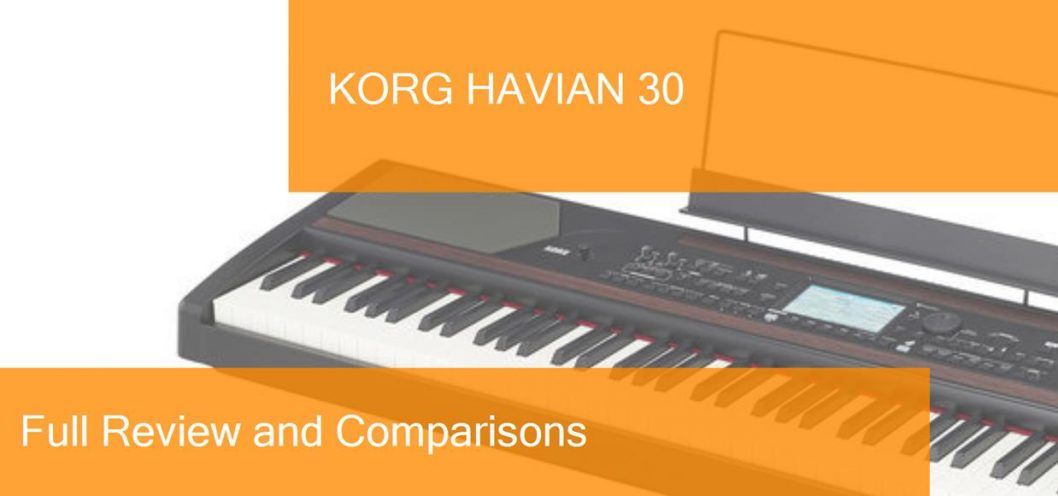
Digital Piano Korg Havian 30 Full Review. Is it a good purchase?
Korg Havian Digital Piano 30 Review Complete. Is it a good choice?
Korg is a Japanese company of electronic musical instruments and guitar tuners. And among their models of keyboards for arrangements we find the Korg Havian 30, which has an approximate price of €1100. And we can already tell you that it is a really interesting digital piano:
- 88 weighted hammer action keys (Weight that the keys of an acoustic piano have and that digital pianos try to imitate to equal the touch of the piano. The keys in the high register are heavier and in the high register less. This is different from the sensitivity on the keyboard which serves to regulate the volume of the note. But a weighted keyboard always has sensitivity in the keys)
- 950 sounds (various piano and other instrument sounds) and variations
- 256 user-configurable sounds
- 420 styles (Accompanying styles that adapt to the chords we are playing. For example they will put a bass and a drum kit that will adapt and synchronize with the notes we are playing on the keyboard) pre-configured
- 128 rhythm kits (Rhythms of accompaniment that adapt to what you are playing. There are bossa nova rhythms, etc. Sometimes they are also known as accompaniment styles) and drums
- 128 notes of polyphony (Number of notes that can be played at once. This includes accompaniments that also consume notes. So if you play over an accompaniment more notes will be accumulated)
- 4 stereo master effect groups
- 125 types of effects
- 3-band equalizer for each track
- Transposition (Transposition allows you to move the note spectrum of a keyboard. This is to be able to play with transposing instruments. It is not an easy concept but it is made to facilitate the writing of an orchestration for instruments with very different bass and treble registers)
- Split function (dividing the keyboard into two different instruments)
- Metronome (Basic study element to study and practice the tempo of a piece of music)
- Full colour screen
- Joystick control for improved usability
- Records MP3 and SMF files. You can record keyboard tracks and effects
- USB midi (MIDI allows you to do such wonderful things as connect your keyboard to your computer, record a sound track and with certain programs click through what you’ve played to musical notes on a score. MIDI tracks store the information of the musical notes)
- USB for pendrives
- Exit hulls
- Sustain pedal (The sustain pedal of a piano or keyboard is used to keep the note playing even if you stop pressing the key)
- 2 super powerful 25W speakers. Tremendous for playing wherever you want without extra amplification
- Includes lectern, network connector, DVD with extras and DS-2H damper pedal used as a sustain
- A weight of 15.1 kg and dimensions of 1312 × 389 × 146mm (width x depth x height)
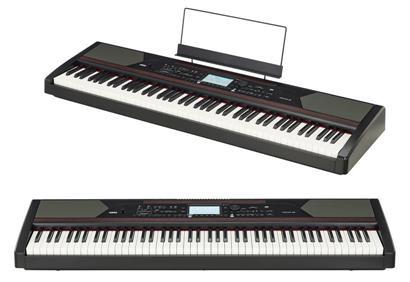
As we mentioned at the beginning, we found an arrangement keyboard with good functions and performance, its foot pedal and Miri USB function gives them an advantage as it can be used in a music production studio or also in order to study piano in a decent way.
Now that we have listed and described the features of this keyboard there is no better way than to take a look at the following video where they tell us more about the Korg Havian 30 and you can hear how its different sounds sound.
Related post you can be interested in
- Ranking with the best digital pianos
- My selection of cheap musical keyboards.
- Basic concepts you need to know about digital pianos.
- The best resources to learn to play the piano by yourself.
- The best Kawai Digital Pianos.
Now let’s compare the Korg Havian 30 with its more common alternatives. Also at the end of the post you will find a section with the best shopping possibilities for this digital piano. But you can go directly to that part of the post by pressing the following button.
Korg Havian 30 vs Casio PX-560 Privia
First we will buy the digital keyboards: the Korg Havian 30 which as we mentioned has an estimated price of £1100 and the Casio PX-560 Privia which has a very similar price. We will see their features and differences in the following face-to-face:
- Both digital keyboards have 88 hammer-action weighted keys with sensitivity. However the Casio’s have a texture of synthetic ebony and ivory, giving a greater simulation to a real acoustic piano. Therefore the Casio keyboard has an advantage. Let’s remember that the weight of the keys of a real acoustic piano is the weighted keyboard, in the low register it has heavier keys while in the high register they are lighter. Sensitivity refers to the fact that we can play dynamics in our performances, i.e. when we press a key with force it sounds louder than when we press another one with little force that will sound lower.
- When it comes to sound, the Korg has 950 sounds and variations, 256 user-configured sounds and 420 pre-configured accompaniment styles, plus 128 polyphonic notes. On the other hand the Casio has 650 sounds, 220 styles pre-configured for accompaniment and 30 styles that can be configured speech by the user, in addition to 256 notes of polyphony. Polyphony is the largest number of notes that can be played simultaneously in a computer.
- The Korg Havian 30 features: 128 drum and rhythm kits, 4 stereo master effect groups, 125 effect types and a sustain pedal.
- The functions of the Casio PX-560 Privia are Multi-Dimensional Morphing AiR System, Pitch Bend Wheel, Sound Modulation Wheel, a joystick for enhanced control, three-pedal input and a sustain pedal included.
- The Korg has 2 super powerful 25W speakers while the Casio PX-560 Privia has 2 8W speakers.
- The Korg Havian 30 weighs 15.1 kg and measures 1312 × 389 × 146mm (W x D x H) and the Casio PX-560 Privia weighs 12 kg and measures 1322 × 293 × 147mm (H x W x D).
We noticed that we found two good arrangement keyboards, with their respective advantages and disadvantages. On the other hand, the Korg gives us a greater amount of sounds both in terms of precept and configuration of speech by the user, has many defects reaching 125, and has powerful speakers of 25W. While the Casio offers us synthetic ebony and ivory keys, a greater amount of polyphony notes, a multi-dimensional Morphing AiR system, a triple pedal input and a lighter weight making this keyboard very portable. Depending on the user’s needs, a decision will be made, although to be honest the Korg’s 300+ sounds appeal more to me.
We will put the characteristics of each of these pianos in 2 different columns to make it easier to see the differences:
|
Korg Havian 30 |
Casio PX-560 Privia |
|---|---|
|
|
And now a video of the Casio PX-560 Privia
https://www.youtube.com/watch?v=2nNwoWXXbA4
If you want to know more about this model don’t miss our review of the Casio PX-560 Privia.
Korg Havian 30 vs Yamaha DGX-660
Now we will buy these two digital keyboards the already mentioned one that has a price close to €1100 and now the Yamaha DGX-660 that has a price of €749/£685, with a big difference of €365, with a relevant difference, we will see its similarities and differences in the next section:
- Both digital keyboards have 88 hammer-action weighted keys with sensitivity. Let’s remember that weighted keyboard is the weight that the keys of a real acoustic piano have, in the bass register it has heavier keys while in the treble register they are lighter. Sensitivity refers to the fact that we can play dynamics in our performances, that is, when we press a key with force it sounds louder than when we press another one with little force that will sound lower.
- When it comes to sound, the Korg has 950 sounds and variations, 256 user-configured sounds and 420 pre-configured accompaniment styles, plus 128 polyphonic notes. On the other hand the Yamaha has 554 sounds, 205 styles pre-configured for accompaniment, plus 192 notes of polyphony. Polyphony is the largest number of notes that can be played simultaneously on one instrument.
- The functions of the Korg Havian 30 are: 128 rhythm and drum kits, 4 stereo master effect groups, 125 effect types and a sustain pedal.
- The functions of the Yamaha DGX-660 are: 41 reverb effect types, 44 chorus types AND 237 DSP sounds, triple pedal input and sustain pedal included.
- The Korg has a two 25W speaker system, while the Yamaha has two 6W speakers.
- The Korg Havian 30 has a weight of 15.1 kg and dimensions of 1312 × 389 × 146mm (W x D x H) and the Yamaha DGX-660 has a weight of 28Kg and dimensions with the stand of 1399 x 445 x 761mm
Once again we have two good digital pianos, this time the Korg has some more advantages. The Korg offers almost twice the sound and style to go with it, a joystick control, and a very powerful 25W speaker system, which allows us to play very well in an enclosure without extra amplification. For its part, the Yamaha does not offer a greater amount of polyphony notes, a greater amount of effects in general and, most importantly, a triple pedal input.
We will put the characteristics of each of these pianos in 2 different columns to make it easier to see the differences:
|
Korg Havian 30 |
Yamaha DGX-660 |
|---|---|
|
|
And now a video of the Yamaha DGX-660
If you want to know more about this model do not miss our review of the Yamaha DGX-660.
Korg Havian 30 vs Thomann SP-5600
Now we will find the following digital keyboards: the Korg Havian 30 which as we mentioned before has an approximate price of €1100, and the Thomann SP-5600 which has a price of €369/£333, a big difference approximately €730, with such a big difference, we will surely find a big difference in its functions and features too, let’s see:
- Both digital keyboards have 88 hammer-action weighted keys with sensitivity.
- When it comes to sound, the Korg has 950 sounds and variations, 256 user-configured sounds and 420 pre-configured accompaniment styles, plus 128 polyphonic notes. On the other hand, the Thomann has 600 sounds, 230 styles pre-configured for accompaniment and 10 of them configurable, in addition to 128 notes of polyphony.
- The functions of the Korg Havian 30 are: 128 rhythm and drum kits, 4 stereo master effect groups, 125 effect types and a sustain pedal.
- The functions of the Thomann SP-5600 are Effects like Reverb and Chorus, and a microphone input.
- The Korg has a two 25W speaker system, while the Yamaha has two 10W speakers.
- The Korg Havian 30 weighs 15.1 kg and has dimensions of 1312 × 389 × 146mm (W x D x H) and the Thomann SP-5600 weighs almost 14 kg and has dimensions of 1365 x 366 x 137mm (W x D x H)
We found a great difference in keyboards for both quality and price, the Korg takes an extremely great advantage to the Thomann for both its amount of sounds, styles and speaker power. In polyphony both are equal, high very interesting due to its great difference in price. However, for a person with a limited budget, the Thomann SP-5600 is really a great choice.
We will put the characteristics of each of these pianos in 2 different columns to make it easier to see the differences:
|
Korg Havian 30 |
Thomann SP-5600 |
|---|---|
|
|
And now a video of the Thomann SP-5600
If you want to know more about this model don’t miss our review of the Thomann SP-5600.
Korg Havian 30 vs Korg PA-700
Finally we will have the comparison of two keyboards for arrangements of the Korg brand: the Korg Havian 30 that as we have mentioned before has a price of approximately €1100, compared to the Korg PA-700 that has a price of approximately €1.079/£999, reaching a very small difference of about €20, we will see then their similarities and differences in the next face to face:
- The Havian 30 has 88 hammer-action weighted keys and sensitivity, while the Korg PA700 has 61 keys but only sensitivity. This gives the Havian 30 a great advantage.
- In terms of sound, the Korg Havian 30 has 950 sounds and variations, 256 user-configured sounds and 420 pre-configured accompaniment styles, plus 128 polyphonic notes. On the other hand, the Korg PA700 has 1700 sounds and 512 customizable styles, 360 pre-configured accompaniment styles, and 128 polyphonic notes.
- The Korg Havian 30 features: 128 drum and rhythm kits, 4 stereo master effect groups, 125 effect types and a sustain pedal.
- The functions of the Korg PA700 are Sound synthesis technology, Defined Nuance Control, micro SD memory slot, sustain pedal input and other configurable, USB memory input, 2 guitar modes.
- The Korg has a two 25W speaker system, while the Yamaha has two 10W speakers.
- The Korg Havian 30 has a weight of 15.1 kg and dimensions of 1312 × 389 × 146mm (W x D x H) and the Korg PA-700 has a weight of 9.9 kg and dimensions of 1030 x 378.3 x 132mm (W x H x D)
We found two good keyboards for accompaniment, both of the color brand and in certain features each one has its own. The Havian 30 has more keys and the function of which are weighted, a greater amount of rhythms, and the PA 700 for its part has a greater amount of sounds both face and set, certain functions that have no rival and both have a great power in their speakers. So it’s not an easy decision to make. Depending on your needs, you can make the best decision.
We will put the characteristics of each of these pianos in 2 different columns to make it easier to see the differences:
|
Korg Havian 30 |
Korg PA-700 |
|---|---|
|
|
And now a video of the Korg PA-700:
If you want to know more about this model don’t miss our review of the Korg PA-700.
Where to buy Korg Havian 30
Amazon
- Free Shipping and possibility of shipping in one day with Amazon Premium.
- Full Guarantee but they are no experts in music equipment.
- Sometimes better price.
- He’s got worse stock than Thomann.
Thomann
- Free Shipping.
- Full warranty. If you have any problems, they take care of everything.
- 100% reliable payment.
- Leader in trouble-free shipping.
- Usually Best price.
- Best Reputation: They are the leading online store in Europe and have the best catalogue and information.
Check below related models with similar price and features:
- Roland FP 60
- Yamaha P515
- Yamaha YDP 164
- Roland FP 90
- Korg G1 Air
- Casio PX 560
- Roland Kiyola KF 10
- Korg PA 1000
- Korg PA 700 Oriental
- Yamaha PSR S975
- Korg Havian 30
- Korg PA 700
- Kawai EN 8
- Kawai MP 11
- Kawai MP 7
- Clavia Nord Electro 6D 61
- Clavia Nord Stage 3 88
- Kurzweil SP6
- Korg SV1 73
- Kurzweil Forte 8
- Clavia Nord Electro 6D 73
- Clavia Nord Stage 3 HP76
- Roland RD 2000
- Kurzweil Artis 7
- Clavia Nord Piano 4
- Clavia Nord Stage 3 compact
- Crumar Seven
- Clavia Nord Electro 6
- Korg Grandstage 73
- Dexibell Vivo Stage S9
- Dexibell Vivo Stage S1
- Korg SV1 88
- Korg Grandstage 88
- Kurzweil Forte SE
- Yamaha CP88
- Roland VR 730
- Studiologic Numa Concert
- Yamaha CP73
- Dexibell Vivo Stage S7
- Yamaha CP300
- Yamaha CP1
- Clavia Nord Grand
- Viscount Physis Piano K4 EX
- Viscount Physis Piano K5 EX
- Dexibell Vivo Portable P7
- Kurzweil Artis
- Dexibell Vivo Portable P3
- Dexibell Vivo Stage S3
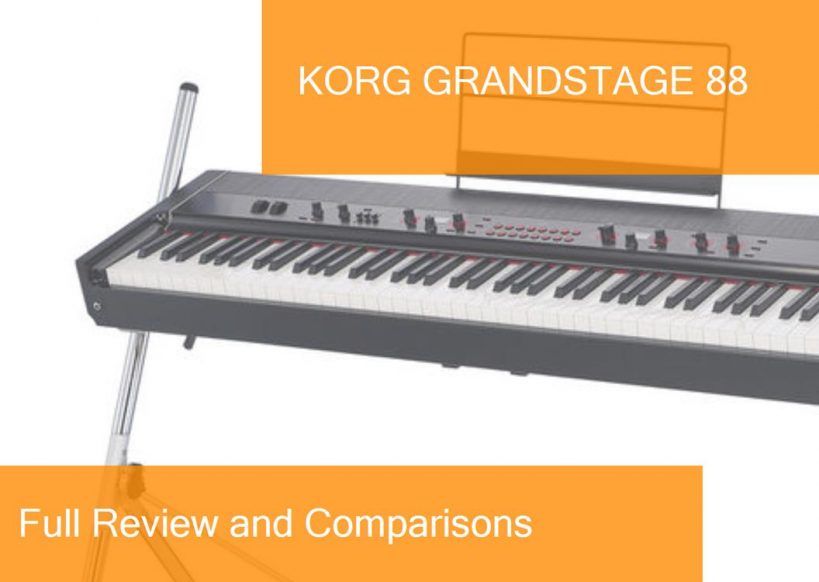
Digital Piano Korg Grandstage 88 Full Review. Is it a good choice?
Digital Piano Korg Grandstage 88 Review Complete. Is it a good chance?
Korg is a Japanese company of electronic musical instruments and accessories for electric guitar. Today we will analyze the Korg Grandstage 88 digital piano that has a price of What is a digital stage piano and offers us everything a pianist needs to play live. We will see its features in the next section:
- 88 weighted keys (Weight that the keys of an acoustic piano have and that digital pianos try to imitate to equal the touch of the piano. The keys in the high register are heavier and in the high register less. This is different from the sensitivity on the keyboard which serves to regulate the volume of the note. But a weighted keyboard always has sensitivity in the keys) with Real Weighted Hammer Action 3 touch and velocity sensitive technology. We will talk more specifically about the keyboard and its technology later on.
- It brings five concert grand piano sounds and several upright piano sounds. Watch videos to hear the sound quality.
- 128 notes of polyphony (Number of notes that can be played at once. This includes accompaniments that also consume notes. So if you play over an accompaniment more notes will be accumulated) maximum with 7 sound engines
- 500 sounds (Different sounds of piano and other instruments)
- 2 screens with OLED technology
- 3-band equalizer and 4 insert effects
- Reverb Effects (Reverb Effect)
- Delay effects
- Split function (dividing the keyboard into two different instruments) and dual
- Modulation wheel
- Pitch bend wheel (Functionality that changes the sound wave of what you play and then returns to its original state)
- Includes power cable and music stand (Standard-M-SV)
- Includes ‘Damper’ pedal (DS-1H) which is a sustain pedal (The sustain pedal of a piano or keyboard is used to keep the note playing even if you stop pressing the key)
- 2 balanced Canon XLR stereo line outputs
- 2 line jack outputs
- Stereo headset jack output
- It has tickets for Damper, Switch and Pedal
- USB-A input for pendrives
- USB midi (MIDI allows you to do such wonderful things as connect your keyboard to your computer, record a sound track and with certain programs click through what you’ve played to musical notes on a score. MIDI tracks store the information of the musical notes)
- A weight of 20 kg and dimensions of 1311 x 359 x 140mm
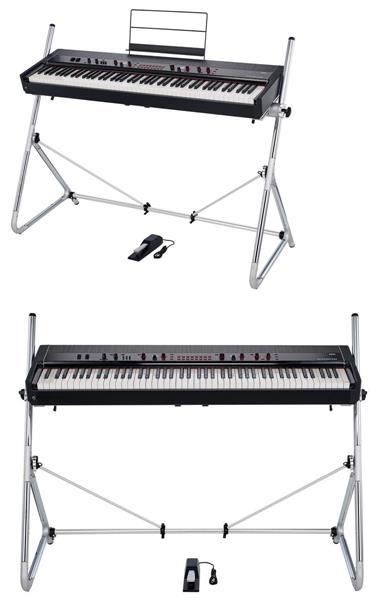
We are in a range of very professional pianos. With a very good amount of effects and a lot of quality in the materials and in the sounds. However, I encourage you to look at the comparisons below. Because there are some very interesting keyboards that you have to see if you are going to spend that money.
Related post you can be interested in
- Ranking with the best digital pianos
- My selection of cheap musical keyboards.
- Basic concepts you need to know about digital pianos.
- The best resources to learn to play the piano by yourself.
- The best Kawai Digital Pianos.
Now let’s compare the Korg Grandstage 88 with its more common alternatives. Also at the end of the post you will find a section with the best shopping possibilities for this digital piano. But you can go directly to that part of the post by pressing the following button.
Korg Grandstage 88 vs Korg SV1 88
We will now make a comparison of two Korg digital pianos: The Korg Grandstage 88 which has a value of €1.969/$2200/£1,799 and the Korg SV 2 88 which has a price of €1.969/$2000/£1,799 , giving a difference of almost £230 between them. We will see their similarities and differences in the following face-to-face:
- Both digital pianos have 88 weighted keys with RHA (Real Hammer Action) 3 technology and touch sensitivity and speed. Remember that the weighted keyboard is the weight that the keys of an acoustic piano have, in the low range it has heavy keys and in the high range it has light keys. Sensitivity is the function of being able to create dynamics in our interpretations. That is to say that when we press a key with force it sounds high and while we press a key with little force it sounds lower.
- The Grandstage 88 has 500 sounds, three of which are concert grand pianos and several upright pianos, the others are other instruments. It also has 128 notes of maximum polyphony and seven of sound motors. The SV1 88 has 36 sounds 2 of Grand Piano and the others of Electric Pianos and other instruments. It offers 80 notes of polyphony and has the Enhanced Definition Synthesis Sound Engine. Polyphony refers to the largest number of notes that can be played at the same time in a computer.
- In terms of effects, the Grandstage 88 has a 3-band EQ and four insert effects. In addition there is a Reverb and Delay section with 4 types of each. In the SV 1 88 we have more variety: 4 Insert Effects + 2 Master Effects, 3-band EQ, Pre FX: Compressor, Boost, U-Vibe, Vibrato, Tremolo, VoxWah, Amplifier and Cabinets with Valve Reactor Technology and a 12AX7 Valve (ECC83), in modulation effects: Chorus1, Chorus2, Phaser1, Phaser2, Flanger, Rotary. In Reverb/Delay: Room, Plate, Hall, Spring, Tape Echo, Stereo Delay.
- Other features of the Grandstage 88 are: modulation and pitch bend wheels (which serve to change the modulation and height of a note while playing), split and dual function, input from: damper, switch and pedal, 2 balanced XLR outputs and 2 unbalanced plug outputs, and USB input for USB flash drives.
- Other functions of SV 1 88 are: its Real eXperience technology, 8 memory spaces to store favorites, Korg DS-2H type sustain pedal, outputs for headphones, jack inputs and outputs (unbalanced) and XLR (balanced), 8 sensitivity and speed curves and USB input for USB flash drives.
- Both digital pianos have USB MIDI which allows them to be connected to a computer, to be used as controllers in a production or music composition program.
- The Grandstage weighs 20kg and measures 1311 x 359 x 140mm, while the SV 1 weighs 17.5kg and measures 1143 x 347 x 154mm.
As we can see, both are good options for digital pianos with their respective advantages and disadvantages. The Grandstage has a large number of sounds and polyphony, as well as modulation and pitch bend wheels, and seven sound generators. While the SV 1: has Real eXperience technology, 8 spaces to store Presets, AND a great amount of effects for its different functions, remembering its technology and a great amount of effects for its different voices, we also highlight its Valve Reactor technology where it uses a 12AX7 vacuum tube for the simulation of amplifiers and cabinets.
We will put the characteristics of each of these pianos in 2 different columns to make it easier to see the differences:
|
Korg Grandstage 88 |
Korg SV1 88 |
|---|---|
|
|
First a video explaining the operation of the RHA3 system, where you can find graduated and heavy hammers, according to the different regions of keys. In the low register you will find red hammers of greater weight and dimension, which simulate the long and heavy strings of an acoustic piano in this range of notes. In the mid-bass range there are blue hammers and in the mid-high range there are green hammers. Reaching the high note range we find hammers with less dimension and weight simulating the short and lighter strings of an acoustic piano in the same note range.
And now a video of the Korg SV1 88, where you can see the quality of its sounds:
The pianos sound great, the touch of the keys is perfect and very easy to use despite the many functions it offers. A great choice for both rehearsing and playing live.
If you want to know more about this model don’t miss our review of the Korg SV1 73.
Korg Grandstage 88 vs Yamaha CP4 Stage
Now we will buy two high quality digital pianos: the Korg Grandstage 88 which as we have seen is priced at €1.969/$2200/£1,799 and the Yamaha CP 4 Stage which is priced at €1829, with a difference of £140 between them, we will also analyse their similarities and differences in the next face-to-face:
- Both digital pianos have 88 weighted and touch-sensitive keys. The Korg with RHA 3 technology and the Yamaha with its Wood Graded Hammer technology (black synthetic ebony keys and white real wood keys). Remember that the weighted keyboard is the weight of the keys of an acoustic piano, in the low range it has heavy keys and in the high range it has light keys. Sensitivity is the function of being able to create dynamics in our interpretations. That is to say that when we press a key with force it sounds high and while we press a key with little force it sounds lower.
- The Grandstage 88 has 500 sounds, three of which are concert grand pianos and several upright pianos, the others are other instruments. It also has 128 notes of maximum polyphony and seven of sound motors. The Yamaha has 433 sounds, 15 from the Yamaha CFX and 15 from the CF, the rest from other instruments. It also has 128 notes of polyphony and two sound engines: SCM and AWM2.
- In terms of effects, the Grandstage 88 has a 3-band Equalizer and four insertion effects. Also a Reverb and Delay section with 4 types of each. The Yamaha has reverb (11 types), chorus (9 types), Master EQ, a 5-band EQ and 62 types of Insert Effects.
- Other features of the Grandstage 88 are: modulation and pitch bend wheels (which serve to change the modulation and pitch of a note while playing), split and dual function, input from: damper, switch and pedal, 2 balanced XLR outputs and 2 unbalanced plug outputs, and USB input for USB flash drives.
- Other functions of the Yamaha CP4 are: Pitch Bend wheels, Modulation wheel, 4 zone split function, dual or layer function, two inputs for sustain pedals, two inputs for controller pedals, stereo jack line outputs, and headphone outputs.
- Both digital pianos are equipped with USB MIDI, which allows them to be connected to a computer, to be used as controllers in a music production or composition program.
- The Grandstage weighs 20 kg and has dimensions of 1311 x 359 x 140 mm, while the Yamaha weighs 17.5 kg and has dimensions of 1332 x 161 x 352 mm.
We are looking at two high-quality, high-performance digital pianos with their respective advantages and disadvantages. The Korg Grandstage 88 has: a slightly higher sound output, an input for three pedals, two XLR balanced main outputs and a USB input for USB flash drives. And the Yamaha CP4 stage has: white keys with real wood and black keys with synthetic ebony, greatly increasing its simulation in real acoustic piano and a lighter weight that allows greater portability. So you can compare the sound quality of each one we invite you to watch the Videos.
We will put the characteristics of each of these pianos in 2 different columns to make it easier to see the differences:
|
Korg Grandstage 88 |
Yamaha CP4 Stage |
|---|---|
|
|
And now a video of the Yamaha CP4 Stage
If you want to know more about this model don’t miss our review of the Yamaha CP4 Stage
Korg Grandstage 88 vs Clavia Nord Piano 4
Now we will have the comparison of these two digital pianos: the Korg Grandstage 88 which as we have seen is priced at €1.969/$2200/£1,799 and the Clavia Nord Piano 4 which is priced at €2.399/$3000/£2,199, with a valuable difference of €430. So like the others we will put them face to face to see their similarities and differences, let’s get to it:
- Both digital pianos have 88 weighted, touch-sensitive keys. The Korg with RHA 3 technology and the Nord has a TRI-SENSOR system called Virtual Hammer-Action.
- The Grandstage 88 has 500 sounds, three of which are concert grand pianos and several upright pianos, the others are other instruments. It also has 128 notes of maximum polyphony and seven of sound motors. The Clavia Nord has 1 Gb of storage in the Piano Nord Library where you can find a large number of piano samples with 120 notes of polyphony, and 512 Gb of storage in the Nord Sample Library, where you can find a large number of samples of various instruments with 150 notes of polyphony.
- In terms of effects, the Grandstage 88 has a 3-band EQ and four insert effects. In addition there is a Reverb and Delay section with 4 types of each. The Nord has the effects included: Tremolo, Phaser, Chorus, Pan, Wah, RM, Flanger, Vibe, EQ, Delay and Reverb with a new Bright Mode. Having a great advantage over the Korg.
- Other features of the Grandstage 88 are: modulation and pitch bend wheels (which serve to change the modulation and height of a note while playing), split and dual function, input from: damper, switch and pedal, 2 balanced XLR outputs and 2 unbalanced plugs, and USB input for USB flash drives.
- Other functions of the Clavia Nord Piano 4 are: Seamless Transitions for seamless program changes, 7 point Split with optional Crossfade function, Revised Organize Mode for quick program organization, Numeric Pad Mode for direct program access, Triple Pedal Nord quality Triple Pedal, Volume Pedal input, One Headphone output, Mini jack monitor input, and Stereo jack output.
- Both digital pianos have USB MIDI which allows them to be connected to a computer, to be used as controllers in a music production or composition program.
- The Grandstage weighs 20 kg and measures 1311 x 359 x 140 mm, while the Nord weighs 20 kg (with pedal) and measures 1287 x 121 x 340 mm
We clearly found two excellent proposals for digital pianos. That to be fair with its price and features the Nord wins the battle, and not for nothing being one of the best selling digital stage pianos in recent years. With a great amount of sounds that it offers us, an extensive series of effects, and its functions of: Seamless Transitions for seamless program changes, 7 Split points with optional Crossfade function, revised Organize Mode for quick program organization, Numeric Pad Mode for direct access to programs. In addition to the triple footswitch input. They make this instrument a true wonder for any pianist. And of course we will have all this at a price that not everyone is willing to pay.
We will put the characteristics of each of these pianos in 2 different columns to make it easier to see the differences:
|
Korg Grandstage 88 |
Clavia Nord Piano 4 |
|---|---|
|
|
First a video comparison of both digital pianos, so you can hear their most relevant sounds:
And now a video of the Clavia Nord Piano 4
If you want to know more about this model don’t miss our review of the Clavia Nord Piano 4.
Korg Grandstage 88 vs Roland RD-2000
Finally we will have the comparison of the digital pianos: the Korg Grandstage 88 Y as we have commented in previous occasions has a price of €1.969/$2200/£1,799 and the Roland RD-2000 that has a price of €2.290/$2600/£2,090. Having a difference between them of €320, knowing this we will analyze their similarities and differences in the next face:
- Both digital pianos have 88 weighted, touch-sensitive keys. The Korg with the RHA 3 technology and the Roland with the PHA-50 technology of hybrid construction between wood and plastic, with ebony and ivory touch, with exhaust (Excellent feeling), which in a later video tests the counterbalance levels.
- The Grandstage 88 has 500 sounds, three of which are concert grand pianos and several upright pianos, the others are other instruments. It also has 128 notes of maximum polyphony and seven of sound motors. The Roland offers more than 1110 sounds from other piano instruments, generated by two sound engines and the acoustic sound engine apart from being very real has total polyphony ie no limits.
- In terms of effects, the Grandstage 88 has a 3-band equalizer and four insert effects. In addition there is a Reverb and Delay section with 4 types of each. The Roland has the following effects: Modulation: 4 systems and 62 types. Tremolo/Amplifier Simulator: 4 systems and 6 types, Reverb: 6 types, Delay: 5 types, 3-band Compressor and a 5-band Digital Equalizer.
- Other features of the Grandstage 88 are: modulation and pitch bend wheels (which are used to change the modulation and pitch of a note while playing), split and dual function, input from: damper, switch and pedal, 2 balanced XLR outputs and 2 unbalanced plug outputs, and USB input for USB flash drives.
- Other functions of the Roland are: 9 Sliders (faders) with lighting, 8 knobs with lighting, pitch bend wheels and modulation, you can split into 8 different zones to configure each with the instruments and programs to choose, input for USB flash drives to increase storage and have more sounds, input for Damper pedal, Sustain FC1 and FC2, an output for headphones, mini jack monitor input, and stereo output jack and XLR.
- Both digital pianos have USB MIDI which allows them to be connected to a computer, to be used as a controller in a music production or composition program.
- The Grandstage weighs 20 kg and measures 1311 x 359 x 140 mm, while the Roland weighs 21.7 kg and measures 1412 x 367 x 140 mm
They are two excellent options as digital stage pianos, however in this face-to-face we also find a clear winner which is the Roland RD-2000. With its features such as: PHA-50 keyboard and its hybrid technology, the incredible amount of more than 1100 sounds and its sound quality, a total polyphony, the option to make Split in eight different zones along the keyboard, the capacity of storage expansion through USB sticks, the large number of effects with which it is integrated, several pedal inputs and its weight that even though it is about 22 kg is still considered portable, in a car. All this makes the Roland RD-2000 one of the best digital pianos for the stage.
We will put the characteristics of each of these pianos in 2 different columns to make it easier to see the differences:
|
Korg Grandstage 88 |
Roland RD-2000 |
|---|---|
|
|
A video to test the counterweight of the PHA-50 keyboard:
And now a video of the Roland RD-2000
If you want to know more about this model don’t miss our review of the Roland RD-2000.
Where to buy Korg Grandstage 88
Thomann
- Free Shipping.
- Full warranty. If you have any problems, they take care of everything.
- 100% reliable payment.
- Leader in trouble-free shipping.
- Usually Best price.
- Best Reputation: They are the leading online store in Europe and have the best catalogue and information.
Amazon
- Free Shipping and possibility of shipping in one day with Amazon Premium.
- Full Guarantee but they are no experts in music equipment.
- Sometimes better price.
- He’s got worse stock than Thomann.
Check below related models with similar price and features:
- Roland FP 60
- Kawai MP 11
- Yamaha P515
- Yamaha YDP 164
- Roland FP 90
- Korg G1 Air
- Casio PX 560
- Roland Kiyola KF 10
- Korg PA 1000
- Korg PA 700 Oriental
- Yamaha PSR S975
- Korg Havian 30
- Korg PA 700
- Kawai EN 8
- Clavia Nord Electro 6D 61
- Clavia Nord Stage 3 88
- Kurzweil SP6
- Korg SV1 73
- Kurzweil Forte 8
- Clavia Nord Electro 6D 73
- Clavia Nord Stage 3 HP76
- Roland RD 2000
- Kurzweil Artis 7
- Clavia Nord Piano 4
- Kawai MP 7
- Clavia Nord Stage 3 compact
- Crumar Seven
- Clavia Nord Electro 6
- Korg Grandstage 73
- Dexibell Vivo Stage S9
- Dexibell Vivo Stage S1
- Korg SV1 88
- Korg Grandstage 88
- Kurzweil Forte SE
- Yamaha CP88
- Roland VR 730
- Studiologic Numa Concert
- Yamaha CP73
- Dexibell Vivo Stage S7
- Yamaha CP300
- Yamaha CP1
- Clavia Nord Grand
- Viscount Physis Piano K4 EX
- Viscount Physis Piano K5 EX
- Dexibell Vivo Portable P7
- Kurzweil Artis
- Dexibell Vivo Portable P3
- Dexibell Vivo Stage S3