
- Home
- Author's Archive:

Digital Piano Korg Tiny Piano Full Review. Is it a good choice?
Review and Opinion of Korg Tiny Piano and Where to Buy It
Korg is a Japanese company of electronic musical instruments and guitar tuners. That as well as other brands has a series of pianos for children, and this time we will analyze it, we talk about Korg Tiny Piano that has a price of €186/$224/£172, an instrument that looks like a toy, with the following characteristics:
- 25 Sensitive keys (You can adjust the volume of the note depending on how you press it. And it is different from the counterbalance that is the weight of the keys on a piano) to the touch
- 25 sounds (Different sounds of piano and other instruments)
- 50 demo songs
- Stereo headset output
- Integrated 8cm speaker
- 1 W speaker
- Powered by batteries or by an optional Korg KA-350 9V DC adapter
- It weighs 4.7 kg and measures 383 × 258 × 282 mm
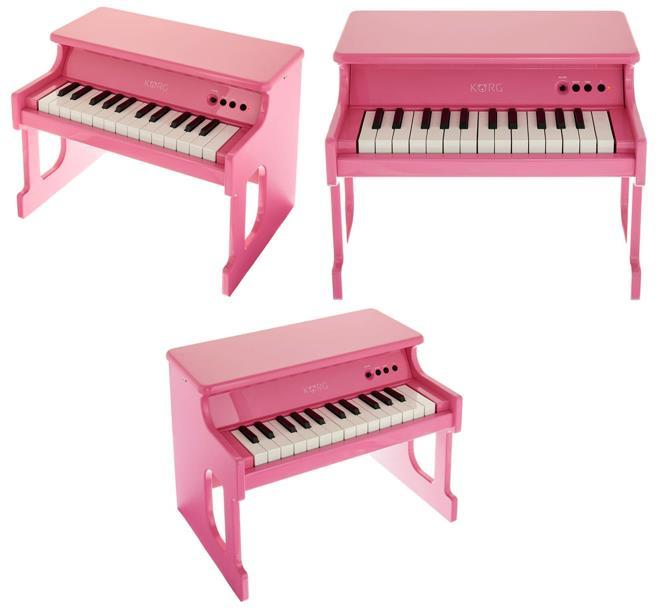
Look at the videos of this piano which, although it looks like a toy, is not:
Related post you can be interested in
- Ranking with the best digital pianos
- My selection of cheap musical keyboards.
- Basic concepts you need to know about digital pianos.
- The best resources to learn to play the piano by yourself.
- The best Kawai Digital Pianos.
We have a keyboard, which is intended for children or for comic or childish situations, could also serve for people with very small hands. Or it can also be used as an ornament.
Now let’s compare the Korg Tiny Piano with its more common alternatives. Also at the end of the post you will find a section with the best purchase possibilities for this keyboard. But you can go directly to that part of the post by pressing the next button.
Korg Tiny Piano vs Casio SA76
As well as the Korg brand which has its piano for children, the Casio brand has a catalogue with mini keyboards with similar characteristics, the SA series. This time we will buy the Korg Tiny Piano which we had already said has a price of €186/$224/£172 and the Casio SA 76 which has a price of €55/$54/£49 . We will analyze their similarities and differences in the next section:
- The Korg has 25 touch-sensitive keys, and the Casio has 44 mini keys with no sensitivity.
- The Korg has 25 sounds and the Casio has 100 sounds.
- The Korg has 50 demo songs and the Casio has 10.
- The Korg has 1 x 1W speaker, while the Casio has 2 x 0.8W speakers.
- Both have headphone outputs and can be powered by batteries or an adapter which is not included in either.
- The Korg weighs 4.7 kg and measures 383 × 258 × 282 mm, and the Casio weighs 1.4 kg and measures 604-mm x 211-mm x 57mm.
We have already mentioned that both are keyboards for infants, that a notable difference is that the Korg has 50 demo songs while the Calcium has only 10, apart from that the Calcium has more keys and sounds. I think the color is made mostly for an ornament and the Casio for use by young children with musical interests.
We will put the characteristics of each of these pianos in 2 different columns to make it easier to see the differences:
|
Korg Tiny Piano |
Casio SA76 |
|---|---|
|
|
A video of the Casio SA76:
If you want to know more about this model don’t miss our review of the Casio SA76.
Where to buy Korg Tiny Piano
Thomann
- Free Shipping.
- Full warranty. If you have any problems, they take care of everything.
- 100% reliable payment.
- Leader in trouble-free shipping.
- Usually Best price.
- Best Reputation: They are the leading online store in Europe and have the best catalogue and information.
Amazon
- Free Shipping and possibility of shipping in one day with Amazon Premium.
- Full Guarantee but they are no experts in music equipment.
- Sometimes better price.
- He’s got worse stock than Thomann.
Check below related models with similar price and features:
- Thomann DP 26
- Thomann SP 320
- Yamaha NP 32 Piaggero
- Korg Tiny Piano
- Startone MK 300
- Startone MK 200
- Yamaha PSR E463
- Yamaha PSR E363
- Startone MKR 61
- Roland GO KEYS
- Casio SA 46
- Casio SA 47
- Casio CTK 240
- Casio CT X700
- Yamaha EZ 220
- Yamaha PSR E263
- Yamaha PSR EW300
- Casio LK 280
- Casio SA 76
- Casio CTK 3500
- Casio LK 265
- Casio LK 136
- Casio CTK 1500
- Casio SA 77
- Yamaha Sonogenic SHS 500
- Casio SA 78
- Casio CTK 2500
- Yamaha YPT 260
- Roland GO PIANO
- Midiplus Stage 88

Digital Piano Korg SV1 88 Full Review. Is it a good choice?
Complete Review Digital Piano Korg SV1 88. Is it Good Choice?
Korg is a Japanese company of electronic musical instruments and guitar tuners. And a few years ago (in 2009) it released a very interesting and vintage-style keyboard, we are talking about the Korg SV1 88 that had a price of about €1500, which in 2017 had a renewal and recently left the market, opening the way for the new Korg SV2 88 with a price of €1969/$1999/£1,799, which we will also analyze later. Let’s go through the features of the Korg SV1 88:
- Vintage aesthetics
- 88 weighted keys (Weight that the keys of an acoustic piano have and that digital pianos try to imitate to equal the touch of the piano. The keys in the high register are heavier and in the high register less. This is different from the sensitivity on the keyboard which serves to regulate the volume of the note. But a weighted keyboard always has sensitivity in the keys) RH3
- 80 notes of polyphony (Number of notes that can be played at once. This includes accompaniments that also consume notes. So if you play over an accompaniment more notes will be accumulated)
- 36 sounds (Different sounds of piano and other instruments)
- 8 Sensitivity and Speed Curves
- Tuning and Transposition function (Transposition allows you to move the note spectrum of a keyboard. This is to be able to play with transposing instruments. It is not an easy concept but it is made to facilitate the writing of an orchestration for instruments with very different bass and treble registers)
- Enhanced Definition Synthesis sound engine and Real eXperience technology
- 8 memory spaces for saving favorites and settings
- 1 x 12AX7 valve on the preamp
- 36 demo songs
- Sustain pedal (The sustain pedal of a piano or keyboard is used to keep the note playing even if you stop pressing the key) type Korg DS-2H
- Hull exit
- JACK and XLR line input and output
- Midi input and output (MIDI allows you to do such wonderful things as connect your keyboard to your computer, record a sound track, and with certain programs click through what you’ve played to musical notes on a score. MIDI tracks store the information of the musical notes)
- USB to connect pendrive
- It has a lectern and a network cable
- a weight of 20kg and a size of 1353 x 347 x 154mm
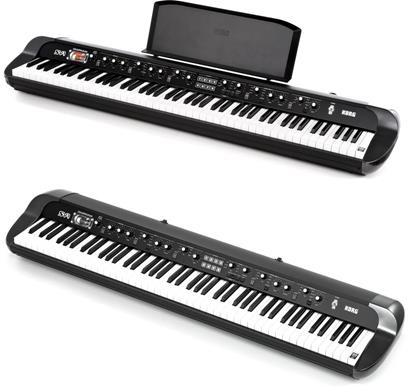
Now that we have listed and described the features of this keyboard there is no better way than to take a look at the following videos where they tell us more about the Korg SV1 88 and you can hear how its different sounds sound.
We have a keyboard with a vintage look that has very good features, such as its weighted keys, its excellent sound quality is something very rare in keyboards, vacuum valve for the preamp part, this is only seen in electric guitar amplifiers, however the Korg company has bet on this kind of effects.
Related post you can be interested in
- Ranking with the best digital pianos
- My selection of cheap musical keyboards.
- Basic concepts you need to know about digital pianos.
- The best resources to learn to play the piano by yourself.
- The best Kawai Digital Pianos.
Now let’s compare the Korg SV1 88 with its more common alternatives. Also at the end of the post you will find a section with the best shopping possibilities for this digital piano. But you can go directly to that part of the post by pressing the following button.
Korg SV1 88 vs Korg SV2 88
As we mentioned before there is a new version of this same model that has a higher price with almost £500 more and now we will see face to face with the characteristics of each one:
- Both keyboards have 88 speed-sensitive and weighted keys. Let’s remember that sensitivity refers to the fact that we can play our performances with dynamics, i.e. when a key is pressed with force it sounds higher while when a key is pressed with less force it sounds lower. And weighted keyboard refers to the weight that the keys of a real acoustic piano have, in the high range with lighter keys while in the low range, the heavier ones.
- The SV1 has 36 sounds with 80 notes of polyphony, while the SV2 has 72 sounds and 128 notes of polyphony.
- They have the same sound engine and the same sound functions so they also have the option of the valve circuit, with the 12AX7 in the preamp.
- The SV2 has four concert grand pianos and two upright pianos, as well as input for three pedals, when the SV1 only had 1.
- The SV2 offers 2 balanced XLR line outputs/unbalanced 6.3mm jack and 2 unbalanced 6.3mm jack line inputs when the SV1 offered one of each.
- The Sv1 weighs 17.5kg and measures 1143 x 347 x 154mm, and the SV2 weighs 17.2kg and measures 1143 x 157 x 347mm (W x H x D), which is almost exactly the same in this respect.
There are many improvements in front of the new generation, and the value that increases is worth moving to the next level.
|
Korg SV1 88 |
Korg SV2 88 |
|---|---|
|
|
And now a video of the SV2:
Korg SV1 88 vs Clavia Nord Stage 3 88
We will now have the following comparison: The Korg SV1 88 keyboard with an approximate price of €1500 and the Clavia Nord Stage 3 88 with a value of €3.490/$4500/£3,185, almost doubling the value of each other. With such a big difference in price we will analyze their differences in functions and features in the following face-to-face:
- Both keyboards have 88 speed-sensitive and weighted keys. Let’s remember that sensitivity refers to the fact that we can play our interpretations with dynamics, that is to say, when a key is pressed with force it sounds higher while when a key is pressed with less force it sounds lower. And weighted refers to the weight that the keys of a real acoustic piano have, in the high range with lighter keys while in the low range, the heavier ones.
- The Korg SV1 has 36 sounds with 80 notes of polyphony, while on that Clavia Nord it has 2Gb of storage for sounds from its library, which is actually very extensive and 120 notes of polyphony.
- The Korg SV1 features 8 sensitivity and speed curves, Tuning and Transposition function, Enhanced Definition Synthesis sound engine and Real eXperience technology, 8 memory spaces for storing favourites and settings and a 1 x 12AX7 valve in the preamp.
- The Clavia Nord Stage 3 features: String Resonance function (Gen 2), Noise Pedal and Long-Release option, powerful synthesizer capabilities with Subtractive Synthesis, FM, and Wavetable, Arpeggiator function, has Master Clock and Unison modes, includes modes for the famous B3, Vox/Farfisa and Main Pipe organs very similar to the original, also simulates the Leslie Vintage 122.
- The Korg has: Korg DS-2H type sustain pedal, headphone output and JACK and XLR line input and output, while the Nord has: 4 assignable audio outputs Jack, Stereo Headphone Jack output, 1 mini-jack monitor input, input for sustain pedal that supports triple pedal, input for rotor jack pedal and also supports organ, switch and control pedal with stereo jack, plus a network cable. A great advantage over the Korg.
- Both have MIDI in and out and USB MIDI that allows them to be connected to a computer for use in a music production program.
- The Sv1 weighs 17.5kg and measures 1143 x 347 x 154mm and the Nord weighs 19kg and measures 1287 x 334 x 118mm (W x H x D), being almost exactly the same in this respect.
As we can see in many ways if not in all the Nord has an advantage over the Korg, not for nothing this is one of the most sold and purchased by professional musicians, it is very common to find these teams in a music video both for its sound capabilities and for its special design. Logically, it is worth what it costs and it is not cheap compared to other models. Even for a tighter budget the Korg is not a bad option.
We will put the characteristics of each of these pianos in 2 different columns to make it easier to see the differences:
|
Korg SV1 88 |
Clavia Nord Stage 3 88 |
|---|---|
|
|
And now a video of the Clavia Nord Stage 3 88
If you want to know more about this model don’t miss our review of the Clavia Nord Stage 3 88.
Korg SV1 88 vs Korg Grandstage 73
Again, we will analyze two Korg keyboards, having a fairer comparison: The Korg SV1 88 keyboard that we have already mentioned has a price of about €1500 and the Korg Grandstage 73 that has a price of €1666/£1,499, being about €166 cheaper the first one. We will analyze their differences and similarities in the next section:
- Both keyboards have speed-sensitive and weighted keys. The SV1 with 88, while the Granstage with 73. Let’s remember that sensitivity refers to the fact that we can play our performances with dynamics, that is, when a key is pressed with force it sounds higher while when a key is pressed with less force it sounds lower. And weighted keyboard refers to the weight that the keys of a real acoustic piano have, in the high range with lighter keys while in the low range, the heavier ones.
- The SV1 has 36 sounds with 80 notes of polyphony, while the Grandstage has 500 sounds, including 5 grand and several upright pianos and 128 notes of polyphony.
- The SV1 has the Enhanced Definition Synthesis sound engine and Real eXperience technology, while the Grandstage has 7 sound engines. Giving a great advantage to the second one.
- The Grandstage has a modulation wheel, a pitch bend wheel and a sustain pedal and input for three pedals.
- The Grandstage offers 2 balanced XLR line outputs / 6.3 mm jack balanced and 2 unbalanced 6.3 mm jack line inputs when the SV1 offered one of each.
- The Sv1 weighs 17.5kg and measures 1143 x 347 x 154mm and the Grandstage weighs 17kg and measures 1099 x 359 x 140mm (W x H x D).
Again, we have two good keyboards, with some difference between them. The Grandstage has a greater amount of sounds and polyphony notes as well as having more sound motors. The SV1 has certain features such as Enhanced Definition Synthesis and Real eXperience technology that give it an advantage, apart from its tube circuit and a larger number of keys. It’s actually a bit of a complicated decision, but a lot depends on what you’re going to use the keyboard for.
We will put the characteristics of each of these pianos in 2 different columns to make it easier to see the differences:
|
Korg SV1 88 |
Korg Grandstage 73 |
|---|---|
|
|
And now a video of the Korg Grandstage 73
If you want to know more about this model don’t miss our review of the Korg Grandstage 73.
Korg SV1 88 vs Clavia Nord Electro 6
As a last comparison we will have the Korg SV1 73 keyboard that we have mentioned has a price of about €1500 and the Clavia Nord Electro 6 that has a price of €1769/£1,599 with a difference of about €230:
- Both keyboards have 88 speed-sensitive and weighted keys.
- The Korg SV1 has 36 sounds with 80 notes of polyphony, while the SV2 has 1Gb of storage for piano sounds with 120 notes of polyphony, and 512Mb for storage of sounds from other instruments with 46 notes of polyphony.
- The functions that characterize the Korg SV1 are: 8 sensitivity and speed curves, Tuning and transposition function, Enhanced Definition Synthesis sound engine and Real eXperience technology, 8 memory spaces to store favorites and settings and a 1 x 12AX7 valve in the preamp.
- The functions that characterize the Clavia Nord Electro 6 are Nord C2D B3 Tone Wheel Simulation, Pipe Organ Model main functionality, Leslie 122 Nord C2D simulation, Seamless Transitions system, Dual-Organ mode, 9 physical handles, Nord Half-Moon-Switch support
- The Korg has: Korg DS-2H type sustain pedal, headphone output and JACK and XLR line input and output, while the Nord has: 4 assignable audio outputs Jack, stereo headphone jack output, 1 mini-jack monitor input, input for sustain pedal that supports triple pedal, input for rotor jack pedal and also supports organ, switch and control pedal with stereo jack, plus a network cable. A great advantage over the Korg.
- Both have MIDI in and out and USB MIDI that allows them to be connected to a computer for use in a music production program.
- The Sv1 weighs 17.5kg and measures 1143 x 347 x 154mm and the Nord weighs 11.4kg.
In our last comparison we have to recognize that the Nord digital pianos offer many more functions than the Korg SV1, although it has more keys, but in the amount of sounds, effects and other features the Korg lags behind. Even for the price the Korg is still a good choice.
We will put the features of each of these pianos in 2 different columns to make it easier to see the differences:
|
Korg SV1 88 |
Clavia Nord Electro 6 |
|---|---|
|
|
And now a video of the Clavia Nord Electro 6
If you want to know more about this model don’t miss our review of the Clavia Nord Electro 6
Where to buy Korg SV1 88
Thomann
- Free Shipping.
- Full warranty. If you have any problems, they take care of everything.
- 100% reliable payment.
- Leader in trouble-free shipping.
- Usually Best price.
- Best Reputation: They are the leading online store in Europe and have the best catalogue and information.
Amazon
- Free Shipping and possibility of shipping in one day with Amazon Premium.
- Full Guarantee but they are no experts in music equipment.
- Sometimes better price.
- He’s got worse stock than Thomann.
Check below related models with similar price and features:
- Roland FP 60
- Yamaha P515
- Yamaha YDP 164
- Roland FP 90
- Korg G1 Air
- Casio PX 560
- Roland Kiyola KF 10
- Korg PA 1000
- Korg PA 700 Oriental
- Yamaha PSR S975
- Korg Havian 30
- Korg PA 700
- Kawai EN 8
- Kawai MP 11
- Kawai MP 7
- Clavia Nord Electro 6D 61
- Clavia Nord Stage 3 88
- Kurzweil SP6
- Korg SV1 73
- Kurzweil Forte 8
- Clavia Nord Electro 6D 73
- Clavia Nord Stage 3 HP76
- Roland RD 2000
- Kurzweil Artis 7
- Clavia Nord Piano 4
- Clavia Nord Stage 3 compact
- Crumar Seven
- Clavia Nord Electro 6
- Korg Grandstage 73
- Dexibell Vivo Stage S9
- Dexibell Vivo Stage S1
- Korg SV1 88
- Korg Grandstage 88
- Kurzweil Forte SE
- Yamaha CP88
- Roland VR 730
- Studiologic Numa Concert
- Yamaha CP73
- Dexibell Vivo Stage S7
- Yamaha CP300
- Yamaha CP1
- Clavia Nord Grand
- Viscount Physis Piano K4 EX
- Viscount Physis Piano K5 EX
- Dexibell Vivo Portable P7
- Kurzweil Artis
- Dexibell Vivo Portable P3
- Dexibell Vivo Stage S3

Digital Piano Korg SV1 73 Full Review. Is it a good choice?
Korg Digital Piano SV1 73 Full Review. Good choice?
Korg is a Japanese company of electronic musical instruments and guitar tuners. And a few years ago (in 2009) it released a very interesting and vintage-style keyboard, we are talking about the Korg SV1 73 that had a price of about €1400, which in 2017 had a renewal and recently left the market, opening the way for the new Korg SV2 73, which we will also analyze later and it costs around €1.799/$2000/£1,666. Let’s go with the characteristics of the Korg SV1 73:
- Vintage Aesthetics
- 73 weighted keys (Weight that the keys of an acoustic piano have and that digital pianos try to imitate to equal the touch of the piano. The keys in the high register are heavier and in the high register less. This is different from the sensitivity on the keyboard which serves to regulate the volume of the note. But a weighted keyboard always has sensitivity in the keys) RH3
- 80 notes of polyphony (Number of notes that can be played at once. This includes accompaniments that also consume notes. So if you play over an accompaniment more notes will be accumulated)
- 36 sounds (Different sounds of piano and other instruments)
- 8 sensitivity and speed curves
- Tuning and Transposition function (Transposition allows you to move the note spectrum of a keyboard. This is to be able to play with transposing instruments. It is not an easy concept but it is made to facilitate the writing of an orchestration for instruments with very different bass and treble registers)
- Enhanced Definition Synthesis sound engine and Real eXperience technology
- 8 memory spaces for saving favorites and settings
- 1 x 12AX7 valve on the preamp
- 36 demo songs
- Sustain pedal (The sustain pedal on a piano or keyboard is used to keep the note playing even if you stop pressing the key) type Korg DS-2H
- Hull exit
- JACK and XLR line input and output
- Midi input and output (MIDI allows you to do such wonderful things as connect your keyboard to your computer, record a sound track, and with certain programs click through what you’ve played to musical notes on a score. MIDI tracks store the information of the musical notes)
- USB to connect pendrive
- It has a lectern and a network cable
- a weight of 17.5kg and a size of 1143 x 347 x 154mm

Now two videos about the Korg SV1:
We have a keyboard with a vintage look that has very good features, such as its weighted keys, its excellent sound quality is something very uncommon in keyboards, vacuum valve for the preamp part, this is only seen in electric guitar amplifiers, however the Korg company has bet on this kind of effects.
Now let’s compare the Korg SV1 73 with its more common alternatives. Also at the end of the post you will find a section with the best purchase possibilities for this keyboard. But you can go directly to that part of the post by pressing the next button.
You are maybe interested in
- Ranking with the best digital pianos
- My selection of cheap musical keyboards.
- Basic concepts you need to know about digital pianos.
- The best resources to learn to play the piano by yourself.
- The best Kawai Digital Pianos.
Now let’s compare the Korg SV1 73 with its more common alternatives. Also at the end of the post you will find a section with the best shopping possibilities for this digital piano. But you can go directly to that part of the post by pressing the following button.
Korg SV1 73 vs Korg SV2 73
As we mentioned before there is a new version of this same model that has a higher price with almost 400 euros more and now we will see face to face with the characteristics of each one:
- Both keyboards have 73 speed-sensitive and weighted keys. Let’s remember that sensitivity refers to the fact that we can play our performances with dynamics, that is to say, when a key is pressed with force it sounds higher while when a key is pressed with less force it sounds lower. And weighted keyboard refers to the weight that the keys of a real acoustic piano have, in the high range with lighter keys while in the low range, the heavier ones.
- The SV1 has 36 sounds with 80 notes of polyphony, while the SV2 has 72 sounds and 128 notes of polyphony.
- They have the same sound engine and the same sound functions so they also have the option of the valve circuit, with the 12AX7 in the preamp.
- The SV2 has the sounds of four concert grand pianos and two upright pianos, as well as input for three pedals, when the SV1 only had 1.
- The SV2 offers 2 unbalanced XLR line outputs / 6.3mm jack and 2 unbalanced 6.3mm jack line inputs when the SV1 offered one of each.
- The Sv1 weighs 17.5kg and measures 1143 x 347 x 154mm and the SV2 weighs 17.2kg and measures 1143 x 157 x 347mm (W x H x D), being almost exactly the same in this respect.
There are many improvements in front of the new generation, and because of the increasing value it is worth going to the next level.
|
Korg SV1 73 |
Korg SV2 73 |
|---|---|
|
|
And now a video from SV2:
Korg SV1 73 vs Clavia Nord Stage 3 88
We will now have the following comparison: The Korg SV1 73 keyboard with a price of approximately €1400 and the Clavia Nord Stage 3 88 with a value of €3.490/$4500/£3,185, almost doubling the value of each other. With such a big difference in price we will analyze their differences in functions and features in the following face-to-face:
- Starting with the keys, the Korg has 73 weighted, touch-sensitive keys. The Nord has 88 weighted touch-sensitive keys. Remember that sensitivity means that we can play our performances with dynamics, i.e. when a key is pressed with force it sounds louder while when a key is pressed with less force it sounds lower. And weighted keyboard refers to the weight that the keys of a real acoustic piano have, in the high range with lighter keys while in the low range, the heavier ones.
- The Korg SV1 has 36 sounds with 80 notes of polyphony, while on this Clavia Nord it has 2Gb of storage for sounds from its library, which is actually very extensive and 120 notes of polyphony.
- The functions that characterize the Korg SV1 are: 8 sensitivity and speed curves, Tuning and transposition function, Enhanced Definition Synthesis sound engine and Real eXperience technology, 8 memory spaces to store favorites and settings and a 1 x 12AX7 valve in the preamp.
- The Clavia Nord Stage 3 features: String Resonance function (Gen 2), Noise Pedal and Long-Release option, powerful synthesizer capabilities with Subtractive Synthesis, FM, and Wavetable, Arpeggiator function, has Master Clock and Unison modes, includes modes for the famous B3, Vox/Farfisa and Main Pipe organs very similar to the original, also simulates the Leslie Vintage 122.
- The Korg has: Korg DS-2H type sustain pedal, headphone output and JACK and XLR line input and output, while the Nord has: 4 assignable audio outputs Jack, Stereo Headphone Jack output, 1 mini-jack monitor input, input for sustain pedal that supports triple pedal, input for rotor jack pedal and also supports organ, switch and control pedal with stereo jack, plus a network cable. A great advantage over the Korg.
- Both have MIDI in and out and USB MIDI that allows them to be connected to a computer for use in a music production program.
- The Sv1 weighs 17.5kg and measures 1143 x 347 x 154mm and the Nord weighs 19kg and measures 1287 x 334 x 118mm (width x height x depth), which is almost exactly the same in this respect.
As we can see in many ways if not in all the Nord has an advantage over the Korg, not for nothing this is one of the most sold and purchased by professional musicians, it is very common to find these teams in a music video both for its sound capabilities and for its special design. Logically, it is worth what it costs and it is not cheap compared to other models. Even for a tighter budget the Korg is not a bad option.
We will put the characteristics of each of these pianos in 2 different columns to make it easier to see the differences:
|
Korg SV1 73 |
Clavia Nord Stage 3 88 |
|---|---|
|
|
And now a video of the Clavia Nord Stage 3 88
It’s a very intuitive keyboard, soon you’ll be designing your own programs with split effects, etc. Very good this option…
If you want to know more about this model don’t miss our review of the Clavia Nord Stage 3 88.
Korg SV1 73 vs Korg Grandstage 73
Again, we will analyze two Korg keyboards, having a fairer comparison: The Korg SV1 73 keyboard that we have already mentioned has a price of about €1400 and the Korg Grandstage 73 that has a price of €1.599/$1999/£1,499, being about €266 cheaper the first one. We will analyze their differences and similarities in the next section:
- Both keyboards have 73 speed-sensitive and wighted keys. Let’s remember that sensitivity refers to the fact that we can play our interpretations with dynamics, that is to say, when a key is pressed with force it sounds higher while when a key is pressed with less force it sounds lower. And weighted keyboard refers to the weight that the keys of a real acoustic piano have, in the high range with lighter keys while in the low range, the heavier ones.
- The SV1 has 36 sounds with 80 notes of polyphony, while this Grandstage has 500 sounds, including 5 grand and several upright pianos and 128 notes of polyphony.
- The SV1 has the Enhanced Definition Synthesis sound engine and Real eXperience technology, while the Grandstage has 7 sound engines. Giving a great advantage to the second one.
- The Grandstage has a modulation wheel, a pitch bend wheel and a sustain pedal and input for three pedals.
- The Grandstage offers 2 balanced XLR line outputs / 6.3 mm jack balanced and 2 unbalanced 6.3 mm jack line inputs when the SV1 offered one of each.
- The Sv1 weighs 17.5kg and measures 1143 x 347 x 154mm and the Grandstage weighs 17kg and measures 1099 x 359 x 140mm (W x H x D).
Again we find two good keyboards, with some difference between them. The Grandstage has a greater amount of sounds and polyphony notes as well as having more sound engines. The SV1 has certain features such as Enhanced Definition Synthesis and Real eXperience technology that give it an edge, aside from its valve circuitry. It’s actually a bit of a complicated decision, but a lot also depends on what you’re going to use the keyboard for.
We will put the characteristics of each of these pianos in 2 different columns to make it easier to see the differences:
|
Korg SV1 73 |
Korg Grandstage 73 |
|---|---|
|
|
And now a video of the Korg Grandstage 73
If you want to know more about this model don’t miss our review of the Korg Grandstage 73.
Korg SV1 73 vs Clavia Nord Electro 6
As a last comparison we will have the Korg SV1 73 keyboard that we have mentioned has a price of about €1400 and the Clavia Nord Electro 6 that has a price of €1.769/£1,599 with a difference of about €230:
- Starting with the keys, the Korg has 73 weighted, touch-sensitive keys. The Nord has 88 weighted and touch-sensitive keys.
- The Korg SV1 has 36 sounds with 80 notes of polyphony, while the SV2 has 1Gb of storage for piano sounds with 120 notes of polyphony, and 512Mb for storage of sounds from other instruments with 46 notes of polyphony.
- The functions that characterize the Korg SV1 are: 8 sensitivity and speed curves, Tuning and transposition function, Enhanced Definition Synthesis sound engine and Real eXperience technology, 8 memory spaces to store favorites and settings and a 1 x 12AX7 valve in the preamp.
- The functions that characterize the Clavia Nord Electro 6 are Nord C2D B3 Tone Wheel Simulation, Pipe Organ Model main functionality, Leslie 122 Nord C2D simulation, Seamless Transitions system, Dual-Organ mode, 9 physical handles, Nord Half-Moon-Switch support
- The Korg has: Korg DS-2H type sustain pedal, headphone output and JACK and XLR line input and output, while the Nord has: 4 assignable audio outputs Jack, stereo headphone jack output, 1 mini-jack monitor input, input for sustain pedal that supports triple pedal, input for rotor jack pedal and also supports organ, switch and control pedal with stereo jack, plus a network cable. A great advantage over the Korg.
- Both have MIDI in and out and USB MIDI that allows them to be connected to a computer for use in a music production program.
- The Sv1 weighs 17.5kg and measures 1143 x 347 x 154mm and the Nord weighs 11.4kg.
In our last comparison we have to recognize that the Nord digital pianos offer many more functions than the Korg SV1, in their keys they are very similar, but in the amount of sounds, effects and other features the Korg is left behind. Even for the price the Korg is still a good choice.
We will put the characteristics of each of these pianos in 2 different columns to make it easier to see the differences:
|
Korg SV1 73 |
Clavia Nord Electro 6 |
|---|---|
|
|
And now a video of the Clavia Nord Electro 6
If you want to know more about this model don’t miss our review of the Clavia Nord Electro 6.
Where to buy Korg SV1 73
Thomann
- Free Shipping.
- Full warranty. If you have any problems, they take care of everything.
- 100% reliable payment.
- Leader in trouble-free shipping.
- Usually Best price.
- Best Reputation: They are the leading online store in Europe and have the best catalogue and information.
Amazon
- Free Shipping and possibility of shipping in one day with Amazon Premium.
- Full Guarantee but they are no experts in music equipment.
- Sometimes better price.
- He’s got worse stock than Thomann.
Check below related models with similar price and features:
- Roland FP 60
- Yamaha P515
- Yamaha YDP 164
- Roland FP 90
- Korg G1 Air
- Casio PX 560
- Roland Kiyola KF 10
- Korg PA 1000
- Korg PA 700 Oriental
- Yamaha PSR S975
- Korg Havian 30
- Korg PA 700
- Kawai EN 8
- Kawai MP 11
- Kawai MP 7
- Clavia Nord Electro 6D 61
- Clavia Nord Stage 3 88
- Kurzweil SP6
- Korg SV1 73
- Kurzweil Forte 8
- Clavia Nord Electro 6D 73
- Clavia Nord Stage 3 HP76
- Roland RD 2000
- Kurzweil Artis 7
- Clavia Nord Piano 4
- Clavia Nord Stage 3 compact
- Crumar Seven
- Clavia Nord Electro 6
- Korg Grandstage 73
- Dexibell Vivo Stage S9
- Dexibell Vivo Stage S1
- Korg SV1 88
- Korg Grandstage 88
- Kurzweil Forte SE
- Yamaha CP88
- Roland VR 730
- Studiologic Numa Concert
- Yamaha CP73
- Dexibell Vivo Stage S7
- Yamaha CP300
- Yamaha CP1
- Clavia Nord Grand
- Viscount Physis Piano K4 EX
- Viscount Physis Piano K5 EX
- Dexibell Vivo Portable P7
- Kurzweil Artis
- Dexibell Vivo Portable P3
- Dexibell Vivo Stage S3