
- Home
- Author's Archive:
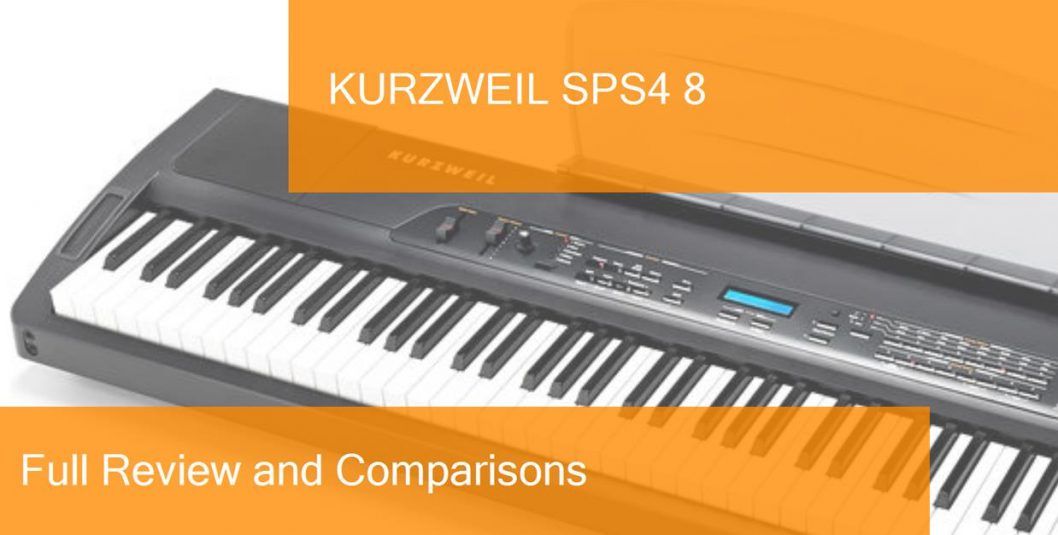
Digital Piano Kurzweil SPS4 8 Full Review. Is it a good purchase?
Digital Piano Kurzweil SPS4 8 Full Review. Is it a good purchase?
- 88 Velocity sensitive Keys with Hammer Action (The weight of the keys on an acoustic piano that digital pianos try to imitate to match the touch of a real acoustic piano. The keys in the high register are heavier and in the high register less. This is a different concept of sensitivity on the keyboard that serves to regulate the volume of the note. But a hammer action keyboard always has sensitivity on the keys.)
- 64 Voice polyphony (Number of notes that can sound at once. This includes songs that sound at once. So if you play over an accompaniment sound, more notes will accumulate.)
- 16-Part multitembral
- 4 zones Split (Split the keyboard into two different instruments) function
- 4 zones Layering function
- 128 presets + 64 user presets
- 64 User midi (MIDI allows you to do such wonderful things as connect the keyboard to the computer, record a soundtrack and with certain programs pass with a click what you have played to musical notes in a score. MIDI tracks store information from musical notes) setups
- Integrated effects as reverb (Reverberation effect which is a reflection effect of the sound), chorus, …
- pitch bend (Functionality that changes the sound wave of what you play and then returns to its original state) and Modulation wheel
- LCD screen
- Two Balanced jack outputs
- 2 Headphone outputs for Duet mode (Duet mode allows you to divide the keyboard into two pianos to play four hands or the teacher and student on the same keyboard.)
- Standar MIDI in/out
- 1 Stereo pedal (The most important pedal of a piano or keyboard is the sustain pedal and is used to keep the note playing even if you stop pressing the key.) input (supports 2 pedal (The most important pedal of a piano or keyboard is the sustain pedal and is used to keep the note playing even if you stop pressing the key.)s with Y adaptor)
- 1 Continuous control pedal input
- USB port
- Powerful stereo speakers with two 4 x 6″ woofers and two 1″ tweeters
- Dimensions (W x D x H): 1314 x 368 x 114 mm and a weight of 18.6 kg
- Sustain pedal not included

Now that we’ve listed and described the features of this digital piano there’s no better than taking a look at the following video where they tell us more about the Kurzweil SPS4 8 and you can hear the different sounds of this piano.
Related post you can be interested in
- Ranking with the best digital pianos
- My selection of cheap musical keyboards.
- Basic concepts you need to know about digital pianos.
- The best resources to learn to play the piano by yourself.
Now let’s compare the Kurzweil SPS4 8 with its more common alternatives. Also at the end of the post you will find a section with the best shopping possibilities for this digital piano. But you can go directly to that part of the post by pressing the following button.
Kurzweil SPS4 8 vs Yamaha YDP 163
The digital piano Kurzweil SPS4 8 is usually about 45 € more expensive than Yamaha YDP 163, but with so little price difference this can vary.
Let’s put the features of each of these pianos in 2 different columns to make it easier to see the differences
|
Kurzweil SPS4 8 |
Yamaha YDP 163 |
|---|---|
|
|
And below a video of the Yamaha YDP 163
If you want to know more about this model do not miss our Yamaha YDP 163 review
Kurzweil SPS4 8 vs Yamaha YDP S54
The digital piano Kurzweil SPS4 8 is usually about 9 € cheaper than Yamaha YDP S54, but with so little price difference this can vary.
Let’s put the features of each of these pianos in 2 different columns to make it easier to see the differences
|
Kurzweil SPS4 8 |
Yamaha YDP S54 |
|---|---|
|
|
And below a video of the Yamaha YDP S54
Kurzweil SPS4 8 vs Casio PX 560
The digital piano Kurzweil SPS4 8 is usually about 95 € cheaper than Casio PX 560.
Let’s put the features of each of these pianos in 2 different columns to make it easier to see the differences
|
Kurzweil SPS4 8 |
Casio PX 560 |
|---|---|
|
|
And below a video of the Casio PX 560
If you want to know more about this model do not miss our Casio PX 560 review
Kurzweil SPS4 8 vs Korg PA 700
The digital piano Kurzweil SPS4 8 is usually about 85 € cheaper than Korg PA 700.
Let’s put the features of each of these pianos in 2 different columns to make it easier to see the differences
|
Kurzweil SPS4 8 |
Korg PA 700 |
|---|---|
|
|
And below a video of the Korg PA 700
If you want to know more about this model do not miss our Korg PA 700 review
Where to buy Kurzweil SPS4 8
Amazon
- Free Shipping and possibility of shipping in one day with Amazon Premium.
- Full Guarantee but they are no experts in music equipment.
- Sometimes better price.
- He’s got worse stock than Thomann.
Thomann
- Free Shipping.
- Full warranty. If you have any problems, they take care of everything.
- 100% reliable payment.
- Leader in trouble-free shipping.
- Usually Best price.
- Best Reputation: They are the leading online store in Europe and have the best catalogue and information.
- Thomann SP 5600
- Yamaha YDP 143
- Roland FP 30
- Yamaha YDP 163
- Yamaha YDP S52
- Hemingway DP 201 MKII
- Casio PX S1000
- Thomann DP 33
- Casio PX S3000
- Casio PX 870
- Yamaha YDP S54
- Yamaha YDP 144
- Korg B1
- Casio CDP S100
- Casio PX 360
- Casio PX 770
- Korg LP 380
- Korg C1 Air
- Casio CDP S350
- Thomann DP 32
- Yamaha YDP S34
- Korg LP 180
- Korg PA 600
- Casio CT X5000
- Yamaha DGX 660
- Korg EK 50
- Yamaha PSR S670
- Yamaha PSR S775
- Yamaha PSR EW410
- Roland 5
- Casio CT X3000
- Yamaha PSR A350
- Casio WK 7600
- Casio WK 6600
- Yamaha P45
- Yamaha P125
- Kawai ES 110
- Alesis Recital Pro
- Kurzweil SPS4 8
- Roland FP 10
- Korg D1
- Studiologic Numa Compact 2
- Korg SP 280
- Yamaha P121
- Studiologic Numa Compact 2x
- Roland GO PIANO 88
- Studiologic Numa Stage
Did you like this post? > > > >

Digital Piano Kurzweil SP6 Full Review. Is it a good choice?
Digital Piano Kurzweil SP6 Review Complete Is it a good choice?
Kurzweil Music Systems is an American company that produces electronic musical instruments. It was founded in 1982 by instrumentalist musician Stevie Wonder, multi-faceted (inventor, musician, entrepreneur, writer and scientist) Raymond Kurzweil and software developer Bruce Cichowlas.
Among its models of stage pianos, here’s the Kurzweil SP6 with a price of €999/$1300/£938. This is a great musical instrument with many functions and features that make it a very interesting digital piano, which has the following characteristics:
- 88-key weighted keyboard (Weight of the keys on an acoustic piano, which digital pianos try to imitate to match the touch of the piano. The keys in the high register are heavier and in the high register less. This is different from the sensitivity on the keyboard which serves to regulate the volume of the note. But a weighted keyboard always has sensitivity to the keys) and sensitivity to touch and velocity
- 128 notes of polyphony (Number of notes that can sound at once. This includes accompaniments that also consume notes. So if you play over an accompaniment more notes will be accumulated)
- Very innovative VAST sound engine
- DSP (Digital Signal Processing) effects. These are digital effects that modify the sound of the keyboard) signal and anti-aliasing
- Split function (divide the keyboard into two different instruments) up to 4 Split parts
- Dual function (Dual mode allows you to combine two sounds to create a more complete one. Typical is the combination of piano + stringed instrument sound) or quick layer up to 4 parts
- 256 sounds (Various piano and other instrument sounds) from the factory, 130 multis from the factory, 1024 user-created programs or sounds (Various piano and other instrument sounds), 1024 multi-user, and 5 favorites
- Forte SE and PC3 program compatible
- A host of effects including reverb and chorus
- Pitch bend wheel (Functionality that changes the sound wave of what you play and then returns to its original state)
- Modulation wheel
- Tap Tempo Control
- 2 inputs for foot switches. Here is the sustain pedal (The sustain pedal of a piano or keyboard is used to keep the note playing even if you stop pressing the key)
- Line output
- Single color LCD display
- Hull exit Jack
- USB midi input and output (MIDI allows you to do such wonderful things as connect your keyboard to your computer, record a sound track, and with certain programs, click through what you’ve played to musical notes on a score. MIDI tracks store the information of the musical notes)
- 2 extra USB storage places
- Music editing software
- Operating system update. Charged by USB
- It includes a foot switch that is used as a sustain and a USB cable
- Weight 12.36 kg and dimensions 133.3 x 38.1 x 14.6 cm (width x depth x height)
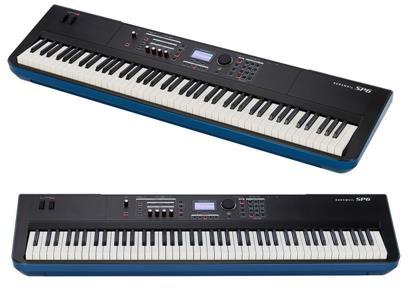
Two very interesting videos for you to see and hear all the power of this keyboard:
Posts you can be interested in
- Ranking with the best digital pianos
- My selection of cheap musical keyboards.
- Basic concepts you need to know about digital pianos.
- The best resources to learn to play the piano by yourself.
Now let’s compare the Kurzweil SP6 with its more common alternatives. Also at the end of the post, you will find a section with the best shopping possibilities for this digital piano. But you can go directly to that part of the post by pressing the following button.
Kurzweil SP6 vs Kurzweil PC4
In our first comparison, we will have two digital pianos of the same brand Kurzweil, the keyboard Kurzweil SP6 which as we saw is priced at €999/$1300/£938 and the big Kurzweil PC4 which is priced at €1.799/$2000/£1,655 a big difference of 800 euros, we will see their similarities and differences:
- Both digital pianos offer a keyboard with 88 weighted keys, which those of the Kurzweil PC4 have RPHA (Real Piano Hammer Action) technology and adjustable aftertouch sensitivity achieved to have a more realistic simulation of an acoustic piano. Weighted Keyboard, means the weight that the keys have to resemble more to those of an acoustic piano, in the low notes more weight that decreases as it reaches the high notes. All keyboards with weighted keys have sensitivity, which is the option to make dynamics, that when we press a key strongly, it sounds higher, than another we press less strongly.
- Both have the VAST (Variable Architecture Synthesis Technology) sound engine, the SP6 with 128 notes of polyphony and the PC4 with 256 notes of polyphony, which is the most notes that can be played at the same time.
- In terms of sounds, the SP6 has 256 factory sounds, 1024 user sounds, 130 multis factory sounds and 1024 multis factory sounds, in total 2Gb storage. And the PC4 offers more than 1000 factory sounds, 4096 user sounds, more than 50 multis factory sounds, which speaking in storage are 2Gb of factory sounds and 2Gb of user sample memory sounds.
- Both have the KB3 ToneReal Organ function, K.S.R. (Kurzweil String Resonance), and a software editor. They offer very real organ tones and string resonances that give a great simulation of the instruments.
- In physical controllers, the Kurzweil SP6 has 20 controllers (4 knobs, 1 Switch, 2 Wheels (Pitch and Modulation), 2 Dual-Switch Pedal Inputs, and 1 Continuous Control Pedal Input. The PC 4 has 35 (9 Faders) Sliders, 9 Knobs, 10 Switches, 2 Wheels (Pitch and Modulation), 2 Pedal Switch Inputs (with support for half a pedal), and 2 Continuous Control Pedal Inputs, Aftertouch and Ribbon controllers.) which allows greater control of the functions and performance of the digital stage piano. Both are good, however on the PC4 we have more control.
- Both have USB inputs, the SP6 has 2, while the PC4 has 4, they are for extra storage.
- Both pianos have auxiliary audio input and audio outputs, plus they have the option of USB MIDI for connection to a computer to serve as a MIDI controller in a music composition/production program.
- In weight and measurements, both keyboards are very similar, the SP6 has 12.36 Kg and measures 1333 x 381 x 146mm (width x depth x height), and the PC4 has a weight of 13Kg and measures 1270 x 374.6 x 165.1 cm (width x depth x height)
Both digital pianos are very similar, taking into account that one is a stage piano and the other is an arrangement piano. The PC4 has better and more features, having a greater amount of sounds and more physical controllers, which allow a greater control towards its different functions. It can also be noted that the PC4 has four extra storage inputs and has a lot of space for compositions, demos and arrangements. Both are excellent in their different purposes, and the SP6 is still an excellent choice for stage piano.
We invite you to listen to the sounds of each piano and make an auditory comparison for yourself.
We will put the characteristics of each of these pianos in 2 different columns to make it easier to see the differences:
|
Kurzweil SP6 |
Kurzweil PC4 |
|---|---|
|
|
And now a video of the Kurzweil PC4
If you want to know more about this model don’t miss our review of the Kurzweil PC4.
Kurzweil SP6 vs Yamaha MX 88
Now we will compare two digital pianos the Kurzweil SP6 keyboard which as we know is priced at €999/$1300/£938 and the Yamaha MX 88 digital piano which is priced at €888/$1099/£818, with a difference of about 100 Euro, we will see their differences and similarities in the face to face:
- Both pianos have 88-key weighted keyboards (each keyboard with its own technology) and sensitivity.
- The Kurzweil SP6 has its VAST sound engine, with a large number of sounds, about 2500, with 128 polyphonic notes. The Yamaha MX88 has its AWM2 sound engine with 1000 tones/speakers, and 128 notes of polyphony, which is the highest number of notes that can be played at the same time. Where the Kurzweil has a great advantage by almost doubling the sounds or voices of the Yamaha.
- In terms of effects, the Kurzweil SP6 has a powerful effects engine with 32 units. The Yamaha MX88 has its VCM (Virtual Circuitry Modeling) effect engine. As always we invite you to watch the Videos so you can compare the sounds of each piano.
- In physical controllers the Kurzweil SP6 has 20 controllers (4 knobs, 1 Switch, 2 Wheels (Pitch and Modulation), 2 Dual-Switch Pedal Inputs and 1 Continuous Control Pedal Input. The Yamaha MX88 Pitch has only 8 (2 Wheels (Pitch and Modulation), 4 Knobs, 2 Pedal Inputs). Where the Kurzweil stands out due to its greater control, which if you are playing live is more than good for you.
- Both keyboards have: line out and line in, USB MIDI to serve as a MIDI controller in a computer for use in a music composition and production program.
- Both are compatible with music editing software.
- The Kurzweil SP6 weighs 12.36 kg and measures 1333 x 381 x 146 mm (W x D x H), and the Yamaha MX88 weighs 13 kg and measures 1320 x 405 x 168 mm (W x D x H). Both weighing about the same size and weight.
Here is a video of the Yamaha’s engine:
We will put the characteristics of each of these pianos in 2 different columns to make it easier to see the differences:
|
Kurzweil SP6 |
Yamaha MX88 |
|---|---|
|
|
First, a comparative video between the two teams, in which it is worth mentioning certain important points:
- Both have professional sounds, that is to say, in neither you will be disappointed by the audio quality
- In general, the Yamaha sounds brighter than the Kurzweil. However as a personal opinion, Kurzweil sounds more real.
- On the low notes, I like the sound of the Yamaha better, however and taking into account that both are EQ’s at zero (i.e. it has no EQ) the dynamic range of the Kurzweil sounds better.
- If we classify them by a musical style, Kurzweil might be more suitable for classical compositions, ballads, and film music. ballads, and film music. The Yamaha may be more suitable for playing contemporary pianists.
Here is the video, listen to each piano and draw your own conclusions.
And now a video of the Yamaha MX88
If you want to know more about this model don’t miss our review of the Yamaha MX88.
Kurzweil SP6 vs Roland Juno-DS 88
Finally, we will have the comparison of the digital pianos the Kurzweil SP6 that as we know has the price of €999/$1300/£938 and the Roland Juno-DS88 digital piano that has a price of €939/$1100/£855, with a difference of 60 euros, we will see their differences and similarities in the face to face:
- Both pianos have keyboards with 88 weighted keys (each keyboard with its technology) and with sensitivity. The Roland has its keys with an ivory touch, which offer more realism of an acoustic piano when playing.
- The Kurzweil SP6 has its VAST sound engine, with a large number of sounds, about 2500, with 128 notes of polyphony. The Roland Juno DS88 has its sound engine with 1200 tones/speakers, and 128 notes of polyphony, which is the highest number of notes that can be played at the same time. The Roland is compatible with the GM2 sound engine, here a list of sounds. The SP6 outperforms it with more than double the amount of sounds, however the Roland is not far behind with its virtual wave expansion slots, which allows new waveforms to be downloaded.
- When it comes to effects, the Kurzweil SP6 has a powerful effect engine with 32 units. The Roland Juno DS88 has a total of about 96 effects.
- In physical controllers the Kurzweil SP6 has 20 controllers (4 knobs, 1 Switch, 2 Wheels (Pitch and Modulation), 2 Dual-Switch Pedal Inputs and 1 Continuous Control Pedal Input. The Roland Juno DS88 Pitch has only 18 (4 Knobs, 4 Sliders (Faders), 8 Multicolor Pads, 2 Pedal Inputs)
- Both keyboards have: line out and line in, USB MIDI to serve as a MIDI controller in a computer for use in a music composition and production program. Giving both keyboards a good control of their defects and performance, which for live playing is very useful. The Roland Juno DS88 also has microphone input and dedicated effects such as reverb, vocoder and tone effects, which is an advantage over the Kurzweil.
- Both are compatible with music editing software.
- The Kurzweil SP6 weighs 12.36 kg and measures 1333 x 381 x 146 mm (W x D x H), and the Yamaha MX88 weighs 13 kg and measures 1320 x 405 x 168 mm (W x D x H)
Both are excellent stage pianos, each having its own advantage over the other. While the Kurzweil has a greater amount of sound. The Roland, has a virtual wave expansion, eight phrase pads to trigger samples or songs, and a microphone input with effects to modify the sound of the voice.
We’ll put the characteristics of each of these pianos in 2 different columns to make it easier to see the differences:
|
Kurzweil SP6 |
Roland Juno-DS 88 |
|---|---|
|
|
And now a video of the Roland Juno DS88:
If you want to know more about this model don’t miss our review of the Roland Juno-DS 88
Where to buy Kurzweil SP6
Thomann
- Free Shipping.
- Full warranty. If you have any problems, they take care of everything.
- 100% reliable payment.
- Leader in trouble-free shipping.
- Usually Best price.
- Best Reputation: They are the leading online store in Europe and have the best catalogue and information.
Amazon
- Free Shipping and possibility of shipping in one day with Amazon Premium.
- Full Guarantee but they are no experts in music equipment.
- Sometimes better price.
- He’s got worse stock than Thomann.
Check below related models with similar price and features:
- Roland FP 60
- Yamaha P515
- Yamaha YDP 164
- Roland FP 90
- Korg G1 Air
- Casio PX 560
- Roland Kiyola KF 10
- Korg PA 1000
- Korg PA 700 Oriental
- Yamaha PSR S975
- Korg Havian 30
- Korg PA 700
- Kawai EN 8
- Kawai MP 7
- Clavia Nord Electro 6D 61
- Clavia Nord Stage 3 88
- Kurzweil SP6
- Kawai MP 11
- Korg SV1 73
- Kurzweil Forte 8
- Clavia Nord Electro 6D 73
- Clavia Nord Stage 3 HP76
- Roland RD 2000
- Kurzweil Artis 7
- Clavia Nord Piano 4
- Clavia Nord Stage 3 compact
- Crumar Seven
- Clavia Nord Electro 6
- Korg Grandstage 73
- Dexibell Vivo Stage S9
- Dexibell Vivo Stage S1
- Korg SV1 88
- Korg Grandstage 88
- Kurzweil Forte SE
- Yamaha CP88
- Roland VR 730
- Studiologic Numa Concert
- Yamaha CP73
- Dexibell Vivo Stage S7
- Yamaha CP300
- Yamaha CP1
- Clavia Nord Grand
- Viscount Physis Piano K4 EX
- Viscount Physis Piano K5 EX
- Dexibell Vivo Portable P7
- Kurzweil Artis
- Dexibell Vivo Portable P3
- Dexibell Vivo Stage S3
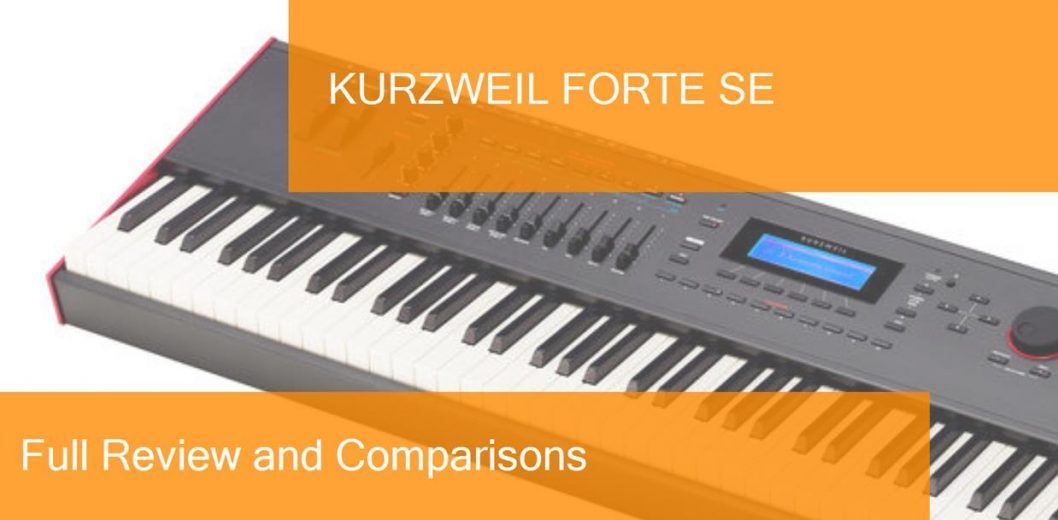
Digital Piano Kurzweil Forte SE Full Review. Is it a good one?
Complete Review Kurzweil Forte SE Digital Piano – Is it a good choice?
Kurzweil Music Systems is an American company that produces electronic musical instruments. It was founded in 1982 by instrumentalist musician Stevie Wonder, multi-faceted (inventor, musician, entrepreneur, writer and scientist) Raymond Kurzweil and software developer Bruce Cichowlas.
Among its stage piano models, the Kurzweil Forte SE with a price of €1700, we have a great musical instrument with many functions and features that make it a very interesting digital piano, which has the following characteristics:
- 88 weighted keyboard (Weight that the keys of an acoustic piano have and that digital pianos try to imitate to equal the touch of the piano. The keys in the high register are heavier and in the high register less. This is different from the sensitivity on the keyboard which serves to regulate the volume of the note. But a weighted keyboard always has sensitivity in the keys) type Fatar Tp100LR
- 128 notes of polyphony (Number of notes that can be played at once. This includes accompaniments that also consume notes. So if you play over an accompaniment more notes will be accumulated)
- 512 sounds (Different sounds of piano and other instruments)
- 182 multi to create different layering
- 2 GB Flash Play including the German Grand D-piano and the Japanese Grand Piano
- 188 MB of memory for samples configured and recorded by you. For loops, etc
- 1024 user-configurable sound programs
- Split function (divide the keyboard into two different instruments) with 8 zones and Quick Split
- Dual mode (Dual mode allows you to combine two sounds to create a more complete one. Typical is the combination of piano + string sound) and layering
- It has up to 32 effects including the typical reverb, chorus, and
- V.A.S.T. Edition
- 8 arpeggiators
- 9 buttons and 9 sliders on the front Modulation wheel and pitch bend (Functionality that changes the sound wave of what you play and then returns to its original state)
- Master EQ (refers to the master equalizer that allows you to adjust the parameters of the sound mix coming out of your speakers) with adjustable mid registers
- High quality LC display
- Line output
- Stereo headset output
- 3.5 mm mini-jack stereo input
- 2 inputs for switch pedals that can be used as a sustain pedal (The sustain pedal of a piano or keyboard is used to keep the note playing even if you stop pressing the key)
- Expression Pedal Input
- Midi input and output (MIDI allows you to do such wonderful things as connect your keyboard to your computer, record a sound track, and with certain programs click through what you’ve played to musical notes on a score. MIDI tracks store the information of the musical notes)
- USB to device for for example a pendrive
- weight 18.5 kg and dimensions (W x H x D): 124.2 x 38.6 x 13.2 cm
- Includes a foot switch

Now that we have listed and described the features of this keyboard there is no better way than to take a look at the following videos where they tell us more about the Kurzweil Forte and you can hear how its different sounds sound.
Related post you can be interested in
- Ranking with the best digital pianos
- My selection of cheap musical keyboards.
- Basic concepts you need to know about digital pianos.
- The best resources to learn to play the piano by yourself.
Now let’s compare the Kurzweil Forte SE with its more common alternatives. Also at the end of the post you will find a section with the best shopping possibilities for this digital piano. But you can go directly to that part of the post by pressing the following button.
Kurzweil Forte SE vs Kurzweil SP6
The first comparison we will have with two digital pianos of the same brand: Kurzweil. The Kurzweil Forte SE which, as we have already mentioned, has a price of approximately €1700 and the Kurzweil SP6 which has a price of €999/$1299/£938. We will analyze their differences and similarities in the next section:
- Both keyboards have 88 touch-sensitive and weighted keys. When we say sensitive we mean the option of making dynamics in our musical performances, that is to say, at the moment of pressing a key with force it will sound higher and at the moment of touching a key or less force it will sound lower. Weighted keyboard refers to the weight that the keys of a real acoustic piano have, in the low range it has heavier keys and in the high range lighter keys.
- The Kurzweil Forte SE has 512 sounds, with 128 notes of polyphony and 2Gb of storage including, among others, the German and Japanese Grand Piano. In terms of sounds the SP6 has 256 factory sounds, 1024 user sounds, 130 multis factory sounds and 1024 multis factory sounds, in total 2Gb storage. Polyphony refers to the number of notes that can be played simultaneously in a piece of equipment.
- Both have the function of KB3 ToneReal Organs, K.S.R. (Kurzweil String Resonance), and a software editor. They offer very real organ tones and string resonances that give a great simulation of the instruments. In addition to its VAST sound engine.
- In physical controllers, the Kurzweil Forte SE has 22 controllers (9 knobs, 9 Switches, 2 Wheels (Pitch and Modulation) and 2 Dual-Switch Pedal Inputs. The Kurzweil SP6 has 20 controllers (4 knobs, 1 Switch, 2 Wheels (Pitch and Modulation), 2 Dual-Switch Pedal Inputs, and 1 Continuous Control Pedal Input.
- Both digital pianos have many effects in general.
- Both have USB inputs, the SP6 has 2, while the Forte SE has 1, they are for extra storage.
- Both pianos have auxiliary audio input and audio outputs, plus they have the option of USB MIDI for connection to a computer to serve as a MIDI controller in a music composition/production program.
- In weight and measurements, the Forte SE weighs 18.5 kg and measures (W x H x D): 124.2 x 38.6 x 13.2 cm and the SP6 is 12.36 kg and measures 1333 x 381 x 146mm (W x D x H)
Being of the brand Kurzweil, both have many similarities, however the Kurzweil forte is unfortunately no longer on the market while the SP6 is still on the market today. So it gives you a really big advantage, besides having a much lower price.
We will put the characteristics of each of these pianos in 2 different columns to make it easier to see the differences:
|
Kurzweil Forte SE |
Kurzweil SP6 |
|---|---|
|
|
And now a video of the Kurzweil SP6:
Don’t miss our review of the Kurzweil Forte SP6.
Kurzweil Forte SE vs Clavia Nord Stage 3 88
We will buy the following digital keyboards: The Kurzweil Forte SE keyboard And as we have already mentioned it has a price of about €1700 and the Clavia Nord Stage 3 88 which is currently priced at €3490/$4499/£3,185, with a difference of almost twice the price, we will see their differences and similarities according to functions:
- Both keyboards have 88 touch-sensitive, weighted keys. When we say sensitive, we mean the option to make dynamics in our musical performances, that is, when pressing a key with force it will sound louder and when touching a key or less force it will sound lower. Weighted keyboard refers to the weight that the keys of a real acoustic piano have, in the low range it has heavier keys and in the high range lighter keys.
- The Kurzweil Forte SE has 512 sounds, with 128 notes of polyphony and 2Gb of storage including, among others, the German and Japanese Grand Piano. And the Nord Stage 3 also has 2Gb of storage that can be filled with samples from the Nord Piano Library or Nord Samples Library, with a polyphony of 120 notes. Polyphony refers to the number of notes that can be simultaneously in a piece of equipment.
- The Kurzweil Forte SE features: KB3 ToneReal, K.S.R. (Kurzweil String Resonance) organs, and a software editor. These provide very real organ tones and string resonances that give a great simulation of the instruments. In addition to its VAST sound engine.
- The Clavia Nord Stage 3 88 features the following functions: Very smooth sound transitions, String Resonance function (Gen 2), Noise Pedal and Long-Release option, Arpeggiator function, has Master Clock and Unison modes and includes modes for the famous B3, Vox/Farfisa and Main Pipe organs very similar to the original. It also simulates the Vintage 122 Leslie
- In physical controllers, the Kurzweil Forte SE has 22 controllers (9 knobs, 9 Switches, 2 Wheels (Pitch and Modulation) and 2 Dual-Switch Pedal Inputs. The Clavia Nord Stage 3 88 has a large number of knobs and buttons to move around in its different functions, and input for four pedals: sustain, rotor, organ, and control. It also supports a triple pedal input.
- Both digital pianos have many effects in general.
- Both have USB inputs, the SP6 has 2, while the Nord has 1, they are for extra storage. The Nord also has an ICC c14 type network cable.
- Both pianos have auxiliary audio input and audio outputs, and have the option of USB MIDI for connection to a computer to serve as a MIDI controller in a music composition/production program.
- In weight and measurements, the Forte SE weighs 18.5 kg and measures (W x H x D): 124.2 x 38.6 x 13.2 cm and the Clavia Nord Stage 3 88 weighs 19 kg and measures 1287 x 334 x 118 mm. Very similar.
Both are excellent digital pianos, with the Clavia Nord Stage 3 winning in many comparisons, and it is not for nothing that this digital piano is so famous among professional musicians. It has a large number of effects and features that allow a high quality performance on stage. Although for the price, the Kurzweil’s features are not bad.
We will put the characteristics of each of these pianos in 2 different columns to make it easier to see the differences:
|
Kurzweil Forte SE |
Clavia Nord Stage 3 88 |
|---|---|
|
|
And now a video of the Clavia Nord Stage 3 88
If you want to know more about this model don’t miss our review of the Clavia Nord Stage 3 88.
Kurzweil Forte SE vs Roland RD-2000
Now we will move on to the next comparison: the Kurzweil Forte SE keyboard which as we have already said has a price of approximately €1700 the Roland RD-2000 which currently has a price of €2290/$2599/£2,090. So let’s move on to the face-to-face of these two devices:
- Both keyboards have 88 touch-sensitive and weighted keys. The keys of the Roland are a hybrid of wood and plastic giving a greater simulation of a real acoustic piano.
- The Kurzweil Forte SE has 512 sounds, with 128 polyphonic notes and 2Gb of storage including among others, the German and Japanese Grand Piano The Roland offers 1113 sounds, with 128 polyphonic notes.
- The Kurzweil Forte SE features: KB3 ToneReal Organs, K.S.R. (Kurzweil String Resonance), and a software editor. These offer very real organ tones and string resonances that give a great simulation of the instruments. In addition to its VAST sound engine.
- The functions that characterize the Roland RD-2000 are: Eight knob wheel controls and nine slide controls, you can also split into eight different zones, layer function.
- In physical controllers, the Kurzweil Forte SE has 22 controllers (9 knobs, 9 Switches, 2 Wheels (Pitch and Modulation) and 2 Dual-Switch Pedal Inputs. The Clavia Nord Stage 3 88 has
- The RD-2000’s are: Eight wheel knobs and nine slide controls.
- Both pianos have auxiliary audio input and audio outputs, plus they have the option of USB MIDI for connection to a computer to serve as a MIDI controller in a music composition/production program.
- In weight and measurements, the Forte SE weighs 18.5 kg and measures (W x H x D): 124.2 x 38.6 x 13.2 cm and the Roland RD-2000 weighs 21.7 kg and measures 1412 x 367 x 140mm (W x D x H)
Interesting proposals for digital stage pianos, on this occasion the Roland wins in many of the points, starting with the quality of its keyboard that being a hybrid technology between wood and plastic has a better quality. Also the quantity of sounds is much higher than the Roland, than the Kurzweil. The Kurzweil has many functions and physical controllers, but in the rest the Roland surpasses it, of course also in price, getting to cost almost twice as much.
We are going to put the characteristics of each of these pianos in 2 different columns to make it easier to see the differences:
|
Kurzweil Forte SE |
Roland RD-2000 |
|---|---|
|
|
And now a video of the Roland RD-2000
If you want to know more about this model don’t miss our review of the Roland RD-2000
Kurzweil Forte SE vs Yamaha CP4 Stage
We will buy the following digital keyboards: The Kurzweil Forte SE keyboard which as we mentioned before is priced at approximately €1700 and the Yamaha CP4 Stage which is priced at approximately €1500 with a difference of approximately €200 between the two. We will therefore analyze their differences and similarities on the next side:
- Both keyboards have 88 touch-sensitive and weighted keys. The keys of the Yamaha are made of wood giving a greater simulation to a real acoustic piano.
- The Kurzweil Forte SE has 512 sounds, with 128 notes of polyphony and 2Gb of storage including among others, the German and Japanese Grand Piano. The Yamaha CP4 Stage offers 433 sounds and 128 notes of polyphony generated by its two sound engines: the SCM and AWM2.
- The Kurzweil Forte SE features: KB3 ToneReal Organs, K.S.R. (Kurzweil String Resonance), and a software editor. These offer very real organ tones and string resonances that give a great simulation of the instruments. In addition to its VAST sound engine.
- The Yamaha CP4 Stage features: Pitch Bend and modulation wheels, 4 zone split function, and dual or layer function.
- In physical controllers, the Kurzweil Forte SE has 22 controllers (9 knobs, 9 switches, 2 wheels (Pitch and Modulation) and 2 Dual-Switch Pedal Inputs. The Clavia Nord Stage 3 88 has The Yamaha CP4 Stage has 2 sustain pedal inputs that are included and 2 inputs for controller pedals.
- The Kurzweil has 32 effects, while the Yamaha has 11.
- Both have USB inputs, the SP6 has 2, while the Yamaha has 1.
- Both pianos have auxiliary audio inputs and audio outputs, and also have the option of USB MIDI for connection to a computer to serve as a MIDI controller in a music composition/production program.
- In terms of weight and dimensions, the Forte SE weighs 18.5 kg and measures (W x H x D): 124.2 x 38.6 x 13.2 cm and the Yamaha CP4 Stage weighs 17.5 kg and measures 1332 x 161 x 352 mm.
These are excellent stage pianos, with their respective advantages and disadvantages. The Kurzweil offers a greater amount of sounds and effects on the keyboard, apart from certain functions that are not available from Yamaha. However, the Yamaha has a keyboard with 88 real wooden keys, not plastic ones, and this surely also gives a better feeling of experience when simulating a real acoustic piano keyboard. So it will be a difficult decision, however depending on which one best meets your employer’s needs will be the best.
We will put the characteristics of each of these pianos in 2 different columns to make it easier to see the differences:
|
Kurzweil Forte SE |
Yamaha CP4 Stage |
|---|---|
|
|
And now a video of the Yamaha CP4 Stage
If you want to know more about this model don’t miss our review of the Yamaha CP4 Stage
Where to buy Kurzweil Forte SE
Thomann
- Free Shipping.
- Full warranty. If you have any problems, they take care of everything.
- 100% reliable payment.
- Leader in trouble-free shipping.
- Usually Best price.
- Best Reputation: They are the leading online store in Europe and have the best catalogue and information.
Amazon
- Free Shipping and possibility of shipping in one day with Amazon Premium.
- Full Guarantee but they are no experts in music equipment.
- Sometimes better price.
- He’s got worse stock than Thomann.
Check below related models with similar price and features:
- Roland FP 60
- Yamaha P515
- Yamaha YDP 164
- Roland FP 90
- Korg G1 Air
- Casio PX 560
- Roland Kiyola KF 10
- Korg PA 1000
- Korg PA 700 Oriental
- Yamaha PSR S975
- Korg Havian 30
- Korg PA 700
- Kawai EN 8
- Kawai MP 11
- Kawai MP 7
- Clavia Nord Electro 6D 61
- Clavia Nord Stage 3 88
- Kurzweil SP6
- Korg SV1 73
- Kurzweil Forte 8
- Clavia Nord Electro 6D 73
- Clavia Nord Stage 3 HP76
- Roland RD 2000
- Kurzweil Artis 7
- Clavia Nord Piano 4
- Clavia Nord Stage 3 compact
- Crumar Seven
- Clavia Nord Electro 6
- Korg Grandstage 73
- Dexibell Vivo Stage S9
- Dexibell Vivo Stage S1
- Korg SV1 88
- Korg Grandstage 88
- Kurzweil Forte SE
- Yamaha CP88
- Roland VR 730
- Studiologic Numa Concert
- Yamaha CP73
- Dexibell Vivo Stage S7
- Yamaha CP300
- Yamaha CP1
- Clavia Nord Grand
- Viscount Physis Piano K4 EX
- Viscount Physis Piano K5 EX
- Dexibell Vivo Portable P7
- Kurzweil Artis
- Dexibell Vivo Portable P3
- Dexibell Vivo Stage S3