
- Home
- Author's Archive:
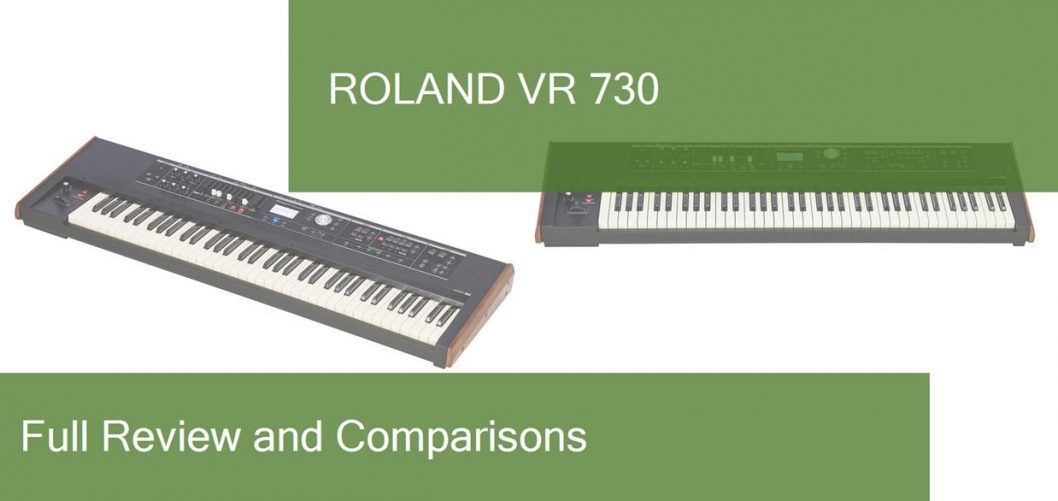
Digital Piano Roland VR 730 Full Review. Is it a good keyboard?
Digital Piano Roland VR 730 Full Review. Is it a good choice?
Roland is a Japanese electronic musical instrument company that has always been known for its electronic synthesizers and keyboards, as well as professional products for electric guitars, drums, and more. Now we are going to review the Roland VR 730, a good performance keyboard, with the following features:
- With professional Sounds (Different sounds of piano and other instruments) for live music
- 73 key half-weighted keyboard
- Fast access to organ, piano, and synthesizer sounds by selecting on the user interface
- Virtual drawbars with authentic vintage organ sounds
- 3 Built-in Rotary effects
- Including a newly developed Rock rotary for strong band performance
- Vintage e-pianos and acoustic grand pianos
- A selection of electric pianos from Roland RD-2000
- Seven simultaneous effects with a real-time controller
- Not speakers, not sustain pedal (The most important pedal of a piano or keyboard is the sustain pedal and is used to keep the note playing even if you stop pressing the key.) included
- Metronome (Element of basic study to study and practice the tempo of a piece of music.)
- Looper
- Can operate with batteries
- You can download sounds reloaded free of
charge at the Roland’s Axial Website - USB audio recording function
- Line Output (L / MONO, R) jack
- Sustain pedal input
- EXT input: Stereo 3.5 mm jack
- Standard midi (MIDI allows you to do such wonderful things as connect the keyboard to the computer, record a soundtrack, and with certain programs pass with a click what you have played to musical notes in a score. MIDI tracks store information from musical notes) (IN, OUT)
- Comes with free iPad editor app for sound editing
- Dimensions (W x D x H): 1215 x 366 x 124 mm and a weight of 9.9 kg
Now that we’ve listed and described the features of this digital piano there’s no better than taking a look at the following video where they tell us more about the Roland VR 730 and you can hear the different sounds of this piano. It costs around €1.199/$1600/£1,090.
Related post you can be interested in
- Ranking with the best digital pianos
- My selection of cheap musical keyboards.
- Basic concepts you need to know about digital pianos.
- The best resources to learn to play the piano by yourself.
- The best Roland Digital Pianos.
Now let’s compare the Roland VR 730 with its more common alternatives. Also at the end of the post, you will find a section with the best shopping possibilities for this digital piano. But you can go directly to that part of the post by pressing the following button.
Roland VR 730 vs Clavia Nord Electro 6
The digital piano Roland VR 730 costs around €1.199/$1600/£1,090 and the Clavia Nord Electro 6, €1.775/$2500/£1,599.
These two keyboards have practically no point of comparison, as they have very different characteristics. It’s important to know what you’re looking for on a keyboard and decide based on the features already mentioned.
They both have 73 keys, Clavia Nord Electro works with 73 Keys with Nord Hammer Action Portable while Roland model has 73 key half-weighted keyboards.
On the other hand, Nord Electro 6 has quick access to two-manual setups with the dual-organ mode while Roland VR 730 has Fast access to organ, piano and synthesizer sounds by selecting on the user interface.
Additionally, unlike the Clavia model, the Roland keyboard has Virtual drawbars use authentic vintage organ sounds, and Vintage e-pianos and acoustic grand pianos.
Clavia Nord Electro 6 has Piano with Synth functions, Advanced Splitting, and layering. In addition, it counts with the Vibe effect, reverb, and delay effects separated and All effects are in stereo.
Let’s put the features of each of these pianos in 2 different columns to make it easier to see the differences
|
Roland VR 730 |
Clavia Nord Electro 6 |
|---|---|
|
|
And below a video of the Clavia Nord Electro 6
If you want to know more about this model do not miss our Clavia Nord Electro 6 review
Roland VR 730 vs Casio PX 560
The digital piano Roland VR 730 costs around €1.199/$1600/£1,090 and the Casio PX 560, €849/$1200/£777.
In this case, the Casio model has more keys to play, it has 88 keys with scaled hammer action II (Tri-Sensor and the Roland Model has 73 key half-weighted keyboards.
Casio PC 560 features 650 Sounds, 256 voices of Polyphony, and 220 Styles + 30 User Styles.
Additionally, It also has Multi-Dimensional Morphing AiR sound generation, Chorus, Reverb, Master EQ, Tone Editor, Transposer, Metronome, Pitch Bend, and Modulation wheels.
Other outstanding features would be Synthetic ebony and ivory touch keys for a better piano playing.
The Casio PX 560 is a more fun keyboard with a variety of functions, styles, and sounds while the Roland VR 730 has a focus on professional performance.
Let’s put the features of each of these pianos in 2 different columns to make it easier to see the differences
|
Roland VR 730 |
Casio PX 560 |
|---|---|
|
|
And below a video of the Casio PX 560
If you want to know more about this model do not miss our Casio PX 560 review
Roland VR 730 vs Korg Havian 30
The digital piano Roland VR 730 is usually about 11 € more expensive than Korg Havian 30. Let´s see what we have here.
Firstly, the Roland VR 730 has a weighted average keyboard of 73 keys while the Korg Havian 30 has 88 weighted receptive hammer keys.
While the Korg Havian 30 has 950 default sounds, 256 user sounds, 420 predefined styles, and 128 drum kits. It also has 128 polyphonic notes, 125 types of effects, and up to 1040 styles available.
Continuing with the features, the Roland VR 730 features a metronome, Looper and can operate with batteries, in addition, it has the function of recording audio via USB. In comparison, the Korg Havian 30 has an equalizer, Transposer and Split function, metronome, sequencer, Color display, joystick control, and recording function.
On the other hand, the Roland VR 730 doesn’t include a sustained pedal like the Korg Havian 30 and also doesn’t have a speaker input compared to the Korg that has a 2x 25W speaker system. In addition, the Korg Havian features a lectern and power supply included (The Roland includes its power supply).
Let’s put the features of each of these pianos in 2 different columns to make it easier to see the differences
|
Roland VR 730 |
Korg Havian 30 |
|---|---|
|
|
And below a video of the Korg Havian 30
If you want to know more about this model do not miss our Korg Havian 30 review
Roland VR 730 vs Dexibell Vivo Stage S1
The digital piano Roland VR 730 costs around €1.199/$1600/£1,090 and the Dexibell Vivo Stage S1, €1.266/£1,139.
The Dexibell Vivo Stage S1 features more than 80 chargeable user sounds, a compatible sound source, 81+ record storage locations, and unlimited USB memory for the user.
Other features of the Roland VR 730 are that it has metronome functions, Looper and can operate on batteries, plus it has the function of recording audio via USB. From this, the only common feature with the Dexibell is its functionality with batteries.
Let’s put the features of each of these pianos in 2 different columns to make it easier to see the differences
|
Roland VR 730 |
Dexibell Vivo Stage S1 |
|---|---|
|
|
And below a video of the Dexibell Vivo Stage S1
If you want to know more about this model do not miss our Dexibell Vivo Stage S1 review
Where to buy Roland VR 730
Thomann
- Free Shipping.
- Full warranty. If you have any problems, they take care of everything.
- 100% reliable payment.
- Leader in trouble-free shipping.
- Usually the Best price.
- Best Reputation: They are the leading online store in Europe and have the best catalog and information.
Amazon
- Free Shipping and possibility of shipping in one day with Amazon Premium.
- Full Guarantee but they are no experts in music equipment.
- Sometimes a better price.
- He’s got worse stock than Thomann.
Check below-related models with similar price and features:
- Roland FP 60
- Yamaha P515
- Yamaha YDP 164
- Roland FP 90
- Korg G1 Air
- Casio PX 560
- Roland Kiyola KF 10
- Korg PA 1000
- Korg PA 700 Oriental
- Kawai MP 11
- Yamaha PSR S975
- Korg Havian 30
- Korg PA 700
- Kawai ES 8
- Kawai MP 7
- Clavia Nord Electro 6D 61
- Clavia Nord Stage 3 88
- Kurzweil SP6
- Korg SV1 73
- Kurzweil Forte 8
- Clavia Nord Electro 6D 73
- Clavia Nord Stage 3 HP76
- Roland RD 2000
- Kurzweil Artis 7
- Clavia Nord Piano 4
- Clavia Nord Stage 3 compact
- Crumar Seven
- Clavia Nord Electro 6
- Korg Grandstage 73
- Dexibell Vivo Stage S9
- Dexibell Vivo Stage S1
- Korg SV1 88
- Korg Grandstage 88
- Kurzweil Forte SE
- Yamaha CP88
- Roland VR 730
- Studiologic Numa Concert
- Yamaha CP73
- Dexibell Vivo Stage S7
- Yamaha CP300
- Yamaha CP1
- Clavia Nord Grand
- Viscount Physis Piano K4 EX
- Viscount Physis Piano K5 EX
- Dexibell Vivo Portable P7
- Kurzweil Artis
- Dexibell Vivo Portable P3
- Dexibell Vivo Stage S3
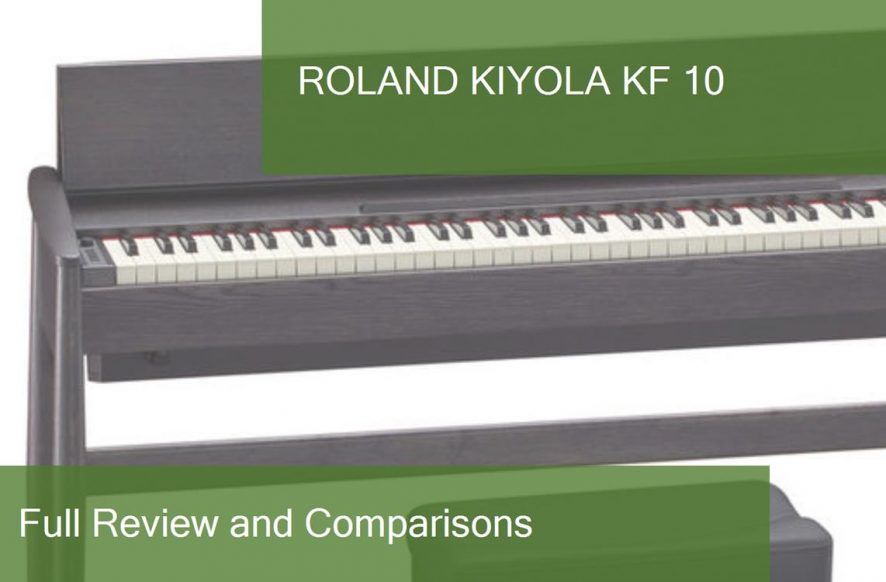
Digital Piano Roland Kiyola KF 10 Full Review. Is it a good choice?
Digital Piano Roland Kiyola KF 10 Full Review. Is it a good choice?
- PHA-50 hybrid keyboard with 88 keys, real Hammer Action (The weight of the keys on an acoustic piano that digital pianos try to imitate to match the touch of a real acoustic piano. The keys in the high register are heavier and in the high register less. This is a different concept of sensitivity on the keyboard that serves to regulate the volume of the note. But a hammer action keyboard always has sensitivity on the keys.)
- 384-voice polyphony (Number of notes that can sound at once. This includes songs that sound at once. So if you play over an accompaniment sound, more notes will accumulate.)
- SuperNatural Piano Modeling Sound Generation
- Tones: Grand Piano: 6 Tones (Grand Piano: 3 Tones, Upright Piano: 1 Tones, E. Piano: 1 Tones) + 265 Others (Including 8 Drum Sets, 1 SFX (Means Sound Effect, different set of sounds) Set)
- Hight quiality Effects: Ambience, brilliance
- Piano Sounds (Different sounds of piano and other instruments): Damper resonance, lid, key off
- Metronome (Element of basic study to study and practice the tempo of a piece of music.)
- Transposer (Transposition allows you to move the note spectrum of a keyboard. This allows you to play with transposing instruments. It is not an easy concept but it is made to facilitate the writing of an orchestration for instruments with very different bass and treble registers.)
- 30 Internal songs
- Triple pedal (The most important pedal of a piano or keyboard is the sustain pedal and is used to keep the note playing even if you stop pressing the key.)
- 2 Headphone connections for Duet mode (Duet mode allows you to divide the keyboard into two pianos to play four hands or the teacher and student on the same keyboard.)
- Bluetooth 4.0
- Usb to Host (It’s a more modern MIDI connector. MIDI allows you to do such wonderful things as connect the keyboard to the computer, record a soundtrack and with certain programs pass with a single click what you have played to musical notes in a score. MIDI tracks store note information)
- USB to device
- Two Speakers of 30W
- Dimensions (lid closed, W x D x H): 1396 x 337 x 782 mm and a weight of 33 kg
- 10-Year manufacturer’s warranty
- Includes good quality piano bench (KF-10-KSB) and stand
- 3 pedals (KF-10-KSB) included
Now that we’ve listed and described the features of this digital piano there’s no better than taking a look at the following video where they tell us more about the Roland Kiyola KF 10 and you can hear the different sounds of this piano.
Related post you can be interested in
- Ranking with the best digital pianos
- My selection of cheap musical keyboards.
- Basic concepts you need to know about digital pianos.
- The best resources to learn to play the piano by yourself.
- The best Roland Digital Pianos.
Now let’s compare the Roland Kiyola KF 10 with its more common alternatives. Also at the end of the post you will find a section with the best shopping possibilities for this digital piano. But you can go directly to that part of the post by pressing the following button.
Where to buy Roland Kiyola KF 10
Thomann
- Free Shipping.
- Full warranty. If you have any problems, they take care of everything.
- 100% reliable payment.
- Leader in trouble-free shipping.
- Usually Best price.
- Best Reputation: They are the leading online store in Europe and have the best catalogue and information.
Amazon
- Free Shipping and possibility of shipping in one day with Amazon Premium.
- Full Guarantee but they are no experts in music equipment.
- Sometimes better price.
- He’s got worse stock than Thomann.
Check below related models with similar price and features:
- Roland FP 60
- Yamaha P515
- Yamaha YDP 164
- Roland FP 90
- Korg G1 Air
- Casio PX 560
- Roland Kiyola KF 10
- Korg PA 1000
- Korg PA 700 Oriental
- Yamaha PSR S975
- Korg Havian 30
- Korg PA 700
- Kawai ES 8
- Kawai MP 11
- Kawai MP 7
- Clavia Nord Electro 6D 61
- Clavia Nord Stage 3 88
- Kurzweil SP6
- Korg SV1 73
- Kurzweil Forte 8
- Clavia Nord Electro 6D 73
- Clavia Nord Stage 3 HP76
- Roland RD 2000
- Kurzweil Artis 7
- Clavia Nord Piano 4
- Clavia Nord Stage 3 compact
- Crumar Seven
- Clavia Nord Electro 6
- Korg Grandstage 73
- Dexibell Vivo Stage S9
- Dexibell Vivo Stage S1
- Korg SV1 88
- Korg Grandstage 88
- Kurzweil Forte SE
- Yamaha CP88
- Roland VR 730
- Studiologic Numa Concert
- Yamaha CP73
- Dexibell Vivo Stage S7
- Yamaha CP300
- Yamaha CP1
- Clavia Nord Grand
- Viscount Physis Piano K4 EX
- Viscount Physis Piano K5 EX
- Dexibell Vivo Portable P7
- Kurzweil Artis
- Dexibell Vivo Portable P3
- Dexibell Vivo Stage S3

Digital Piano Roland GO KEYS Full Review. Is it a good choice?
Digital Piano Roland GO KEYS Full Review.
Is it a good choice?
This is a full review from Roland GO KEYS. Is it the best choice for you? If you have a budget of €280/$325/£259 it could be a good option. Let’s see it now.
- 61 Ivory-touch keys with velocity sensitivity (no weighted)
- 128 voice polyphony(In other words, the number of notes that can sound at once. This also includes songs that sound at once. To clarify, if you play over an accompaniment sound, more notes will accumulate.)
- Bluetooth 4.2
- MIDI format compatible with GM2(It’s a MIDI sound format that stores information about the musical notes you’re playing.)
- 500+ Sounds(Different sounds of piano and other instruments)
- Multi-effects/Chorus/reverb(To clarify, reverberation effect is a reflection effect of the sound)
- Transposer(Transposition allows you to move the note spectrum of a keyboard. In other words, this allows you to play with transposing instruments. It is not an easy concept, but it is made to facilitate the writing of an orchestration for instruments with very different bass and treble registers.)
- Over 12 sets of loops mix
- Over 672 patterns (12 sets x 56 patterns)
- 10 interpretation pads
- Functions: Bender: pitch bend(To clarify, this is a functionality that changes the sound wave of what you play and then returns to its original state) / Modulation; Effect: Roll / Filter
- Recording function
- LCD display
- Two x 2.5W speakers
- Possibility of operation with batteries
- Includes power supply (PSD-230 EU)
- Usb to Host(It’s a more modern MIDI connector. MIDI allows you to do such wonderful things as connect the keyboard to the computer, record a soundtrack and with certain programs pass, with a single click what you have played to musical notes in a score. MIDI tracks store note information)
- Sustain pedal(The most important pedal of a piano or keyboard, is the sustain pedal and it’s used to keep the note playing even if you stop pressing the key.) input (not included)
- Headphone output and auxiliary input
- Dimensions: 877 x 271 x 82mm (W x D x H) and a weight of 3.9kg.
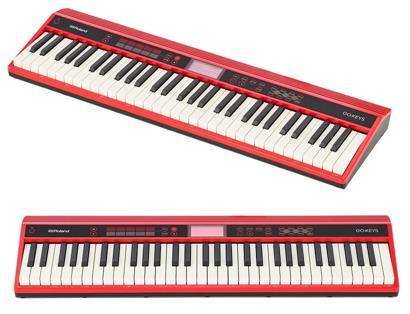
Now that we’ve listed and described the features of this digital piano; There’s no better than taking a look at the following video where they tell us more about the Roland GO KEYS, and you can hear the different sounds of this piano.
Related post you can be interested in
- Ranking with the best digital pianos
- My selection of cheap musical keyboards.
- Basic concepts you need to know about digital pianos.
- The best resources to learn to play the piano by yourself.
- The best Roland Digital Pianos.
Now let’s compare the Roland GO KEYS with its more common alternatives. In addition, you will find a section with the best shopping possibilities for this digital piano at the end of the post. But you can go directly to that part of the post by pressing the following button..
Roland GO KEYS vs Roland FP 30
The digital piano Roland GO KEYS is usually about€280/$325/£259 and the Roland FP 30 is €619/$700/£555. However, the two of them have different features but you must look carefully to learn which one is perfect for you right now. I just introduce you this piano because it is piano portable most sold worldwide. So it is important for you to know it
Roland FP 30 is the most portable digital piano nowadays with 88 keys and weighted keyboard. So it is perfect if you want to learn classical music in a proper way (weighted keys it a good point for this)
Now that you know every Roland GO KEYS feature we’ll just compare with Roland FP-30 features.
First of all, notice that Roland FP 30 has 88 keys with hammer action and velocity sensitivity which is different from the 61 keys with velocity sensitivity of Roland GO KEYS.
To clarify, Roland GO KEYS imitates the sound effect of making the volume louder or softer according to how hard or fast you press the key while Roland FP 30 additionally, simulates the weight of acoustic piano keys.
Roland FP 30 offers a more real and comfortable experience.
Roland FP 30 also has more powerful speakers than Roland GO KEYS. The first one has Two x 11 W – 12 cm while the GO KEYS has Two x 2.5 W speakers.
Furthermore Roland FP 30 offers the option of playing the same pitch with a partner on Twin piano mode. In addition, it has available layering and splitting sounds, transposer, built microphone and SMF recorder.
Roland GO KEYS has definitely more sounds (500 sounds) than Roland FP 30 (35 sounds) and it also has 12 sets x 56 patterns available.
Another feature of Roland GO KEYS different of Roland FP 30 is MIDI format compatible with GM2 and Multi-effects/Chorus/Reverb option available.
In short, you can choose the best for you depending on how you want to use it and how much would you like to spend.
Roland go keys is a really good option if you has less of 300 euros (350 USD) but if you study classical music or you want a real piano feeling when you play Roland FP 30 is the most popular option as portable piano. And in addition brings a mic to sing. What i really love it
And below a video of the Roland FP 30:
https://www.youtube.com/watch?v=62_LCDLQsU4
If you want to know more about this model don’t miss our Roland FP 30 review
Roland Go Keys vs Yamaha PSR E353
We are comparing two models from two of the most well known keyboard and piano manufacturers. Both models are aimed at the low to mid-range of keyboard instruments, and at a beginner audience or one whose requirements are not demanding. Although the price difference is remarkable (€280/$325/£259 for the Roland and about €198/$230/£180 for the Yamaha, which would be a difference of 90 euros) . In this case the Roland has more features than the Yamaha, but the Yamaha is adigital keyboard for tighter budgets. Let’s go on to describe and compare its main features:
- Same number of keys (61) Both cases have touch-sensitive keys with dynamic volume control at the touch of a button (the more you press it, the louder the note will sound).
- The Roland can have more notes in polyphony. It also provides the possibility of making Loops (repetitions of compositions or musical sequences, repeatedly or in a loop).
- The Yamaha presents more variety of sounds with the Roland, but beats the latter in patterns compared to the amount offered by the Yamaha PSR-E363.
- Both feature Reverb and Chorus effects. It also features transposition, which helps to move different tones of scale.
- Both models have sustain pedal input. An advantageous resource when learning to play the piano and improving the expressiveness, quality and quantity of the songs we can play.
- Both have a USB MIDI connection, which allows you to record songs using MIDI tracks to take them to the computer, and do things like pulling out your sheet music.
- The Roland doesn’t have a metronome, whereas the Yamaha keyboard does.
- Both have batteries (they can be easily transported anywhere without depending on the power supply) and are very lightweight:
- Roland Go Keys: 3.9 kg (incredibly light).
- Yamaha PSR-E363: 4.6kg.
- Both have 2.5W speakers, very little power to be well heard in rehearsal rooms or live performances such as bars or pubs.
- The Yamaha has a duo function (it allows you to split the keyboard into two keyboards with half of the keys each, and you can play one person accompanied by another, for example a teacher). The Roland does not have this function.
- Only the Yamaha keyboard has an auxiliary input (minijack). This allows you to put an mp3 or an instrument in it and have it play through the speakers.
- Possibility of making arpeggios (musical phrases or sequence of notes) in the Yamaha PSR-E363. The Roland does not have this function.
- The Roland features modulation and slide with Picth Bend adjustment, of this function and others. The Yamaha features a joystick that does similar functions for control. In contrast, the Yamaha features an equalization system (Master EQ).
We will put the characteristics of each of these pianos in 2 different columns to make it easier to see the differences:
|
Roland Go Keys |
Yamaha PSR-E353 |
|---|---|
|
|
Now have a look to this short video review:
Don´t miss our full review of this top seller. The Yamaha PSR E363
Roland GO KEYS vs Startone MK 300
The digital piano Roland GO KEYS is usually €280/$325/£259 and the Startone MK 300 is around €115/£102 . But if you live at Europe the Startone brand could be a really good option if your budget is around 120 euros. For this price you have the Startone MK 300 that has sensitivity keyboard, sustain pedal input and MIDI. It is like the Yamaha PSR 363 but a little worst. But it is a really good value for the money.
Startone MK 300 can play just 64 voice polyphony while Roland can play 128 voice polyphony. Also, Roland has more sounds (500 sounds) than Startone MK 300 (390 sounds)
Both models has 61 Keys with velocity sensitivity and can operate with batteries. Also, both of them possess two speakers: Roland GO KEYS has two x 2.5W speakers and Startone model has two x 3W speakers.
Additionally, both models have recording function, Headphone output and USB to Host.
Importantly, Roland GO KEYS has a few features not available on MK 300 these are some of them:
- MIDI format compatible with GM2
- Multi-effects/Chorus/Reverb
- Transposer
- More than 12 sets of loops mix
- More than 672 patterns (12 sets x 56 patterns)
And below a video of Startone MK-300
If you want to know more about this model don’t miss our Startone MK 300 review
Where to buy Roland GO KEYS
Amazon
- Free Shipping and possibility of shipping in one day with Amazon Premium.
- Full warranty, but they’re not experts in music equipment.
- Sometimes better price.
- Particularly, he’s got worse stock than Thomann.
Thomann
- Free shipping.
- Full warranty. If you have any problems, they take care of everything.
- 100% reliable payment.
- Leader in trouble-free shipping.
- Usually best price.
- Best reputation: They’re the leading online store in Europe and have the best catalogue and information.
Related models
Check below related models with similar price and features:
| Thomann | Korg | Roland | |
| DP 26 | Tiny Piano | Roland GO KEYS | |
| SP 320 |
|
||
| Yamaha | Startone | Casio | |
| NP 32 Piaggero | Startone MK 300 | SA 46 | |
| PSR E463 | Startone MK 200 | SA 47 | |
| PSR E363 | Startone MKR 61 | CTK 240 | |
| EZ 220 | CT X700 | ||
| PSR E263 | Midiplus | LK 280 | |
| PSR EW300 | Stage 88 | SA 76 | |
| sonogenic SHS 500 | CTK 3500 | ||
|
LK 265 | ||
| LK 136 | |||
| CTK 1500 | |||
| SA 77 | |||
| SA 78 | |||
|