
- Home
- Author's Archive:
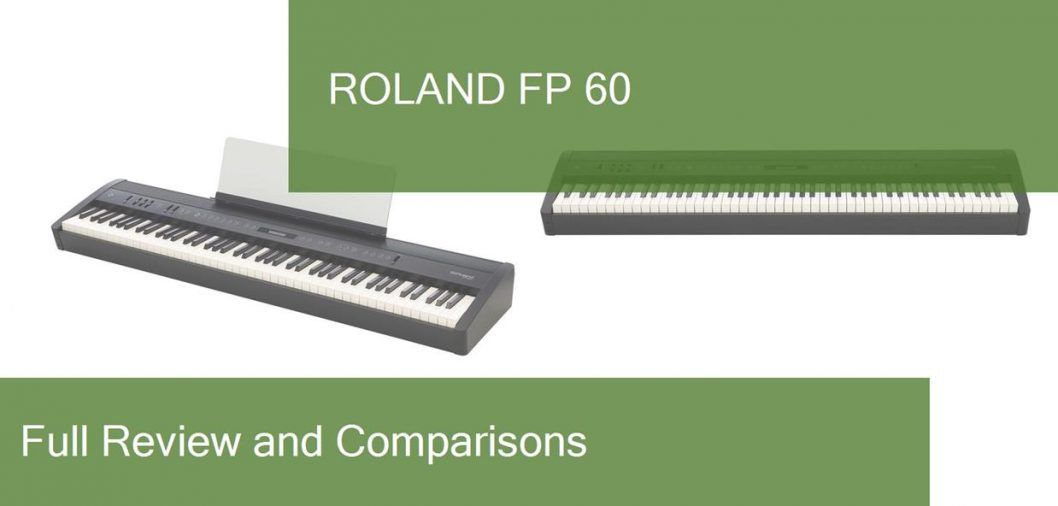
Digital Piano Roland FP-60 Full Review. Is it a good purchase?
Roland FP-60 Digital Piano Review Complete. A Good Choice?
Roland is a Japanese electronic musical instrument company that has always been known for its electronic synthesizers and keyboards, as well as professional products for electric guitars, drums and more. This portable digital piano offers exceptional sound and touch sensitivity in a stylish cabinet that looks great and is easy to transport. The specially designed on-board speaker system produces impressive, luxurious sound with wide projection for small room performances, while the selection of sounds from other instruments allows you to cover a variety of musical styles. You can’t expect anything less than a €1.329/$1500/£1,199 instrument.
The Roland FP 60 is a more advanced version of the ultra-modern Roland FP 30. Let’s go with your analysis and that of your competitors:
- SuperNatural Sound Engine
- 88 weighted keys (Weight that the keys of an acoustic piano have and that digital pianos try to imitate to equal the touch of the piano. The keys in the high register are heavier and in the high register less. This is different from the sensitivity on the keyboard which serves to regulate the volume of the note. But a counterbalanced keyboard always has sensitivity in the keys) with escapement and ivory touch
- 288 notes of polyphony (Number of notes that can be played at once. This includes accompaniments that also consume notes. So if you play over an accompaniment more notes will be accumulated)
- 15 sounds (different piano sounds and other instruments) from acoustic pianos
- 16 electric piano sounds
- 11 types of sound
- 15 organ sounds
- 15 pad controls
- Metronome (Basic study element to study and practice the tempo of a piece of music)
- Transposition function (Transposition allows you to move the note spectrum of a keyboard. This is to be able to play with transposing instruments. It is not an easy concept but it is made to facilitate the writing of an orchestration for instruments with very different bass and treble registers)
- 30 tracks for the user to create and store their own sounds
- Dual mode (Dual mode allows you to combine two sounds to create a more complete one. Typical is the combination of piano + string sound)
- Duo mode (Duo mode allows the keyboard to be divided into two pianos so that four hands can be played or the teacher and student can play on the same keyboard) with adjustable midpoint
- Split mode (Split the keyboard into two different instruments)
- 3-band equalizer between effects
- Effects for organ tones
- Effects to enrich electric pianos
- Recording in SMF format while playing
- Plays audio in WAV and MP3 format (requires flash memory)
- USB midi (MIDI allows you to do such wonderful things as connect your keyboard to your computer, record a sound track and with certain programs click through what you’ve played to musical notes on a score. MIDI tracks store the information of the musical notes), it is also capable of playing and storing midi files (MIDI allows you to do such wonderful things as connecting the keyboard to the computer, recording a sound track and with certain programs passing with a click what you have played to musical notes in a score. MIDI tracks store the information of the musical notes) in their internal memory
- High quality LCD display
- 8 very powerful built-in 12 cm speakers
- Line input and output for live
- Accept three pedals. All you need and a sustain pedal is included (The sustain pedal of a piano or keyboard is used to keep the note playing even if you stop pressing the key)
- It has Bluetooth 4.0 MIDI and a USB for pendrive
- Includes network adapter and comes with lectern
- 2 helmet jacks
- It weighs 19 kg and has dimensions of 1291 x 344 x 125mm (width x depth x height)

There’s also a black one
Now that we have listed and described the features of this keyboard there is no better way than to take a look at the following video where they tell us more about the Roland FP-60 and you can hear how its different sounds sound.
Related post you can be interested in
- Ranking with the best digital pianos
- My selection of cheap musical keyboards.
- Basic concepts you need to know about digital pianos.
- The best resources to learn to play the piano by yourself.
- The best Roland Digital Pianos.
Now let’s compare the Roland FP 60 with its more common alternatives. Also at the end of the post you will find a section with the best shopping possibilities for this digital piano. But you can go directly to that part of the post by pressing the following button.
Roland FP-60 vs Roland FP-90
Let’s compare the Roland FP-60 digital piano with a price of €1.329/$1500/£1,199 and the Roland FP-90 digital piano with a price of €1.659/$1999/£1,499. We will check according to their characteristics if it is worth choosing the more expensive one or if you keep the FP60. Maybe those almost 300 euros make a considerable difference:
- Both digital pianos have 88 sensitively weighted keys, the Roland FP60 has a PHA-4 exhaust and ivory touch, while the FP90 has a PHA-5 (Progressive Hammer Action with Tapping Point Simulation) that integrates a combination of wood-finished elements and other modern, highly wear-resistant materials, which also emulates the feel of a grand piano. Weighted Keys (This is the weight of the keys on an acoustic piano that digital pianos try to imitate to match the touch of the piano. The keys in the high register are heavier and in the high register less.) and sensitivity refers to the dynamics between notes, when one is played more strongly it sounds higher.
- The Roland FP60 has 351 sounds in total and 288 notes of polyphony, while the Roland FP90 has 350 sounds in total and 384 notes of polyphony, although the manual mentions that for piano sounds polyphony is unlimited. Polyphony means the number of notes that can be played at the same time.
- The Roland FP60 has 7 editable piano parameters, while the Roland FP90 has 13 editable piano parameters.
- Both have 30 tracks (slots) to create your own sounds and store them.
- Both pianos offer Modes: Dual (combining sounds), Split (certain parts of the keyboard with one instrument and another part with another instrument) and Duo for two people to play.
- Both digital pianos have effects such as: Ambience, 3-band EQ, rotary speaker effect (Leslie) and modulation rate.
- Both digital pianos have: metronome, transpose function, MIDI In and Out, a sustain pedal, and input for triple pedalboard.
- A very noticeable difference is the output power which, in the Roland FP60 we have 13W x 2 and in the Roland FP90 we have 25W x 2 and some tweeters (high frequency speakers) 5W x 2, which becomes a much better quality output.
- As far as connections are concerned, both pianos are equipped with MIDI Input and Output, 3.5mm (minijack) and 1/4” (jack) outputs, input for triple pedalboard, auxiliary audio input, and Bluetooth connection for both audio and MIDI (and be used as a MIDI controller in a computer). However, the FP90 also has a 1/4″ microphone input (jack) that can also be modified with effects such as Echo, Compressor, and Dubbing.
- Both pianos can record in SMF format and play audio in WAV and MP3 format
- The Roland FP60 has a weight of 19 kg and dimensions of 1291 x 344 x 125 mm (width x depth x height), while the Roland FP90 has a weight of 23.6 kg and dimensions of 1340 x 390 x 136 mm (width x depth x height).
Both excellent digital stage pianos, however in the Roland FP 90 it has its clear advantages which are: a more realistic keyboard (similar to an acoustic piano), with premium SuperNATURAL sound engine, Bluetooth functionality and triple pedal input.
We will put the characteristics of each of these pianos in 2 different columns to make it easier to see the differences:
|
Roland FP-60 |
Roland FP-90 |
|---|---|
|
|
And now a video comparison of the Roland FP-60 and the Roland FP90
https://www.youtube.com/watch?v=2N9exacUAwg
If you want to know more about this model don’t miss our review of the Roland FP-90.
Roland FP-60 vs Roland FP-30
Now let’s compare the Roland FP-60 digital piano priced at €1.329/$1500/£1,199 with its little brother the Roland FP-30 priced at €619/$700/£555, a big difference in price, with one being almost twice as expensive as the other. Let’s review their specifications to see which one suits you best.
- Both pianos have 88 touch-sensitive weighted keys and a PHA-4 system with ivory touch and exhaust and a sound generator called Roland’s own superNATURAL. Weighted keyboard, is the weight that the keys of an acoustic piano have and that digital pianos try to imitate to equal the touch of it. The keys in the high register are heavier and in the high register less. And sensitivity refers to the dynamics between notes, when one is played more strongly it sounds louder.
- The Roland FP60 offers 351 sounds between acoustic and electric pianos, strings and organs, with 288 notes of polyphony, while the FP30 offers 35 sounds also from acoustic and electric pianos with 128 notes of polyphony. Polyphony refers to the maximum number of notes that can be played simultaneously.
- Both pianos have the modes: Duo, Dual and Split. And they have two headphone outputs. In effect they share the: Ambience and the FP60 has: 3-band EQ, rotary speaker effect (Leslie) and modulation rate. While the FP30 gives us Brillance.
- In speakers the FP60 has 13W x 2 output and the FP30 has 11W x 2 output, being the output of the FP60 more powerful.
- As far as connections are concerned, both pianos are equipped with MIDI input and output, 3.5mm (mini-jack) and 1/4″ (jack) outputs, input for triple pedalboard, auxiliary audio input. The FP60 has Bluetooth connection for both audio and MIDI, where it would serve as a MIDI controller to a music composition or production program. The FP30 also has a 1/4″ microphone input (jack).
- The Roland FP60 weighs 19 kg and measures 1291 x 344 x 125 mm (W x D x H). The Roland FP30 weighs 14.1 kg and measures 130 x 28.4 x 15 cm (W x D x H).
- Both pianos have connections: MIDI input and output, 3.5mm (minijack) and 1/4″ (jack) outputs, input for triple pedalboard, auxiliary audio input. The FP60 has Bluetooth connection for both audio and MIDI, where it would serve as a MIDI controller to a music composition or production program.
Well, given the differences, what we have to do is reflect on what we want this piano for. It is clear that the Roland FP 60 is much superior but the Roland Fp 30 gives a lot for a small price. If we play live from time to time and our level is beginner or intermediate. The Roland FP 30 gives us plenty. That’s all we need. If you’re looking for the Roland FP 60 that’s because you’ve already enjoyed one or more keyboards and you want to go for something more professional.
We will put the characteristics of each of these pianos in 2 different columns to make it easier to see the differences:
|
Roland FP-60 |
Roland FP-30 |
|---|---|
|
|
Now for our video review of the Roland FP30:
If you want to know more about this model don’t miss our review of the Roland FP-30.
Roland FP-60 vs Yamaha P255
Finally we will make a comparison of the Roland FP60 at €1.329/$1500/£1,199 euros with the Yamaha P255 which is around 1500 euros to 1600 euros. We will check according to their characteristics if it’s worth signing up for the more expensive one or if you stay with the FP60. Perhaps that nearly 300 euros makes a considerable difference:
- Both digital pianos have 88 sensitively weighted keys, the Roland FP60 with PH-4 technology and the Yamaha P255 with GH technology, both with synthetic ivory touch. Counterbalance is the weight of the keys on an acoustic piano, which digital pianos try to imitate to match the touch of the piano. The keys in the high register are heavier and in the high register less.
- The Roland FP60 offers 351 sounds with 288 notes of polyphony, while the Yamaha P255 offers 24 sounds with 256 notes of polyphony. Polyphony refers to the maximum number of notes that can be played simultaneously.
- Both pianos have the modes: Duo, Dual and Split. In effects they share the FP60 has: 3-band EQ, rotary speaker effect (Leslie) and modulation rate. While the Yamaha P255 features: Reverb, Chorus, Phase, Rotary Speaker (Leslie). Both have a 3-band EQ.
- Both allow for SMF recording and playback of WAV and MP3 audio.
- In speakers the FP60 has 13W x 2 output and the Yamaha P255 has 15W x 2 output, being the most powerful output of the Yamaha.
- The Roland FP60 has a weight of 19Kg, with dimensions of 1291 x 344 x 125mm (width x depth x height). The Yamaha P255 weighs 17.3Kg and has dimensions of 1333 x 351 x 148mm (width x depth x height)
Once again we come face to face, where the Yamaha has certain advantages: its synthetic ivory keyboard helps to simulate a real acoustic keyboard, its curious Rotary Speaker effect (Leslie) gives organ lovers an advantage. However, the Roland FP 60 shines in its amount of sounds and polyphony notes. According to your needs you will make the best decision.
We will put the characteristics of each of these pianos in 2 different columns to make it easier to see the differences:
|
Roland FP-60 |
Yamaha P255 |
|---|---|
|
|
Now for our video review of the Yamaha P255:
If you want to know more about this model don’t miss our review of the Yamaha P255.
Where to buy Roland FP-60
Thomann
- Free Shipping.
- Full warranty. If you have any problems, they take care of everything.
- 100% reliable payment.
- Leader in trouble-free shipping.
- Usually Best price.
- Best Reputation: They are the leading online store in Europe and have the best catalogue and information.
Amazon
- Free Shipping and possibility of shipping in one day with Amazon Premium.
- Full Guarantee but they are no experts in music equipment.
- Sometimes better price.
- He’s got worse stock than Thomann.
Check below related models with similar price and features:
- Yamaha P515
- Yamaha YDP 164
- Roland FP 90
- Korg G1 Air
- Casio PX 560
- Roland Kiyola KF 10
- Korg PA 1000
- Korg PA 700 Oriental
- Yamaha PSR S975
- Korg Havian 30
- Korg PA 700
- Kawai MP 11
- Clavia Nord Electro 6D 61
- Clavia Nord Stage 3 88
- Kurzweil SP6
- Korg SV1 73
- Kurzweil Forte 8
- Clavia Nord Electro 6D 73
- Clavia Nord Stage 3 HP76
- Roland RD 2000
- Kurzweil Artis 7
- Clavia Nord Piano 4
- Clavia Nord Stage 3 compact
- Crumar Seven
- Clavia Nord Electro 6
- Korg Grandstage 73
- Dexibell Vivo Stage S9
- Dexibell Vivo Stage S1
- Korg SV1 88
- Korg Grandstage 88
- Kurzweil Forte SE
- Yamaha CP88
- Roland VR 730
- Studiologic Numa Concert
- Yamaha CP73
- Dexibell Vivo Stage S7
- Yamaha CP300
- Yamaha CP1
- Clavia Nord Grand
- Viscount Physis Piano K4 EX
- Viscount Physis Piano K5 EX
- Dexibell Vivo Portable P7
- Kurzweil Artis
- Dexibell Vivo Portable P3
- Dexibell Vivo Stage S3
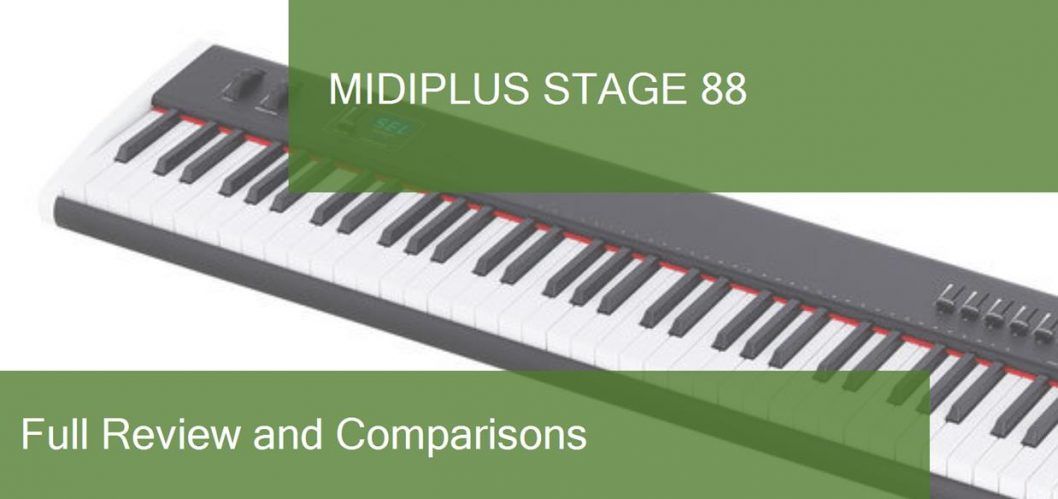
Digital Piano Midiplus Stage 88 Full Review. Is it a good choice?
Digital Piano Midiplus Stage 88 Full Review. Is it a good choice?
A low-end digital piano with features and a decent quality that is presented as an alternative to all students and also for those who want to produce music in a comfortable way, the Midiplus Stage 88 is presented as a simple piano to play and comfortable while combining elements for live performances with other studio functions. The Midiplus Stage 88 costs around €272/$262/£244.
Features
- MIDI (MIDI allows you to do such wonderful things as connect the keyboard to the computer, record a soundtrack, and with certain programs pass with a click what you have played to musical notes in a score. MIDI tracks store information from musical notes)plus Stage 88; Masterkeyboard and Controller functions
- 88 velocity-sensitive semi-weighted keys
- Sound Bank with 64 EMU Sounds (Different sounds of piano and other instruments) + 128 GM Sounds (Different sounds of piano and other instruments)
- 15 Memory locations user setups
- 8 free customizable Rotary Knobs & 8 free customizable 40 mm Fader
- Pitch-Bend & Modulation Wheel
- Layer function
- Integrated Metronome (Element of basic study to study and practice the tempo of a piece of music.)
- Transposer (Transposition allows you to move the note spectrum of a keyboard. This allows you to play with transposing instruments. It is not an easy concept but it is made to facilitate the writing of orchestration for instruments with very different bass and treble registers.)
- Split (Split the keyboard into two different instruments) function
- Connections: Standard MIDI Input / Output, USB Port, Sustain pedal (The most important pedal of a piano or keyboard is the sustain pedal and is used to keep the note playing even if you stop pressing the key.) input (6.3 mm jack); USB bus-powered or USB DC
- Dimensions 1280 x 280 x 90 mm and a weight of 10 kg
Now that we’ve listed and described the features of this digital piano there’s no better than taking a look at the following video where they tell us more about the Midiplus Stage 88 and you can hear the different sounds of this piano. Here’s a video of a very similar model the Midiplus x8:
Related post you can be interested in
- Ranking with the best digital pianos
- My selection of cheap musical keyboards.
- Basic concepts you need to know about digital pianos.
- The best resources to learn to play the piano by yourself.
Now let’s compare the Midiplus Stage 88 with its more common alternatives. Also at the end of the post, you will find a section with the best shopping possibilities for this digital piano. But you can go directly to that part of the post by pressing the following button.
Midiplus Stage 88 vs Thomann DP 26
Although the Midiplus is focused on living rather than studio presentations, the Thomann DP 26 is presented as a contender that outperforms it in several facets, however, the Midiplus puts a new function on the table and it is its connection to different devices that makes its difference in the market. The Midiplus Stage 88 costs around €272/$262/£244 and the Thomann DP 26, €309/£279.
The Midiplus features an 88-key keyboard that also works as MIDI controls, a sound bank with more than 64 EMU sounds and more than 120 GM sounds as well as 15 memory lots and a pitch bend to customize the track while we are playing as well as a control that allows us to configure the different effects we use, a layer function and transposer.
The Thomann also has 88 keys with hammer action, has 20 sounds as well as 2 demo songs, 50 styles and polyphony of 64 voices, LEDs that illuminate the keyboard as well as a layer mode, a four hands mode, effects such as reverb and master EQ among many others.
The digital piano Midiplus Stage 88 is usually about 25 € cheaper than Thomann DP 26, but with so little price difference this can vary.
Let’s put the features of each of these pianos in 2 different columns to make it easier to see the differences
|
Midiplus Stage 88 |
Thomann DP 26 |
|---|---|
|
|
And below a video of the Thomann DP 26
If you want to know more about this model do not miss our Thomann DP 26 review
Midiplus Stage 88 vs Thomann SP 5600
As we compare it with pianos of a higher range we notice the differences between them, considering that the Thomann SP 5600 has functions like the chorus, the reverb as well as the EQ master that the Midiplus doesn’t have, we can see that the price is considerably higher so the Midiplus can be a better option if you are looking for something to practice or a comfortable piano for presentations. The Midiplus Stage 88 costs around €272/$262/£244 and the Thomann SP 5600, €369/£338.
The Thomann has more developed functions than the Midiplus like having 600 integrated sounds as well as a track start function, 230 styles with 128 polyphonic voices, a layer mode as well as four hands, reverb and chorus effects, and an EQ master, it also has a sustain pedal and a transposer.
Let’s put the features of each of these pianos in 2 different columns to make it easier to see the differences
|
Midiplus Stage 88 |
Thomann SP 5600 |
|---|---|
|
|
And below a video of the Thomann SP 5600
https://www.youtube.com/watch?v=YUMJD2STwBo
If you want to know more about this model do not miss our Thomann SP 5600 review
Midiplus Stage 88 vs Thomann SP 320
Comparing it with a rather old model we can say that the Midiplus Stage 88 improves quite well the functions of these pianos usually used for live presentations besides being of a low range, accessible for purchase, the Midiplus improves on functions such as the integration of quality midi connections as well as customizable knobs that can give style to your presentations. The Midiplus Stage 88 costs around €272/$262/£244 and the Thomann SP 320 €239/£215.
The Thomann has more developed functions than the Midiplus like having 600 integrated sounds as well as a track start function, 230 styles with 128 polyphonic voices, a layer mode as well as four hands, reverb and chorus effects, and an EQ master, it also has a sustain pedal and a transposer.
Let’s put the features of each of these pianos in 2 different columns to make it easier to see the differences
|
Midiplus Stage 88 |
Thomann SP 320 |
|---|---|
|
|
And below a video of the Thomann SP 320
If you want to know more about this model do not miss our Thomann SP 320 review
Midiplus Stage 88 vs Yamaha PSR E363
The Midiplus Stage 88 has nothing to fear from pianos from much larger companies like Yamaha as it’s quality/price ratio is good enough for low-end users who want to acquire a solid digital piano for live performances, the Midiplus stage 88 enhances several functions of the Yamaha PSR E363 such as the integration of a modulation wheel that allows to moderate the piano sound to taste and also better midi connections. The Midiplus Stage 88 costs around €272/$262/£244 and the Yamaha PSR E363 €198/$239/£179.
The Yamaha PSR E363 has 61 sensitive keys as well as more than 500 sounds, 165 styles, 48 polyphonic voices, 2 track sequencer as well as reverb effects, chorus, a recording function, and a register memory and also has an integrated battery as well as support for various Android and iOS apps.
Let’s put the features of each of these pianos in 2 different columns to make it easier to see the differences
|
Midiplus Stage 88 |
Yamaha PSR E363 |
|---|---|
|
|
And below a video of the Yamaha PSR E363
If you want to know more about this model do not miss our Yamaha PSR E363 review
Where to buy Midiplus Stage 88
Thomann
- Free Shipping.
- Full warranty. If you have any problems, they take care of everything.
- 100% reliable payment.
- A leader in trouble-free shipping.
- Usually the Best price.
- Best Reputation: They are the leading online store in Europe and have the best catalog and information.
Amazon
- Free Shipping and the possibility of shipping in one day with Amazon Premium.
- Full Guarantee but they are no experts in music equipment.
- Sometimes a better price.
- He’s got worse stock than Thomann.
Check below related models with similar price and features:
- Thomann DP 26
- Thomann SP 320
- Yamaha NP 32 Piaggero
- Korg Tiny Piano
- Startone MK 300
- Startone MK 200
- Yamaha PSR E463
- Yamaha PSR E363
- Startone MKR 61
- Roland GO KEYS
- Casio SA 46
- Casio SA 47
- Casio CTK 240
- Casio CT X700
- Yamaha EZ 220
- Yamaha PSR E263
- Yamaha PSR EW300
- Casio LK 280
- Casio SA 76
- Casio CTK 3500
- Casio LK 265
- Casio LK 136
- Casio CTK 1500
- Casio SA 77
- Yamaha sonogenic SHS 500
- Casio SA 78
- Casio CTK 2500
- Yamaha YPT 260
- Roland GO PIANO
- Midiplus Stage 88

Digital Piano Roland FP 10 Full Review. Is it a good choice?
Roland Corporation is a Japanese manufacturer of electronic musical instruments, electronic equipment and software. Today I’d like to talk to you about the new Roland FP 10. The new digital piano designed to compete with the Yamaha P45 and the Casio CDP S100. The truth is that this Roland piano was totally necessary and I was surprised that they hadn’t brought it out yet. Normally Roland is priced €499/$589/£449 but this is a complete change of strategy and really worth a look.
Let’s list its characteristics:
- 88 weighted keys
- 96-note polyphony, which are the notes that can be played at the same time
- 15 piano sounds and effects.
- 2 split zones to divide your keyboard into several instruments
- Layer function to combine piano and strings for example
- Hull exit
- Includes sustain pedal
- USB MIDI and Bluethooth MIDI 4.0 output
- Weight 12.3 kg
- Dimensions (W x D x H): 1284 x 258 x 140 mm
- 6W speakers
Well, as we can see it is a very powerful machine for less than 500 euros. It is true that the Yamaha P45 and the Casio CDP S100 are worth a little less. About 30 – 40 euros more or less.
Sound
The sound has the same engine as the Roland FP 30 . The SuperNATURAL sound engine that’s not bad, although the speakers are a little better on the Yamaha P45. But they are quite acceptable. With a small power but enough to play in a small place.
I’m leaving you a video to hear what it sounds like:
Will it fit the entire Roland FP 10?
It is a good piano for beginners and people who are in the first 5 or 6 years of learning. It is counterbalanced and designed to be a best seller for that price.
It has things that for me are not very important either, like Bluetooth MIDI. I would have preferred a little more power in the speakers or recording possibility.
For the conservatory up to medium grade so go ok. For a beginner or intermediate level person with this budget it is one of the best choices.
Now let’s compare it to your main competitors.
Related post you can be interested in
- Ranking with the best digital pianos
- My selection of cheap musical keyboards.
- Basic concepts you need to know about digital pianos.
- The best resources to learn to play the piano by yourself.
- The best Roland Digital Pianos
Roland FP 10 vs Roland FP30
First we will compare the Roland digital keyboards, the already analyzed Roland FP10 with an approximate price of €499/$589/£449, and its big brother the Roland FP30 that has a price of €619/$1530/£555, having a difference of approximately €120, we will see the next one face to face, analyzing its differences and similarities:
- They both have 88 weighted keys with PHA-IV technology with an ivory touch and leakage release. Let’s remember that weighted keys is the weight that the keys of real acoustic pianos have. As well as that, both have sensitivity in their keys. Sensitivity refers to the option of performing dynamics in our performances, that is, when we step or press a key with force it sounds louder or higher, and when we step with less force it sounds lower.
- Both keyboards also use the SuperNATURAL sound engine, with excellent singles from different musical instruments such as acoustic pianos, organs and strings.
- The FP10 has 15 different sounds or voices, a maximum polyphony of 96 notes. The Roland FP 30 has 35 different sounds or voices AND a maximum polyphony of 128 notes having a great advantage over the FP 10. Remember that polyphony is the highest number of notes that can be played simultaneously on a computer.
- Both devices allow the keyboard modes: integer, dual, split and double piano.
- Both digital pianos have an integrated metronome function, in order to be used in the piano studio. They also have a Bluetooth function that allows them to be connected to an amplification system without cables.
- The advantages of the Roland FP10 are: Its lighter weight of up to 12.3 kg.
- The advantages of the Roland FP 30 are: a greater number of sounds and polyphony, more power in its speakers reaching 11 W in each, its 8 preset rhythms, and an SMF recorder for ideas. As well as input for a triple pedalboard.
Both are good digital pianos for the early years of piano study, however the Roland FP 30 has its obvious advantages over its younger brother. Its triple-pedal entry, is very much appreciated when studying the piano in a decent way, so that’s worth the 120 euros.
Let’s put the characteristics of these pianos in a table so you can compare
|
Roland FP10 |
Roland FP30 |
|---|---|
|
|
And here is our video review of the Roland FP30 digital piano:
If you are interested in knowing more, we invite you to see our review of the Roland FP30
Roland FP 10 vs Yamaha P45
Now let’s look at the comparison between the Roland FP 10 digital pianos with a price of about €499/$589/£449, as we had discussed before, and the Yamaha P45 which is priced at €425/$500/£389 being £75 cheaper than the Roland. We will see their versus, reviewing their similarities and differences in the next section:
- The Roland FP 10 has more polyphony. Which are the notes that can sound at the same time including what we play and the accompaniments that sound at the same time.
- The Roland FP 10 has more sounds
- Both have MIDI but the FP 10 has bluetooth, although for me it doesn’t matter
- The good thing about the Yamaha P45 is that its speakers sound a bit better and it’s cheaper
- The Yamaha P45 weighs less but not a significant difference either
As we can see the Yamaha P 45 has certain advantages over the Roland FP 10 digital piano, not for nothing the Yamaha has been a Super seller since it came out.
Let’s put the features of these pianos in a table so you can compare
|
Roland FP10 |
Yamaha P45 |
|---|---|
|
|
Finally, you have a video of the Yamaha P 45:
If you want to know more, here is the review of the Yamaha P45
Roland FP 10 vs Casio CDP S100
Now let’s compare our Roland FP 10 and as we mentioned before it has a price of €499/$589/£449 with the Casio CDP S100 which has a price of €339/£311, and as we will see it has many differences. Here’s the face-to-face:
OK, there’s a difference here but each one is designed for a different thing.
- The Roland FP 10 has more sounds and more polyphony
- The advantage of the Casio is that it weighs 2 kg less and takes up much less space. It is designed to be transported and can also be battery operated.
- Both are counterbalanced with similar quality.
- For home study, the Roland Fp 10 is best, but for moving it around, the Casio may be the more interesting option.
Let’s put the features of these pianos on a table so you can compare
|
Roland FP10 |
Casio CDP S100 |
|---|---|
|
|
Finally, you have our video of the Casio CDP S100:
Visit our review of the Casio CDP S100
Roland FP 10 vs Korg B2
Finally we proceed to analyze the comparison between the digital pianos the Roland this I asked is that as we have commented before it has a value or price of €499/$589/£449 and the Korg B2 that has a price of €389/$500/£389 in its version in black, and something more economic its version in white. Next we will have their differences and similarities in the following face to face:
- They both have 88 weighted keys with PHA-IV technology with an ivory touch and leakage release. Let’s remember that counterweight is the weight that the keys of real acoustic pianos have. As well as, both have sensitivity in their keys. Sensitivity refers to the option of performing dynamics in our performances, that is, when we step or press a key with force it sounds louder or higher, and when we step with less force it sounds lower.
- The Roland has a Super Natural Sound Engine which we talked about earlier, and the Korg has a branded PCM sound engine.
- The FP10 has 15 different sounds or voices, a maximum polyphony of 96 notes. The Korg has 12 different sounds or voices and a maximum polyphony of 120 notes. Remember that polyphony is the highest number of notes that can be played simultaneously on a computer.
- The Roland allows the following keyboard modes: integer, dual, split and double piano. What the Korg does not have.
- Both digital pianos have an integrated metronome function, in order to be used in the piano studio. The Roland has a Bluetooth function that allows them to connect to an amplification system without cables.
- The advantages of the Roland FP10 are: A Bluetooth system for wireless amplification, sustain pedal.
- The advantages of the Korg B2: More polyphony and more power to your speakers.
Both are good digital pianos, according to their functions and sounds you can buy some Videos for sure you will make the best decision. However, if you are on a tight budget, the Korg B2 is an economical option and not a bad one.
Let’s put the features of these pianos in a table so you can compare
|
Roland FP10 |
Korg B2 |
|---|---|
|
|
A video of the Korg B2 digital piano:
If you are interested in learning more we invite you to see our review of Korg B1. Korg B2 predecessor
Where to buy Roland FP 10
Amazon
- Free Shipping and possibility of shipping in one day with Amazon Premium.
- Full Guarantee but they are no experts in music equipment.
- Sometimes better price.
- He’s got worse stock than Thomann.
Thomann
- Free Shipping.
- Full warranty. If you have any problems, they take care of everything.
- 100% reliable payment.
- Leader in trouble-free shipping.
- Usually Best price.
- Best Reputation: They are the leading online store in Europe and have the best catalogue and information.
Check below related models with similar price and features:
- Thomann SP 5600
- Yamaha YDP 143
- Roland FP 30
- Yamaha YDP 163
- Yamaha YDP S52
- Hemingway DP 201 MKII
- Casio PX S1000
- Thomann DP 33
- Casio PX S3000
- Casio PX 870
- Yamaha YDP S54
- Yamaha YDP 144
- Korg B1
- Casio CDP S100
- Casio PX 360
- Casio PX 770
- Korg LP 380
- Korg C1 Air
- Casio CDP S350
- Thomann DP 32
- Yamaha YDP S34
- Korg LP 180
- Korg PA 600
- Casio CT X5000
- Yamaha DGX 660
- Korg EK 50
- Yamaha PSR S670
- Yamaha PSR S775
- Yamaha PSR EW410
- Roland 5
- Casio CT X3000
- Yamaha PSR A350
- Casio WK 7600
- Casio WK 6600
- Yamaha P45
- Yamaha P125
- Kawai ES 110
- Alesis Recital Pro
- Kurzweil SPS4 8
- Roland FP 10
- Korg D1
- Studiologic Numa Compact 2
- Korg SP 280
- Yamaha P121
- Studiologic Numa Compact 2x
- Roland GO PIANO 88
- Studiologic Numa Stage