
- Home
- Author's Archive:
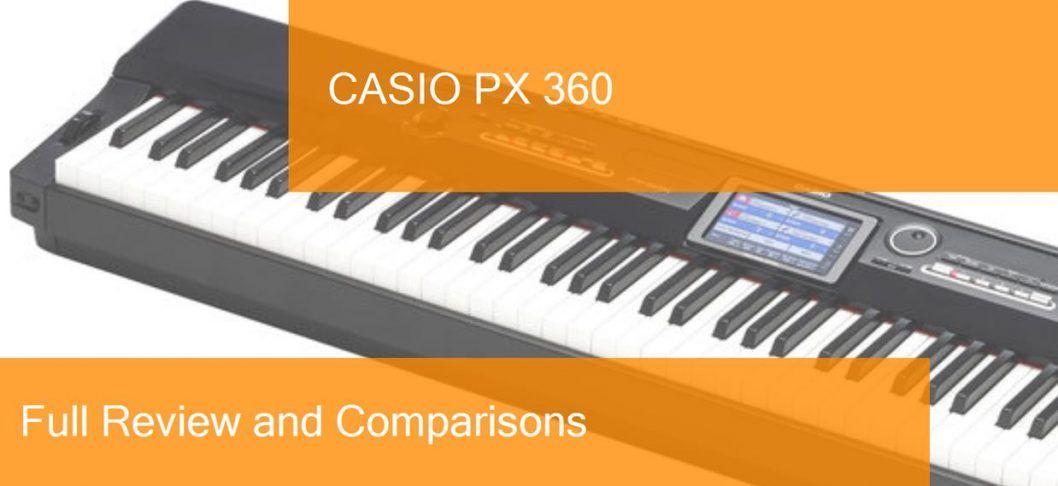
Digital Piano Casio PX 360 Full Review. Is it a good purchase?
Review and Opinion of the Casio PX-360 Privia and Where to Buy It?
Casio Computer Co., Ltd. is an electronics manufacturer founded in 1946 and based in Tokyo, Japan. We will now take a look at the Casio PX-360 Privia model, which is priced at approximately $800:
- 88 weighted keys (The weight of the keys on an acoustic piano, which digital pianos try to imitate to match the touch of the piano. The keys in the high register are heavier and in the high register less. This is different from the sensitivity on the keyboard which serves to regulate the volume of the note. But a weighted keyboard always has sensitivity on the keys) that simulate hammer action and synthetic ebony/ivory textures. This popular Casio system is called Scaled Hammer Action II (Tri-Sensor)
- 550 sounds (different sounds of piano and other instruments)
- 200 styles (Accompanying styles that adapt to the chords we are playing. For example they will put a bass and a drum kit that will adapt and synchronize with the notes we are playing on the keyboard)
- 10 user-configurable styles
- 128 notes of polyphony (Number of notes that can be played at once. This includes accompaniments that also consume notes. So if you play over an accompaniment more notes will be accumulated)
- Multi-Dimensional Morphing AiR Sound Enhancement Technology
- Dual function (Dual mode allows you to combine two sounds to create a more complete one. Typical is the combination of piano + stringed instrument sound)
- Split function (dividing the keyboard into two different instruments)
- reverb (Reverb effect)
- chorus
- Master Equalizer or Master EQ (refers to the master equalizer that allows you to adjust the parameters of the sound mix coming out of your speakers)
- DSP (Digital Signal Processing) effects. These are digital effects that modify the sound of the keyboard)
- Transposition (Transposition allows you to move the note spectrum of a keyboard. This is to be able to play with transposing instruments. It is not an easy concept but it is made to facilitate the writing of an orchestration for instruments with very different bass and treble registers)
- Metronome (Basic study element to study and practice the tempo of a piece of music)
- Pitch bend wheel (Functionality that changes the sound wave of what you play and then returns to its original state)
- high quality colour TFT LCD screen
- Midi input/output (MIDI allows you to do such wonderful things as connect your keyboard to your computer, record a sound track, and with certain programs click through what you’ve played to musical notes on a score. MIDI tracks store the information of the musical notes)
- 2 headphone outputs
- Input for sustain pedal (The sustain pedal of a piano or keyboard is used to keep the note playing even if you stop pressing the key)
- Line input/output (L/Mono, R) to be able to connect to any live equipment without injection box
- USB port for connecting other devices
- 2 x 8W speakers, enough to play in a restaurant
- It weighs about 12 kg so it’s easy to carry in the car

Now that we’ve listed and described the features of this digital piano there’s no better than taking a look at the following video where they tell us more about the Casio PX 360 and you can hear the different sounds of this piano.
https://www.youtube.com/watch?v=xCCjXvIJIus
Related post you can be interested in
- Ranking with the best digital pianos
- My selection of cheap musical keyboards.
- Basic concepts you need to know about digital pianos.
- The best resources to learn to play the piano by yourself.
- The best Casio Digital Pianos.
Now let’s compare the Casio PX 360 with its more common alternatives. Also at the end of the post you will find a section with the best shopping possibilities for this digital piano. But you can go directly to that part of the post by pressing the following button.
Casio PX-360 Privia vs Yamaha DGX-660
In the first comparison we will have the following devices: the Casio PX-360 Privia keyboard with a price of approximately €800 and the Yamaha DGX-660 with a price of €749/£685, with a difference of approximately €65. We will therefore see their differences and similarities in the following face-to-face:
- Both digital pianos have 88 weighted keys and a hammer effect and sensitivity. The keys of the Casio have the texture of synthetic ebony/ivory. Weighted Keys is the weight of the keys of a real acoustic piano, in the bass range it has heavier keys while in the treble range it has lighter keys. Sensitivity refers to the ability to make dynamics in the performance, i.e. when we step with force it sounds higher than another step with less force.
- The Casio offers 550 sounds, 200 styles, 10 of which are configurable and 128 notes of polyphony, and the Yamaha offers 554 sounds, 205 styles and 192 notes of polyphony. Remember that polyphony is the largest number of notes that can be played at the same time on a computer.
- The functions that characterize the Casio are Multidimensional Morphing Air system, dual function, split function and how-to effects: Reverb, Chorus, Master EQ and DSP (Digital Signal Process) effects, pitch bend wheel and sound modulation wheel, plus 2 x 8W speakers
- The functions that characterize the Yamaha are: intelligent acoustic control, 41 types of reverb effect, 44 types of chorus, 237 DSP sounds and Master EQ by presets, in addition to 37 DSP sounds, plus 2 6W speakers.
- The Casio has 2 headphone outputs for playing two people at the same time in silence, Input for sustain pedal and input/line output (L/Mono, R).
- The Yamaha has an auxiliary sound input, including a sustain pedal. Headset output, plus 2 speakers with 6W average power. Triple pedal input. Something important is that it has NO line output.
- Both digital keyboards have USB MIDI, this means that they can be connected to a computer and work as MIDI controllers in a music composition and production program.
- The Casio measures 1322 x 293 x 139 mm (H x W x D) and weighs 12 kg. While the Yamaha has a weight of 28Kg and dimensions with the support of 1399 x 445 x 761mm.
We found two very similar digital pianos. However a relevant difference is the keys of the Casio that have the texture of ebony and synthetic ivory, improving its simulation towards a real acoustic piano. The Yamaha stands out with its triple pedalboard input and a slight advantage in the amount of sounds, rhythms and polyphony, the downside is that it cannot be operated on batteries, it only works with the power adapter. Both have good functions for both practice and live use, but in my opinion the texture of synthetic ivory and ebony makes that price increase worthwhile.
We will put the characteristics of each of these pianos in 2 different columns to make it easier to see the differences:
|
Casio PX-360 Privia |
Yamaha DGX-660 |
|---|---|
|
|
And now a video of the Yamaha DGX-660
If you want to know more about this model don’t miss our review of the Yamaha DGX-660
Casio PX-360 Privia vs Casio PX-560 Privia
Now we will buy two keyboards from the same brand: the Casio PX-360 which as we mentioned before is priced at €800 and the Casio PX-560 Privia which is priced at around €1089 and as we see there is a difference of around €200 between them. We will see their similarities and differences in the following face-to-face:
- Both digital pianos have 88 weighted keys and sensitivity and hammer effect with synthetic ebony and ivory. They use the same technology. Weighted keyboard is the weight of the keys of a real acoustic piano, in the bass range it has heavier keys while in the treble range it has lighter keys. Sensitivity refers to the ability to make dynamics in the performances, that is, when we step with force it sounds higher than another step with less force.
- The Casio PX-560 Privia offers 650 sounds, 220 styles, 30 of which are configurable and 256 notes of polyphony, and the Casio PX-360 Privia offers 550 sounds, 200 styles and 128 notes of polyphony. Remember that polyphony is the largest number of notes that can be played at the same time on a computer.
- The functions that characterize both: Multidimensional Morphíng Air System, dual function, split function and how effects: Reverb, Chorus, Master EQ and DSP (Digital Signal Process) effects, Pitch Bend wheel and Sound Modulation wheel And 8W speakers.
- Both have 2 headphone outputs to play two people at the same time in silence, Input for sustain pedal and line input/output (L/Mono, R).
- Both digital keyboards have USB MIDI, which means that they can be connected to a computer and work as MIDI controllers in a music composition and production program.
- The Casio PX-560 Privia measures 1322 x 293 x 147mm (H x W x D) and weighs 12kg. The Casio PX-360 Privia weighs approximately 12 kg.
We find with very similar models of keyboards, where logically the Casio PX-560 Privia will always be the winner by being a superior model and more current, however, for its price the Casio PX-360 Privia is not a bad choice.
We will put the features of each of these pianos in 2 different columns to make it easier to see the differences:
|
Casio PX-360 Privia |
Casio PX-560 Privia |
|---|---|
|
|
And now a video of the Casio PX-560 Privia
https://www.youtube.com/watch?v=2nNwoWXXbA4
If you want to know more about this model don’t miss our review of the Casio PX-560 Privia.
Casio PX-360 Privia vs Yamaha P125
Again, we will look at the Casio PX-360 Privia keyboard with a price of €800, and now together with a best-selling Yamaha P125 which is priced at €566/$650/£518, with a difference of almost €240 we will see its differences and similarities in the next section:
- Both digital pianos have 88 weighted keys and a hammer effect and sensitivity. The Casio has a texture of ebony and synthetic ivory.
- The Casio offers 550 sounds, 200 styles, 10 of which are configurable and 128 notes of polyphony, and the Yamaha offers 24 sounds and 192 notes of polyphony.
- The functions that characterize the Casio are: Morphing-air multidimensional system, dual function, split function and how-to effects: Reverb, Chorus, Master EQ and DSP (Digital Signal Process) effects, pitch bend wheel and sound modulation wheel
- The functions that characterize the Yamaha are: intelligent acoustic control, reverb effect and Master EQ, Resonance Attenuator and Sound Boost.
- The Casio has 2 headphone outputs for playing two people at once in silence, Input for sustain pedal and input/line output (L/Mono, R). And 8W speakers.
- The Yamaha has auxiliary sound input, including sustain pedal. Headset output, plus 2 speakers with 7W average power. Also the free “Smart Pianist” App for iPhone/iPad.
- Both digital keyboards have USB MIDI, which means that they can be connected to a computer and work as MIDI controllers in a music composition and production program.
- The Casio measures 1322 x 293 x 147mm (H x W x D) and weighs 12kg. While the Yamaha weighs 11.8 kg and measures 1326 x 166 x 295 mm with the stand.
With two digital pianos of good brands and models, the Casio offers a large number of sounds, rhythms and polyphony notes in addition to its keyboard with its ebony/ivory synthetic texture, making it the best choice. However, the Yamaha is still a great option for the price it has.
We will put the characteristics of each of these pianos in 2 different columns to make it easier to see the differences:
|
Casio PX-360 Privia |
Yamaha P125 |
|---|---|
|
|
And now a video of the Yamaha P125:
If you want to know more about this model don’t miss our Review of the Yamaha P125.
Where to buy Casio PX 360
Amazon
- Free Shipping and possibility of shipping in one day with Amazon Premium.
- Full Guarantee but they are no experts in music equipment.
- Sometimes better price.
- He’s got worse stock than Thomann.
Thomann
- Free Shipping.
- Full warranty. If you have any problems, they take care of everything.
- 100% reliable payment.
- Leader in trouble-free shipping.
- Usually Best price.
- Best Reputation: They are the leading online store in Europe and have the best catalogue and information.
Check below related models with similar price and features:
- Thomann SP 5600
- Yamaha YDP 143
- Roland FP 30
- Yamaha YDP 163
- Yamaha YDP S52
- Hemingway DP 201 MKII
- Casio PX S1000
- Thomann DP 33
- Casio PX S3000
- Casio PX 870
- Yamaha YDP S54
- Yamaha YDP 144
- Korg B1
- Casio CDP S100
- Casio PX 360
- Casio PX 770
- Korg LP 380
- Korg C1 Air
- Casio CDP S350
- Thomann DP 32
- Yamaha YDP S34
- Korg LP 180
- Korg PA 600
- Casio CT X5000
- Yamaha DGX 660
- Korg EK 50
- Yamaha PSR S670
- Yamaha PSR S775
- Yamaha PSR EW410
- Roland 5
- Casio CT X3000
- Yamaha PSR A350
- Casio WK 7600
- Casio WK 6600
- Yamaha P45
- Yamaha P125
- Kawai ES 110
- Alesis Recital Pro
- Kurzweil SPS4 8
- Roland FP 10
- Korg D1
- Studiologic Numa Compact 2
- Korg SP 280
- Yamaha P121
- Studiologic Numa Compact 2x
- Roland GO PIANO 88
- Studiologic Numa Stage
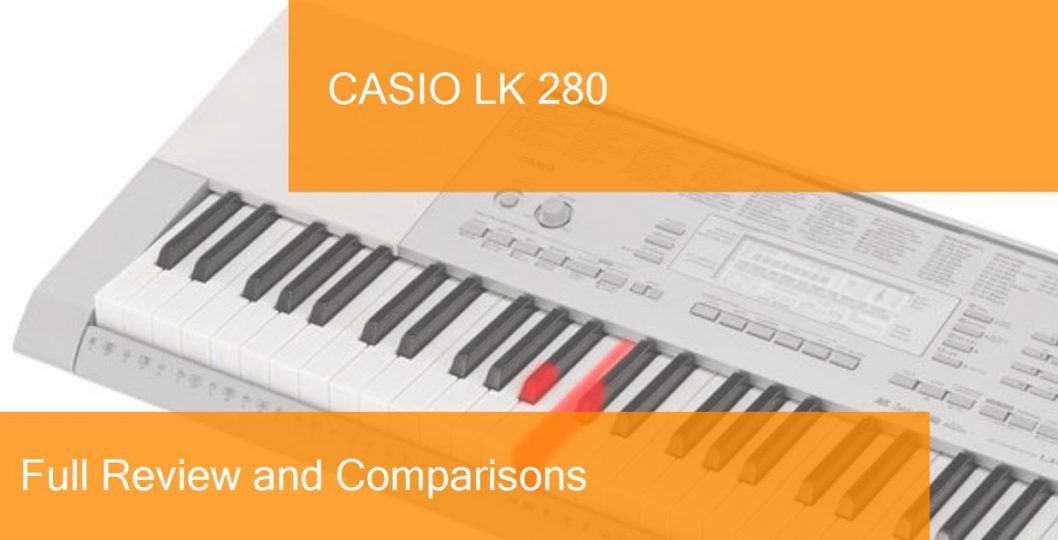
Digital Piano Casio LK 280 Full Review. Is it a good choice?
Casio LK 280 Review Complete Digital Piano. Is it a good choice?
Casio is a Japanese company that produces various electronic products, including digital keyboards. One of them is the LK280, a keyboard for beginners that has many great features to get you started. With a price of 239 euro we have the following features of this keyboard and then we will go with the comparisons that is the most useful:
- 61 illuminated and touch-sensitive keys
- 48 notes polyphony (Number of notes that can be played at once. This includes accompaniments that also consume notes. So if you play over an accompaniment more notes will be accumulated)
- 600 sounds (Different sounds of piano and other instruments)
- 180 styles (Accompanying styles that adapt to the chords we are playing. For example they will put a bass and a drum kit that will adapt and synchronize with the notes we are playing on the keyboard)
- 110 internal songs already set up
- Learning system (I don’t really like these systems)
- Transposition function (Transposition allows you to move the note spectrum of a keyboard. This is to be able to play with transposing instruments. It is not an easy concept but it is made to facilitate the writing of an orchestration for instruments with very different bass and treble registers)
- LCD display for easy operation
- Metronome (Basic study element for studying and practicing the tempo of a piece of music)
- Sampler function to record percussion loops or musical passages and then play over them in a loop. Up to 10 seconds
- Recording of up to 6 tracks
- Memory expansion slot for SD or SDHC cards up to 32 Gb
- SMF format player
- Microphone input that will come out to the speakers and will allow us to sing while playing and put effects to the voice. Or record… Also includes microphone
- USB midi connection (MIDI allows you to do such wonderful things as connect your keyboard to your computer, record a sound track and with certain programs click through what you’ve played to musical notes on a score. MIDI tracks store the information of the musical notes)
- Input for sustain pedal (The sustain pedal of a piano or keyboard is used to keep the note playing even if you stop pressing the key)
- Headphone and line output for live
- 2 x 2.5W speakers that are ok for home rehearsal and practice
- has a power supply included and supports batteries. It is also very portable with a weight of 4.5 kg and dimensions of 948 x 350 x 103mm (W x D x H)

I’ve selected two videos to show the sounds and some specs.
Related post you can be interested in
- Ranking with the best digital pianos
- My selection of cheap musical keyboards.
- Basic concepts you need to know about digital pianos.
- The best resources to learn to play the piano by yourself.
- The best Casio Digital Pianos.
Now let’s compare the Casio LK 280 with its more common alternatives. Also at the end of the post you will find a section with the best shopping possibilities for this digital piano. But you can go directly to that part of the post by pressing the following button.
Casio LK-280 vs Yamaha EZ-220
We will compare two keyboards with very similar characteristics, the Casio LK 280 with a price of 239 Euro and the Yamaha EZ-220 with a price of €195/£177, which is a little less, although we will see according to their price and performance which is the most convenient keyboard for you:
- Both keyboards have 61 illuminated and touch-sensitive keys. Sensitivity means that notes played more loudly will sound louder, and those played less loudly will sound quieter.
- The Casio LK-280 has 600 sounds, with 180 styles, 110 pre-recorded songs and 48 notes of polyphony, while the Yamaha EZ-220 has 392 sounds, 100 styles, 100 pre-recorded songs and 32 notes of polyphony. Polyphony is the maximum number of notes that can be played simultaneously.
- Both keyboards have learning systems, specific to each Casio and Yamaha brand.
- An essential difference is that the Casio LK-280 has a microphone input and effects for voice and recording of up to 6 tracks. The Yamaha EZ-220 can record with the help of an App called Page Turner that is installed on iO devices.
- Both have headphone outputs and input for sustain pedal, which is not included in either.
- Both have a USB MIDI connection, which allows them to be connected to a computer to be used as a MIDI controller in a music composition or production program.
- Both have 2.5W speakers and support batteries to be used without the power adapter.
- The Casio LK-280 weighs 4.5 kg and measures 948 x 350 x 103mm (W x D x H), while the Yamaha EZ-220 weighs 4.4 kg and measures 94.5 x 34.8 x 11 cm (W x D x H).
We will put the characteristics of each of these pianos in 2 different columns to make it easier to see the differences:
|
Casio LK-280 |
Yamaha EZ-220 |
|---|---|
|
|
One of the advantages of the Casio is the track recording and the microphone input, where you can see that it is for keyboard and voice fans or songwriters, if you are interested in that and you can pay the 40 euro difference it will be your ideal choice
And now a video of the Yamaha EZ-220
If you want to know more about this model don’t miss our review of the Yamaha EZ-220.
Casio LK-280 vs. Casio LK-265
Now we will have two keyboards of the same brand and with very similar characteristics. The Casio LK-280 with a price of 239 euros and the Casio LK-265 with a lower price of 199 euros. Now we will put them face to face to see their differences and similarities:
- Both keyboards have 61 illuminated and touch-sensitive keys. Sensitivity means that notes played more loudly will sound higher, and those played less loudly will sound lower.
- The Casio LK-280 has 600 sounds, with 180 styles, 110 pre-recorded songs, while the Casio LK-265 has 400 sounds, 100 styles, 600 pre-recorded songs. Both have 48 notes of polyphony. Polyphony is the maximum number of notes that can be played simultaneously.
- Both keyboards have learning systems, which to be honest is not that useful. Better apps like Flowkey.
- Both have headphone outputs and a sustain pedal input, and a microphone input that can also be modified with voice effects, so that you can sing and at the same time put filters on your voice in real time.
- The Casio LK-280 has a USB MIDI option, which allows it to be connected to a computer for use as a MIDI controller in a music composition or production program. The Casio LK-265 does not.
- The Casio LK-280 has 2.5W speakers, while the Casio LK-265 has 2W speakers and both support batteries for use without the power adapter.
- The Casio LK-280 weighs 4.5 kg and measures 948 x 350 x 103 mm (W x D x H), while the Casio LK-265 weighs 3.6 kg and measures 946 x 307 x 92 mm (W x D x H).
We will put the characteristics of each of these pianos in 2 different columns to make it easier to see the differences:
|
Casio LK-280 |
Casio LK-265 |
|---|---|
|
|
One of the most notable differences is that the LK280 has a USB MIDI connection, which is indispensable if you intend to connect the keyboard to a computer. The truth is that the LK 280 is much more worthwhile with a difference of only 40 euros for everything it brings. Now a video of the Casio LK-265:
If you want to know more about this model don’t miss our review of the Casio LK-265.
Casio LK-280 vs Startone MK-300
Finally we will make a comparison with these two keyboards, the Casio LK-280 with a price of 239 Euro and the Startone MK-300 with a price of €115/£102. A big difference in price, as the Casio costs almost twice as much as the Startone, but we will see which one meets your expectations better and with the budget you want to spend on a starter keyboard:
- Both keyboards have 61 keys and are touch-sensitive. Sensitivity means that notes played more loudly will sound higher, and those played less loudly will sound lower. The keys on the Casio light up, making it ideal for children.
- The Casio LK-280 has 600 sounds, with 180 styles, 110 pre-recorded songs and 48 notes of polyphony, while the Startone MK-300 has 390 sounds, 100 styles, 110 pre-recorded songs and 64 notes of polyphony. Polyphony is the maximum number of notes that can be played simultaneously.
- Both keyboards have learning systems, which to be honest is not that useful.
- Both have headphone outputs and a sustain pedal input, the Casio LK280 has a microphone input that can also be modified with voice effects.
- The Startone MK-300 has the modes: split and dual, with division of the keyboard and has a Pitch Bend Wheel, which allows you to change the pitch (height) of a note that is playing.
- The Casio LK-280 can record up to 6 tracks and the Startone MK-300 can record 4 tracks.
- Both keyboards have the USB MIDI option, which allows them to be connected to a computer for use as a MIDI controller in a music composition or production program.
- The Casio LK-280 has 2.5W speakers, while the Startone MK-300 has 10W speakers and both support batteries to be used without the power adapter.
- The Casio LK-280 weighs 4.5 kg and measures 948 x 350 x 103mm (W x D x H), while the Startone MK-300 weighs 4.5 kg and measures 955 x 360 x 145mm (W x D x H).
We will put the characteristics of each of these pianos in 2 different columns to make it easier to see the differences:
|
Casio LK-280 |
Startone MK-300 |
|---|---|
|
|
They are very similar keyboards, the main difference being in certain features that only each one has, such as the Casio that has a microphone input and the Startone with its different modes and Pitch Wheel. If you want to sing better the LK 280 but if you want something very cheap the MK 300 is very good because it has MIDI, sustain pedal input and sensitivity on the keyboard for a very low price.
And now a video of the Startone MK-300
If you want to know more about this model don’t miss our review of the Startone MK-300.
Casio LK-280 vs Yamaha PSR-E363
We’ll compare two keyboards with very similar features, the Casio LK 280 with a price of 239 euros and the Yamaha PSR-E363 with a price of €198/£180, which is a little less, although we’ll see which keyboard is more suitable for you according to its price and features:
- Both keyboards have 61 keys that light up and are touch-sensitive.
- The Casio LK-280 has 600 sounds, with 180 styles, 110 pre-recorded songs and 48 notes of polyphony, while the Yamaha E636 has 574 sounds, 165 styles, 154 pre-recorded songs and 48 notes of polyphony, too.
- Both keyboards have learning systems, specific to each Casio and Yamaha brand.
- An essential difference is that the Casio LK-280 has a microphone input and effects for voice and recording up to 6 tracks.
- Both have helmet outputs and input for sustain pedal, which is not included in either.
- Both have a USB MIDI connection, which allows them to be connected to a computer to be used as a MIDI controller in a music composition or production program.
- Both have 2.5W speakers and support batteries to be used without the power adapter.
- The Casio LK-280 weighs 4.5 kg and measures 948 x 350 x 103 mm (W x D x H), while the Yamaha PSR-E363 weighs 4.6 kg and measures 945 x 368 x 118 mm (W x D x H).
We found two digital keyboards very similar in their aspects and functions, the Casio slightly exceeds the Yamaha with its number of sounds and what if difference between both as before is the microphone input and voice effects that has the Casio LK 280 that you do sing very well.
We will put the features of each of these pianos in 2 different columns to make it easier to see the differences:
|
Casio LK-280 |
Yamaha PSR-E363 |
|---|---|
|
|
One of the advantages of the Casio is the track recording and microphone input, where you can see that it is for keyboard and voice fans or songwriters, if you are interested in that and can pay the 40
Check our Yamaha PSR E363 review
Where to buy Casio LK 280
Thomann
- Free Shipping.
- Full warranty. If you have any problems, they take care of everything.
- 100% reliable payment.
- Leader in trouble-free shipping.
- Usually Best price.
- Best Reputation: They are the leading online store in Europe and have the best catalogue and information.
Amazon
- Free Shipping and possibility of shipping in one day with Amazon Premium.
- Full Guarantee but they are no experts in music equipment.
- Sometimes better price.
- He’s got worse stock than Thomann.
Check below related models with similar price and features:
- Thomann DP 26
- Thomann SP 320
- Yamaha NP 32 Piaggero
- Korg Tiny Piano
- Startone MK 300
- Startone MK 200
- Yamaha PSR E463
- Yamaha PSR E363
- Startone MKR 61
- Roland GO KEYS
- Casio SA 46
- Casio SA 47
- Casio CTK 240
- Casio CT X700
- Yamaha EZ 220
- Yamaha PSR E263
- Yamaha PSR EW300
- Casio LK 280
- Casio SA 76
- Casio CTK 3500
- Casio LK 265
- Casio LK 136
- Casio CTK 1500
- Casio SA 77
- Yamaha Sonogenic SHS 500
- Casio SA 78
- Casio CTK 2500
- Yamaha YPT 260
- Roland GO PIANO
- Midiplus Stage 88

Digital Piano Casio LK 265 Full Review. Is it a good choice?
Digital Piano Casio LK 265 Full Review. Is it a good choice?
Since 1946 Casio has been a manufacturer of electronic devices, including electronic keyboards, and today we will look at one of them: the Casio LK 265, a keyboard with illuminated keys (LK for Light Keys, all LKs have these illuminated keys) that makes learning much easier and thanks to its features and functions is ideal for children and people who want to start learning to play the keyboard, has a price of 183 euros, we go with its features:
- 61 Sensitive keys (You can adjust the volume of the note depending on how you press it. And it is different from the counterbalance that is the weight of the keys on a piano) to the touch
- 48 notes of polyphony (Number of notes that can be played at once. This includes accompaniments that also consume notes. So if you play over an accompaniment more notes will be accumulated)
- 400 sounds (Different sounds of piano and other instruments)
- It brings the basic effects on any keyboard and some interesting ones for electronic music: Hall, Dance Music, virtual room
- 60 songs already configured
- 100 types of rhythms (accompaniment rhythms that adapt to what you are playing. There are bossa nova rhythms, etc. Sometimes they are also known as accompaniment styles)
- 100 types of settings that can be triggered with a single button
- Transposition (Transposition allows you to move the note spectrum of a keyboard. This is to be able to play with transposing instruments. It is not an easy concept but it is made to facilitate the writing of an orchestration for instruments with very different bass and treble registers)
- LC display for easy setup
- Metronome (Basic study element to study and practice the tempo of a piece of music)
- Hull and line output
- Mini-jack input for plugging in a player or similar
- Microphone input and it will sound through your speakers. You can put effects on your voice.
- Sustain pedal connection (The sustain pedal of a piano or keyboard is used to keep the note playing even if you stop pressing the key)
- Two 2″ speakers, it’s ok to play at home.
- Includes power supply but also supports batteries
- Dimensions (W x D x H): 946 x 307 x 92 mm
- It is light and weighs 3.6 kg

It’s very interesting its function of illuminated keys because together with the 60 songs already configured allows us to have a repetition learning system, where we only have to press where we see a key that lights up and with practice and time, we can get to play a composition very quickly. (See the second video to understand better)
I have selected 2 videos for you:
Related post you can be interested in
- Ranking with the best digital pianos
- My selection of cheap musical keyboards.
- Basic concepts you need to know about digital pianos.
- The best resources to learn to play the piano by yourself.
- The best Casio Digital Pianos.
Now let’s compare the Casio LK 265 with its more common alternatives. Also at the end of the post you will find a section with the best shopping possibilities for this digital piano. But you can go directly to that part of the post by pressing the following button.
Casio LK-265 vs. Casio LK-280
To be honest, these two models are almost exactly the same, both have their primary learning function which is the illuminated keys, which if you watched the videos, can also be turned off when we have had some time and experience of practicing with the instrument.
The main improvements of the LK 280 are: 200 more sounds, the sampler option to record loops of up to 10 seconds and play over them, record up to 6 tracks, or with the memory extension more, and slightly more powerful speakers. With all this we also have an increase in its price of almost 60 euros reaching 239 euros the Casio LK280
We will put the characteristics of each of these pianos in 2 different columns to make it easier to see the differences:
|
Casio LK-265 |
Casio LK-280 |
|---|---|
|
|
And now a video of the Casio LK-280:
If you want to know more about this model don’t miss our review of the Casio LK-280.
Casio LK-265 vs Yamaha EZ-220
Now let’s compare the Casio LK265, which as we already know is priced at 183 euros with a keyboard at almost the same price €195/$210/£177, the Yamaha EZ-220. Let’s put them face to face and see their differences and similarities:
- Both keyboards have 61 illuminated touch-sensitive keys. Remember that sensitivity is the option to make dynamics when playing a composition, i.e. when a strong key is pressed, it sounds louder than another when pressed less strongly.
- The Casio LK 265 has 400 sounds with 48 notes of polyphony and 100 styles/rhythms of accompaniment, while the Yamaha EZ-220 has 392 sounds with 32 notes of polyphony and 100 styles/rhythms.
- Both have settings that can be activated with a button.
- One notable difference is that the Casio LK265 has a microphone input, where the microphone is also included, as well as voice effects. This is a function not found on the Yamaha EZ-220.
- Where the Yamaha stands out is the use of the Page Turner application that integrates into an iPad device and allows you to switch pages to the scores automatically and record audio on the device. Function that looks much like Chordana of the Casio LK265, where we have a learning application for tablet / smartphone both iOS and Android. (Below you will find a video explaining each application)
- The weight of the Casio LK265 is 3.6Kg and its dimensions are: 946 x 307 x 92 mm (W x D x H), in the Yamaha EZ-220 the weight is 4.4 Kg and its dimensions are: 945 x 348 x 110 mm (W x D x H).
- They both have the ability to use batteries which is great because it makes them much more portable.
We are going to put the characteristics of each of these pianos in 2 different columns to make it easier to see the differences:
|
Casio LK-265 |
Yamaha EZ-220 |
|---|---|
|
|
Yamaha App Page Turner video:
Now a video of Casio’s App Chordana:
And now a video of the Yamaha EZ-220
If you want to know more about this model don’t miss our review of the Yamaha EZ-220.
Casio LK-265 vs Casio CTK-3500
Now we will put the comparison between these two Casios that are beginner or entry level. The Casio LK265 which as we have already mentioned has a price of 183 euro and the Casio CTK-3500 with a price of 150 euro, with a difference of only 30 euro since they are very similar keyboards (you can see it clearly in the comparative tables) we will see only their few differences:
- As we talked about before, the LK series stands for Light Keys, or illuminated keys, a function that the CTK.3500 does not have.
- The CTK-3500 has a Pitch Bend Wheel, which is used to change the pitch of a note while playing, a function that the LK265 does not have.
- The Casio CTK 3500 has a dedicated USB-MIDI port for connection to a computer for use as a MIDI controller in a music composition/production program.
If it is for a child, the LK265 will be ideal, if the keyboard is for a teenager or adult, with aspirations to learn or experiment with MIDI the Casio CTK 3500 will be ideal.
Right now the new model of the Casio CTK 3500 is the Casio CT S300 which is the one to buy. Everything we have discussed in this comparison applies equally to the CR S300, which are virtually identical.
We will put the characteristics of each of these pianos in 2 different columns to make it easier to see the differences:
|
Casio LK-265 |
Casio CTK-3500 |
|---|---|
|
|
And now a video of the Casio CTK-3500
If you want to know more about this model don’t miss our review of the Casio CTK-3500.
Casio LK-265 vs Yamaha PSR E363
Finally we will put the comparisons of the Casio LK265 that as we already know its price of 183 euros with the Yamaha PSR-E363 with a price of €198/$350/£180 that only have a difference of 15 euros. Let’s put them face to face and see their differences and similarities:
- Both have 61 touch-sensitive keys, which in the case of the Casio LK265 have illuminated keys for learning purposes.
- The Casio LK265 has 400 different sounds/loudspeakers, with 48 notes of polyphony and 100 styles/rhythms for accompaniment, while the Yamaha PSR-E63 has 574 sounds/loudspeakers, with 48 notes of polyphony and 165 styles/rhythms for accompaniment, in which we find more variety as we see is the Yamaha.
- In terms of effects the Casio LK265 has: Reverb (10 types), Virtual Hall, Dance Music Effect, when the Yamaha PSR-E363 has Reverb, Chorus, Master EQ and Harmony.
- Both keyboards have functions like: Arpeggiator, Transposition and Metronome. And learning systems that we have reviewed before.
- A relevant difference is found in the microphone input of the LK265, which includes it and can be modified with many vocal effects. Both have a sustain pedal input.
- The Yamaha PSR E363 has a USB-MIDI port, dedicated specifically to be connected to a computer and used as a MIDI controller in a music composition/production program.
- The Casio LK265 has 2 x 2W speakers, and the Yamaha PSR-E363 has 2 x 2.5W speakers.
- Both include their own power supply, and support batteries to operate.
- The Casio LK265 has a weight of 3.6 kg and dimensions of 946 x 307 x 92 mm (W x D x H), while the Yamaha has a weight of 4.6 kg and dimensions of 945 x 368 x 118 mm (W x D x H).
A good comparison since on the one hand the Yamaha has a greater number of sounds, styles and effects, the USB MIDI function. While the Casio LK265 has illuminated keys and a microphone input, which can be modified with effects.
We will put the characteristics of each of these pianos in 2 different columns to make it easier to see the differences:
|
Casio LK-265 |
Yamaha PSR-E363 |
|---|---|
|
|
And now a video of the Yamaha PSR-E363:
If you want to know more about this model don’t miss our review of the Yamaha PSR-E363.
Where to buy Casio LK 265
Amazon
- Free Shipping and possibility of shipping in one day with Amazon Premium.
- Full Guarantee but they are no experts in music equipment.
- Sometimes better price.
- He’s got worse stock than Thomann.
Thomann
- Free Shipping.
- Full warranty. If you have any problems, they take care of everything.
- 100% reliable payment.
- Leader in trouble-free shipping.
- Usually Best price.
- Best Reputation: They are the leading online store in Europe and have the best catalogue and information.
Check below related models with similar price and features:
- Thomann DP 26
- Thomann SP 320
- Yamaha NP 32 Piaggero
- Korg Tiny Piano
- Startone MK 300
- Startone MK 200
- Yamaha PSR E463
- Yamaha PSR E363
- Startone MKR 61
- Roland GO KEYS
- Casio SA 46
- Casio SA 47
- Casio CTK 240
- Casio CT X700
- Yamaha EZ 220
- Yamaha PSR E263
- Yamaha PSR EW300
- Casio LK 280
- Casio SA 76
- Casio CTK 3500
- Casio LK 265
- Casio LK 136
- Casio CTK 1500
- Casio SA 77
- Yamaha Sonogenic SHS 500
- Casio SA 78
- Casio CTK 2500
- Yamaha YPT 260
- Roland GO PIANO
- Midiplus Stage 88