
- Home
- Author's Archive:
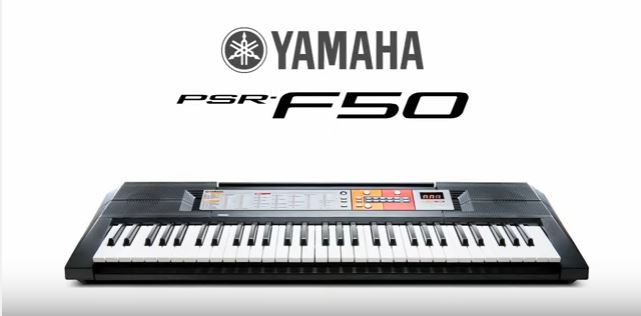
Digital Piano Yamaha PSR F50 Full Review. Is it a good option for beginners?
Updated post! There is a new version of this keyboard. The current post is valid because they are the same. Typical change of acronym. The new one is the Yamaha PSR F51. The Yamaha PSR F50 has been discontinued. But they really are the same in everything 🙂
The analysis of this keyboard for beginners is covered in our Yamaha keyboard guide. But we have developed more the section on this keyboard because it enjoys great popularity in its price range.
Understand that the Yamaha PSR F-50 is not a piano keyboard, it is simply a 61-key keyboard for entering the world of piano.
The keyboards for less than 100 € are usually bad quality keyboards but in the case of the PSR F-50 the sound is acceptable and the quality of the material is durable because it is Yamaha and that is always synonymous with quality for whatever price.
What can I do and what can I not do with the Yamaha PSR F50?
I’m sure you’ll be interested in…
- Ranking with the best digital pianos in quality-price ratio
- The cheapest musical keyboards for beginners
- Other Yamaha Digital Piano Reviews
- Learn piano by yourself and for free
Whether you want to buy the keyboard for yourself or for a family member, you need to be clear about the limitations of the product. If you want to introduce someone to music and you don’t have any more budget this is a great option. The sound is ok and you can learn basic songs.
You have to know that it is a keyboard that does not have the possibility of using a sustain pedal. This pedal keeps the note in time even when the key is pressed. This is a necessary interpretative resource to learn the piano. It is not vital for basic songs but in the future, it will be an impediment.
The keys are not touch-sensitive. In other words, there is no difference in volume between a loud or a loose pulsar, which is like a normal piano. It will be a constraint in the future as well.
You will not be able to connect it to the computer through MIDI, but you will be able to connect it through the output of the headphones. You can record what you’re playing with a mini-jack cable.
Is the Yamaha PSR F50 worth buying?
Of course, if you’re only going to play it once a week to have fun and reduce stress with this keyboard is enough. Well, you won’t care about the aspects mentioned above.
It also serves to test if you like music and is something that is not clear to you. If you don’t like it as it is very demanded then you can sell it for 50€ and you’ve taken the doubt off your mind.
Learning piano is only valid for the first few months. If it’s for your child and you’re not sure if he or she will leave it lying on one side, it may be worth it. But the teacher will be begging you that if there is some progression in the first months of class, change it to the child.
The new model of this keyboard, the Yamaha PSR F51 vs Yamaha PSR F50
Nothing, we’ve studied the specs from top to bottom. They’re exactly the same.
We hope we have guided you a little in the purchase of this musical keyboard.
Where to buy the Yamaha PSR F51?
We put you directly the link to 51 because the other is out of print as we have told you above. We recommend you check it out at Amazon because you might find it at a good second-hand price. Here’s the direct link:

Amazon
- Free Shipping and the possibility of shipping in one day with Amazon Premium.
- Full Guarantee but they are no experts in music equipment
- A leader in fast shipments.
- The price change a lot daily.
- The best option in the USA and worldwide
(If there is a better price for Yamaha PSR E263 link will drive you to this keyboard that is better)
Here are some interesting posts on the subject. In the range of keyboards from 100 to 200 euros, you have very interesting options. We advise you to visit our guide of cheap musical keyboards and if you want to know more about the subject our selection with the best electronic keyboards.
For a similar price you have the following pianos and keyboards:
- yamaha PSR-EW300
- yamaha PSR-E263
- yamaha PSR-A350
- yamaha PSR F51
- yamaha PSR F50
- yamaha PSR EW400
- yamaha PSR E363
- yamaha PSR E353
- yamaha PSR E253
- yamaha NP-32 Piaggero
- yamaha EZ 220
- yamaha PSR EW410
- Startone MKR 61
- Startone MK-300
- Startone MK-200
- korg Volca FM
- korg Tiny Piano
- casio SA78
- casio SA 77
- casio SA 76
- casio SA 47
- casio SA 46
- casio LK-280
- casio LK-265
- casio LK-135
- casio CTK-2500
- casio CTK-240
- casio CTK 7200
- casio CTK 4400
- casio CTK 3500
- casio CTK 2200
- casio CTK 1500
- yamaha NP12
- roland Go Piano
- casio CTK1300
- casio CTK 6200
- casio CTK 3200
Vote if you liked this article 🙂
Digital Piano Yamaha P125 Full Review. Where to buy it?
Digital Piano Yamaha P125 Full Review. Is It Worth it?
Yamaha has always been characterized by having a variety of keyboard lines, the P125 is an interesting choice within digital pianos or pianist-focused keyboards.
Its predecessor, the Yamaha P115 is included in our list of the best value for money digital pianos. The Yamaha P115 has been and still is a real bestseller in the second hand and now the Yamaha P125 takes its place without major changes. Below we tell you what makes them different.
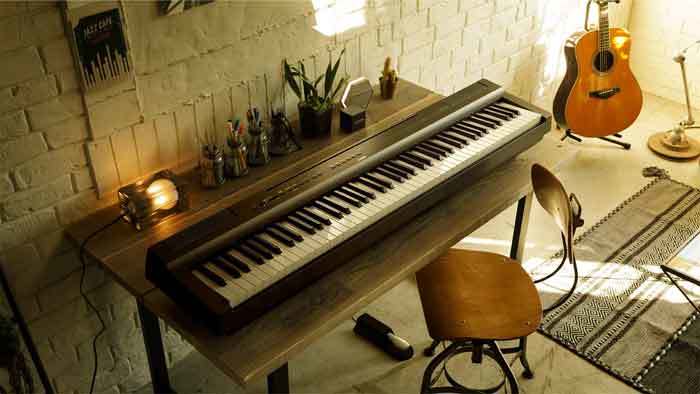
The 88 weighted keys with sensitivity to pressure, the option of having a triple pedalboard, and the 192 polyphony notes of this model make it an alternative to consider, especially for those who are just starting out in the world of piano. We also leave a direct link at the end of the article if you want to see which stores you can find it at the best price:
Features
I’m sure you’ll be interested in…
- Ranking with the best digital pianos in quality-price ratio
- The cheapest musical keyboards for beginners
- Other Yamaha Digital Piano Reviews
- Learn piano by yourself and for free
Among the strong points of this model are its 88 keys and 192 polyphony notes for less than 1000€. Below are the technical specifications of the Yamaha P125:
- Keyboard with 88 weighted keys and 4-level pressure sensitivity.
- 192 polyphony notes
- CF Sound Engine
- 24 voices
- Effects ( 4 Type Reverb, IAC, Damper, Sound Boost)
- Dual function, split and the duo
- Metronome
- 21 demo songs and 50 piano songs
- Recorder with capacity for 1 song
- 2 Outputs for standard hearing aids
- Sustain pedal (half-pedal option FC3A)
- Triple footswitch input (included in some packs)
- Aux Output [L/L+R] [R]
- USB to Host
- Compatible with Smart Pianist App
- 2 Speakers of 7w each
- Power consumption: 9w
- Dimensions 1.32m x 16.6cm x 29.5cm
- Weight 11.8kg
Sound
The P125 is a digital piano with a focus on pianists, so the sound engine operates with the great quality especially in the piano voice, its 7 w speakers and the polyphony sound of 192 notes generate a sound of great quality.
Below is a good video review of Yamaha P125
As you can see in the video the sound quality is quite good, the piano voice perfectly simulates a grand piano. Below is an additional video of the sound of the Yamaha P125 for you to hear more voices:
The previous video shows how the piano voice and the sensitivity of the keyboard make it possible to interpret any piece by marking the appropriate nuances.
Connectivity
In terms of connectivity the P125 could fall short for those looking for a digital piano for music production, however, the P125 has the essentials.

The auxiliary output, the USB to host, the two headphone inputs, the sustain pedal or triple footswitch option, and the connection with the Smart pianist app for many will be more than enough since these options allow to solve most of the requirements.
It also has a line output to connect to a large amplification system without having to put a power box to increase sound signal power.
Advantages and disadvantages of P125
The advantages of this model are:
- Sound Quality
- 88 keys
- Price
The disadvantages of this model are: Connectivity for music production is basic. But it has USB MIDI so it’s enough if you’re learning to play the piano and you want to record MIDI tracks and then export what you play directly to a score. The advantages of the P125 are very clear, the keyboard with 88 weighted keys with pressure sensitivity is of great quality, as well as the sound that it is able to reproduce and all this at an economical price. The connectivity is good, however, it falls short for musical production functions although it is not the goal of this piano, even so, the balance of the Yamaha P125 is very positive, since the approach of this model is to simulate a piano, for many the only voice to use will be that of “Grand Piano” and the value for money of this model is something to highlight.
Yamaha P125 vs P115
The Yamaha P115 is the predecessor of the P125, then we will see the differences and similarities between the two keyboards:
- Both models maintain the same GHS keyboard technology with the same features (88 counterbalanced keys with 4-level sensitivity).
- Both the P115 and P125 have a polyphony of 192 notes.
- The P125 has 24 voices while the P115 has 14.
- The connectivity and power of headphones are exactly the same.
- The P125 has the Smart pianist app to control the keyboard from an iPad.
- Yamaha has not done a great job updating this version, as the only clear advantage in the P125 is the addition of 10 additional voices that includes this model, however, both keyboards are a good alternative for beginner and intermediate pianists. In addition, the P125 is now at a good price.
Yamaha P125 vs P45
The P45 and P125 are two versions of Yamaha aimed at pianists, below are the differences and similarities between the two models:
- Both models share GHS keyboard technology with the same features
- The P125 has 192 polyphony notes while the P45 has only 64.
- The recorder is only available on the P125, the P45 has no option to record parts.
- The connectivity of both models is similar, however, the P125 has a jack to connect it to a mixer or amplifier.
- Both models are very similar, the P45 is a basic version of the P125, however, the sound quality of the latter is superior, as well as the diversity of functions, both are good options to learn, however, the P125 is a keyboard that will last you more years.
Both models are very similar, the P45 is a basic version of the P125, however, the sound quality of the latter is superior, as well as the diversity of functions, both are good options to learn, however, the P125 is a keyboard that will last you more years.
Yamaha P125 vs Roland FP30
Roland and Yamaha have always competed in all product lines, the Yamaha P125 and the Roland FP30 are no exception, below are the similarities and differences between the two models:
- Both models feature 88-key Hammer Action keyboard and pressure sensitivity, however, Roland offers 5 levels of sensitivity while Yamaha 4.
- The polyphony of the P125 is 192 notes, while the Roland FP30 offers 128.
- The FP30 has 35 voices, while Yamaha has 24.
- The variety of effects of the Roland is better because it has 5 reverb levels and brightness adjustment, while the P125 has 4 reverb levels.
- Both models have split and dual functions.
- The Yamaha includes 2 speaker ports, an auxiliary port, USB to host, and a triple footswitch option, while the FP30 has the same option in addition to MIDI and Bluetooth.
- Both support triple footswitch
- The P125 speakers are 7w each and the Roland FP30 speakers are 11w each.
- The weight of Yamaha is 11kg vs 14kg of Roland
The decision between the two models is complicated, as both models are of high quality. If you are looking for an alternative with more sound power, more variety of voices, better connectivity and keyboard quality you should go for the Roland FP30, however, if your priority is sound quality and weight your best choice is the Yamaha P125.
Yamaha P125 vs Kawai ES110
Both have an 88-key keyboard with pressure sensitivity and weighted keys, Yamaha incorporates GHS technology, while Kawai displays its Responsive Hammer technology that mimics the hammer system of an acoustic piano.
- Both Yamaha and Kawai offer a polyphony of 192 voices.
- The P125 offers 24 voices, while the Kawai offers 19.
- Both models feature a metronome and sound recorder, as well as triple footswitch capability.
- The Kawai’s recorder allows recording 3 songs while Yamaha’s only 1.
- Kawai incorporates its system of piano lessons Alfred’s Basic Piano 1A /1B, Burgmüller 25 (Opus 100), while Yamaha incorporates the App Smart Pianist.
- Both models feature 2 x 7w speakers
- Kawai offers 2 headphone inputs, in-line input, and output, MIDI input and output, sustain pedal or triple footswitch input, and Bluetooth, while Yamaha has 2 speaker ports, an auxiliary port, USB to host, and a triple footswitch option.
As you can see the comparison of these two models is very closed, in specifications are two models that offer virtually the same features, the Kawai ES 110 has better keyboard technology, connectivity, and a system for piano learning and Yamaha offers more voices, however, both models are high quality.
Yamaha P125 vs Casio PX160
Casio and Yamaha compete on virtually every level of keyboard, the Yamaha P125 and Casio PX160 are two competitors within the affordable digital piano range. The similarities and differences between the two models are presented below:
- Both models feature an 88-key weighted keyboard with pressure sensitivity.
- Yamaha offers 4 levels of pressure sensitivity, while Casio offers only 3.
- The polyphony of the P125 is 192 notes, while Casio offers 128.
- The P125 offers 24 voices while the PX160 has 18.
- When it comes to connectivity, both models have similar characteristics, as they both support USB, triple footswitch, 2 headphones, and have in-line input and output.
- Yamaha P125 has available the Smart pianist application, which allows you to control the digital piano and perform some additional functions.
- The integrated speakers in the Casio PX160 are 8w, while the Yamaha offers two 7w speakers.
The Yamaha P125 is a clear winner in the previous comparison since the only weak point is the sound power, where Casio wins with 1w more power per speaker, however, has better sound quality, levels of sensitivity on the keyboard, and a greater variety of voices. While it is true that the Casio PX 160 can sometimes be found at less than 400 euros.
Conclusion
Before buying a keyboard or digital piano, make sure you know in depth the use you will give it and analyze in detail what you require, this way you will buy something more suitable.
If you are going to begin in the world of piano or you are already a beginner pianist you must carefully analyze the options, since a keyboard like the Yamaha P125 or the Kawai ES110 are good alternatives but it is possible that in the long term you want to change for something more professional.
The Yamaha P125 has everything you need to learn the piano and is a high-quality keyboard. However, the Kawai ES110 may seem like a more interesting option since it has very similar features and a system of lessons. If you want to see the best alternatives do not miss our ranking with the best pianos of the moment.
Where to buy Yamaha P125?
There are several options to purchase the Yamaha P125, but it will always be better to buy through a virtual store, as you can save money. We recommend 2 places where they have good conditions for purchase and a very attractive price. Amazon to buy in America and Asia, Thomann to buy in Europe:
Amazon
- Free Shipping and the possibility of shipping in one day with Amazon Premium.
- Full Guarantee but they are no experts in music equipment
- A leader in fast shipments.
- The price change a lot daily.
- The best option in the USA and worldwide
Thomann
- Free Shipping
- Full warranty. If you have any problems, they take care of everything.
- 100% reliable payment.
- A leader in trouble-free shipping.
- Usually Best Price.
- Best Reputation: They are the leading online store in Europe and have the best catalog and information.
We hope you liked this article. Don’t miss also our guide on the electronic piano so that you have all the concepts and clearings and if you are looking for a cheaper keyboard and you don’t care if it simulates the touch of a piano have a look at our guide with cheap electronic keyboards.
For a similar price you have the following pianos and keyboards:
- YAMAHA YDP-S34 ARIUS
- YAMAHA YDP 163
- YAMAHA YDP 143
- YAMAHA PSR S770
- YAMAHA PSR S670
- YAMAHA PSR E453
- YAMAHA PSR E443
- YAMAHA P45
- YAMAHA P255
- YAMAHA P125
- YAMAHA P-121
- YAMAHA P115
- YAMAHA P105
- YAMAHA DGX 660
- YAMAHA ARIUS YDP 142
- YAMAHA PSR S775
- YAMAHA PSR E463
- YAMAHA P35
- THOMANN SP 5600
- THOMANN DP-33
- THOMANN DP-31
- ROLAND JUNO DS61
- ROLAND JD XI
- ROLAND GO KEYS
- ROLAND FP-60
- ROLAND FP 80
- PIANO THOMANN SP 320
- MOOG SUB PHATTY
- MOOG MOTHER 32
- MINIMOOG MODEL D
- KURZWEIL SPS4-8
- KURZWEIL SP6
- KURZWEIL SP4-8
- KURZWEIL FORTE SE
- KURZWEIL FORTE 8
- KURZWEIL ARTIS 7
- KORG PA-700 ORIENTAL
- KORG PA-700
- KORG PA600
- KORG PA-300
- KORG PA-1000
- KORG KROSS
- KORG KRONOS
- KORG HAVIAN 30
- KORG GRANDSTAGE 88
- CASIO PX-870 PRIVIA
- CASIO PX-770 PRIVIA
- CASIO PX-5S PRIVIA PRO
- CASIO PX-560 PRIVIA
- CASIO PX-360 PRIVIA
- CASIO PX 160
- CASIO CT-X800
- CASIO CT-X700
- CASIO CT-X5000
- CASIO CT-X3000
- CASIO CDP 130
- THOMANN DP 26
- ROLAND FP 90
- ROLAND FP 30
- ROLAND FA 06
- ROLAND BK 5
- KORG SP 280
- KORG MONOLOGUE
- KORG MINILOGUE
- KORG MICROKORG
- KORG LP 380
- KORG B1
- KAWAI ES8
- KAWAI ES110
- KAWAI ES100
- KAWAI CN27
- KAWAI CN25
- CASIO CDP 230
- ARTURIA MICROBRUTE
- CASIO CDP S100
Did you like this article?
>>>>>>>>>>>
Digital Piano Kawai ES110 Full Review. Is it a good choice?
Kawai Digital Piano ES110 Review Complete. Is It a Good Choice?
The Kawai es110 demonstrates that the Japanese brand not only has a talent for producing acoustic pianos, but is also capable of designing high-end digital pianos.
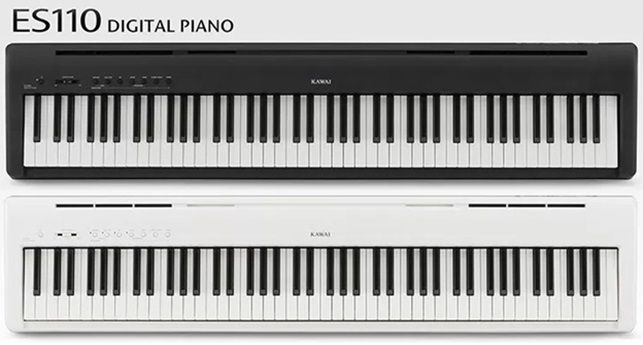
If you are looking for a high quality digital piano with 88 weighted keys, sensitivity similar to an acoustic piano, and at a very affordable price; the Kawai is110 is for you. The Kawai ES110 is a fairly complete option, as it is a “basic” digital piano that includes everything you need for any pianist.
This Japanese brand model has a sustain pedal included (damper pedal F-10H), and a lectern, in addition to having a fairly acceptable connectivity and other features that can make it the ideal digital piano. If you want a cheaper digital piano you will have to choose the Yamaha P45 or the Casio CDP 130. Although they are worth for the study of the piano, they contain more scarce benefits and sounds, comparing with this Kawai. Later, you have the comparison with other models that do shade the Kawai ES 110.
Let’s move forward with the functions and features of this digital piano. But first we’ll give you some comparative charts with the best places to buy it:
Where to Buy Kawai ES 110?
Our favorite place in America and Asia is Amazon, to buy in Europe Thomann:
Amazon
- Free Shipping and possibility of shipping in one day with Amazon Premium
- Full Guarantee but they are no experts in music equipment
- Leader in fast shipments
- Price that change a lot daily
- The best option in USA and worldwide
Thomann
- Free Shipping for the piano
- Full warranty, if you have any problems, they take care of everything
- 100% reliable payment
- Leader in trouble-free shipping
- Best price
- Best Reputation: They are the leading online store in Europe and have the best catalog and information
Features
The Kawai ES110 features 88 pressure sensitive keys that work with a weighted keys system called “Responsive Hammer”, which simulates the weight of an acoustic piano key with great precision. Unlike other digital pianos, the Kawai ES110 focuses more on metronome functions, connectivity, recording and the included lesson method, making it a good choice for those looking to learn the piano. The features of the Kawai ES110 are:
I’m sure you’ll be interested in…
- See this section for possible discounts and offers
- Ranking with the best digital pianos in quality-price ratio
- The cheapest musical keyboards for beginners
- Learn piano by yourself and for free
- 88 weighted Keys with Responsive Hammer Technology and Sensitivity polyphony of 192 notes
- 19 Voices (8 Piano Voices, 5 E. Piano Voices and 6 additional voices)
- Piano: Concert Grand, Concert Grand 2, Studio Grand, Studio Grand 2, Mellow Grand, Mellow Grand 2, Modern Piano, Rock Piano.E. Piano : Classic E.Piano, 60’s E.Piano, Modern E.Piano, Jazz Organ, Church Organ. Others: Slow Strings, String Ensemble, Wood Bass, Electric Bass, Harpsichord, Vibraphone
- Metronome
- MIDI Input and Output
- Line-In and Line-Out (basic for playing live on large stages)
- 2 Inputs for headphones
- Bluetooth connectivity and Bluetooth low energy MIDI
- Input for F-10H Pedal or Triple Footswitch
- Recording system with 4 memories (you can record up to three tracks)
- Piano Lesson System Alfred’s Basic Piano 1A /1B, Burgmüller 25 (Opus 100) lesson songs
- 2 Speakers 7 w/ Power consumption 9w
- Dimensions 1312 (W) x 286 (D) x 148 (H) mm / 12 Kg Weight
- Comes with higher quality sustain pedal
Sound
The sound of the Kawai is110 is really good. The difference between an acoustic piano and this digital piano is practically null, the nuances and cleanliness of the sound added to the sensitivity and counterweight that have the keys provide an experience very similar to that of a digital piano.
The sound is recorded from an acoustic piano Kawai EX Concert Grand and the sampling of the sound wave has pleasantly surprised us.
The piano also offers the ability to specify whether you are using a digital piano stand or putting it on a table. The piano itself will optimize the sound on that basis.
The following video shows the sound of the digital piano ES110:
At this point in the Review, it is not surprising that the Kawai ES110 is totally focused on pianists or future pianists, the sound and combination with the experience of sensitivity and weighted keys provides an experience virtually identical to that of a piano. Here’s a video where you can learn in detail the experience of a pianist using the Kawai es110, in addition to appreciate again the sound quality.
You can also customize the following aspects of the sound:
- Reverberation: Mimics the effect of being in different types of rooms with different acoustics and you have three levels: Room, Small Hall and Concert Hall
- Damper Resonance: Emulates the effect by which when a piano string resounds, the vibration is transmitted to strings that are in resonance with it; this acoustic piano effect is emulated in the Kawai ES110 so that the real piano experience is total
- Temperament: It imitates pianos from different periods and we can choose between 6 temperaments
- Voicing: If you want it to sound more mellow or less, it depends on how romantic you are
- Brightness Adjustment: Up to 10 levels to give the sound a bright tone (good for rock)
Dual Mode and Split Mode
We love this functionality of digital pianos and each one brings it. Dual mode allows you to layer and have one sound, sound on top of another. This allows you to play a piece of piano and have a string accompaniment, while playing as if you were accompanied by violins.On the other hand, there’s the split mode that allows you to divide the keyboard into 2 different instruments. The piano is played on one side, and the bass on the other. We’ll give you an example in the next video:
Connectivity
When it comes to connectivity, the Kawai ES110 is well equipped with MIDI input and output, 2 inputs for headphones, Bluetooth, and an in-line input/output and the input for connecting the sustain pedal or the triple footswitch, however, you must be careful as it does not have a USB port.
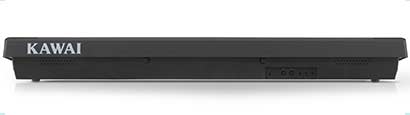
Despite the simplicity shown by the Japanese brand, the connectivity in the Kawai ES110 is virtually complete because it really only lacks a USB port and flash memory, yet has all the connectivity to work as a digital piano.
One thing I like about the Kawai ES110 is that it comes with an F10 – H pedal. What is better than other sustain pedals like the ones that come by default with the Roland FP 30 or the Yamaha P115.

Advantages and Disadvantages of Kawai ES110
The advantages of the Kawai ES110 are:
- 88 keys with sensitivity and weight, 19 Piano voices. That’s very good. It’s not intended for electronic music. The digital pianos of 88 weighted keys usually bring like 10 sounds and this 19 and of an extreme quality, so it’s very good
- Responsive Hammer System (simulation of weight and response of a piano hammer)
- Sound practically identical to that of a Piano
- Integrated piano lesson system
- Higher quality sustain pedal than they usually come by default
- Connectivity Bluetooth, MIDI, Line, Pedals and 2 ports for headphones
The disadvantages of the Kawai ES110 are:
- No USB or Flash Memory Port
- The speakers could be a little more powerful
- As you can see the Kawai ES110 is a digital piano focused almost entirely on pianists, so its strengths are focused on simulating an acoustic piano
It has a learning system, but the truth is that these systems integrated into pianos are merely for playing. If you want to learn in a self-taught way (which is not the most recommended) we recommend you take a look at apps such as Flowkey.
Kawai ES110 vs Roland FP30
A great competitor of the Kawai ES110 is the Roland FP30, both keyboards are very similar, they have functions suitable for a pianist, however, the main differences are:
- The polyphony of the Kawai ES110 is 192 notes, while that of the Roland FP30 is 128. Kawai’s Responsive Hammer technology of the ES110 provides more sensitivity and better feel than the weighted keys and 5-level sensitivity of the Fp30
- The Roland FP30 has a USB input, while the Kawai ES110 does not have a USB port
- The Kawai ES110 has 2 headphones outputs while the Roland FP30 has only one
- The Kawai ES110 weighs 12 kg and the Roland FP30 weighs 14kg
- The fault of the Kawai ES110 is that it has 7 W speakers, compared to the 11 W of the Roland FP30; although with 7 W is already valid for small restaurants
- The Kawai ES110 is a clear winner over the Roland FP30 mainly in terms of touch, as the sound quality and user experience is much better, the ES110 simulates a piano in a better way because it has better sound, sensitivity and key system, making it a clear winner
Now if you want power without extra amplification the Roland FP30 is a more interesting option.
Kawai ES110 vs Kawai ES100
It is not surprising that the ES110 is better than the Kawai ES100, as it is the new model. However, both models share virtually all functions and features, so they are great competitors.
The main differences that present these two models of Kawai are: The Kawai ES110 has the new Responsive Hammer technology and the ES100 maintains the old.
- Advanced Hammer Action technology
- The Kawai ES110 has 19 Voices while the ES100 has 18 Voices
Despite having only two differences between the two models of Kawai, it is necessary to point out that the technology of the sensitivity and weight of keys is an important difference since.
Kawai got closer to the sensitivity of a piano through the Responsive hammer, as the response speed and sensitivity increase over the previous system. On the other hand, the ES110 gains 1 voice, which can be irrelevant especially if you plan to use it as a keyboard.
Kawai ES110 vs Yamaha P115 vs Yamaha P125
The Yamaha P115 also enters the competition against the Kawai ES110, as both keyboards are very similar and have common functions. The new version of the Yamaha P115 is the Yamaha P125, the only difference is that it brings more piano sounds, which is a welcomed improvement. The main differences between the Kawai and the Yamaha P125 and 115 are:
- The Kawai ES110 features Responsive Hammer, while the Yamaha P115 has a 4-level sensitivity system
- The Kawai ES110 can store up to 3 songs while the Yamaha P115 can only record 2
- The Kawai ES110 has 19 voices, now the Yamaha P125 surpasses us with 24 voices
- The Yamaha P115 has USB and MIDI port while the Kawai ES110 only has MIDI
- The Yamaha P115 comes with a three-month Flowkey app subscription gift, but if you go to class it doesn’t have anything special and it’s usually cheaper
The Kawai ES110 I like, especially in the touch they are similar range, but we do not expect much difference between the two. The truth is that the Yamaha P125 and the Kawai ES110 are tough competitors and sometimes you have to decide depending on the price each one is at.
Comparative Video of Kawai ES110 vs Roland FP30 vs Yamaha P115
Below is a video where you can compare the sound quality of Kawai, Yamaha and Roland on their digital pianos:
Conclusions
If you’re looking for a digital piano with great sound quality and user experience for less than 1000 €, the Kawai ES110 is for you. Despite the fact that the Japanese brand’s initial level offer is not totally perfect, its quality is far above that of its competitors.
The Kawai ES110 is totally recommendable for a pianist since it has all the necessary characteristics for it; the responsive hammer system imitates practically to the perfection the experience of playing a piano, in the same way the quality of sound that shows with its 192 notes of polyphony does that the sound resembles in great way.
For those who want to learn to play piano or acquire a digital piano to transport, or use at home and want to have the sensitivity and sound of an acoustic piano, the Kawai ES110 is the best alternative… especially if we talk about options for less than 1000 €.
Before buying any instrument, it’s necessary to consider the best option for your budget; if you want to know other options that are very competitive in relation price benefit we recommend you to take a look at our ranking of digital pianos. If you’re looking for an option that ranges from 200 € to $ you may be interested in reading our guide to the best inexpensive keyboards.
Where to buy Kawai ES110
It is best to buy from an online store that can guarantee you a correct transport. Besides, buying online can save you a lot of money. You can search for the product at any Kawai dealer in your area. As we said bellow, in Europe always check Thomann. If you live in Asia or America, always check Amazon. Here the direct links to the product.
For a similar price you have the following pianos and keyboards:
- YAMAHA YDP-S34 ARIUS
- YAMAHA YDP 163
- YAMAHA YDP 143
- YAMAHA PSR S770
- YAMAHA PSR S670
- YAMAHA PSR E453
- YAMAHA PSR E443
- YAMAHA P45
- YAMAHA P255
- YAMAHA P125
- YAMAHA P-121
- YAMAHA P115
- YAMAHA P105
- YAMAHA DGX 660
- YAMAHA ARIUS YDP 142
- YAMAHA PSR S775
- YAMAHA PSR E463
- YAMAHA P35
- THOMANN SP 5600
- THOMANN DP-33
- THOMANN DP-31
- ROLAND GO KEYS
- ROLAND FP-60
- ROLAND FP 80
- PIANO THOMANN SP 320
- KURZWEIL SPS4-8
- KURZWEIL SP6
- KURZWEIL SP4-8
- KURZWEIL FORTE SE
- KURZWEIL FORTE 8
- KURZWEIL ARTIS 7
- KORG PA-700 ORIENTAL
- KORG PA-700
- KORG PA600
- KORG PA-300
- KORG PA-1000
- KORG HAVIAN 30
- KORG GRANDSTAGE 88
- CASIO PX-870 PRIVIA
- CASIO PX-770 PRIVIA
- CASIO PX-5S PRIVIA PRO
- CASIO PX-560 PRIVIA
- CASIO PX-360 PRIVIA
- CASIO PX 160
- CASIO CT-X800
- CASIO CT-X700
- CASIO CT-X5000
- CASIO CT-X3000
- CASIO CDP 130
- THOMANN DP 26
- ROLAND FP 90
- ROLAND FP 30
- ROLAND FA 06
- ROLAND BK 5
- KORG SP 280
- KORG LP 380
- KORG B1
- KAWAI ES8
- KAWAI ES100
- KAWAI CN27
- KAWAI CN25
- CASIO CDP 230
- CASIO CDP S100
Vote this post>>>>